
Good morning everyone
And the rest of the story now available at https://a.co/d/0iCnPaNX


Rambling Harbor: a quiet inlet in the wide sea of history, where resistance once sat down and refused to stand—caught between silence and song, memory and myth. From these shores, I share chapters of a life lived out loud in quiet ways. Poems that ache and hum. Thoughts that bloom like sea-worn prayers. Hoping to grow into an oak, but knowing I may return as a daffodil, drifting toward the light, carried by the tide. This is where I write. This is where I remember. This is where I stay.

Born Today: August 14th 1943, Mitch Snyder
I met Mitch in prison, and later we shared a home at CCNV in D.C. That’s where I saw the man behind the headlines—the fire, the flaws, the stubborn heart, and the relentless drive to stand with people the system would rather forget. Anyone who has read my book knows the depth of our friendship.
Born August 14, 1943, Mitch Snyder was a prominent American advocate for people experiencing homelessness. His life was as complicated as it was impactful, a long arc from troubled youth to fierce activist, from a kid abandoned in Brooklyn to a national voice demanding dignity for the unhoused.
Snyder’s early life was marked by hardship and rebellion. Growing up in Brooklyn, he faced his father’s abandonment and drifted into criminal activity that eventually landed him in prison. But prison was also where Mitch began to change. Influenced by fellow inmates and by his reading — including the Bible — he joined hunger strikes and work stoppages over prisoners’ rights. He found purpose in resistance.
During his time at Danbury Correctional, Mitch met two men who shaped the rest of his life: Daniel and Philip Berrigan. Both were anti‑war priests serving time for destroying draft records in protest of the Vietnam War. Their commitment to justice and nonviolent resistance struck Mitch hard. They showed him activism wasn’t just anger — it was discipline, courage, and sacrifice. Mitch joined them in hunger strikes and work stoppages, learning firsthand how fasting could force attention onto issues the powerful preferred to ignore. He carried that lesson with him for the rest of his life.
After his release, Mitch moved to Washington, D.C. and joined the Community for Creative Non‑Violence (CCNV). The group had roots in anti‑war activism but evolved into one of the most forceful voices for people experiencing homelessness. Mitch’s leadership brought national attention to the crisis. He staged public funerals for people who died on the streets, occupied abandoned buildings, and used hunger strikes to pressure the government into action.
One of his most famous actions was occupying an abandoned federal building. After intense pressure on the Reagan administration, the building was leased to CCNV for $1 a year to serve as a shelter. It was a symbolic victory — a reminder that the government had responsibilities it couldn’t simply shrug off.
Mitch’s life wasn’t without controversy. His sacrifices — including leaving his family — and the toll activism took on him were debated publicly. But his commitment never wavered. He gave everything he had to the cause, and the weight of that struggle eventually became too much. In 1990, overwhelmed by the ongoing crisis and the lack of meaningful governmental response, Mitch took his own life.
His story was later told in the biopic Samaritan: The Mitch Snyder Story, with Martin Sheen portraying him. But for those of us who knew him, Mitch wasn’t a symbol or a headline. He was a complicated, brilliant, stubborn man who refused to look away from suffering — and demanded the same from the rest of us.
Mitch Snyder’s legacy is a testament to the power of individual activism and the impact one person can have on society. His life reminds us that homelessness is not a statistic — it’s a human crisis demanding compassion, courage, and relentless advocacy. His work continues to inspire those who believe in giving voice to the voiceless and standing with people the system would rather erase.
And for me, he remains the man I met in prison, the man I later lived with at CCNV, the man who gave me a home and a safe place when I once again found myself running for my life and helped me begin a new life. And always he will remain flaws and all the man I call my friend.
It’s the birthday of Henry David Thoreau, born July 12, 1817, in Concord, Massachusetts—a man who treated conscience the way some people treat religion. He didn’t just write about living deliberately; he practiced it like a stubborn art form. Poet, philosopher, abolitionist, tax resister, transcendentalist—Thoreau collected titles the way other people collect parking tickets.
And here’s the thing: every time I read about Thoreau refusing to pay taxes that supported slavery, I think about my own little rebellion a century later. When the phone tax went up to help bankroll the Vietnam War, I looked at that bill and said, “Nope.” Ten percent, gone. I refused to pay it, wrote it right on the check. It wasn’t Walden Pond, but it was my own small patch of moral ground, and I stood on it.
Thoreau would’ve understood. He believed a person’s duty wasn’t to obey, but to stay awake. To look at the world and decide what you can live with—and what you absolutely cannot.
I’ve walked around Walden Pond more times than I can count. Not in some tourist way, but in the way you walk a place that’s part of your own story. I’ve stood inside the space where he built that cabin, imagining him shaping those boards, thinking those thoughts, refusing to let the world flatten him out. There’s something electric about standing where a stubborn soul once stood. You feel the charge in your feet.
Thoreau didn’t ask permission to live the way he believed. He just lived it. And maybe that’s why his birthday still matters. It’s a reminder that resistance isn’t always loud. Sometimes it’s a quiet walk around a pond. Sometimes it’s a tax you refuse to pay. Sometimes it’s simply deciding your life is yours, and you’re going to live it with your eyes open.
On July 12, I think about Thoreau’s stubbornness, and I think about mine. Different wars, different taxes, different centuries—but the same old human urge to stand where your conscience tells you to stand.
And to keep walking.
Boston — and the whole country — is celebrating 250 years of existence, and at the same time I’m celebrating 50 years since I first came to the place that has always felt like home. Half a century ago I walked into Boston for the first time, not knowing a damn thing about the city except that something in it pulled at me. Now, as the nation marks its big anniversary, I’m marking mine — fifty years in a place I had never been that somehow felt like I had never left.
Some time in the late days of ’75 or the early days of ’76, I crawled out of a produce dumpster in Baltimore. Yes, really. I was living at Jonah House then, part of the Community for Creative Non‑Violence, and my Sunday duties — along with my friend Phil Berrigan — were to head down to the produce terminal and gather all the discarded fruits and vegetables. The terminal had this rule: if anything hit the ground, it had to be thrown out. Didn’t matter if it was a perfect apple or a bruised banana. Somehow it never occurred to them to wash it and give it to folks who needed it.
So Sundays were our scavenger days. The terminal was closed, the gates quiet, and Phil and I could climb in and out of dumpsters at will. This wasn’t just picking things off the ground — though there was some of that — it was literal dumpster diving, hoping the bananas hadn’t liquefied and the tomatoes hadn’t turned into soup. We’d haul home whatever we could carry, wash it all, keep what Jonah House needed, then walk the neighborhood leaving bags of good food on doorsteps. We lived in one of the poorest sections of Baltimore, and this was one small way to push back against the madness.
Anyway, one day I heaved myself up out of that dumpster, and before I knew it, I was heaving myself out of another kind of dumpster — a dump called the Hillbilly Ranch, a country bar in Boston. I had decided to leave Jonah House, take my stepson Jimmy — the courts had given me custody — and make a new life in the town of the original revolutionaries.
The Hillbilly Ranch sat right on the edge of the Combat Zone, Boston’s old adult‑entertainment district — a few crooked blocks of strip joints, peep shows, porn theaters, massage parlors, and bars that didn’t pretend to be anything other than what they were. The Zone was neon and noise, hustlers and lost souls, cops who looked the other way, and a steady hum of trouble that never quite boiled over but never went cold either. It was the kind of place where the sidewalk felt alive under your feet, where you could smell beer, sweat, perfume, and desperation all mixing together in the humid night air. A carnival of the city’s underbelly, running full tilt just a stone’s throw from the Common.
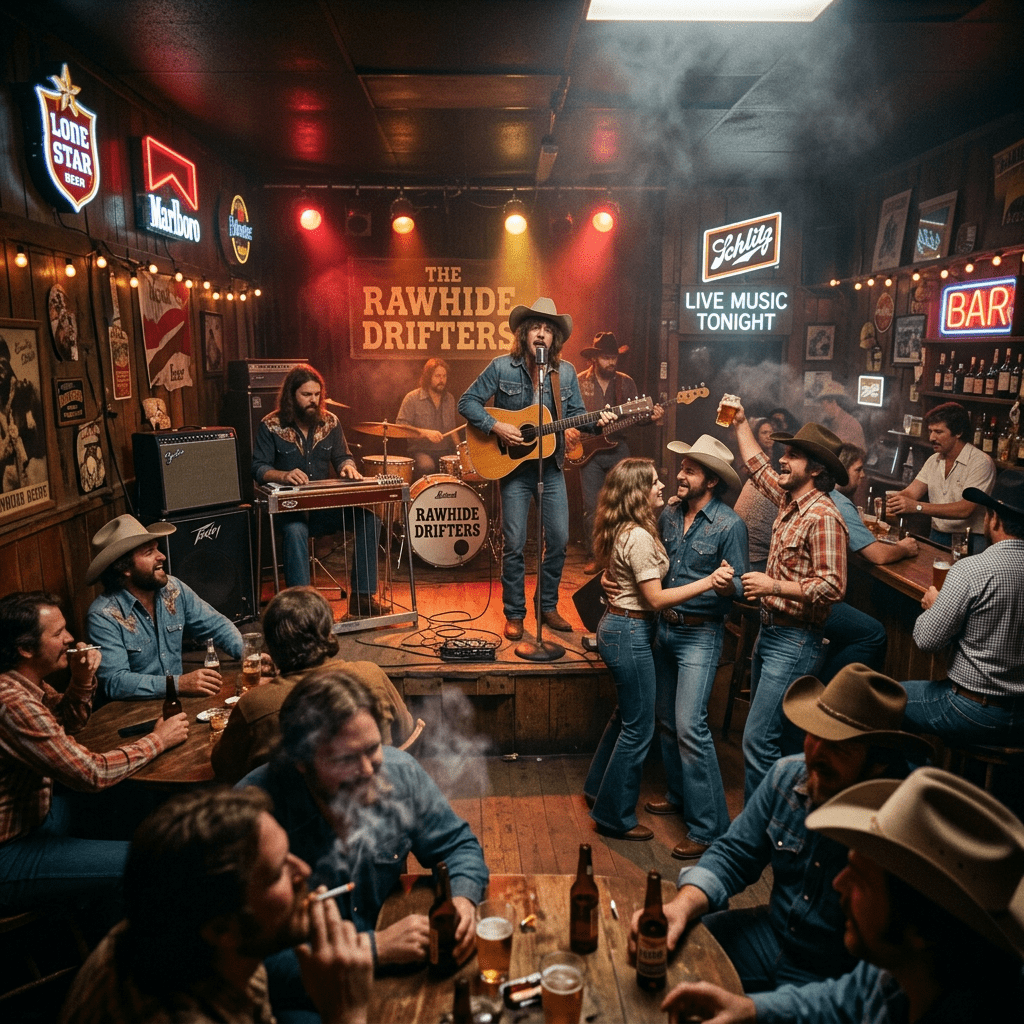
And right there, tucked into that chaos, was the Hillbilly Ranch — the first place I walked into in Boston. A country‑western honky‑tonk with wagon wheels nailed to the walls, neon beer signs, wood paneling, and a floor that stuck to your boots. The crowd looked like someone shook the whole city and let whoever fell out land inside: cowboys who weren’t cowboys, bikers, hippies, sailors, Southie hard‑cases, and tourists who had no idea what they’d wandered into.
It occurs to me now that the movie Road House shows a few scenes that feel like cousins to what the Hillbilly Ranch really was — the neon, the noise, the rough crowd, the band trying to hold the room together while trouble simmered in the corners. But Road House was Hollywood danger, stuntmen and sugar glass, a fantasy of barroom violence dressed up with muscles and movie lighting. The Hillbilly Ranch was all that and more — no stuntmen, no retakes, no Patrick Swayze walking in to clean up the place. Just a real Boston honky‑tonk sitting on the edge of the Combat Zone, fed nightly by the Zone’s parade of characters.
The bathroom was a trough urinal — no stalls, no sinks, no privacy, no mercy. You went in, did your business, and hoped you didn’t slip.
But the real heartbeat of the Ranch was the music. Boston had a surprisingly strong country‑western undercurrent back then — not the polished Nashville stuff, but barroom country, Telecasters through cheap amps, fiddles that could cut glass. The Ranch was home base for the local pickers, the guys who played five nights a week and drank six. You’d get bluegrass pickers who’d show up with banjos and mandolins and turn the place into a barn dance, and honky‑tonk trios with drummers who looked like they’d slept in the van.
Touring road bands came through too — southern and midwestern groups grinding their way up the East Coast. Tight rhythm sections, steel guitar players who could make you cry, singers who’d lived every word they sang. They’d roll in, plug in, and blow the doors off the place.
And then there were the almost‑famous ones — former sidemen from bigger acts, songwriters who’d had one regional hit, guitar players who’d toured with someone you’d heard of. They’d show up, play their hearts out, and disappear into the night.
The crowd was part of the show. They leaned right up to the stage — bikers, sailors, hippies, Southie hard‑cases, and lost souls who’d wandered in from the Zone. If the band was good, the room lit up. If the band was bad, the room let them know. It was a working‑class music bar, and the musicians respected that.
It was loud, sweaty, raw — no fancy lighting, no sound engineer, just a stage, a few amps, and a band trying to win over a room full of characters. It was the kind of place where a fiddle solo could stop a fight, or start one.
And funny enough, for all the grit and neon and honky‑tonk chaos of the Hillbilly Ranch, my first Fourth of July in Boston was the exact opposite — standing out on the Esplanade at the Hatch Shell, watching Arthur Fiedler conduct what turned out to be his last performance at the Hatch Shell.
Arthur Fiedler wasn’t just a conductor — he was Boston’s heartbeat in a white jacket. He’d led the Pops for half a century, dragging classical music out of the velvet‑rope concert halls and putting it right in the hands of regular people. He made the Pops a Boston institution, a family tradition, a summer ritual. He believed music belonged to everyone — the dockworkers, the office clerks, the kids running around on the grass — and he played like he was giving the whole city a gift. When Fiedler stepped onto that Hatch Shell stage, Boston showed up. He was as much a part of the city as the Charles River itself.
One night I’m in a bar where a fiddle solo might start a fight, and a few months later I’m listening to the Boston Pops under the summer sky, the river breathing behind us, the whole city gathered like a family. Boston could swing from rough to beautiful without warning, and I was learning that fast.
And standing there that night, I knew I had found my new home — a place I had never been that somehow felt like I had never left.
Sometimes a chapter needs another walk around the block, and this one did. I went back, rewrote it, and finally gave a little mouse named Archibald MacLeash the explanation he deserved. If you’ve read the book, this fills in the cracks. If you haven’t, well—welcome to the neighborhood.
The night before my induction, I couldn’t sleep. I lay in bed staring at the ceiling, looking for answers. My heart pounded like I’d just run the 40‑yard dash. A drumbeat I wasn’t sure I could march to — too fast, too loud, too soft, and definitely its own rhythm. But I knew exactly where I did not want to march.
I tried everything: counting breaths, replaying old football games, thinking of my girlfriend, even astral projection — maybe I could end up on some tropical island, safe and away. I wanted to be anywhere but, in that room, in that bed, wondering where I might be tomorrow night. But dread snuck in under the door and settled in my brain. I wasn’t afraid of dying. I was afraid of disappearing — of becoming a number, a uniform, a cog in a machine I didn’t believe in.
The draft lottery — America’s twisted game show of fate — wouldn’t begin until 1969. But in 1964, the draft was still run by local boards, deferments reviewed by hand. At eighteen, I burned my college deferment card, thinking I was making a statement. I wrote letters to President Johnson and to my Staten Island draft board, asking to be reclassified 1‑A. You can’t refuse what you haven’t been offered. And I was tired of hiding behind loopholes, even if I hadn’t meant to hide in the first place.
By ’69, they granted my wish. I was 1‑A — fit for service, next in line to toe the line, or not. Five years of business schools and seminaries had led me here. From the gridiron to leg irons.
And then the morning came.
I was up by 6 a.m. — not that I’d slept. I left a note for my mother saying I’d gone to visit friends. I wondered how long I’d really be gone. I took the bus to the Staten Island Ferry, crossed the Hudson, and walked the two longest blocks of my life to Whitehall Station. Even writing about it now, I can feel that god‑awful sickness in my stomach. I can’t do this.
Fight or flight? Mine was freeze and sit. No exit. Just a heart pounding like a drumline on speed. I was about to jump off a cliff and couldn’t see the bottom. Compared to this, the Coney Island Parachute Jump was a kiddie ride.
Whitehall Station sat in lower Manhattan like a bureaucratic bunker — the place where boys became soldiers or tried not to. It shut down in 1972, two days before my birthday, while I was in Danbury Federal Correctional Institution. I’d wanted it torn down. I’d done my best to see that happen.
As I climbed the steps, I saw Mr. Harold Jones waiting outside. My eighth‑grade science teacher — but more than that. Over the years, he’d become my confidant, the one adult who understood what I was feeling. He made science feel like storytelling, helped along by a fictional mouse named Archibald MacLeish who lived in his coat closet. I never saw him, but I saw him. Still do.
Mr. Jones said he named the mouse Archibald MacLeish after the poet — “because even a mouse can carry big ideas,” he told me once, tapping his temple like he was winding up a thought. MacLeish wrote about truth, about standing your ground when the world tries to bend you, about the kind of dissent that isn’t loud or showy but stubborn and necessary. He believed democracy wasn’t something you admired from a distance — it was something you practiced, even when it cost you. Jones figured a mouse could teach eighth‑graders more about courage and conscience than any textbook. The beret, the cane, the red bandana — that was all me. That’s how I pictured him: a tiny philosopher with a rebel’s wardrobe, the kind of creature who’d whisper, Don’t let them turn you into something you’re not. Archibald showed up whenever I needed him — not as a hallucination, not as a joke, but as a reminder that dissent can be quiet, steady, and small, and still shake the world.
Mr. Jones didn’t say much that morning. He didn’t have to. He told me to stay who I was. Said it was something to be proud of.
Inside, the induction ceremony began. The room smelled of sweat. The air was thick with the breath of boys pretending not to shake. The recruiter’s voice was flat, rehearsed, like he’d stopped listening years ago.
“Please repeat after me…”
“I do solemnly swear…”
Repeat. Repeat? Hell, I could barely breathe.
“…that I will bear true faith…”
And suddenly I wasn’t in Whitehall anymore. I was back on the football field, hearing my coach yell, “Go in hell‑bent for leather, Little Sandy!” My dad was Big Sandy. The coach used that nickname to rile me up. Hell‑bent for leather — without fear.
My heart picked up the chant until it drowned out everything else.
Then came the words: Step forward.
I sat down.
The recruiter blinked, confused. Thought I was sick. I stood, breathed, sat again.
“I’m not moving,” I said, though I wasn’t sure I could even if I wanted to.
The sergeant’s face turned fire‑engine red. My heart was a jackhammer. I was frozen in defiance — or fear. Maybe both. I prayed he wouldn’t hit me. If he did, I wasn’t sure I could stop myself from hitting back. I may be a peacenik, but I know myself. Anger lives in me too. If I struck him, I wouldn’t be going to jail for trying to end a war, but for starting one.
Two MPs grabbed me like a sack of potatoes and hauled me to a holding cell. I expected that part. I was prepared. No blows were thrown. An Army lawyer came in to make sure I knew what I was doing. I asked if he knew what he was doing — and what he was part of. He accepted my yes and left.
Then came the police car, the ride to Staten Island, and my first night in jail. Five miles from the gridiron. A lifetime away.
As they carried me out of Whitehall, I refused to walk — part of my plan for total non‑cooperation. Mr. Jones stood on the grimy sidewalk. He smiled. Gave me a thumbs‑up. I flashed him a peace sign from between a cop’s holster and his arm.
And behind him — I swear — I saw Archibald MacLeish strutting down the sidewalk, beret tilted, cane tapping a rhythm only I could hear. He paused near the induction center door, tipped his hat, and whispered, “Courage isn’t loud. It’s the quiet refusal.” Then he vanished into the crowd.
Mr. Jones arranged to bail me out, though I was released on my own recognizance. I spent the rest of the day at his home — resting, recovering, trying to make sense of what had just happened. And what would happen next. To my mother, I was simply visiting Mr. Jones. I was old enough to say, “Don’t call my parents,” and the authorities obliged.
A trial date was set for April. The weeks leading up to it blurred into paperwork, legal advice, friends’ advice, and panic. I walked Manhattan like I always had, but now I memorized the cracks in the sidewalk, the rhythm of subway trains, the smell of roasted peanuts from corner carts — anything to anchor me.
Oddly, I’d always found the Financial District peaceful on a Sunday morning. Wall Street’s insanity gave way to silence. I walked it a few times in those last days. And Times Square — the lights of Broadway weren’t going to shine on me, but they still shine inside my memory. So do the beaches of Staten Island.
I didn’t know what I was looking for. Only that it wasn’t in New York anymore.
And so the city’s noise faded behind me. The cracks in the sidewalks, the drumbeat of the subway, even Broadway’s lights became part of a memory I carried but could no longer live inside.
What I needed was silence. Steadiness. A place where the ground didn’t demand allegiance.
Somewhere in the back of my mind, I could still hear Archibald’s cane tapping — that quiet rhythm he kept for me when I couldn’t keep one for myself. He’d been at Whitehall, and he’d be on the mountain too. Courage travels light.
Emily’s mountain was waiting. Quiet, immovable, patient — just like she was — offering refuge without question.
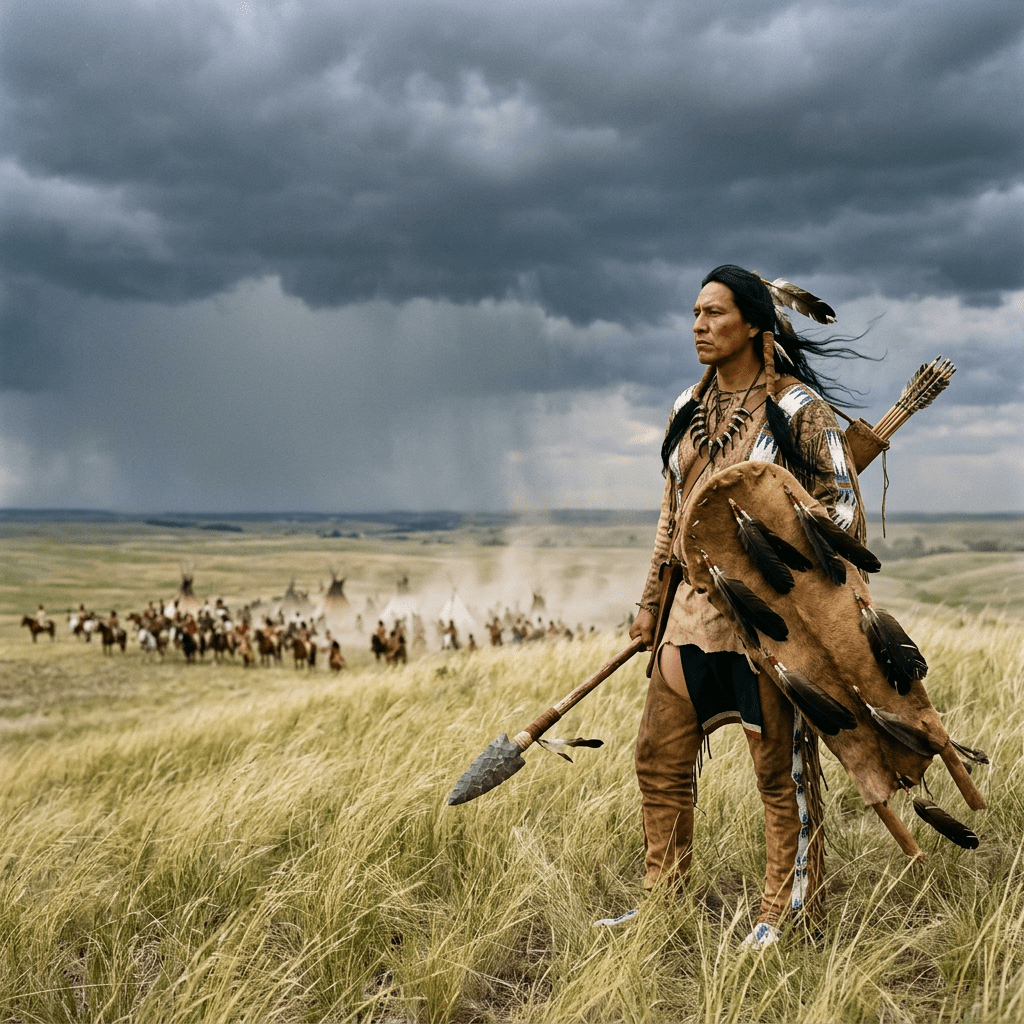
They don’t put this in the glossy schoolbooks, but New England was born in blood long before anybody slapped a Minuteman on a license plate. King Philip’s War — 1675 to 1676 — was the kind of fight that leaves a scar on a whole region, even if the region pretends it never happened.
Metacom — the English called him King Philip because God forbid they learn a Native name — was the son of Massasoit, the same Massasoit who fed the Pilgrims when they were starving and clueless. The Wampanoag kept the peace for fifty years. Half a century. Longer than most countries manage. And how did the colonists repay that? Land grabs. Broken treaties. “Misunderstandings” that always seemed to end with the English owning more shoreline.
Eventually, Metacom had had enough. And when he pushed back — when he finally said “no more” — the colonists called it savagery. They called it a massacre. They called it everything except what it was: a people fighting for the last pieces of their home.
The war burned through New England like a fever. Entire towns were wiped off the map. Twelve of them are gone completely. Proportionally, more people died here than in any war this country ever fought afterward — Civil War included. Think about that. The deadliest war in American history happened before there was an America.
And when it was over — when Metacom was killed — they cut off his head and stuck it on a pike in Plymouth. Left it there for twenty‑five years. A generation grew up walking past it. That’s not a metaphor. That’s not a legend. That’s the kind of thing a place remembers even when it pretends it doesn’t.
Thousands of Wampanoag, Narragansett, and Nipmuc people were killed. Thousands more were enslaved and shipped to the Caribbean like cargo. New England likes to talk about its abolitionist heart, its moral backbone, its “cradle of liberty.” Funny how the cradle always leaves out the bones underneath.
And here’s the part that hits closest to home:
You and I — we went to school in the same New England. We learned about the Pilgrims, the Puritans, the Revolution, the Tea Party, and Paul Revere galloping around like he invented midnight. But Metacom? King Philip’s War? Maybe a sentence. Maybe a footnote. Maybe nothing at all.
That silence isn’t an accident. It’s a choice. A whole region deciding which ghosts get to speak and which ones get paved over.
I write about people’s birthdays, so I figured I’d give this guy a try.
Dan Sanders was born on May 20 in Knoxville, Tennessee, and before he knew much of anything he was hauled into the strange hum of Oak Ridge — the Atomic City, where the sidewalks were clean, the secrets were thick, and the grown‑ups talked in half‑sentences. He spent his first ten years there, learning early that the world doesn’t always tell you the truth straight on.
Then came the moves, one after another, the kind of drifting that teaches a kid to keep his eyes open and his back to the wall. Eventually he landed in New York City with his parents, a place loud enough to either swallow you whole or teach you how to stand your ground. He chose standing.
When the Vietnam War came calling, he not only didn’t answer — he sent a resounding NO echoing through the induction center, loud enough that the walls probably still remember it. And the country made him pay for that honesty. He spent time in federal prison for refusing the war, learning a different kind of geography: steel bars, long nights, and the strange brotherhood of men who wouldn’t bend. It didn’t break him. It sharpened him.
He made his way from New York to Boston, where he built a quieter life without ever losing the grit of where he came from. Over the years he became a broadcaster, a writer, a guy who pays attention to the small moments most people walk right past. His work — whether memoir, poetry, or the stories he tells out loud — carries that mix of blunt honesty and dry wit that only comes from a life actually lived, not imagined.
Born on this day, May 20, Dan Sanders grew up between the secrets of Oak Ridge, the chaos of New York, the hard lessons of prison, and the hard‑earned calm of Boston — carrying all of it in the way he writes, remembers, and tells the truth as he sees it.
Subscribing is free because any money is from number of clicks and advertisers’ readers.
Some people arrive in this world like a whisper. Wavy Gravy showed up like a marching band that took a wrong turn and decided to stay.
Born on this day in 1936, back when the world was still in black‑and‑white, he somehow grew into one of the most colorful human beings to ever wander through the American story. Hugh Romney was the name on the paperwork, but the universe had other plans. It needed a jester. A peacekeeper. A clown with a conscience. A man who could talk down a crowd of 400,000 hungry, muddy, half‑mad festival‑goers at Woodstock with nothing but a microphone and a grin.
He fed people. He calmed people. He made them laugh when they were ready to break. He turned compassion into a kind of performance art, and he never stopped believing that humor could be a tool for survival. The Hog Farm, the Seva Foundation, the endless parade of red noses and tie‑dye — it was all part of the same mission: make the world a little lighter, a little kinder, a little more human.
Wavy Gravy reminds us that you can take the work seriously without taking yourself seriously. That mischief can be mercy. That joy can be a form of resistance. And that sometimes the best way to keep the peace is to show up dressed like a psychedelic Santa Claus and tell everyone it’s going to be okay.
On the day he was born, the universe clearly decided it needed more color. And all these years later, we’re still living in the glow.
From Rambling Harbor, where the tide rolls in with its own kind of cosmic joke, I tip my hat to the man who proved you can change the world with a laugh and a ladle.
FREE SUBSCRIBING
The Diamond Sutra is set up as a conversation between the Buddha and an elderly disciple named Subhuti. Two voices, one asking, one answering, both circling around the same old questions we still ask today: What matters? What lasts? How do we see the world without getting lost in it?
Some dates slip past us without a sound, and some carry a little echo if you stop long enough to listen. This one goes all the way back to 868 A.D., when somebody — a monk, a printer, a pair of hands we’ll never know — pressed inked wood against paper and created what we now call the oldest printed book with a publication date. The Diamond Sutra. Sixteen feet of teachings, questions, answers, and the quiet persistence of human curiosity.
The word sutra comes from Sanskrit and means “teaching,” but it’s more than that. It’s a thread, a line connecting one mind to another across centuries. The Diamond Sutra is set up as a conversation between the Buddha and an elderly disciple named Subhuti. Two voices, one asking, one answering, both circling around the same old questions we still ask today: What matters? What lasts? How do we see the world without getting lost in it?
The physical book itself was printed from carved wooden blocks onto seven long strips of paper. Each page had its own block, carved by hand, reversed like a mirror, every line a small act of faith that someone in the future would want to read it. Those seven sheets were pasted together into a scroll about sixteen feet long — a book before books were bound the way we know them now. Imagine unrolling that thing, the slow reveal of words that had already traveled further than most people of that time ever would.
And then, like so many things, it vanished.
For more than a thousand years the scroll sat hidden away in Turkestan, sealed up with hundreds of other manuscripts in one of the Caves of the Thousand Buddhas. A whole library walled off, maybe to protect it, maybe to forget it, maybe because someone thought the world was ending and wanted to save what they could. We’ll never know. What we do know is that in 1900, a caretaker sweeping out a cave stumbled onto a doorway that hadn’t been opened in centuries. Behind it: bundles of manuscripts, paintings, scrolls, and among them, this sixteen‑foot conversation between a teacher and a disciple.
I like stories like this. They remind me that the things we make — the words we write, the thoughts we try to pin down — have a way of outliving us. They get lost, they get found, they get read by someone a thousand years later who has no idea who we were but still feels the spark of recognition. A voice calling across time saying, “I was here. I wondered about the same things you do.”
Maybe that’s why I keep writing. Maybe that’s why any of us do.
SUBSCRIPTIONS ARE ALWAYS FREE
Mother’s Day didn’t start with flowers, cards, or brunch. Its earliest roots in the United States came from women who were trying to hold their communities together in the face of disease, war, and political division.
Ann Reeves Jarvis, a West Virginia woman who lived through the mid‑1800s, spent her life organizing “Mothers’ Work Clubs” to fight outbreaks of measles, typhoid, and diphtheria in Appalachian towns. These clubs inspected milk, taught sanitation, and even quarantined homes when needed. During the Civil War, she insisted her groups care for both Union and Confederate soldiers, and after the war she organized a Mother’s Friendship Day in 1868 to help reunite divided families.
Around the same time, Julia Ward Howe — abolitionist, suffragist, and author of The Battle Hymn of the Republic — issued her 1870 Mother’s Day Proclamation, calling for women to gather in the name of peace after witnessing the devastation of the Civil War and the Franco‑Prussian War. She envisioned an international congress of women dedicated to preventing war. A few communities observed her proposed “Mother’s Day for Peace,” but it didn’t take hold nationally.
The holiday as we know it today came from Anna Jarvis, Ann Jarvis’s daughter. After her mother’s death, she campaigned for a day to honor the sacrifices and quiet labor of mothers. In 1908, she held the first official Mother’s Day service at her mother’s church in Grafton, West Virginia. Within five years, nearly every state observed it, and in 1914, President Woodrow Wilson declared Mother’s Day a national holiday, celebrated on the second Sunday in May.
Ironically, Anna Jarvis spent the rest of her life fighting the commercialization of the holiday she created — protesting florists, card companies, and anyone who turned her solemn tribute into a business opportunity.
SUBSCRIPTIONS ARE ALWAYS FREE
I published my first book on March 5th. It’s called I Was There. I probably should’ve called it Who Am I, because it’s a memoir, and since I can’t hang a famous name on it, no one really cares. If I were a famous musician, actor, or politician, it wouldn’t matter if my entire memoir was just me sitting by a luxury pool all day sipping fancy drinks made by an impeccable butler — or better yet, a Butlerette in a miniskirt — people would be clamoring to buy it.
On Amazon, where my book is available, I’m competing with the likes of Maya Angelou, Malcolm X, and Trevor Noah’s mother, for God’s sake — all of whom have written memoirs. And that’s just naming the lesser-known ones, except maybe Trevor’s mother, though I suspect everyone but me knows who she is. I’ll add, with sincere condolences, that all are deceased, and underline that I am not willing to die for this book.
I have considered changing the name to something like Outlaw, rewriting it just a bit — not changing the facts, just throwing in more drama and sex. I could confabulate. In writing, confabulation is when you unknowingly fill in gaps with invented details because your mind wants the story to feel complete, smooth, or emotionally coherent. It’s not lying. It’s not embellishment on purpose. It’s the brain saying, “Let me tidy this up for you,” and slipping in something that feels true even if it isn’t. Then I could list my book under Autofiction, which could easily be misunderstood as autoerotica — and that should outsell Trevor’s mother.
A few weeks ago, I was talking to a good friend who’s also writing a book. Hers is about murder, and as I said to her, she has a better chance of gaining buyers because everyone knows what murder is. Along with not dying for this book, I’m also not willing to kill for it. And let me quickly add that my friend is not the murderess in her book either. Though I’ll bet she’s a killer in a miniskirt.
I also need to say my book is not boring. The folks who have read it have all been sincerely enthusiastic in their positive reviews. It deals with ten very turbulent times in my life — ten years when this country was an amalgam of ideas, movements, people, music, war, and yes, even sex. I was involved in some amazing moments with some amazing people, some known to history — people who, if they wrote a memoir today, would give Trevor’s mother a run for her money.
But you see, what I did, I did quietly. Not a lot of fanfare or fangirls or fantastic shenanigans. Maybe what I need to do now is go out and do something to call attention to myself. Maybe run for President on the WTF Party — that’s the What The Fuck Party — or maybe the LWRS Party, the Left Wing Radical Scum Party. You may have heard mention of that breed of human; I think they’re currently under investigation by the residents at 1600 Pennsylvania Avenue.
But the truth is, I never meant to make a splash with my book — not even in a luxury backyard pool with fancy drinks being served by a Butlerette in a miniskirt. I just wanted to tell my story to a few friends and family while there was still time. Part of the problem, I think, is that many of my friends thought I was writing a completely different book — probably about my hazy, crazy days in radio, which I barely mention.
If all of a sudden some major publisher caught on to my book, a major studio made it into a major and successful motion picture, and I suddenly had fame and fortune and miniskirt‑clad Butlerettes running around, I know I’d be looking for the nearest exit to the highest mountain I could find.
In short, I think maybe Emily Dickinson was right, and her idea fits my personality better.
Emily Dickinson wrote:
I’m Nobody! Who are you?
Are you — Nobody — too?
Then there’s a pair of us!
Don’t tell! they’d banish us — you know!
How dreary — to be — Somebody!
How public — like a Frog —
To tell your name — the livelong June —
To an admiring Bog!
Maybe that’s the whole point: I never wanted to be Somebody. I just wanted to leave a trail for the other Nobodies to follow home.
SUBSCRIBING IS FREE
Pete Seeger was born on May 3, 1919, in New York City. He became a legendary American folk musician, songwriter, and activist whose long career made a significant impact on music and social movements. Seeger wasn’t just part of the folk revival — he was one of the engines driving it. In the 1940s and ’50s, most of America listened to crooners and big bands. Seeger was dragging a long-neck banjo across union halls, college campuses, and picket lines. He taught people that folk music wasn’t a museum piece. It was a living language of protest, hope, and ordinary people trying to make the world a little fairer.rer.
When he joined The Weavers in 1948, the group became a kind of Trojan horse for social change. They took traditional songs — work songs, spirituals, Appalachian ballads — and smuggled them into the mainstream. Their version of “Goodnight, Irene” hit No. 1 in 1950, and suddenly millions of Americans were humming a tune from the Black folk tradition. That was Seeger’s quiet genius: he made the radical feel familiar.
But success painted a target on their backs. The early 1950s were the height of the McCarthy era, when suspicion was a national pastime, and anyone with left‑leaning politics was treated like a threat. Seeger had been outspoken about labor rights, racial justice, and peace — long before it was fashionable — and that made him an easy mark. The Weavers were dragged into the anti‑communist hysteria, labeled subversive, and effectively erased from radio and television. Concerts were canceled. Record contracts evaporated. Their career didn’t just stall; it was deliberately strangled. Seeger was subpoenaed by the House Un-American Activities Committee in 1955. He refused to name names or apologize for his beliefs. He did not hide behind the Fifth Amendment. Instead, he told Congress he had a right to sing for anyone he pleased. It was a bold act of conscience, and it cost him dearly. He was indicted for contempt and blacklisted for years.
Even after these setbacks, Seeger stayed active in music. He wrote and made famous songs like “Where Have All the Flowers Gone?,” “If I Had a Hammer,” and “Turn! Turn! Turn!” These songs became important for civil rights, labor, and anti‑war movements. His version of “We Shall Overcome” helped make it a key song in the civil rights movement.
Seeger was also a committed activist beyond music. He worked for environmental causes, especially the cleanup of the Hudson River, and remained involved as he aged. He inspired artists like Bob Dylan and Bruce Springsteen to continue his tradition of songs about social issues.
Seeger died January 27, 2014, at 94, but his songs and beliefs continue to inspire. He believed music could unite people.
SUBSCRIPTION ARE FREE








Leave a Reply