Mother Knows for Better Clothes — And I Hated Every Damn Minute of It

Mother knows for better clothes… it’s back to Robert Hall again.
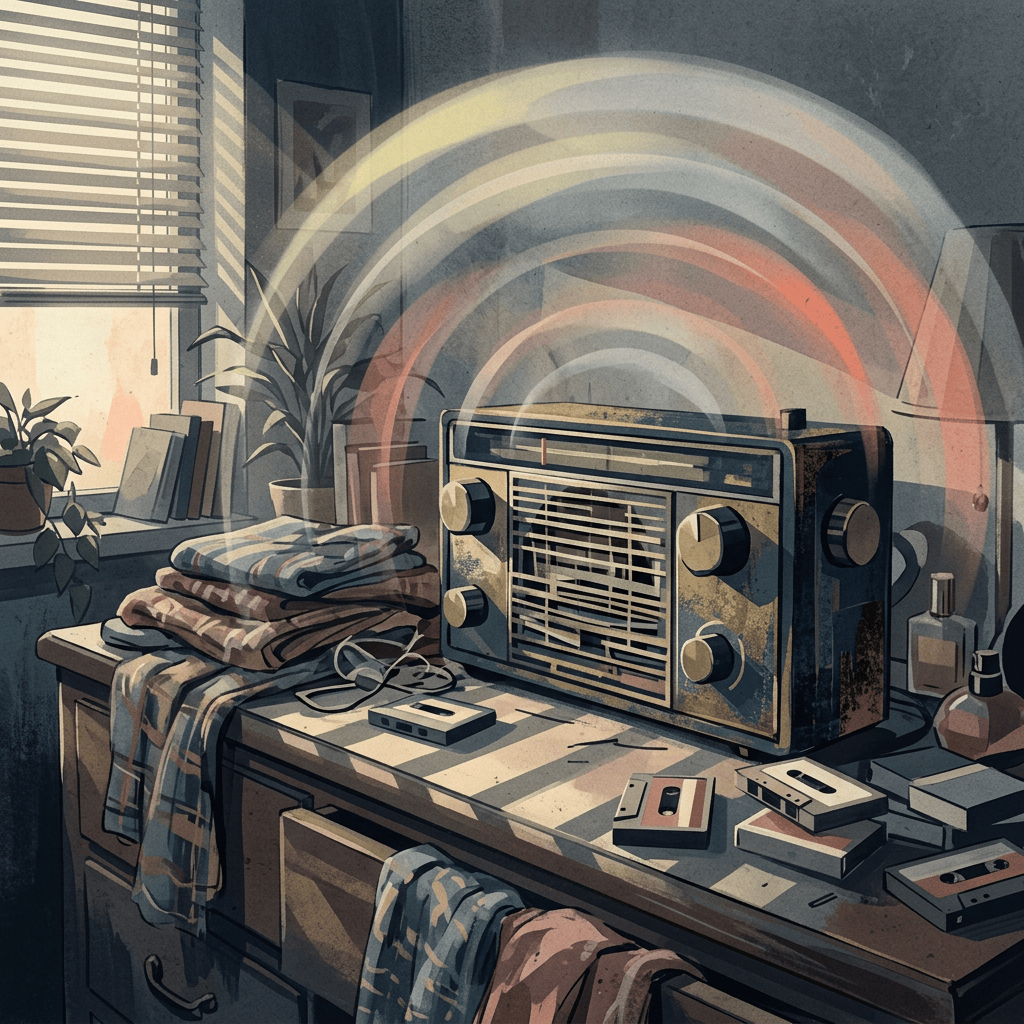
That jingle was the soundtrack of doom every August of my childhood. You couldn’t escape it. Radio, TV, store speakers — like they were trying to brainwash us into being happy about summer ending. I wasn’t fooled. I hated it. Hated the jingle, hated the reminder, hated the whole back‑to‑school circus.

Summer was freedom. Bare feet, scraped knees, long days that didn’t care what time it was. Then suddenly some cheery voice on TV starts singing about “better clothes,” like that was supposed to make me excited to go sit in a classroom again. Better clothes? Who cared. I wasn’t trying to impress anybody. I just wanted one more week of sun, one more night of staying out too late, one more morning where I didn’t have to drag myself out of bed.

I remember telling a good friend of mine once — I said, “I hated going back to school. I hated summer ending.”
She looked at me like I’d confessed to a crime.
“But I thought you were a good student?”
And I told her the truth: “I was a good student. I still hated it.”

People think being good at something means you enjoy it. Not true. I was good at school the way some people are good at shoveling snow — you do it because you have to, not because you love it. I could read, write, answer questions, get the grades. Fine. But the whole ritual of “back to school” felt like being marched back into captivity.

And that damn jingle didn’t help.
It was like a warning siren: Fun’s over, kid. Get your notebooks.
Even now, decades later, I can hear it clear as day. The bright, chirpy voices. The fake cheer. The promise of “better clothes” like that was supposed to make everything okay.

It never did.

Summer always ended too fast, and school always started too soon. And Robert Hall — with their bargain pants and their relentless advertising — made sure you knew exactly when your freedom was about to be taken away again.

So yeah. I hated hearing it.
I hated going back to school.
I hated summer ending.
And I still think that jingle was one of the most effective pieces of psychological warfare ever unleashed on American children.

Leave a comment

This site uses Akismet to reduce spam. Learn how your comment data is processed.

    Eleven Days in September

    A few thoughts here are hard for me to write, because they force me to relive some of the worst days of my life. I’m sharing them because maybe it helps the healing, and because it’s more than Mother Nature and her climatological shenanigans that make me hate September. I’ve never been a fan of the month anyway. And I know I’m not the only person who has been — or is — going through tough times. When you mix difficult life issues with a chemical imbalance called SAD (Seasonal Affective Disorder), life can become a Ulyssean train wreck of emotions, senses, and befuddled thinking.

    SAD is a mood disorder tied to seasonal changes, usually showing up as depression beginning in the fall and lasting through winter. It’s caused by a disturbance in the body’s circadian system. My condition is minor compared to what some people I know experience. I once worked with a woman who could cry at a funny joke — and she wasn’t pretending. And then there are the doubters who say things like: get over it; it’s not real; don’t let things get you down. This piece is for anyone who’s heard that too many times. I often think of James Joyce’s line: “Your battles inspired me — not the obvious material battles but those that were fought and won behind your forehead.”

    In June of 1997, summer — the season of good times and hope — shattered into a million heart‑piercing fragments. After a misdiagnosis that let her cancer grow unchecked, my wife finally learned the truth. By then, the prognosis was treatable but not curable. It would one day take her life.

    So we began living six months at a time. From one blood test and body scan to the next, we held our breath, never knowing if this time would be the last. We did that every six months for fourteen years.

    Jennifer began thirty radiation treatments in a row. The burns were third‑degree. She would lie curled on the floor outside the treatment room, in pain from the day before, waiting for the next round. I was always with her — holding her as tightly as I could, sometimes curled beside her on that cold hallway floor, trying desperately to absorb even a sliver of her agony.

    After radiation came two weeks of intensive chemotherapy. And then, almost a year later, as her body began to heal, she developed severe panic attacks. She couldn’t leave the house or be left alone. Once, I was gone for no more than fifteen minutes. When I returned, she was clinging to her chair, sweating, crying, begging me never to leave again.

    Jennifer was not a coward. She was strong. Brave. But the disease was killing her in ways no scan could measure. I had already quit my job in broadcasting. There would be other jobs — or not. I wanted to be home so she would never feel alone.

    By the end of 1997, we had at least put cancer in remission. With good doctors, counseling, and Jennifer’s relentless determination, she resumed what passed — at least to the outside world — as everyday life. Inside our home, we cocooned, believing that if we locked the world out, nothing could get in to harm us. The two of us were enough. And that’s how we lived — six months at a time, always together.

    I had my own ways of coping — music and writing. I learned to live not just one day at a time, but sometimes one minute at a time. I didn’t yet realize how deeply life was carving its marks into me.

    By the summer of 2009, traditional chemotherapy stopped working. Our six‑month reprieves ended with the doctor’s quiet words: “There is no more we can do to beat cancer back; it is spreading rapidly now.” I cried that day. But the worst day was still ahead. Suddenly, six months felt like a long time.

    One last treatment was available: a Phase 1 clinical trial. Jennifer agreed to try it. She said she knew the drugs probably wouldn’t save her life, but maybe someday they would save someone else. She joked that lab rats had better lives than she did.

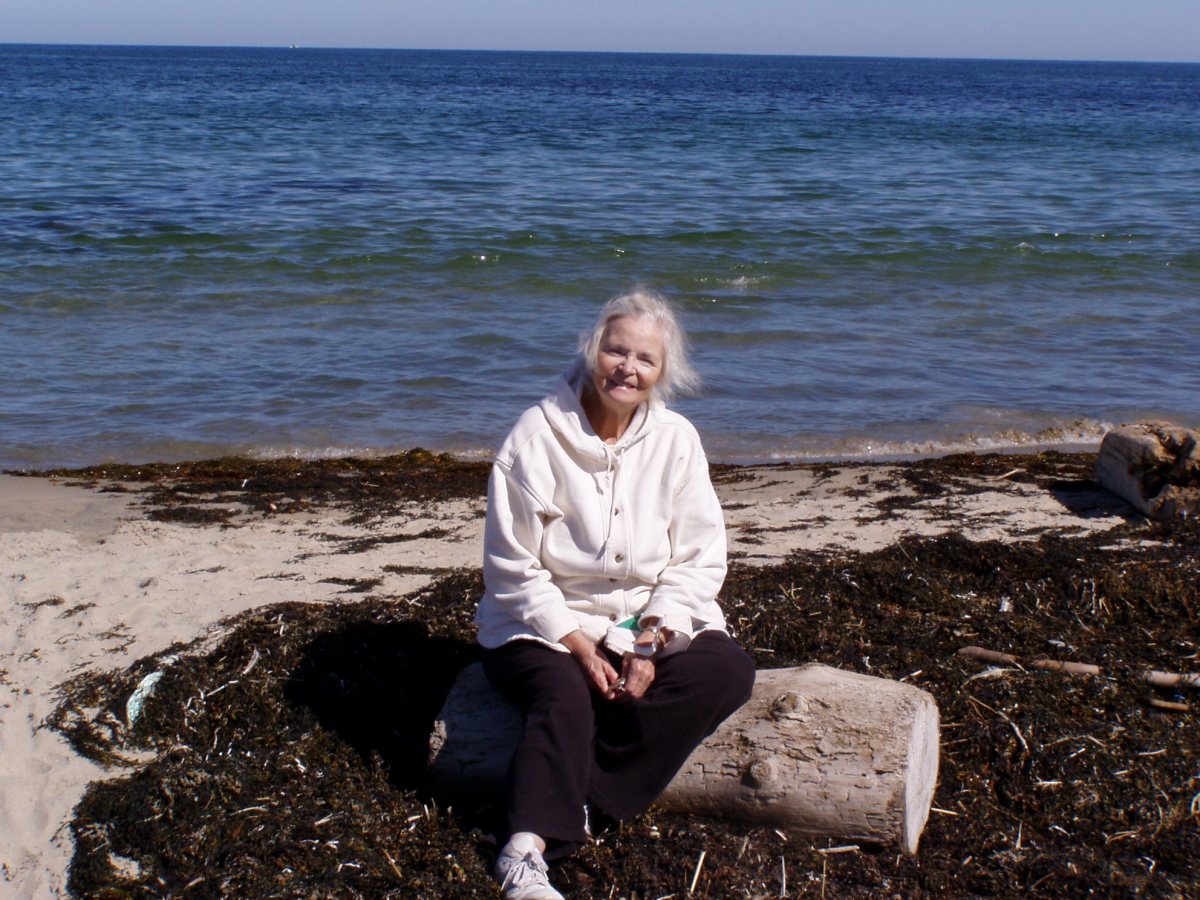
    Jennifer had always been grateful that chemo hadn’t taken her long, beautiful blond hair. But these new drugs were brutal. Her hair came out in clumps on her pillow. I watched her body change from the vibrant ocean swimmer she had been to someone frail and barely recognizable. The woman who could outwalk and outswim me now needed help to move from one room to the next. The end was closing in. This would be our last summer together.

    And this is where a question began — one I still carry today: What did Jennifer suffer quietly, never telling me?

    I know she hid things. Not because she didn’t trust me, but because she loved me. She curled her pain inward so I wouldn’t have to carry all of it with her. I think about the fears she must have swallowed whole. Not the obvious ones — not the fear of cancer or dying or treatments that burned her skin and hollowed her bones. Those she faced openly. Those she let me see.

    It’s the quieter fears I wonder about — the ones behind her eyes.

    Maybe she feared becoming a burden. Maybe she feared watching me watch her suffer. Maybe she feared losing herself long before she lost her life — the swimmer, the walker, the strong woman who once outpaced me on any beach. Maybe she feared the shrinking of her world, the panic that made the front door feel like a cliff’s edge. And maybe — though she never said it — she feared leaving me alone in a house that once echoed with two voices.

    There was pain she hid too. The physical pain, yes — the burns, the nausea, the exhaustion that made her bones feel hollow. But also the humiliation of losing independence, of needing help to move from one room to the next. She tried to stand straighter when I entered the room. She tried to smile when she was breaking.

    I wonder what thoughts she kept from me in those last months. Did she count her remaining days? Did she lie awake listening to her own breathing? Did she realize before I did that we would not grow old together?

    I will never know. Her silence wasn’t distance — it was devotion. She protected me from the full weight of her fear, even when she was too weak to lift her head. That was her last act of love.

    Sometimes I wish she hadn’t. Not because I needed to know, but because she shouldn’t have had to carry any of it alone. I would have held every fear, every pain, every trembling thought. I would have carried it all if she had let me.

    But she didn’t. She was always like that — even at the end. Protecting me quietly, suffering quietly, loving quietly.

    And so the question remains — the one I will carry for the rest of my life: What did she endure in silence so I wouldn’t have to?

    I’ll never know. And maybe that’s the shape love sometimes takes — the part that remains unknowable.

    On September 14th, 2011, the hospice nurse who visited us daily said, “Maybe it’s time for inpatient hospice care.” She tried to soften it with “it’s not always a one‑way trip,” but I knew it would be. And so did Jennifer. Sometimes I wake up at night trembling, tears flowing down my cheeks as I follow the red taillights of the ambulance taking her on her last road trip. I have traveled every mile of that trip in my mind, and always will.

    I spent the next eleven days in hospice, sleeping with my arms around my dying wife, waking to the sound of her breathing or gently pressing my lips to hers to check for air. And sometimes, I heard the sound that still echoes in my head at night — the death rattle.

    On the morning of September 25th at 7:28, I didn’t have to check. Something felt different. The room felt hollow. Jennifer’s soul was gone. She had quietly slipped away sometime in the night. I wondered if she whispered goodbye and I didn’t hear. Knowing her, she probably didn’t want to wake me. Seminary never taught me this: the human soul is real. And hers had left the room.

    The first three years after her death are a blur. I drank — sometimes fine scotch, sometimes whatever I could afford. I wrote poems deep into the night and listened to music until morning. A neighbor joked that I was channeling Edgar Allan Poe. Maybe I was. My doctor prescribed tranquilizers, antidepressants, and sleeping pills. A shrink told me I had PTSD. I snapped: “You’re nuts. PTSD? I haven’t been in a war.” They explained that I had been in a fourteen‑year battle against an enemy I couldn’t see — and that I lost the one person I couldn’t bear to lose.

    I stopped the pills nine years ago. I stopped drinking ten years ago this December. I understand now: the dreams and flashbacks are part of a condition I’ll likely carry for life. And September will always be the hardest.

    My first major break — the first time I truly lost my grip — was when a little white cat named Chloe died. The cat Jennifer had loved so much. The last living, touchable thing I had of her. The day I lost Chloe, I melted down. I nearly wrecked the exam room. Two friends explained to the staff what was happening, and they kindly said, “Let him go. We’ll clean up later.” Chloe’s body became Jennifer’s. Just like that morning in hospice when I had to be pulled away from my wife.

    The most recent time was a few years ago, when Jennifer’s sister Gayle died. No one knows how important Gayle was to me. But in short: if there had never been a Gayle, there would have never been a Jennifer.

    Every day, I try to be happy. I made a poster I look at each morning: “The dream lives; you were her dream; be happy.” I was loved. Deeply. Fiercely. And she would want me to be happy. I try. I really do. But then September comes, and the battle intensifies.

    Still, I try to be as brave as she was — the woman who curled up on a hospital floor and still found the strength to fight. The woman who joined Phase 1 trials not only for herself, but for someone she’d never meet. She wanted us to grow old together. She wanted me to be happy.

    But damn you, September. Your fall beauty hides your cruelty — the short days, long shadows, lonely nights, and memories that never fade.

    I’ve survived fifteen Septembers without her. I will survive this one. And the next. Because carrying the weight of those years means I’m still carrying her.

    And I know I’m not the only one who has traveled this road. Grief has a thousand faces, and none of them walk alone. I hope that by writing this — by laying out the bumps, the breaks, the nights that nearly swallowed me — it might help someone else get over their own rough patches and keep on keeping on.

    I know if I can, they can.

    Leave a comment

    This site uses Akismet to reduce spam. Learn how your comment data is processed.

    When We Happened.


    I wrote this while remembering how ordinary moments, a laugh, a glance, a shared silence—can feel sacred once we know they will not return. It is not a poem about loss, but about presence: the way two lives can briefly align, then drift apart while still carrying the echo.

    Once upon a time
    as the story is told
    We happened,
    knowing our love
    would never grow old.

    No soft‑spoken whispers,
    just cries of longing,
    taking each other by storm,
    for once, feeling like belonging.
    In all our desperate cries
    of yearning

    We knew our time
    would not last for long,
    for like the summer’s burning
    One would soon be gone.

    We threw off the guides.
    and let go the tether,
    making the most
    of our summers together.

    This began as a memory of one woman, but it became something larger — a reflection on all the women who, like me, were searching for a place to belong, even if only for a short while. Some loves arrive when they shouldn’t, some fade before they can settle, yet each leaves a mark that time can’t erase. We happened once, and maybe that was enough — a moment that still burns like summer long after the season has gone.

    Leave a comment

    This site uses Akismet to reduce spam. Learn how your comment data is processed.

      Rating: 1 out of 5.

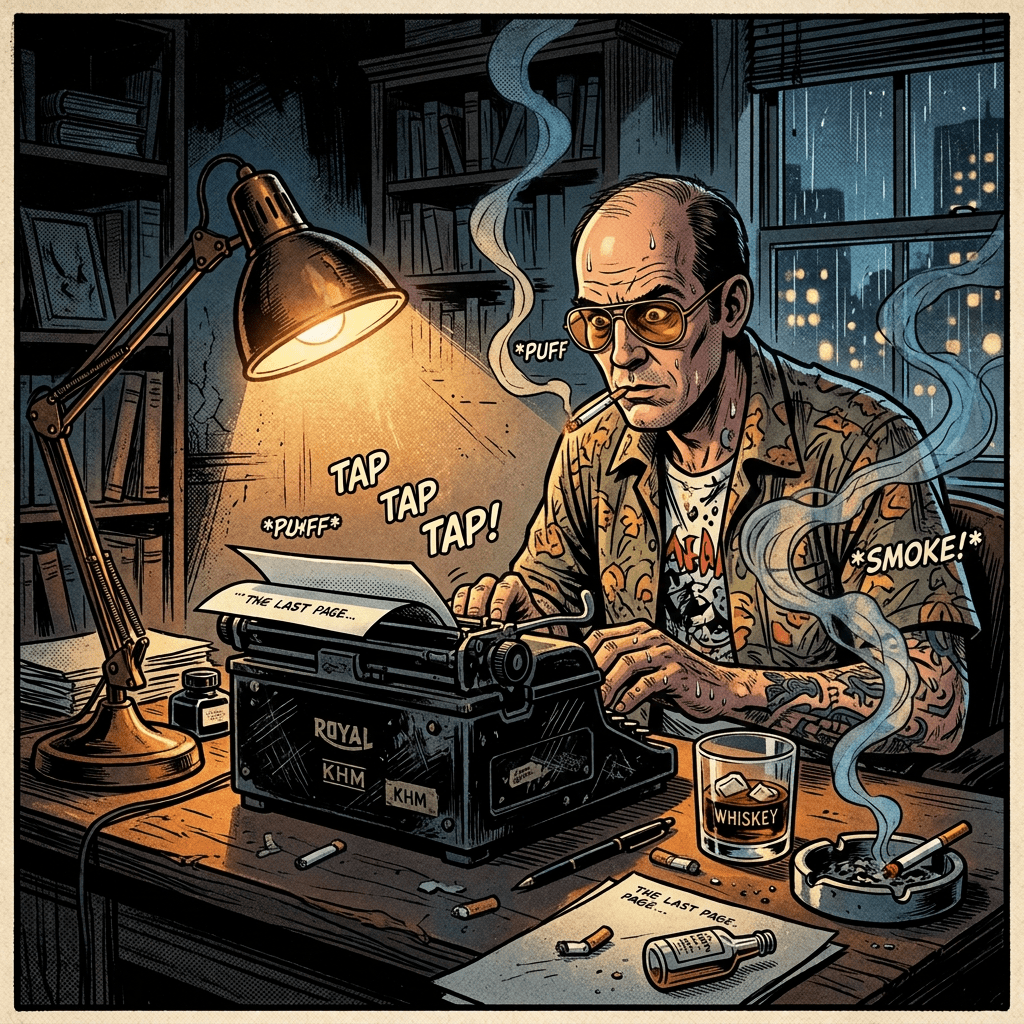
      Hunter S. Thompson

      Today is the birthday of Hunter S. Thompson, born in Louisville, Kentucky, 1937 — and I wake up feeling like the sky’s got a little extra static in it. Like the day itself is leaning forward, waiting for somebody to do something reckless and honest.

      There’s a certain charge in the air when you think about Thompson. Not the Hollywood cartoon of him — the real man, the one who wrote like he had a live wire jammed straight into his spine. The one who understood that America wasn’t a postcard, it was a fever dream, and the only way to tell the truth about it was to dive in headfirst and come up swinging.

      I think about him the way I think about a storm rolling over the harbor — that low, electric rumble, the kind that makes you stand a little straighter because you know something’s about to break loose. He wasn’t tidy. He wasn’t polite. He didn’t sand down the edges. He was the edge.

      Louisville boy. Southern heat in his blood. A kid who saw early that the “official version” of anything was usually the biggest lie in the room. So he made his own version — louder, stranger, funnier, truer. He wrote like someone who refused to pretend the country wasn’t half‑mad already.

      And maybe that’s why he still hits me so hard.
      Because he reminds me that the world doesn’t need more polite little sentences. It needs people willing to say what they actually see. It needs voices that don’t flinch.

      On his birthday, I picture him barreling down some Kentucky back road in a beat‑up convertible, sunglasses on, hair flying, muttering about Nixon or the Derby or whatever fresh American absurdity had caught his attention. And he’s laughing — that cracked, dangerous laugh — because he knew the joke was always on the people who thought they were in charge.

      Maybe that’s the lesson today.
      Live a little louder.
      Tell the truth even when it’s ugly.
      Write the thing that scares you.
      Don’t sand down your voice to make anybody comfortable.

      Hunter S. Thompson didn’t just write about America — he wrestled it, bit it, spit it out, and handed us the bones.

      Happy birthday, Hunter.
      The harbor feels rowdier today, and I’m not fighting it.

      Leave a comment

      This site uses Akismet to reduce spam. Learn how your comment data is processed.

      July 16th, 1945, The Big Boom and Me

      On this day back in ’45 — 5:29 and 45 seconds in the damn morning — the desert out in Alamogordo lit up like somebody flipped on a second sun just to see what kind of trouble it could make. A bunch of scientists stood around in welder’s goggles, slathering on suntan lotion like they were prepping for a day at Revere Beach instead of kicking off the nuclear age.

      Enrico Fermi, cool as a guy waiting for the T that’s already late, took bets on whether they’d ignite just New Mexico or the whole planet. Real casual end‑of‑the‑world office pool.

      Then the thing goes off — BOOM — sky goes white, sand melts into this ghostly green radioactive glass, like the desert tried to make its own cursed souvenir.

      Ken Bainbridge, Harvard physicist running the whole Manhattan Project circus, turns to Oppenheimer — the man who’d spend the rest of his life haunted by the glow — and drops the line only someone with a New England soul could deliver clean: “We are all sons of bitches now.”

      Weeks later, August 6th and 9th, Hiroshima and Nagasaki were leveled — the only time nuclear weapons have ever been used in war. A permanent scar on humanity, no matter how you slice it.

      Bainbridge spent the rest of his life trying to undo the monster he helped midwife into existence.

      And about a year after all that, I boomed onto the planet myself — born into a prefab little government town called Oak Ridge, where the fences hummed, the jet fighters buzzed overhead, and every entrance had a guard who looked like he’d seen too much. I spent my first ten years around atomic plants, security checkpoints, and the strange quiet of a place built to help make the damn thing in the first place.

      Thirty years later, I was getting myself arrested trying to stop nuclear proliferation — life’s funny like that, it circles back with a badge and a pair of handcuffs.

      Leave a comment

      This site uses Akismet to reduce spam. Learn how your comment data is processed.

      White Hall Station

      Sometimes a chapter needs another walk around the block, and this one did. I went back, rewrote it, and finally gave a little mouse named Archibald MacLeash the explanation he deserved. If you’ve read the book, this fills in the cracks. If you haven’t, well—welcome to the neighborhood.

      The night before my induction, I couldn’t sleep. I lay in bed staring at the ceiling, looking for answers. My heart pounded like I’d just run the 40‑yard dash. A drumbeat I wasn’t sure I could march to — too fast, too loud, too soft, and definitely its own rhythm. But I knew exactly where I did not want to march.

      I tried everything: counting breaths, replaying old football games, thinking of my girlfriend, even astral projection — maybe I could end up on some tropical island, safe and away. I wanted to be anywhere but, in that room, in that bed, wondering where I might be tomorrow night. But dread snuck in under the door and settled in my brain. I wasn’t afraid of dying. I was afraid of disappearing — of becoming a number, a uniform, a cog in a machine I didn’t believe in.

      The draft lottery — America’s twisted game show of fate — wouldn’t begin until 1969. But in 1964, the draft was still run by local boards, deferments reviewed by hand. At eighteen, I burned my college deferment card, thinking I was making a statement. I wrote letters to President Johnson and to my Staten Island draft board, asking to be reclassified 1‑A. You can’t refuse what you haven’t been offered. And I was tired of hiding behind loopholes, even if I hadn’t meant to hide in the first place.

      By ’69, they granted my wish. I was 1‑A — fit for service, next in line to toe the line, or not. Five years of business schools and seminaries had led me here. From the gridiron to leg irons.

      And then the morning came.

      I was up by 6 a.m. — not that I’d slept. I left a note for my mother saying I’d gone to visit friends. I wondered how long I’d really be gone. I took the bus to the Staten Island Ferry, crossed the Hudson, and walked the two longest blocks of my life to Whitehall Station. Even writing about it now, I can feel that god‑awful sickness in my stomach. I can’t do this.

      Fight or flight? Mine was freeze and sit. No exit. Just a heart pounding like a drumline on speed. I was about to jump off a cliff and couldn’t see the bottom. Compared to this, the Coney Island Parachute Jump was a kiddie ride.

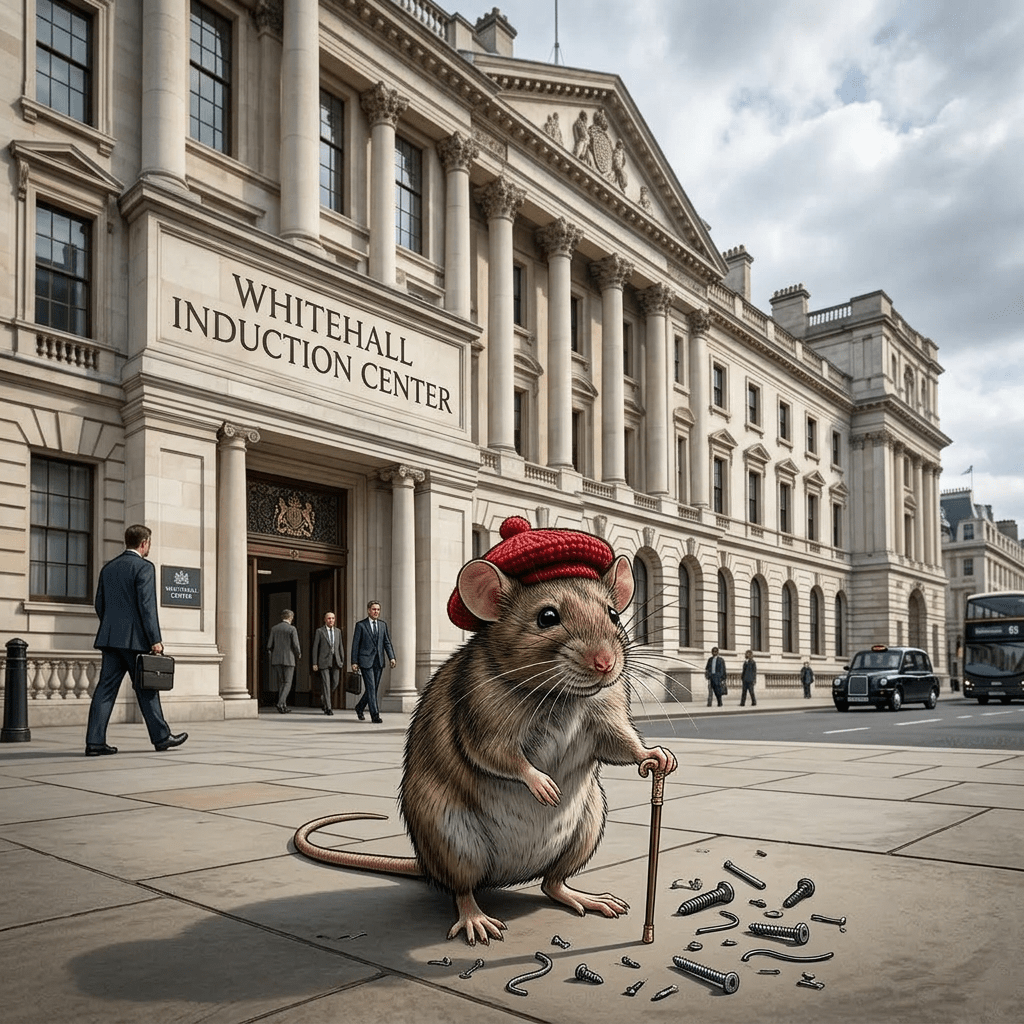
      Whitehall Station sat in lower Manhattan like a bureaucratic bunker — the place where boys became soldiers or tried not to. It shut down in 1972, two days before my birthday, while I was in Danbury Federal Correctional Institution. I’d wanted it torn down. I’d done my best to see that happen.

      As I climbed the steps, I saw Mr. Harold Jones waiting outside. My eighth‑grade science teacher — but more than that. Over the years, he’d become my confidant, the one adult who understood what I was feeling. He made science feel like storytelling, helped along by a fictional mouse named Archibald MacLeish who lived in his coat closet. I never saw him, but I saw him. Still do.

      Mr. Jones said he named the mouse Archibald MacLeish after the poet — “because even a mouse can carry big ideas,” he told me once, tapping his temple like he was winding up a thought. MacLeish wrote about truth, about standing your ground when the world tries to bend you, about the kind of dissent that isn’t loud or showy but stubborn and necessary. He believed democracy wasn’t something you admired from a distance — it was something you practiced, even when it cost you. Jones figured a mouse could teach eighth‑graders more about courage and conscience than any textbook. The beret, the cane, the red bandana — that was all me. That’s how I pictured him: a tiny philosopher with a rebel’s wardrobe, the kind of creature who’d whisper, Don’t let them turn you into something you’re not. Archibald showed up whenever I needed him — not as a hallucination, not as a joke, but as a reminder that dissent can be quiet, steady, and small, and still shake the world.

      Mr. Jones didn’t say much that morning. He didn’t have to. He told me to stay who I was. Said it was something to be proud of.

      Inside, the induction ceremony began. The room smelled of sweat. The air was thick with the breath of boys pretending not to shake. The recruiter’s voice was flat, rehearsed, like he’d stopped listening years ago.

      “Please repeat after me…”

      “I do solemnly swear…”

      Repeat. Repeat? Hell, I could barely breathe.

      “…that I will bear true faith…”

      And suddenly I wasn’t in Whitehall anymore. I was back on the football field, hearing my coach yell, “Go in hell‑bent for leather, Little Sandy!” My dad was Big Sandy. The coach used that nickname to rile me up. Hell‑bent for leather — without fear.

      My heart picked up the chant until it drowned out everything else.

      Then came the words: Step forward.

      I sat down.

      The recruiter blinked, confused. Thought I was sick. I stood, breathed, sat again.

      “I’m not moving,” I said, though I wasn’t sure I could even if I wanted to.

      The sergeant’s face turned fire‑engine red. My heart was a jackhammer. I was frozen in defiance — or fear. Maybe both. I prayed he wouldn’t hit me. If he did, I wasn’t sure I could stop myself from hitting back. I may be a peacenik, but I know myself. Anger lives in me too. If I struck him, I wouldn’t be going to jail for trying to end a war, but for starting one.

      Two MPs grabbed me like a sack of potatoes and hauled me to a holding cell. I expected that part. I was prepared. No blows were thrown. An Army lawyer came in to make sure I knew what I was doing. I asked if he knew what he was doing — and what he was part of. He accepted my yes and left.

      Then came the police car, the ride to Staten Island, and my first night in jail. Five miles from the gridiron. A lifetime away.

      As they carried me out of Whitehall, I refused to walk — part of my plan for total non‑cooperation. Mr. Jones stood on the grimy sidewalk. He smiled. Gave me a thumbs‑up. I flashed him a peace sign from between a cop’s holster and his arm.

      And behind him — I swear — I saw Archibald MacLeish strutting down the sidewalk, beret tilted, cane tapping a rhythm only I could hear. He paused near the induction center door, tipped his hat, and whispered, “Courage isn’t loud. It’s the quiet refusal.” Then he vanished into the crowd.

      Mr. Jones arranged to bail me out, though I was released on my own recognizance. I spent the rest of the day at his home — resting, recovering, trying to make sense of what had just happened. And what would happen next. To my mother, I was simply visiting Mr. Jones. I was old enough to say, “Don’t call my parents,” and the authorities obliged.

      A trial date was set for April. The weeks leading up to it blurred into paperwork, legal advice, friends’ advice, and panic. I walked Manhattan like I always had, but now I memorized the cracks in the sidewalk, the rhythm of subway trains, the smell of roasted peanuts from corner carts — anything to anchor me.

      Oddly, I’d always found the Financial District peaceful on a Sunday morning. Wall Street’s insanity gave way to silence. I walked it a few times in those last days. And Times Square — the lights of Broadway weren’t going to shine on me, but they still shine inside my memory. So do the beaches of Staten Island.

      I didn’t know what I was looking for. Only that it wasn’t in New York anymore.

      And so the city’s noise faded behind me. The cracks in the sidewalks, the drumbeat of the subway, even Broadway’s lights became part of a memory I carried but could no longer live inside.

      What I needed was silence. Steadiness. A place where the ground didn’t demand allegiance.

      Somewhere in the back of my mind, I could still hear Archibald’s cane tapping — that quiet rhythm he kept for me when I couldn’t keep one for myself. He’d been at Whitehall, and he’d be on the mountain too. Courage travels light.

      Emily’s mountain was waiting. Quiet, immovable, patient — just like she was — offering refuge without question.

      Leave a comment

      This site uses Akismet to reduce spam. Learn how your comment data is processed.

      Mother’s Day

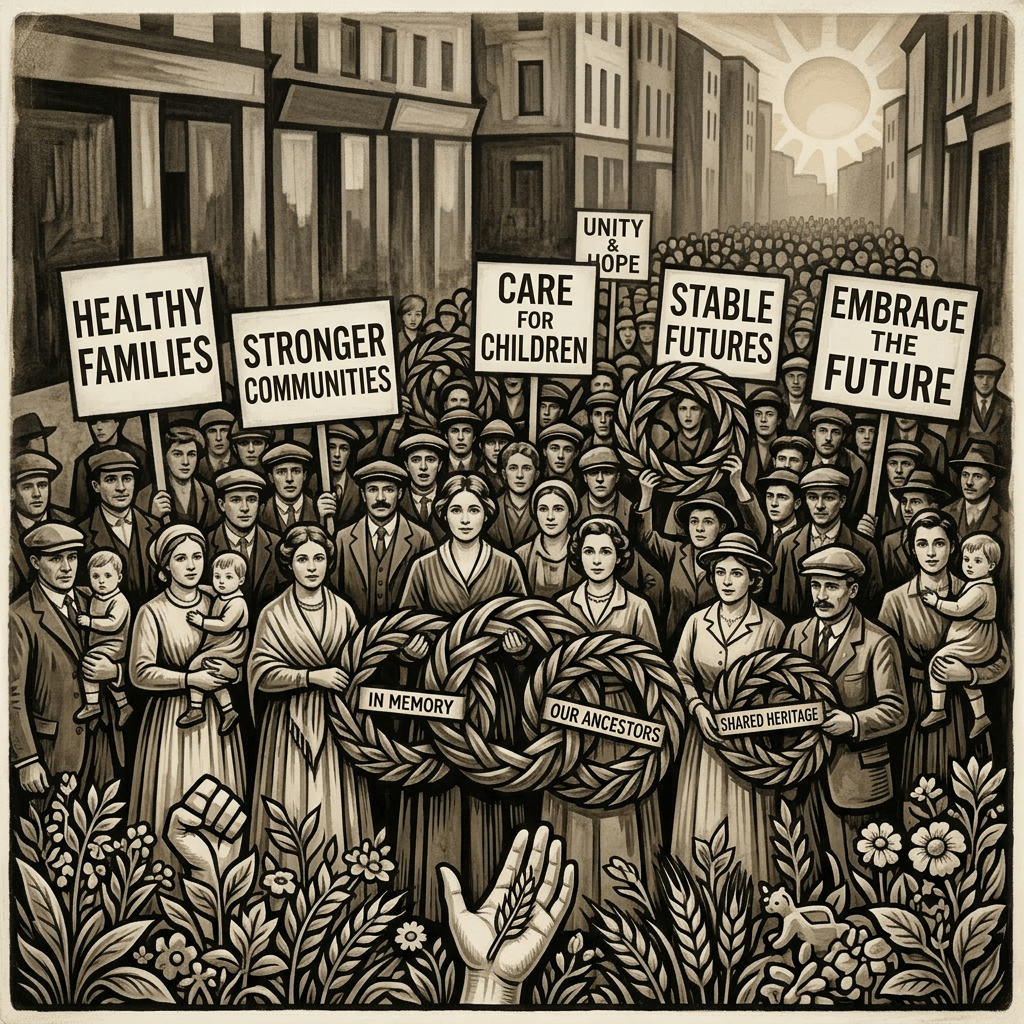
      Mother’s Day didn’t start with flowers, cards, or brunch. Its earliest roots in the United States came from women who were trying to hold their communities together in the face of disease, war, and political division.

      Ann Reeves Jarvis, a West Virginia woman who lived through the mid‑1800s, spent her life organizing “Mothers’ Work Clubs” to fight outbreaks of measles, typhoid, and diphtheria in Appalachian towns. These clubs inspected milk, taught sanitation, and even quarantined homes when needed. During the Civil War, she insisted her groups care for both Union and Confederate soldiers, and after the war she organized a Mother’s Friendship Day in 1868 to help reunite divided families.

      Around the same time, Julia Ward Howe — abolitionist, suffragist, and author of The Battle Hymn of the Republic — issued her 1870 Mother’s Day Proclamation, calling for women to gather in the name of peace after witnessing the devastation of the Civil War and the Franco‑Prussian War. She envisioned an international congress of women dedicated to preventing war. A few communities observed her proposed “Mother’s Day for Peace,” but it didn’t take hold nationally.

      The holiday as we know it today came from Anna Jarvis, Ann Jarvis’s daughter. After her mother’s death, she campaigned for a day to honor the sacrifices and quiet labor of mothers. In 1908, she held the first official Mother’s Day service at her mother’s church in Grafton, West Virginia. Within five years, nearly every state observed it, and in 1914, President Woodrow Wilson declared Mother’s Day a national holiday, celebrated on the second Sunday in May.

      Ironically, Anna Jarvis spent the rest of her life fighting the commercialization of the holiday she created — protesting florists, card companies, and anyone who turned her solemn tribute into a business opportunity.

      Leave a comment

      This site uses Akismet to reduce spam. Learn how your comment data is processed.

      SUBSCRIPTIONS ARE ALWAYS FREE

      May Day.

      May Day shows up every year like an old friend who never knocks, just walks in and expects you to know why they’re there. It’s a day with more identities than most of us manage in a lifetime — workers’ marches, ancient bonfires, maypoles, the whole spring‑is‑coming‑whether-you’re-ready-or-not business. A strange mix of protest and petals.

      Long before it was a date on a union calendar, it was the halfway mark between the equinox and the solstice, a reminder that the world keeps tilting toward the light even when we’re not paying attention. People lit fires to chase off whatever darkness they believed in. Maybe they weren’t wrong. We still carry our own shadows around, and sometimes a little symbolic fire wouldn’t hurt.

      In the labor world, May Day is the day people stood up and said enough — enough hours, enough bosses squeezing the last drop out of the last worker. It’s a day built on the idea that ordinary people deserve a life, not just a living. That message hasn’t aged a bit.

      And here we are, another May 1st. No bonfires on the beach, no marching bands down the street, just the quiet truth that the year is moving whether we move with it or not. Spring is trying its best. The light hangs around a little longer each night. Even the air feels like it’s leaning forward.

      Maybe that’s the real heart of May Day: the nudge. The reminder. The gentle shove from the universe saying, Get on with it. Dan would’ve liked that part.

      So here’s to May Day — the ancient, the political, the personal. A day that asks nothing more than that we notice the world turning and decide, in whatever small way we can, to turn with it.

      Leave a comment

      This site uses Akismet to reduce spam. Learn how your comment data is processed.

      NO CHARGE TO SUBSCRIBE

      A Message of Hope — A story about friendship, courage, and the small ways hope still finds us.

      I have a friend I’ve known since 1980, someone who used to listen to my overnight radio show when she was only sixteen. She would call me in the middle of the night, and we’d talk. I remember wishing her a happy eighteenth birthday at midnight. We met many years later in a grocery store when she was in her thirties, just before Halloween, at a time when my personal life was going through struggles as my wife battled cancer. I hadn’t seen her standing there, but I guess she remembered my voice, and I heard her say with a question mark in her voice, Sanders? And I then remember the voice that had kept me company through a phone so long ago. I like to tell her it was over the Candy Corn aisle, but she denies that memory. Still, I’ve always liked the idea that hope can show up in the corniest places. We’ve remained friends ever since. And before you get the wrong idea and think you know where this is going, here’s where it takes a sharp left.

      My friend has been married and has a daughter and a granddaughter. I met her daughter once, when I think she was around eight years old—a beautiful young child. That daughter is now older than her mother was when she used to call that lonely late-night DJ. My friend comes from a religious upbringing, and her daughter, through her own choices, has been pursuing a life in the ministry as a student at a local school.

      Here comes that left turn again. A few days ago, I got a message from my friend saying her daughter was preparing to go to Minneapolis, Minnesota, and that she was both proud and petrified. I told her I could understand both. Of course, we all know the horror unfolding in the city.

      My friend is well aware of my resistance to the Vietnam War, my time in prison for refusing induction, my involvement with Phil and Dan Berrigan, as well as my own stay in seminary and a basic life of resistance to oppression in all its ugly forms. And I know that’s one reason she chose to tell me about her daughter’s upcoming adventure.

      So why am I telling you this story? Because it’s a story of hope. In this world where ugliness is all around us—where women can be shot as their last words still echo in our minds, “I’m not mad at you, dude”; where our president tries to conquer the world and tear down democracy one White House brick at a time; where someone I’ve known and worked with can try to justify what ICE is doing and justify that shooting—when I’m at my darkest and it feels like everyone has lost all sense of morality and right or wrong… out of nowhere, I got a message of hope.

      This beautiful young child I met so many years ago is heading into the belly of the beast to try to influence and bear witness to the truth. And I’m sharing this with you because I have friends who feel as scared and disappointed as I have—friends who, in their own ways, have tried to bring truth and hope into the world, who want things to change and get better, and who have felt disappointed, hopeless, and lost as things just keep getting worse.

      And maybe part of why this hit me so hard is because this isn’t just anyone’s daughter. This is the daughter of a woman who has been woven through almost half my life—a friend who once called a lonely late-night DJ at sixteen, who somehow stayed woven through the fabric of my life through decades of change, disappointment, and small miracles. I care what happens to her. I care what happens to her daughter. And knowing that this young woman is stepping into the world with courage, conviction, and a sense of calling… well, that felt like a comforting hand on my shoulder in a dark room.

      Hope doesn’t always arrive with trumpets. Sometimes it shows up as a message from an old friend, telling you her daughter is heading into the storm because she believes in something better. She leaves on Wednesday. And for a moment—just long enough—you remember that belief is still possible, and you feel yourself steady a bit. I hope this story offers the same small steadiness to anyone who’s felt their strength wavering.

      Leave a comment

      This site uses Akismet to reduce spam. Learn how your comment data is processed.

      Subscribing to my website is free.

      Matches and Money: A Sanctuary Strategy for Resistance

      Tomorrow, Saturday, October 18th, is the nationwide “No Kings March”. And I’ve been beating myself silly because this time I’ve decided that I can’t go—not that I don’t want to, but that I can’t. The primary reason is that my back has been so bad this week, I’ve spent most of my time in what’s called the non-violent prone position. In this case, that means flat on my bed.

      And while I was lying there, writing the great American resistance novel on my ceiling, I kept thinking about an article I’d just read by Brian Huba published in”The Hill” today, October 17th. He was talking about another form of resistance—one I’ve always believed in. The kind that hits them where it hurts: the pocketbook.

      Now, I’m not pretending that my low participation in the general ebb and flow of the almighty buying power of the dollar will make much difference. And I’m not saying it can replace the power of demonstration—of people gathering to make our voices heard and to send a signal, both to each other and to the Gestapo in DC: ‘We are not alone.’

      But I’ve been thinking about pressure. Not the kind that crushes, but the kind that carves. The type that reshapes stone into sanctuary. And lately, I’ve come to believe that the most potent pressure we can apply—politically, spiritually, economically—is a two-part ritual: matches and money.

      Let me explain.

      We’ve been taught to march. To chant. To gather in the streets with cardboard signs and aching knees. And yes, there’s power in that, and there’s power in the crowd. But maybe the real revolution isn’t in the march, but in the match? Not the kind that burns buildings. The kind that lights candles. That ignites awareness. That says: ‘I see what you’re doing, and I will not fund it.’

      Because the truth is: the system doesn’t fear our voices. It loves our wallets, our money, and it fears losing them. It fears our cancellations, our divestments, our refusal to play along. When we cancel a subscription, we’re not just saving $14.99—we’re pulling a thread from the tapestry of complicity. When we stop feeding the beast, the beast gets hungry.

      Brian Huba said it plainly: maybe the most radical thing we can do right now isn’t to protest in the streets, but to unsubscribe, to stop paying for platforms that profit from our pain. To match our outrage with economic consequences.

      So, I’m lighting matches. Quiet ones. Symbolic ones. I’m canceling, redirecting, reimagining. I’m spending like a poet—every dollar a stanza, every boycott a verse. I’m building a sanctuary where resistance isn’t just loud, it’s strategic.

      Because when matches meet money, we don’t just protest. We pressure. We don’t just speak. We shift.

      And yes—I will march again.

      But first, I get the MRI.

      First, I listen to the good doctors—the ones I trust to tell me how to walk without pain, how to stand without flinching.

      Because resistance isn’t just about showing up. It’s about showing up whole.

      And when I do march again, and I will return, I’ll be carrying my flag and my banners, not just as protest, but as testimony.

      Proof that healing is part of the revolution, too.

      —Dan

      Rambling Harbor, where even the receipts are revolutionary

      Leave a comment

      This site uses Akismet to reduce spam. Learn how your comment data is processed.

      Introduction

      I never meant to write a war story. I meant to live a life. Not the kind that ends up in textbooks or on movie screens, but the kind shaped by quiet choices—by sitting down when others stepped forward, by saying no when silence was easier. This book isn’t about the Vietnam War or the peace movement. Those stories already fill libraries. It’s not about my years behind the mic as a radio broadcaster—that came later. Nor is it about the loud ones: the noisemakers, the celebrities, the politicians, or the filmmakers chasing spotlight and legacy.

      This book is about quiet defiance. About extraordinary moments tucked inside an otherwise ordinary life. Mine.

      During the Vietnam War era, roughly 570,000 young men were labeled draft offenders. Of those, 210,000 were formally charged. Just 8,750 were convicted. And only 3,250 were jailed. Less than one percent. This book is about that final group—the ones history rarely names, Hollywood never casts, and textbooks barely mention. It’s about my friend Kevin, who said, when we reconnected after Daniel Berrigan’s passing in 2016, “Dan, we didn’t go after the government; they came after us. We just wanted to live our lives.” Kevin was right. We wanted to live, and we wanted the boys sent to fight in a war we didn’t choose to live also.

      I’m proud to say I was one of the 3,250 who said no. We said it quietly, but loud enough to keep our souls intact while they locked up our bodies. I tell only my part of the story, but I know I’m not so different from the other 3,249. Maybe I can make a little noise for all of us.

      I once asked my father what happens when we die. We were walking a dirt road in the Deep South, the heat thick as molasses. I was nine. My dad, a scientist in spirit and mind, told me energy can’t be created or destroyed—it only changes form. Since the human body is mostly energy, it too must become something else. That left me with the unsettling idea that I might not become a mighty oak, but a daffodil on the side of a hill. Maybe my life has been a long attempt to be the oak, not the daffodil. But the jury’s still out.

      I never planned to oppose a war, and I certainly never intended to write a book. If I had, maybe I would’ve kept a diary—or at least some decent notes. What few I scribbled on barroom napkins or in stray notebooks are long gone, buried in some landfill. Hopefully, raising a mighty oak. But I do remember a few things.

      I’ll tell you about growing up on Staten Island—football, beaches, music, and radio. A middle-class kid with few worldly cares and a head full of books. My first dream was to be a radio star. That dream shifted when friends started coming home in body bags—boys who could run, jump, and catch with the best of us, now still forever.

      I’ll try to explain how a painfully shy kid found the courage to sit down instead of stepping forward at Whitehall Station—the military induction center in New York City where young men were processed for the draft. The routine was simple: They underwent a written aptitude test and a physical examination to determine fitness for service.

      Based on these evaluations, they were classified (e.g., 1-A for fit, 4-F for unfit). When your name was called, you stepped forward to begin your journey into military service. But I didn’t. I sat down. I don’t know if fear buckled my knees or if I’d read somewhere that sitting was the perfect nonviolent act. Maybe it was both. Either way, that quiet refusal marked the beginning of my resistance.

      I’ll take you from New York to the mountains of West Virginia, to a woman named Emily who taught me how to live off the land. Then, to a woman older than I was, with three children, about her, and the court fight for custody of her kids and one of mine. I’ll tell you about my arrest in Hollywood and the cross-country ride back to New York, escorted by U.S. marshals. And the old judge who nearly begged me to take one of his get-out-of-jail-free cards.

      I’ll talk about meeting Daniel and Phillip Berrigan in prison. And how resistance didn’t end behind bars, as shown by my trips to solitary confinement for refusing to walk the prison lines. I’ll tell you about fellow inmates like Howard Hunt, G. Gordon Liddy, and Clifford Irving—and the handful of other draft and war resisters. I’ll finish with life after prison.

      3,249 other stories may or may not be told. This one is mine.

      Dan Sanders

      July 2025

      Leave a comment

      This site uses Akismet to reduce spam. Learn how your comment data is processed.

      Rating: 1 out of 5.

      Chapter 1: Ties, Offices, and Draft Cards

      I need to revisit something I said in the introduction. I called my life ordinary. That was a misfire. Looking back, it’s been anything but. What I should’ve said is that there were ordinary moments scattered through an otherwise extraordinary life. I grew up alongside kids who mapped out their futures with surgical precision—future CEOs, most likely. Me? I had a plan too, though it felt more like a whispered plea to the universe: Please, God, don’t let my life be beige. No cubicle coma. No death by fluorescent light. I’ll tell you soon how close I came to that fate—until I tossed my tie into the Hudson River like a message in a bottle. Still the best decision I ever made.

      As I started writing about my life, one emotion kept erupting like a brainquake—volcanic, relentless. It left me slack-jawed, arms limp, staring at the screen like I’d just seen a ghost. If you’ve ever tried writing in that state, you know it’s like trying to type underwater. And that emotion? The gut-punch realization that, holy hell, this is ancient history. Am I really that old? Who was she? Who was he? Did I actually do that? A Ulyssean train wreck of memory and feeling, barreling through time.

      From the moment we’re born, we’re shaped by sound, sight, touch, and experience.

      I was sixteen in 1962 when the Cuban Missile Crisis hit—a high-stakes staring contest between the U.S. and the Soviet Union, triggered by Soviet missiles in Cuba. It was the closest we ever came to turning the Cold War into a full-blown nuclear nightmare. But in my corner of Staten Island, the “wonder years” of the 1950s still lingered like the scent of summer on a football jersey. My friends and I spent our days at the beach, dreaming of October and kickoff season. But that October was different. For thirteen days, the whole country held its breath. I did too, hoping the football field would still be there when morning came.

      My dad had worked on the Manhattan Project. He didn’t talk much about it, but I knew he carried the weight. He once said the first bomb should’ve been dropped on Mt. Fuji as a warning, not on Hiroshima. That act, he believed, was revenge—rage disguised as strategy. And now, just seventeen years later, we were back on the brink, flirting with annihilation.

      Three books helped shape me in those early years. First was Elie Wiesel’s Night—a raw, haunting account of surviving Auschwitz and Buchenwald. Years later, I’d sit at the dinner table with a Tufts professor who’d lived through it. His stories etched themselves into my memory like carvings in stone. The second was Black Like Me, where John Howard Griffin darkened his skin and walked through the segregated South to see what it meant to be Black in America. I couldn’t have known then that I’d one day I’d call Phil Berrigan—a white priest who rode with the Freedom Riders—a friend. The third was Fail-Safe, serialized during the Cuban Missile Crisis itself. It imagined a nuclear war sparked by a glitch. Fiction, yes—but terrifyingly plausible.

      Heavy reading for a sixteen-year-old. I don’t know what other kids were reading, but those books rewired my brain. The wonder years ended in 1962. I graduated from high school in ’64, skipped the ceremony, and refused the yearbook photo. Some of my teammates had gone off to war. Some came back in boxes. I didn’t want the pomp. I wanted silence. My mom was quietly heartbroken. My dad understood, though he never said so.

      In ’63 and ’64, I had a summer gig at WSLT Radio in Ocean City, New Jersey. Two hours each way from Staten Island, but I had a license and a dream. Sunday mornings were mine—I was king of the airwaves. The worst part was driving through Newark, where the air tasted like burnt rubber and my gum absorbed the pollution. I think of that now, as climate change becomes the new crisis.

      I was supposed to start at Pace University in September ’64. Tuition paid. The catch? A lifetime at Cunard Steamship Company. I lasted six weeks. One hot day, I walked into Battery Park and threw my tie into the Hudson. That was my declaration of independence. My boss called. My mom worried. My dad? Not surprised.

      I kept the Sunday radio gig.

      Meanwhile, the world was shifting. In December ’63, Eugene Keyes burned his draft card on Christmas Day. In May ’64, I got mine—and joined a protest in Union Square. Fifty of us. My mom thought I was with my girlfriend. My dad probably knew better. Burning that card was symbolic. I had a deferment, and I wasn’t headed to Vietnam. But I broke two laws: failing to carry the card and destroying government property. I kept the ashes in my pocket.

      I haven’t been back to New York since 1968. But one day, I’ll return to Battery Park. And remember.


      ________________________________________

      Leave a comment

      This site uses Akismet to reduce spam. Learn how your comment data is processed.

      Rating: 1 out of 5.