

Boston — and the whole country — is celebrating 250 years of existence, and at the same time I’m celebrating 50 years since I first came to the place that has always felt like home. Half a century ago I walked into Boston for the first time, not knowing a damn thing about the city except that something in it pulled at me. Now, as the nation marks its big anniversary, I’m marking mine — fifty years in a place I had never been that somehow felt like I had never left.
Some time in the late days of ’75 or the early days of ’76, I crawled out of a produce dumpster in Baltimore. Yes, really. I was living at Jonah House then, part of the Community for Creative Non‑Violence, and my Sunday duties — along with my friend Phil Berrigan — were to head down to the produce terminal and gather all the discarded fruits and vegetables. The terminal had this rule: if anything hit the ground, it had to be thrown out. Didn’t matter if it was a perfect apple or a bruised banana. Somehow it never occurred to them to wash it and give it to folks who needed it.
So Sundays were our scavenger days. The terminal was closed, the gates quiet, and Phil and I could climb in and out of dumpsters at will. This wasn’t just picking things off the ground — though there was some of that — it was literal dumpster diving, hoping the bananas hadn’t liquefied and the tomatoes hadn’t turned into soup. We’d haul home whatever we could carry, wash it all, keep what Jonah House needed, then walk the neighborhood leaving bags of good food on doorsteps. We lived in one of the poorest sections of Baltimore, and this was one small way to push back against the madness.
Anyway, one day I heaved myself up out of that dumpster, and before I knew it, I was heaving myself out of another kind of dumpster — a dump called the Hillbilly Ranch, a country bar in Boston. I had decided to leave Jonah House, take my stepson Jimmy — the courts had given me custody — and make a new life in the town of the original revolutionaries.
The Hillbilly Ranch sat right on the edge of the Combat Zone, Boston’s old adult‑entertainment district — a few crooked blocks of strip joints, peep shows, porn theaters, massage parlors, and bars that didn’t pretend to be anything other than what they were. The Zone was neon and noise, hustlers and lost souls, cops who looked the other way, and a steady hum of trouble that never quite boiled over but never went cold either. It was the kind of place where the sidewalk felt alive under your feet, where you could smell beer, sweat, perfume, and desperation all mixing together in the humid night air. A carnival of the city’s underbelly, running full tilt just a stone’s throw from the Common.
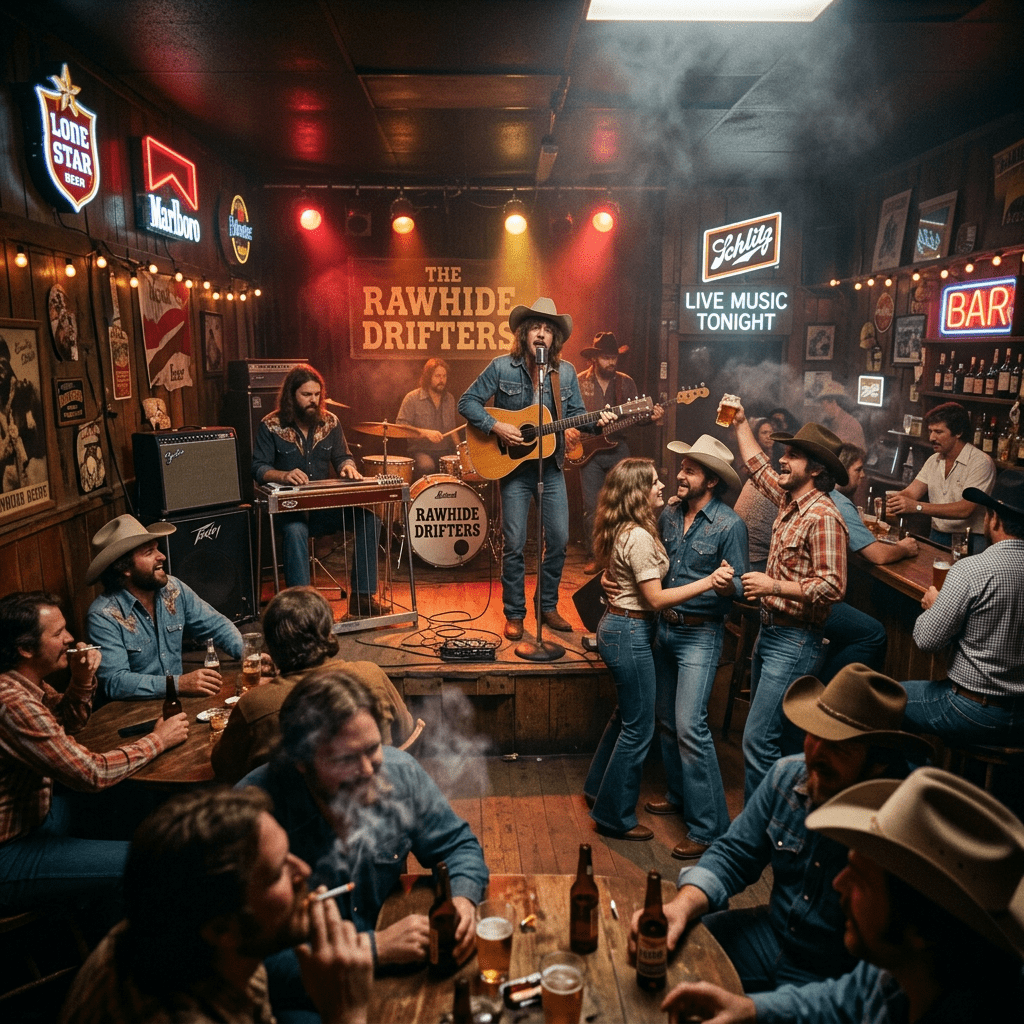
And right there, tucked into that chaos, was the Hillbilly Ranch — the first place I walked into in Boston. A country‑western honky‑tonk with wagon wheels nailed to the walls, neon beer signs, wood paneling, and a floor that stuck to your boots. The crowd looked like someone shook the whole city and let whoever fell out land inside: cowboys who weren’t cowboys, bikers, hippies, sailors, Southie hard‑cases, and tourists who had no idea what they’d wandered into.
It occurs to me now that the movie Road House shows a few scenes that feel like cousins to what the Hillbilly Ranch really was — the neon, the noise, the rough crowd, the band trying to hold the room together while trouble simmered in the corners. But Road House was Hollywood danger, stuntmen and sugar glass, a fantasy of barroom violence dressed up with muscles and movie lighting. The Hillbilly Ranch was all that and more — no stuntmen, no retakes, no Patrick Swayze walking in to clean up the place. Just a real Boston honky‑tonk sitting on the edge of the Combat Zone, fed nightly by the Zone’s parade of characters.
The bathroom was a trough urinal — no stalls, no sinks, no privacy, no mercy. You went in, did your business, and hoped you didn’t slip.
But the real heartbeat of the Ranch was the music. Boston had a surprisingly strong country‑western undercurrent back then — not the polished Nashville stuff, but barroom country, Telecasters through cheap amps, fiddles that could cut glass. The Ranch was home base for the local pickers, the guys who played five nights a week and drank six. You’d get bluegrass pickers who’d show up with banjos and mandolins and turn the place into a barn dance, and honky‑tonk trios with drummers who looked like they’d slept in the van.
Touring road bands came through too — southern and midwestern groups grinding their way up the East Coast. Tight rhythm sections, steel guitar players who could make you cry, singers who’d lived every word they sang. They’d roll in, plug in, and blow the doors off the place.
And then there were the almost‑famous ones — former sidemen from bigger acts, songwriters who’d had one regional hit, guitar players who’d toured with someone you’d heard of. They’d show up, play their hearts out, and disappear into the night.
The crowd was part of the show. They leaned right up to the stage — bikers, sailors, hippies, Southie hard‑cases, and lost souls who’d wandered in from the Zone. If the band was good, the room lit up. If the band was bad, the room let them know. It was a working‑class music bar, and the musicians respected that.
It was loud, sweaty, raw — no fancy lighting, no sound engineer, just a stage, a few amps, and a band trying to win over a room full of characters. It was the kind of place where a fiddle solo could stop a fight, or start one.
And funny enough, for all the grit and neon and honky‑tonk chaos of the Hillbilly Ranch, my first Fourth of July in Boston was the exact opposite — standing out on the Esplanade at the Hatch Shell, watching Arthur Fiedler conduct what turned out to be his last performance at the Hatch Shell.
Arthur Fiedler wasn’t just a conductor — he was Boston’s heartbeat in a white jacket. He’d led the Pops for half a century, dragging classical music out of the velvet‑rope concert halls and putting it right in the hands of regular people. He made the Pops a Boston institution, a family tradition, a summer ritual. He believed music belonged to everyone — the dockworkers, the office clerks, the kids running around on the grass — and he played like he was giving the whole city a gift. When Fiedler stepped onto that Hatch Shell stage, Boston showed up. He was as much a part of the city as the Charles River itself.
One night I’m in a bar where a fiddle solo might start a fight, and a few months later I’m listening to the Boston Pops under the summer sky, the river breathing behind us, the whole city gathered like a family. Boston could swing from rough to beautiful without warning, and I was learning that fast.
And standing there that night, I knew I had found my new home — a place I had never been that somehow felt like I had never left.

 Rambling Harbor
Leave a comment