When the World’s on Fire but the Game Still Kicks Off

There’s something almost absurd about it. You wake up, flip on the news, and the crawl is talking about U.S. strikes, Iranian retaliation, oil tankers burning, diplomats glaring at each other like they’re about to drop gloves at center ice. And then you look out your window in Boston and see a bunch of Iranian soccer fans in jerseys, laughing, grabbing Dunkin’, taking selfies with the Zakim Bridge like they’re on a school trip. It shouldn’t make sense — but somehow it does. Because governments go to war. People don’t.

The political layer is steel. The human layer is soft. Washington and Tehran can’t agree on the color of the sky. Forty‑plus years of sanctions, threats, and proxy fights have made sure of that. But the Iranian kid who grew up juggling a ball in an alley doesn’t hate the American kid doing the same thing in a backyard in Revere. They’ve never met. They’ve never had a reason to hate. The hate lives in speeches. Humanity lives in stadiums.

Sports are the one place where the world pretends to behave. FIFA isn’t the U.S. government. Gillette Stadium isn’t the Pentagon. A soccer pitch isn’t a battlefield. It’s the last neutral zone on Earth — a weird little island where people who are supposed to be enemies end up sitting next to each other, yelling at the same ref, complaining about the same overpriced beer. You can have a U.S. soldier deployed in the Gulf and, at the same time, an Iranian midfielder jogging onto the field in Foxborough to polite applause. That contradiction isn’t a glitch. It’s the point. Sports are the last place where we practice getting along.

And Boston, of all places, gets it. This city’s got a long memory and a short fuse, but it knows how to host a crowd. We’ve had Irish and Italians who hated each other living on the same block. We’ve had Yankees fans walk into Fenway and somehow leave alive. We’ve had marathon runners from countries bombing each other still share water cups on Boylston Street. So, a few thousand Iranians showing up for a soccer match? Boston shrugs and says, “Yeah, kid, grab a seat.”

The truth nobody says out loud is that most people — Iranian, American, whoever — are just trying to live their lives. They want their kids safe, they want to pay their rent, their team to score one lousy goal so they can scream and forget the world for ninety minutes. And maybe that’s why the whole thing works. Because while the politician’s posture and the missiles fly, the rest of us are still out here trying to figure out how to share a planet without killing each other. And sometimes the only place we remember how to do that is in a stadium, with a ball, a whistle, and a crowd full of people who were told they’re supposed to hate each other but don’t.

Maybe that’s the lesson. The world’s on fire. But the game still kicks off. And for ninety minutes, nobody’s an enemy. They’re just fans.

Leave a comment

This site uses Akismet to reduce spam. Learn how your comment data is processed.

Jack Herer

Jack Herer was one of those big‑voiced American characters you don’t see much anymore — the kind who could walk into a room and make the wallpaper nervous. A man built out of stubbornness, belief, and whatever spark it is that keeps certain people from ever shutting up when they know the world’s got something wrong.

He wasn’t born into the counterculture. Hell, he started out in Buffalo, a long way from hemp fields and head shops. But once cannabis crossed his path in the late ’60s, it was like the universe tapped him on the shoulder and said, “Hey Jack, this one’s yours to carry.” And he carried it like a man dragging a lighthouse up a hill.

By the mid‑’70s he was already out there on the sidewalks, booming voice, finger jabbing the air, telling anyone who’d listen — and plenty who wouldn’t — that hemp wasn’t the devil’s lettuce, it was the plant that could save the damn planet. Fuel, fiber, medicine, paper, food — he said it could do everything but tuck you in at night. And honestly, he probably had an argument for that too.

Then came The Emperor Wears No Clothes, his big, sprawling, half‑history‑book, half‑battle‑cry masterpiece. The kind of book that feels like it was written by a man pacing the room, waving his arms, daring the world to prove him wrong. It became the bible of the legalization movement, passed around like contraband scripture. You didn’t just read it — you got converted by it.

Jack didn’t slow down. He founded HEMP, traveled like a man allergic to staying home, and turned every stage, booth, and folding chair into a pulpit. People said he was loud, relentless, impossible. They also said he was right.

And then there’s the strain — Jack Herer — bright, sharp, electric. The kind of high that feels like someone opened a window in your skull and let the breeze in. A living tribute, sold in glass jars from coast to coast. Not many activists get a statue. Jack got a sativa.

He had his battles — strokes, heart attacks, the body giving out while the mission kept marching. He died in 2010 out in Eugene, Oregon, but the strange thing about certain people is they don’t really go. His book’s still in print. His strain’s still on shelves. And the world he spent decades shouting about is finally, slowly, catching up.

Jack Herer didn’t just push for legalization. He carved the road with his bare hands and dared the rest of us to walk.

Leave a comment

This site uses Akismet to reduce spam. Learn how your comment data is processed.

June 16th Bloomsday

 A day when the literary faithful raise a glass — or several — to James Joyce, that beautiful madman who turned one ordinary day in Dublin into a whole universe of wandering, worrying, loving, lusting, loafing humanity.

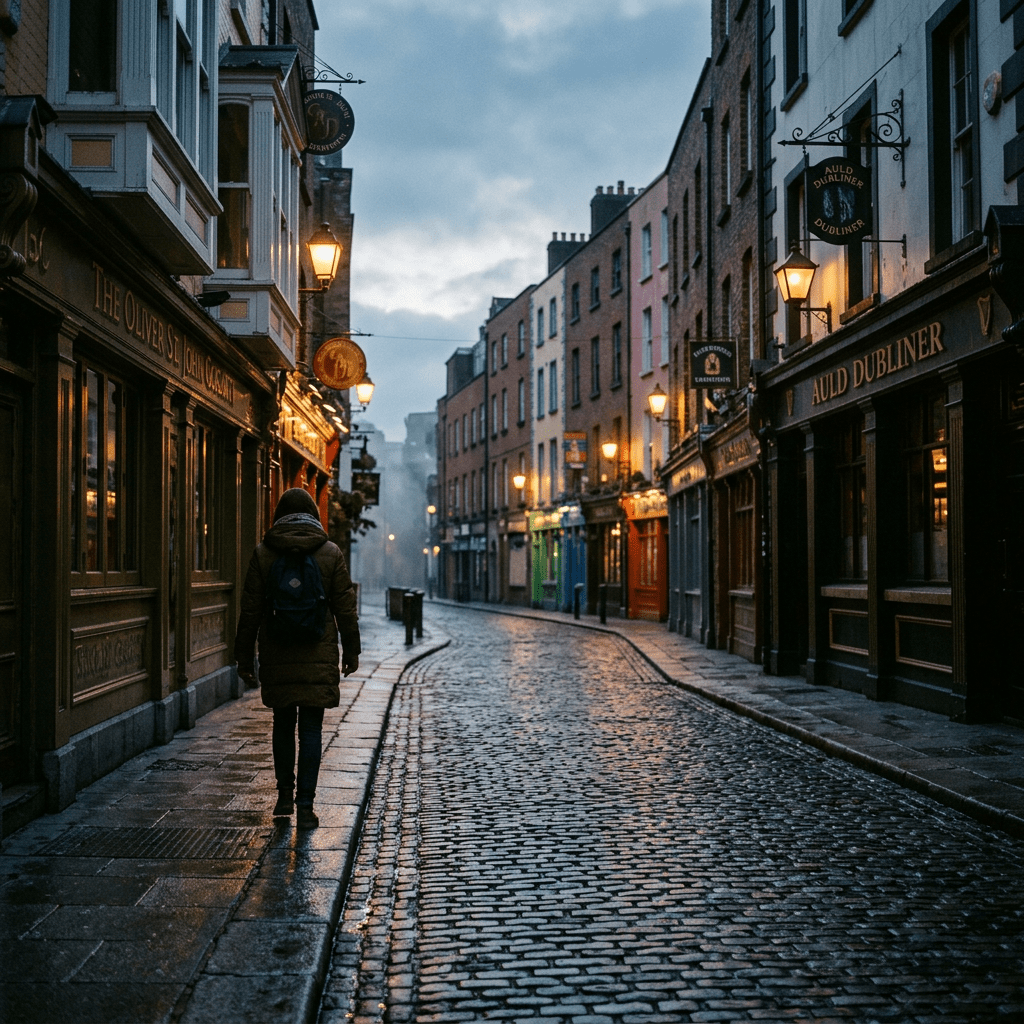
It’s funny, isn’t it, how a single date can become a pilgrimage. Most people wake up on June 16th thinking about coffee, bills, maybe the Red Line running late again. But Joyce fans? They wake up ready to walk the city like Leopold Bloom, ready to trace the steps of a man who spent most of his day just trying to get through it without losing his mind or his lunch.

Joyce picked June 16th, 1904, because it was the day he first walked out with Nora Barnacle — the woman who’d become his anchor, his storm, his everything. Leave it to a writer to turn a first date into a literary holy day. The rest of us just hope we don’t spill something on our shirt.

And yet here we are, more than a century later, with people all over the world reading Ulysses out loud, page by page, like some great communal chant. Dublin fills up with folks in straw hats and period clothes, reenacting scenes that half the world still pretends to understand. And the other half? They’re like me — they love the idea of Joyce, the music of the language, the wildness of it, even if they occasionally get lost somewhere between Sandymount Strand and the inside of Stephen Dedalus’s skull.

But that’s the thing about Bloomsday. It’s not about “getting” Joyce. It’s about celebrating the messy, wandering, ordinary miracle of being alive for one more day. A day of errands and temptations and memories and small kindnesses. A day where you try to make sense of the world and mostly fail, but you keep walking anyway.

And maybe that’s why Bloomsday hits me a little harder this year. Because most of life isn’t the big moments — it’s the walking around. The thinking too much. The bumping into people you didn’t expect to see. The quiet ache of remembering someone who’s gone. The sudden joy of a warm breeze off the water. The way a single day can hold a whole lifetime if you pay attention.

So here’s to Joyce. Here’s to Bloom. Here’s to June 16th, 1904 — and every June 16th since.

And here’s to all of us, still wandering our own cities, still trying to make sense of the map, still hoping for a little grace along the way.

Leave a comment

This site uses Akismet to reduce spam. Learn how your comment data is processed.

White Hall Station

Sometimes a chapter needs another walk around the block, and this one did. I went back, rewrote it, and finally gave a little mouse named Archibald MacLeash the explanation he deserved. If you’ve read the book, this fills in the cracks. If you haven’t, well—welcome to the neighborhood.

The night before my induction, I couldn’t sleep. I lay in bed staring at the ceiling, looking for answers. My heart pounded like I’d just run the 40‑yard dash. A drumbeat I wasn’t sure I could march to — too fast, too loud, too soft, and definitely its own rhythm. But I knew exactly where I did not want to march.

I tried everything: counting breaths, replaying old football games, thinking of my girlfriend, even astral projection — maybe I could end up on some tropical island, safe and away. I wanted to be anywhere but, in that room, in that bed, wondering where I might be tomorrow night. But dread snuck in under the door and settled in my brain. I wasn’t afraid of dying. I was afraid of disappearing — of becoming a number, a uniform, a cog in a machine I didn’t believe in.

The draft lottery — America’s twisted game show of fate — wouldn’t begin until 1969. But in 1964, the draft was still run by local boards, deferments reviewed by hand. At eighteen, I burned my college deferment card, thinking I was making a statement. I wrote letters to President Johnson and to my Staten Island draft board, asking to be reclassified 1‑A. You can’t refuse what you haven’t been offered. And I was tired of hiding behind loopholes, even if I hadn’t meant to hide in the first place.

By ’69, they granted my wish. I was 1‑A — fit for service, next in line to toe the line, or not. Five years of business schools and seminaries had led me here. From the gridiron to leg irons.

And then the morning came.

I was up by 6 a.m. — not that I’d slept. I left a note for my mother saying I’d gone to visit friends. I wondered how long I’d really be gone. I took the bus to the Staten Island Ferry, crossed the Hudson, and walked the two longest blocks of my life to Whitehall Station. Even writing about it now, I can feel that god‑awful sickness in my stomach. I can’t do this.

Fight or flight? Mine was freeze and sit. No exit. Just a heart pounding like a drumline on speed. I was about to jump off a cliff and couldn’t see the bottom. Compared to this, the Coney Island Parachute Jump was a kiddie ride.

Whitehall Station sat in lower Manhattan like a bureaucratic bunker — the place where boys became soldiers or tried not to. It shut down in 1972, two days before my birthday, while I was in Danbury Federal Correctional Institution. I’d wanted it torn down. I’d done my best to see that happen.

As I climbed the steps, I saw Mr. Harold Jones waiting outside. My eighth‑grade science teacher — but more than that. Over the years, he’d become my confidant, the one adult who understood what I was feeling. He made science feel like storytelling, helped along by a fictional mouse named Archibald MacLeish who lived in his coat closet. I never saw him, but I saw him. Still do.

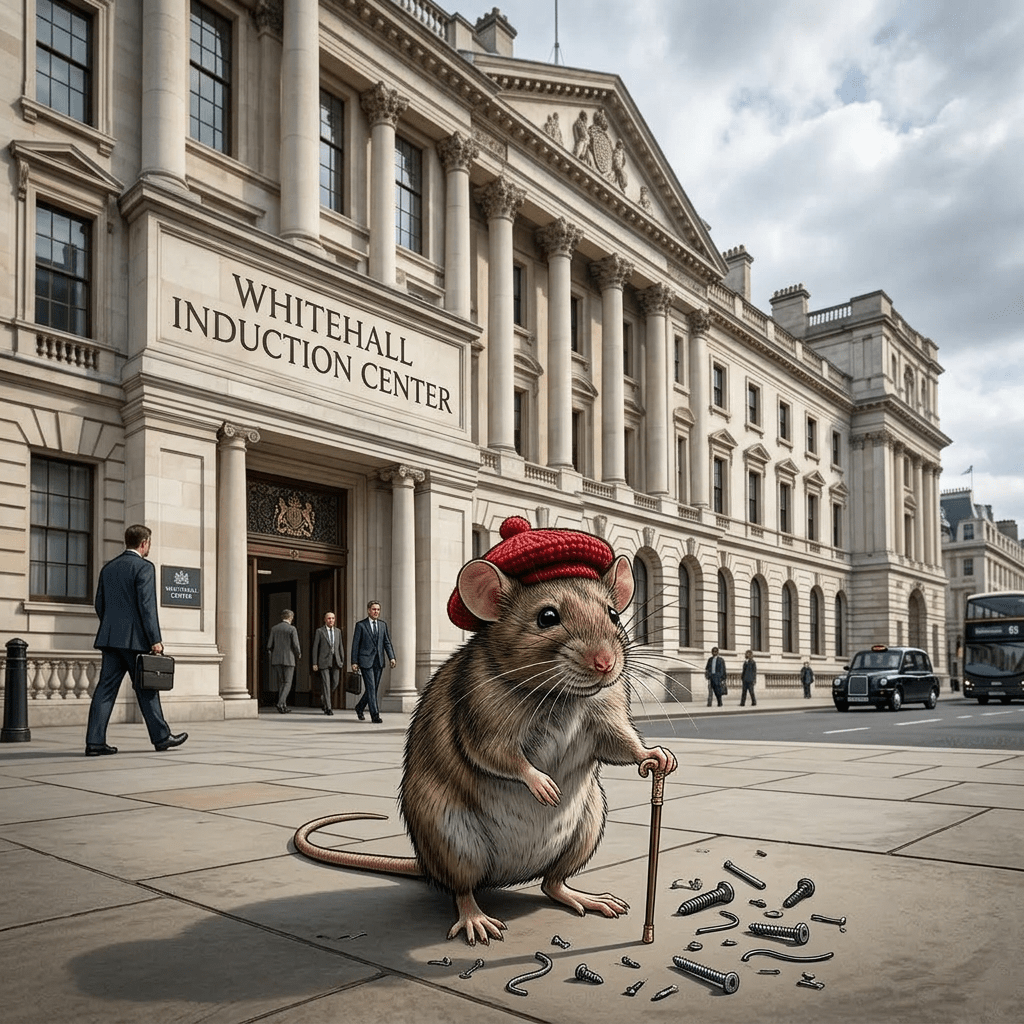
Mr. Jones said he named the mouse Archibald MacLeish after the poet — “because even a mouse can carry big ideas,” he told me once, tapping his temple like he was winding up a thought. MacLeish wrote about truth, about standing your ground when the world tries to bend you, about the kind of dissent that isn’t loud or showy but stubborn and necessary. He believed democracy wasn’t something you admired from a distance — it was something you practiced, even when it cost you. Jones figured a mouse could teach eighth‑graders more about courage and conscience than any textbook. The beret, the cane, the red bandana — that was all me. That’s how I pictured him: a tiny philosopher with a rebel’s wardrobe, the kind of creature who’d whisper, Don’t let them turn you into something you’re not. Archibald showed up whenever I needed him — not as a hallucination, not as a joke, but as a reminder that dissent can be quiet, steady, and small, and still shake the world.

Mr. Jones didn’t say much that morning. He didn’t have to. He told me to stay who I was. Said it was something to be proud of.

Inside, the induction ceremony began. The room smelled of sweat. The air was thick with the breath of boys pretending not to shake. The recruiter’s voice was flat, rehearsed, like he’d stopped listening years ago.

“Please repeat after me…”

“I do solemnly swear…”

Repeat. Repeat? Hell, I could barely breathe.

“…that I will bear true faith…”

And suddenly I wasn’t in Whitehall anymore. I was back on the football field, hearing my coach yell, “Go in hell‑bent for leather, Little Sandy!” My dad was Big Sandy. The coach used that nickname to rile me up. Hell‑bent for leather — without fear.

My heart picked up the chant until it drowned out everything else.

Then came the words: Step forward.

I sat down.

The recruiter blinked, confused. Thought I was sick. I stood, breathed, sat again.

“I’m not moving,” I said, though I wasn’t sure I could even if I wanted to.

The sergeant’s face turned fire‑engine red. My heart was a jackhammer. I was frozen in defiance — or fear. Maybe both. I prayed he wouldn’t hit me. If he did, I wasn’t sure I could stop myself from hitting back. I may be a peacenik, but I know myself. Anger lives in me too. If I struck him, I wouldn’t be going to jail for trying to end a war, but for starting one.

Two MPs grabbed me like a sack of potatoes and hauled me to a holding cell. I expected that part. I was prepared. No blows were thrown. An Army lawyer came in to make sure I knew what I was doing. I asked if he knew what he was doing — and what he was part of. He accepted my yes and left.

Then came the police car, the ride to Staten Island, and my first night in jail. Five miles from the gridiron. A lifetime away.

As they carried me out of Whitehall, I refused to walk — part of my plan for total non‑cooperation. Mr. Jones stood on the grimy sidewalk. He smiled. Gave me a thumbs‑up. I flashed him a peace sign from between a cop’s holster and his arm.

And behind him — I swear — I saw Archibald MacLeish strutting down the sidewalk, beret tilted, cane tapping a rhythm only I could hear. He paused near the induction center door, tipped his hat, and whispered, “Courage isn’t loud. It’s the quiet refusal.” Then he vanished into the crowd.

Mr. Jones arranged to bail me out, though I was released on my own recognizance. I spent the rest of the day at his home — resting, recovering, trying to make sense of what had just happened. And what would happen next. To my mother, I was simply visiting Mr. Jones. I was old enough to say, “Don’t call my parents,” and the authorities obliged.

A trial date was set for April. The weeks leading up to it blurred into paperwork, legal advice, friends’ advice, and panic. I walked Manhattan like I always had, but now I memorized the cracks in the sidewalk, the rhythm of subway trains, the smell of roasted peanuts from corner carts — anything to anchor me.

Oddly, I’d always found the Financial District peaceful on a Sunday morning. Wall Street’s insanity gave way to silence. I walked it a few times in those last days. And Times Square — the lights of Broadway weren’t going to shine on me, but they still shine inside my memory. So do the beaches of Staten Island.

I didn’t know what I was looking for. Only that it wasn’t in New York anymore.

And so the city’s noise faded behind me. The cracks in the sidewalks, the drumbeat of the subway, even Broadway’s lights became part of a memory I carried but could no longer live inside.

What I needed was silence. Steadiness. A place where the ground didn’t demand allegiance.

Somewhere in the back of my mind, I could still hear Archibald’s cane tapping — that quiet rhythm he kept for me when I couldn’t keep one for myself. He’d been at Whitehall, and he’d be on the mountain too. Courage travels light.

Emily’s mountain was waiting. Quiet, immovable, patient — just like she was — offering refuge without question.


Leave a comment

This site uses Akismet to reduce spam. Learn how your comment data is processed.

Archibald the Mystical Mouse

I’ve been thinking since March 5th of 2026, when I published my book, that I should rewrite it — not because I expect sales to suddenly skyrocket, but because I left out some things, explanations that would have mattered. Like the fact that I have this mystical mouse named Archibald MacLeish who shows up in the beginning. I just assumed everyone would sort of get it, and then it started occurring to me, over and over again, that no, not everyone does get it. What’s the big deal about the mouse?

So let me say it plainly.

In my book, I talk about this make‑believe mouse named Archibald MacLeish. He’s a small, mystical presence who slips in and out of the story, but the name itself comes from something real in my life. Back in school, my science teacher kept a classroom mouse, and he named that little creature Archibald MacLeish. At the time, I didn’t know much about the man behind the name, but my teacher did — and he believed in giving things names that meant something.

Later, I learned who the real Archibald MacLeish was — an American poet who wrote about democracy as something you do, not something you admire from a distance. He believed in dissent, in thinking for yourself, in the dignity of choosing your own path.

So the mouse in my book is that mouse — the one supporting my dissent. Not just the classroom mouse, and not just the poet, but the whole chain of belief behind it: a teacher who saw something in me, a poet who stood for freedom of thought, and a reminder that even the smallest presence can carry a big idea.

That’s the namesake. That’s the reason. That’s why the mouse is Archibald MacLeish. That’s why he shows up at the induction center.

And I should have explained that as an introduction to the little guy — why he’s there and given him the honor and the dues he deserved. I think folks would have felt the depth of his presence.

Leave a comment

This site uses Akismet to reduce spam. Learn how your comment data is processed.

A Rambling Harbor Note for Allen Ginsberg’s Born today May 3rd, 1926

There are mornings in Rambling Harbor when the gulls sound like they’re arguing about poetry — loud, insistent, half‑mad, and absolutely convinced they’ve got the line that’ll crack open the universe. And on a day like this, with the tide dragging its feet and the coffee tasting like it’s been through a few revolutions of its own, I find myself thinking about Allen Ginsberg, born in 1926, long before “flower power” became a bumper sticker or a punchline.

Ginsberg didn’t invent the sixties, but he sure as hell lit the pilot light. The man could walk into a room and suddenly everyone was talking louder, thinking stranger, feeling braver. He had that way of seeing the world — cracked, luminous, holy in its brokenness — and he didn’t apologize for any of it. Why would he. The whole point was to not apologize.

I imagine him wandering into Rambling Harbor, beard catching the sea breeze, eyes scanning the horizon like he expected a revelation to come rolling in on the next wave. And maybe it would. This place has a habit of handing you truths you didn’t ask for. Sometimes they’re gentle. Sometimes they hit like a wet rope across the knuckles.

He’d probably stand on the seawall, muttering lines to himself, something about angels and madness and the way America keeps trying to outrun its own shadow. And the old-timers down by the bait shop would look up, squint, and say, “Who’s the guy talking to the ocean?” And someone else would shrug and say, “Poet, probably,” and that would be enough.

Because around here, we know a thing or two about people who talk to things that don’t talk back.

Ginsberg coined “flower power,” but he also carried the weight of the world in his chest. He saw the beauty and the rot, the promise and the poison, and he wrote it all down like he was afraid the country might forget itself if he didn’t keep reminding it. And maybe he was right. Maybe we still need reminding.

So on his birthday, I raise a mug — chipped, stained, honest — to the man who howled at the machinery and dared it to howl back. To the poet who believed the world could be better if we just cracked our hearts open wide enough. To the stubborn, wild, inconvenient hope of it all.

And here in Rambling Harbor, where the wind never quite settles and the stories never quite end, that feels like something worth celebrating.

Subscriptions are free

Leave a comment

This site uses Akismet to reduce spam. Learn how your comment data is processed.