Wavy Gravy Was Born Today

Some people arrive in this world like a whisper. Wavy Gravy showed up like a marching band that took a wrong turn and decided to stay.

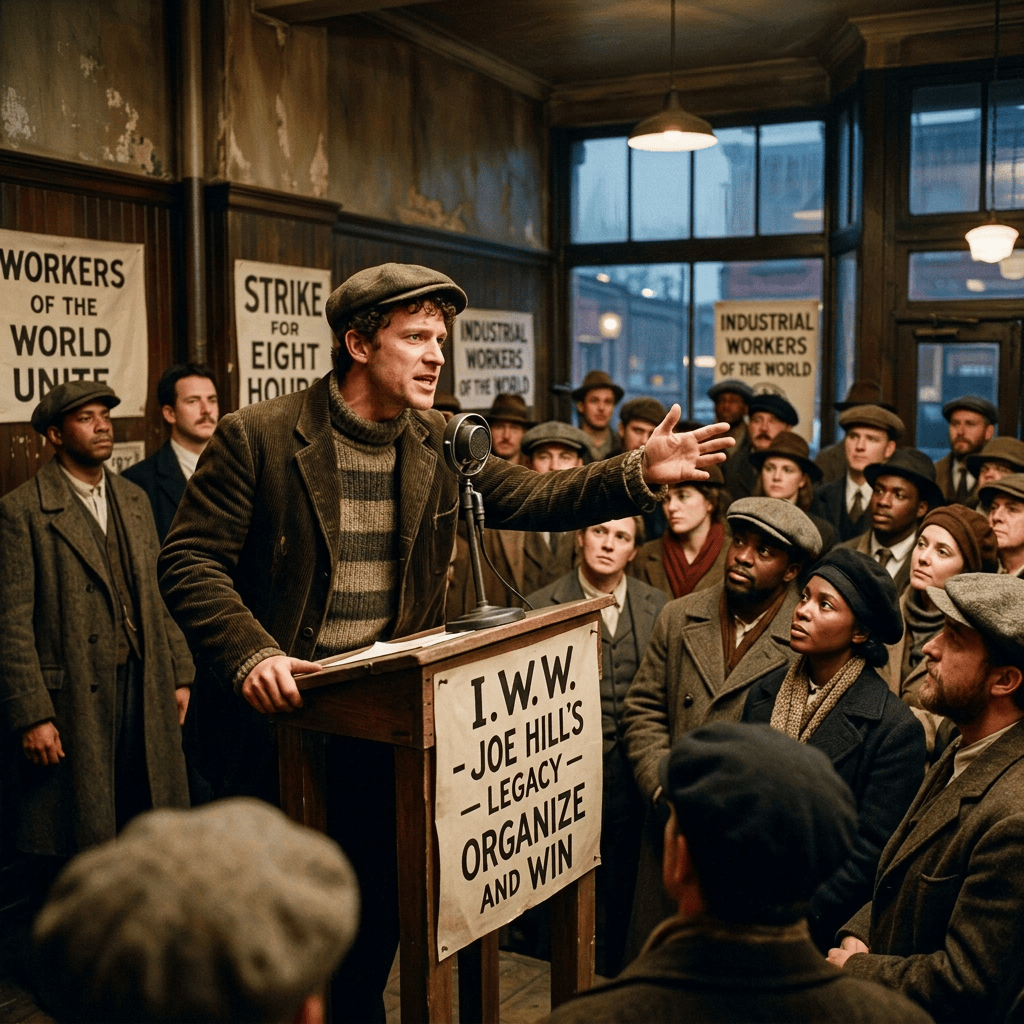
Born on this day in 1936, back when the world was still in black‑and‑white, he somehow grew into one of the most colorful human beings to ever wander through the American story. Hugh Romney was the name on the paperwork, but the universe had other plans. It needed a jester. A peacekeeper. A clown with a conscience. A man who could talk down a crowd of 400,000 hungry, muddy, half‑mad festival‑goers at Woodstock with nothing but a microphone and a grin.

He fed people. He calmed people. He made them laugh when they were ready to break. He turned compassion into a kind of performance art, and he never stopped believing that humor could be a tool for survival. The Hog Farm, the Seva Foundation, the endless parade of red noses and tie‑dye — it was all part of the same mission: make the world a little lighter, a little kinder, a little more human.

Wavy Gravy reminds us that you can take the work seriously without taking yourself seriously. That mischief can be mercy. That joy can be a form of resistance. And that sometimes the best way to keep the peace is to show up dressed like a psychedelic Santa Claus and tell everyone it’s going to be okay.

On the day he was born, the universe clearly decided it needed more color. And all these years later, we’re still living in the glow.

From Rambling Harbor, where the tide rolls in with its own kind of cosmic joke, I tip my hat to the man who proved you can change the world with a laugh and a ladle.

Leave a comment

This site uses Akismet to reduce spam. Learn how your comment data is processed.

FREE SUBSCRIBING

The Diamond Sutra.

The Diamond Sutra is set up as a conversation between the Buddha and an elderly disciple named Subhuti. Two voices, one asking, one answering, both circling around the same old questions we still ask today: What matters? What lasts? How do we see the world without getting lost in it?

Some dates slip past us without a sound, and some carry a little echo if you stop long enough to listen. This one goes all the way back to 868 A.D., when somebody — a monk, a printer, a pair of hands we’ll never know — pressed inked wood against paper and created what we now call the oldest printed book with a publication date. The Diamond Sutra. Sixteen feet of teachings, questions, answers, and the quiet persistence of human curiosity.

The word sutra comes from Sanskrit and means “teaching,” but it’s more than that. It’s a thread, a line connecting one mind to another across centuries. The Diamond Sutra is set up as a conversation between the Buddha and an elderly disciple named Subhuti. Two voices, one asking, one answering, both circling around the same old questions we still ask today: What matters? What lasts? How do we see the world without getting lost in it?

The physical book itself was printed from carved wooden blocks onto seven long strips of paper. Each page had its own block, carved by hand, reversed like a mirror, every line a small act of faith that someone in the future would want to read it. Those seven sheets were pasted together into a scroll about sixteen feet long — a book before books were bound the way we know them now. Imagine unrolling that thing, the slow reveal of words that had already traveled further than most people of that time ever would.

And then, like so many things, it vanished.

For more than a thousand years the scroll sat hidden away in Turkestan, sealed up with hundreds of other manuscripts in one of the Caves of the Thousand Buddhas. A whole library walled off, maybe to protect it, maybe to forget it, maybe because someone thought the world was ending and wanted to save what they could. We’ll never know. What we do know is that in 1900, a caretaker sweeping out a cave stumbled onto a doorway that hadn’t been opened in centuries. Behind it: bundles of manuscripts, paintings, scrolls, and among them, this sixteen‑foot conversation between a teacher and a disciple.

I like stories like this. They remind me that the things we make — the words we write, the thoughts we try to pin down — have a way of outliving us. They get lost, they get found, they get read by someone a thousand years later who has no idea who we were but still feels the spark of recognition. A voice calling across time saying, “I was here. I wondered about the same things you do.”

Maybe that’s why I keep writing. Maybe that’s why any of us do.

SUBSCRIPTIONS ARE ALWAYS FREE

Leave a comment

This site uses Akismet to reduce spam. Learn how your comment data is processed.

Mother’s Day

Mother’s Day didn’t start with flowers, cards, or brunch. Its earliest roots in the United States came from women who were trying to hold their communities together in the face of disease, war, and political division.

Ann Reeves Jarvis, a West Virginia woman who lived through the mid‑1800s, spent her life organizing “Mothers’ Work Clubs” to fight outbreaks of measles, typhoid, and diphtheria in Appalachian towns. These clubs inspected milk, taught sanitation, and even quarantined homes when needed. During the Civil War, she insisted her groups care for both Union and Confederate soldiers, and after the war she organized a Mother’s Friendship Day in 1868 to help reunite divided families.

Around the same time, Julia Ward Howe — abolitionist, suffragist, and author of The Battle Hymn of the Republic — issued her 1870 Mother’s Day Proclamation, calling for women to gather in the name of peace after witnessing the devastation of the Civil War and the Franco‑Prussian War. She envisioned an international congress of women dedicated to preventing war. A few communities observed her proposed “Mother’s Day for Peace,” but it didn’t take hold nationally.

The holiday as we know it today came from Anna Jarvis, Ann Jarvis’s daughter. After her mother’s death, she campaigned for a day to honor the sacrifices and quiet labor of mothers. In 1908, she held the first official Mother’s Day service at her mother’s church in Grafton, West Virginia. Within five years, nearly every state observed it, and in 1914, President Woodrow Wilson declared Mother’s Day a national holiday, celebrated on the second Sunday in May.

Ironically, Anna Jarvis spent the rest of her life fighting the commercialization of the holiday she created — protesting florists, card companies, and anyone who turned her solemn tribute into a business opportunity.

Leave a comment

This site uses Akismet to reduce spam. Learn how your comment data is processed.

SUBSCRIPTIONS ARE ALWAYS FREE

I’m Nobody! Who are You?

I published my first book on March 5th. It’s called I Was There. I probably should’ve called it Who Am I, because it’s a memoir, and since I can’t hang a famous name on it, no one really cares. If I were a famous musician, actor, or politician, it wouldn’t matter if my entire memoir was just me sitting by a luxury pool all day sipping fancy drinks made by an impeccable butler — or better yet, a Butlerette in a miniskirt — people would be clamoring to buy it.

On Amazon, where my book is available, I’m competing with the likes of Maya Angelou, Malcolm X, and Trevor Noah’s mother, for God’s sake — all of whom have written memoirs. And that’s just naming the lesser-known ones, except maybe Trevor’s mother, though I suspect everyone but me knows who she is. I’ll add, with sincere condolences, that all are deceased, and underline that I am not willing to die for this book.

I have considered changing the name to something like Outlaw, rewriting it just a bit — not changing the facts, just throwing in more drama and sex. I could confabulate. In writing, confabulation is when you unknowingly fill in gaps with invented details because your mind wants the story to feel complete, smooth, or emotionally coherent. It’s not lying. It’s not embellishment on purpose. It’s the brain saying, “Let me tidy this up for you,” and slipping in something that feels true even if it isn’t. Then I could list my book under Autofiction, which could easily be misunderstood as autoerotica — and that should outsell Trevor’s mother.

A few weeks ago, I was talking to a good friend who’s also writing a book. Hers is about murder, and as I said to her, she has a better chance of gaining buyers because everyone knows what murder is. Along with not dying for this book, I’m also not willing to kill for it. And let me quickly add that my friend is not the murderess in her book either. Though I’ll bet she’s a killer in a miniskirt.

I also need to say my book is not boring. The folks who have read it have all been sincerely enthusiastic in their positive reviews. It deals with ten very turbulent times in my life — ten years when this country was an amalgam of ideas, movements, people, music, war, and yes, even sex. I was involved in some amazing moments with some amazing people, some known to history — people who, if they wrote a memoir today, would give Trevor’s mother a run for her money.

But you see, what I did, I did quietly. Not a lot of fanfare or fangirls or fantastic shenanigans. Maybe what I need to do now is go out and do something to call attention to myself. Maybe run for President on the WTF Party — that’s the What The Fuck Party — or maybe the LWRS Party, the Left Wing Radical Scum Party. You may have heard mention of that breed of human; I think they’re currently under investigation by the residents at 1600 Pennsylvania Avenue.

But the truth is, I never meant to make a splash with my book — not even in a luxury backyard pool with fancy drinks being served by a Butlerette in a miniskirt. I just wanted to tell my story to a few friends and family while there was still time. Part of the problem, I think, is that many of my friends thought I was writing a completely different book — probably about my hazy, crazy days in radio, which I barely mention.

If all of a sudden some major publisher caught on to my book, a major studio made it into a major and successful motion picture, and I suddenly had fame and fortune and miniskirt‑clad Butlerettes running around, I know I’d be looking for the nearest exit to the highest mountain I could find.

In short, I think maybe Emily Dickinson was right, and her idea fits my personality better.

Emily Dickinson wrote:

I’m Nobody! Who are you?
Are you — Nobody — too?
Then there’s a pair of us!
Don’t tell! they’d banish us — you know!

How dreary — to be — Somebody!
How public — like a Frog —
To tell your name — the livelong June —
To an admiring Bog!

Maybe that’s the whole point: I never wanted to be Somebody. I just wanted to leave a trail for the other Nobodies to follow home.

Leave a comment

This site uses Akismet to reduce spam. Learn how your comment data is processed.

Rating: 1 out of 5.

SUBSCRIBING IS FREE

I Was There

There’s a moment, when you finish a book that came out of your own bones, where the world goes strangely quiet. Not peaceful quiet — more like the hush that settles over the harbor right before the fog rolls in. You stand there thinking, Well, I guess I really did this.

“I Was There” didn’t start as a book. It started as scraps — memories, radio nights, the odd corners of life that stick to you like sea salt. I wasn’t trying to write anything grand. I was just trying to make sense of the noise in my head before it drifted off like a gull that couldn’t be bothered to land.

But stories have their own stubborn tide. They kept washing back up at my feet. And eventually I realized I wasn’t collecting them — they were collecting me.

Now the thing is out there in the world, floating around on Goodreads and Amazon like a bottle tossed into the Atlantic. People can pick it up, shake it, hold it to the light, decide if they want to walk a few miles with me. Some already have. Some will. Some won’t. The tide doesn’t ask permission.

What matters is this: the stories aren’t trapped anymore. They’re free to wander, to be misunderstood, to be loved, to be argued with, to be read at 2 a.m. by someone who can’t sleep and needs to know they’re not the only one who’s lived through a few storms.

If you want to take a look, here’s the Goodreads page — no passwords, no secret handshake, just the book sitting there waiting: Click the little arrow on the left side of the Goodreads page under the word read and a drop-down will appear with the link on it.

https://www.goodreads.com/book/show/249304682-i-was-there

I’ve walked a long road to get here. Some of it was smooth, most of it wasn’t, and all of it ended up in these pages. If you decide to read it, I hope you find something in there that feels like truth — or at least something that feels like company.

The tide keeps moving. The stories keep coming. And I’m still here, walking the shoreline.

Leave a comment

This site uses Akismet to reduce spam. Learn how your comment data is processed.

NO CHARGE FOR SUBSCRIPTIONS

When April Teaches You How to Feel Warm Again

Some days don’t announce themselves. They don’t kick down the door or roll in with thunder. They just show up quietly, like an old friend who doesn’t need to knock. Today was one of those days.

The official coastal temperature — the one the weather folks love to toss around — sat at a stubborn 47°. Cooler at the coast, they say, as if we haven’t lived long enough to know the ocean keeps its own personality. But then I stepped outside, and the sun hit me in that particular April way, the way that says, Relax. I’ve got this.

And just like that, I felt better already.

MSN Weather, in its polite little digital voice, tried to explain it:
“Dominant factor: humidity.”
Which is really just science’s way of saying the air has softened. The sharp edges have rounded off. Your skin isn’t fighting the cold anymore. The breeze isn’t stealing heat from you like it did all winter. And the sun — well, the sun is finally acting like it remembers what month it is.

Stand in the right spot — out of the sea breeze, tucked against a sun‑warmed wall, maybe near a patch of pavement that’s been soaking up the morning light — and the whole world shifts. The thermometer can cling to its 47°, but your body knows better. Your body says 59°, maybe more. Your body says, Hey, we made it. Look at us now.

That’s the thing about April.
It’s not just a month.
It’s a mood.
It’s the first real exhale after months of bracing yourself. It’s the moment you realize the warmth isn’t a rumor anymore. It’s here. It’s real. And it’s trying its best to meet you halfway.

So yes, the coast may be cooler.
But today?
Today feels warm enough to believe in again.
Warm enough to loosen your shoulders.
Warm enough to remind you that you’re still here, still breathing, still capable of feeling good for no grand reason at all.

And sometimes that’s all a person needs — a little sun, a little shelter from the breeze, and the quiet surprise of feeling warm again.

Leave a comment

This site uses Akismet to reduce spam. Learn how your comment data is processed.

Rating: 1 out of 5.

I’m On Goodreads

I woke up to sunshine and clear skies, and the news that five people I’ve never met are already reading my book. I guess this thing is officially out in the wild. If you use Goodreads, you can add I Was There to your “Want to Read” or “Currently Reading” shelf. It helps the algorithm gods notice the little guys.

https://www.goodreads.com/book/show/249304682-i-was-there

Leave a comment

This site uses Akismet to reduce spam. Learn how your comment data is processed.

Rating: 1 out of 5.

My Book Has Been Released

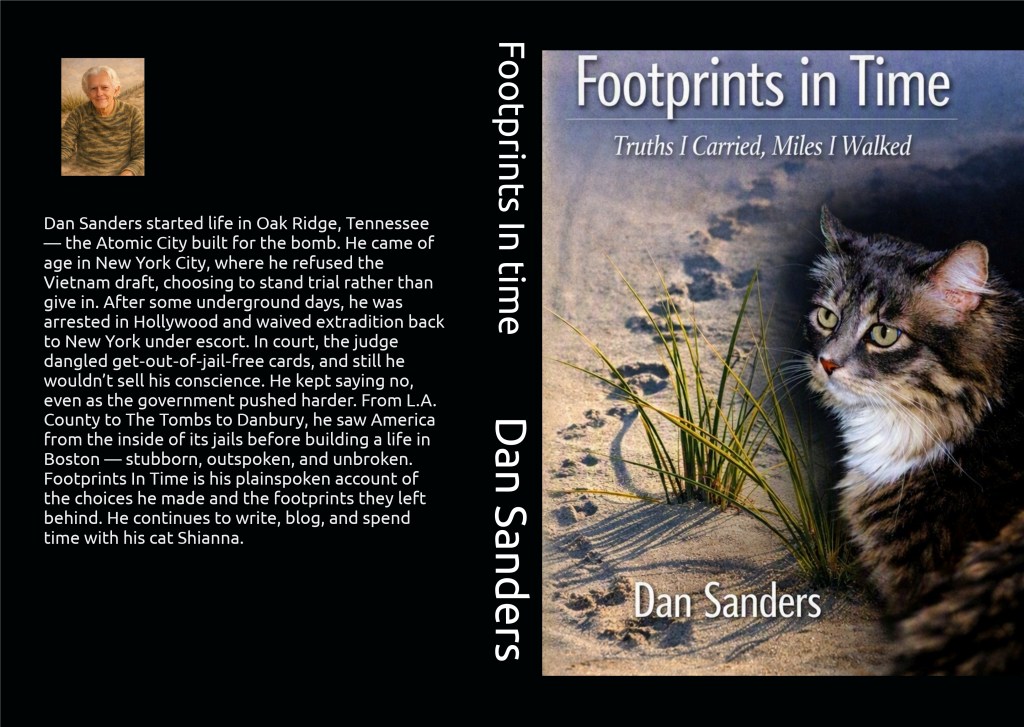
Dan Sanders grew up on Staten Island and learned early how to navigate the edges of things—family, faith, war, and the long road toward becoming himself. He spent years in radio, activism, and community work before settling in the Boston area, where he writes about the moments that refuse to stay quiet. He lives in what he calls Rambling Harbor with his cat, Shianna, and continues to tell the stories that shaped him, one honest line at a time.

The Road to “I Was There”

It didn’t happen all at once. It wasn’t a straight shot. It was a long road — with detours, breakdowns, and a few stretches where I didn’t touch the wheel at all.

This book took years. Not because I was writing every day, but because I wasn’t. I’d circle back, pick up a thread, lose it again. Life got in the way. So did doubt. So did the internet.

But the story never left. It waited. And every time someone asked — “Are you still working on it?” or “When’s the book coming out?” — it reminded me that I was still on the road.

So thank you. To everyone who kept asking. To those who read the early chapters, who saw the fog and the mountains and said, “Keep going.”

The book is out now. It’s called “I Was There”. Because I was. And now, so are you.

And who knows what comes next — maybe that’s the best part. Maybe even another book

follow this link to the Amazon page: https://a.co/d/01jMzMsm

About Me
I’m a dreamer with some rough edges, a word‑slinger, an actor, a picture‑maker, and a guy who hangs onto the stories that don’t always behave. I write from a small harbor shaped by memory, Boston weather, and all the quiet corners where truth sits down and refuses to move.
I Was There is one road I’ve walked. There’ll be others. There always are.

Leave a comment

This site uses Akismet to reduce spam. Learn how your comment data is processed.

Rating: 1 out of 5.

One of the Unrecorded

I was just doing some research on this book, and as I’ve said, I’m horrible with dates. I always have been, as they drift into ancient history, they become a lost, whirling maze of amazement and often befuddled amusement. Just now, I was looking for someone from my CCNV days, and after a multitude of different search sources and avenues, including AI, it came back.

 “You’re trying to find someone who lived in a world that didn’t preserve itself well — CCNV, Catholic Worker, Berrigan circles, early women clergy. Those people didn’t leave digital trails.”

 I laughed aloud and said in my best Robert Deniro Taxi voice, “You talkin’ to me?” I know. I’m one of them, lost to time, memory, but maybe not to history.

About a year ago, I spent several weeks with on-and-off communication with various federal agencies trying to get copies of my arrest and prison records. I started with the bureau of prisons The Bureau of Prisons stated that they do not retain records beyond ten years,  They gave me a link to the FOIA ( Freedom of Information Act) the freedom of information act said that because of my type of cases any records would most likely be held by the National Archives they may have retained documentation related to this type of case. I wrote to the National Archives, but have not heard back. I am willing to bet no one has ever tried so hard to prove they are a criminal. Even though the law I broke needed to be broken, and I still would love to see my whole records including as Arlo Guthrie put it in the song “Alice’s Restaurant”, a black and white 8 by 10 glossy.

So yeah, I did and still do live in a world that doesn’t preserve itself well.

Part of me hopes we’re not all lost to history. And part of me thinks maybe that’s the way it was always meant to go.

Leave a comment

This site uses Akismet to reduce spam. Learn how your comment data is processed.

Rating: 1 out of 5.

A Message of Hope — A story about friendship, courage, and the small ways hope still finds us.

I have a friend I’ve known since 1980, someone who used to listen to my overnight radio show when she was only sixteen. She would call me in the middle of the night, and we’d talk. I remember wishing her a happy eighteenth birthday at midnight. We met many years later in a grocery store when she was in her thirties, just before Halloween, at a time when my personal life was going through struggles as my wife battled cancer. I hadn’t seen her standing there, but I guess she remembered my voice, and I heard her say with a question mark in her voice, Sanders? And I then remember the voice that had kept me company through a phone so long ago. I like to tell her it was over the Candy Corn aisle, but she denies that memory. Still, I’ve always liked the idea that hope can show up in the corniest places. We’ve remained friends ever since. And before you get the wrong idea and think you know where this is going, here’s where it takes a sharp left.

My friend has been married and has a daughter and a granddaughter. I met her daughter once, when I think she was around eight years old—a beautiful young child. That daughter is now older than her mother was when she used to call that lonely late-night DJ. My friend comes from a religious upbringing, and her daughter, through her own choices, has been pursuing a life in the ministry as a student at a local school.

Here comes that left turn again. A few days ago, I got a message from my friend saying her daughter was preparing to go to Minneapolis, Minnesota, and that she was both proud and petrified. I told her I could understand both. Of course, we all know the horror unfolding in the city.

My friend is well aware of my resistance to the Vietnam War, my time in prison for refusing induction, my involvement with Phil and Dan Berrigan, as well as my own stay in seminary and a basic life of resistance to oppression in all its ugly forms. And I know that’s one reason she chose to tell me about her daughter’s upcoming adventure.

So why am I telling you this story? Because it’s a story of hope. In this world where ugliness is all around us—where women can be shot as their last words still echo in our minds, “I’m not mad at you, dude”; where our president tries to conquer the world and tear down democracy one White House brick at a time; where someone I’ve known and worked with can try to justify what ICE is doing and justify that shooting—when I’m at my darkest and it feels like everyone has lost all sense of morality and right or wrong… out of nowhere, I got a message of hope.

This beautiful young child I met so many years ago is heading into the belly of the beast to try to influence and bear witness to the truth. And I’m sharing this with you because I have friends who feel as scared and disappointed as I have—friends who, in their own ways, have tried to bring truth and hope into the world, who want things to change and get better, and who have felt disappointed, hopeless, and lost as things just keep getting worse.

And maybe part of why this hit me so hard is because this isn’t just anyone’s daughter. This is the daughter of a woman who has been woven through almost half my life—a friend who once called a lonely late-night DJ at sixteen, who somehow stayed woven through the fabric of my life through decades of change, disappointment, and small miracles. I care what happens to her. I care what happens to her daughter. And knowing that this young woman is stepping into the world with courage, conviction, and a sense of calling… well, that felt like a comforting hand on my shoulder in a dark room.

Hope doesn’t always arrive with trumpets. Sometimes it shows up as a message from an old friend, telling you her daughter is heading into the storm because she believes in something better. She leaves on Wednesday. And for a moment—just long enough—you remember that belief is still possible, and you feel yourself steady a bit. I hope this story offers the same small steadiness to anyone who’s felt their strength wavering.

Leave a comment

This site uses Akismet to reduce spam. Learn how your comment data is processed.

Subscribing to my website is free.

A Radio Christmas Remembered

The holidays always make people feel nostalgic. I know I do, even though I don’t really take part in what feels like holiday madness these days, instead of real joy. I get a kick out of the ads that promise big savings if I just spend twice as much as usual.

New Year’s Day has always been a time for me to reflect, feel grateful, and sometimes regretful. Even when I was young, there was always someone or a moment to remember. As we get older, those memories matter even more.

I haven’t done live radio since 2006, and sometimes I miss it. It’s hard not to miss something you dreamed about as a kid and finally got to do. But when I talk to friends, they remind me that radio isn’t what it used to be. Now it’s all programmed and controlled by corporations, with little room for real personalities. I was lucky to work in radio when it meant something, when underground FM was fun and creative.

I wrote the next story a few years back, but it actually happened more than 40 years ago. I’m sharing it again because it’s real and it means a lot to me. People have told me it’s one of their favorite stories, and it’s one of my favorite Christmas memories, too.

A Radio Christmas Remembered

It was a quietly magical December, around 1982. Snow was blowing outside in the middle of the night—well, 3 a.m. is hardly morning. The kind of snow that sneaks up on you, drifting quietly and getting deeper. It moved across the empty parking lot, turning this lonely spot into something like the Montana or Wyoming prairie. It was the perfect scene as Merle Haggard sang about wanting the Big City to let him go. Even though I wasn’t far from Boston, it was easy to feel cut off from the world, watching the snow shape the night. I probably wouldn’t see another person for at least three more hours. I was the only one on duty from midnight to 6 a.m. I could still see most of my car, but I wasn’t sure I’d be able to move it in the morning, even if someone could get to me.

As the keeper of the light, I stayed in touch with others who were awake during the darkest hours—the night people. I’ve always liked night people. There’s a passion in how they move through life—caring, yet often a little lonely, choosing the quiet roads and the small hours. My way of connecting with them was through a country radio station in the basement of a small strip mall in the middle of nowhere. Still, our AM signal reached far and wide, especially at night—traveling over flat land and even across the ocean, carried on the darkness. I was the only show in town, the only one playing music on the AM dial in that forgotten time zone.

About once a week, a cross-country trucker would call me. When he got to Rhode Island and picked up my signal, he’d say, “The California Kid is on the line.” This time, he wished me a Happy Holiday and, as always, asked for a few songs to help him make it to Maine. I was his companion on the road.

I also got calls from Alice. She drove all over the area, servicing ATMs, and would call once or twice a week while she worked. I never met Alice; she was a bit like the coyotes that roamed the parking lot, always staying out of sight. I called her Dallas Alice, after the Little Feat song Willin’, which I played for her every time she called.

On that snowy night, Alice called to wish me a Merry Christmas and told me to wait a few minutes, then look outside. After we hung up, I played Willin’ and walked up the steps to the door. There, already gathering snow, was a small pre-lit Christmas tree and a card that read, “Merry Christmas from Dallas Alice.” I saw her footprints in the snow. She had parked close to the entrance so she could get back to the main road quickly.

I never met Alice, but her kindness lingered long after that night. I never met the California Kid either, yet in the passion of their journeys and the gentle connections forged in the dark, we shared something rare—a caring warmth that glowed quietly in the lonely hours. On that cold, snowy night so many years ago, a woman named Alice—Dallas Alice—and a trucker called the California Kid gave me memories that still make me smile every Christmas.

Every Christmas, I remember the way we reached for each other across the airwaves—passionate, caring, and yes, a little lonely, but never truly alone.


Rating: 1 out of 5.

Leave a comment

This site uses Akismet to reduce spam. Learn how your comment data is processed.

Matches and Money: A Sanctuary Strategy for Resistance

Tomorrow, Saturday, October 18th, is the nationwide “No Kings March”. And I’ve been beating myself silly because this time I’ve decided that I can’t go—not that I don’t want to, but that I can’t. The primary reason is that my back has been so bad this week, I’ve spent most of my time in what’s called the non-violent prone position. In this case, that means flat on my bed.

And while I was lying there, writing the great American resistance novel on my ceiling, I kept thinking about an article I’d just read by Brian Huba published in”The Hill” today, October 17th. He was talking about another form of resistance—one I’ve always believed in. The kind that hits them where it hurts: the pocketbook.

Now, I’m not pretending that my low participation in the general ebb and flow of the almighty buying power of the dollar will make much difference. And I’m not saying it can replace the power of demonstration—of people gathering to make our voices heard and to send a signal, both to each other and to the Gestapo in DC: ‘We are not alone.’

But I’ve been thinking about pressure. Not the kind that crushes, but the kind that carves. The type that reshapes stone into sanctuary. And lately, I’ve come to believe that the most potent pressure we can apply—politically, spiritually, economically—is a two-part ritual: matches and money.

Let me explain.

We’ve been taught to march. To chant. To gather in the streets with cardboard signs and aching knees. And yes, there’s power in that, and there’s power in the crowd. But maybe the real revolution isn’t in the march, but in the match? Not the kind that burns buildings. The kind that lights candles. That ignites awareness. That says: ‘I see what you’re doing, and I will not fund it.’

Because the truth is: the system doesn’t fear our voices. It loves our wallets, our money, and it fears losing them. It fears our cancellations, our divestments, our refusal to play along. When we cancel a subscription, we’re not just saving $14.99—we’re pulling a thread from the tapestry of complicity. When we stop feeding the beast, the beast gets hungry.

Brian Huba said it plainly: maybe the most radical thing we can do right now isn’t to protest in the streets, but to unsubscribe, to stop paying for platforms that profit from our pain. To match our outrage with economic consequences.

So, I’m lighting matches. Quiet ones. Symbolic ones. I’m canceling, redirecting, reimagining. I’m spending like a poet—every dollar a stanza, every boycott a verse. I’m building a sanctuary where resistance isn’t just loud, it’s strategic.

Because when matches meet money, we don’t just protest. We pressure. We don’t just speak. We shift.

And yes—I will march again.

But first, I get the MRI.

First, I listen to the good doctors—the ones I trust to tell me how to walk without pain, how to stand without flinching.

Because resistance isn’t just about showing up. It’s about showing up whole.

And when I do march again, and I will return, I’ll be carrying my flag and my banners, not just as protest, but as testimony.

Proof that healing is part of the revolution, too.

—Dan

Rambling Harbor, where even the receipts are revolutionary

Leave a comment

This site uses Akismet to reduce spam. Learn how your comment data is processed.