Eleven Days in September

A few thoughts here are hard for me to write, because they force me to relive some of the worst days of my life. I’m sharing them because maybe it helps the healing, and because it’s more than Mother Nature and her climatological shenanigans that make me hate September. I’ve never been a fan of the month anyway. And I know I’m not the only person who has been — or is — going through tough times. When you mix difficult life issues with a chemical imbalance called SAD (Seasonal Affective Disorder), life can become a Ulyssean train wreck of emotions, senses, and befuddled thinking.

SAD is a mood disorder tied to seasonal changes, usually showing up as depression beginning in the fall and lasting through winter. It’s caused by a disturbance in the body’s circadian system. My condition is minor compared to what some people I know experience. I once worked with a woman who could cry at a funny joke — and she wasn’t pretending. And then there are the doubters who say things like: get over it; it’s not real; don’t let things get you down. This piece is for anyone who’s heard that too many times. I often think of James Joyce’s line: “Your battles inspired me — not the obvious material battles but those that were fought and won behind your forehead.”

In June of 1997, summer — the season of good times and hope — shattered into a million heart‑piercing fragments. After a misdiagnosis that let her cancer grow unchecked, my wife finally learned the truth. By then, the prognosis was treatable but not curable. It would one day take her life.

So we began living six months at a time. From one blood test and body scan to the next, we held our breath, never knowing if this time would be the last. We did that every six months for fourteen years.

Jennifer began thirty radiation treatments in a row. The burns were third‑degree. She would lie curled on the floor outside the treatment room, in pain from the day before, waiting for the next round. I was always with her — holding her as tightly as I could, sometimes curled beside her on that cold hallway floor, trying desperately to absorb even a sliver of her agony.

After radiation came two weeks of intensive chemotherapy. And then, almost a year later, as her body began to heal, she developed severe panic attacks. She couldn’t leave the house or be left alone. Once, I was gone for no more than fifteen minutes. When I returned, she was clinging to her chair, sweating, crying, begging me never to leave again.

Jennifer was not a coward. She was strong. Brave. But the disease was killing her in ways no scan could measure. I had already quit my job in broadcasting. There would be other jobs — or not. I wanted to be home so she would never feel alone.

By the end of 1997, we had at least put cancer in remission. With good doctors, counseling, and Jennifer’s relentless determination, she resumed what passed — at least to the outside world — as everyday life. Inside our home, we cocooned, believing that if we locked the world out, nothing could get in to harm us. The two of us were enough. And that’s how we lived — six months at a time, always together.

I had my own ways of coping — music and writing. I learned to live not just one day at a time, but sometimes one minute at a time. I didn’t yet realize how deeply life was carving its marks into me.

By the summer of 2009, traditional chemotherapy stopped working. Our six‑month reprieves ended with the doctor’s quiet words: “There is no more we can do to beat cancer back; it is spreading rapidly now.” I cried that day. But the worst day was still ahead. Suddenly, six months felt like a long time.

One last treatment was available: a Phase 1 clinical trial. Jennifer agreed to try it. She said she knew the drugs probably wouldn’t save her life, but maybe someday they would save someone else. She joked that lab rats had better lives than she did.

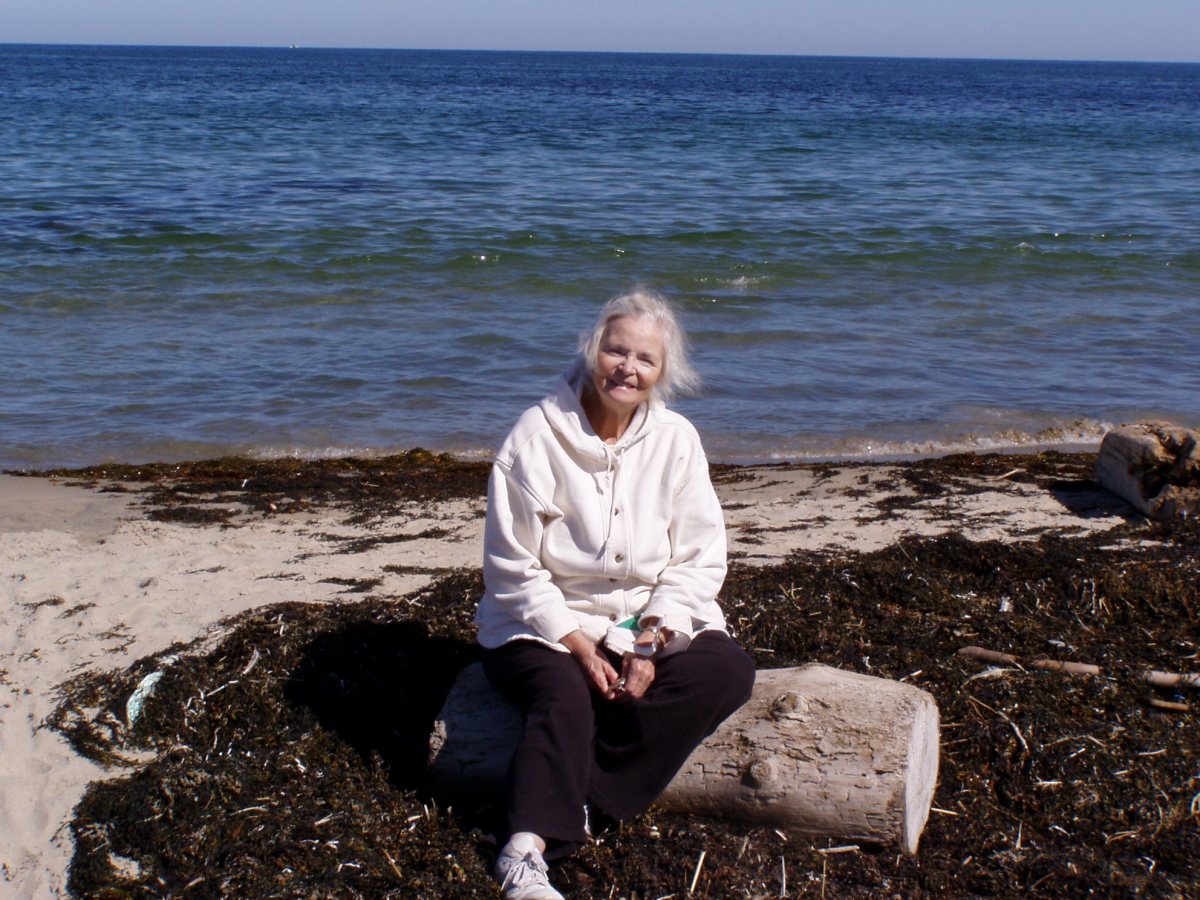
Jennifer had always been grateful that chemo hadn’t taken her long, beautiful blond hair. But these new drugs were brutal. Her hair came out in clumps on her pillow. I watched her body change from the vibrant ocean swimmer she had been to someone frail and barely recognizable. The woman who could outwalk and outswim me now needed help to move from one room to the next. The end was closing in. This would be our last summer together.

And this is where a question began — one I still carry today: What did Jennifer suffer quietly, never telling me?

I know she hid things. Not because she didn’t trust me, but because she loved me. She curled her pain inward so I wouldn’t have to carry all of it with her. I think about the fears she must have swallowed whole. Not the obvious ones — not the fear of cancer or dying or treatments that burned her skin and hollowed her bones. Those she faced openly. Those she let me see.

It’s the quieter fears I wonder about — the ones behind her eyes.

Maybe she feared becoming a burden. Maybe she feared watching me watch her suffer. Maybe she feared losing herself long before she lost her life — the swimmer, the walker, the strong woman who once outpaced me on any beach. Maybe she feared the shrinking of her world, the panic that made the front door feel like a cliff’s edge. And maybe — though she never said it — she feared leaving me alone in a house that once echoed with two voices.

There was pain she hid too. The physical pain, yes — the burns, the nausea, the exhaustion that made her bones feel hollow. But also the humiliation of losing independence, of needing help to move from one room to the next. She tried to stand straighter when I entered the room. She tried to smile when she was breaking.

I wonder what thoughts she kept from me in those last months. Did she count her remaining days? Did she lie awake listening to her own breathing? Did she realize before I did that we would not grow old together?

I will never know. Her silence wasn’t distance — it was devotion. She protected me from the full weight of her fear, even when she was too weak to lift her head. That was her last act of love.

Sometimes I wish she hadn’t. Not because I needed to know, but because she shouldn’t have had to carry any of it alone. I would have held every fear, every pain, every trembling thought. I would have carried it all if she had let me.

But she didn’t. She was always like that — even at the end. Protecting me quietly, suffering quietly, loving quietly.

And so the question remains — the one I will carry for the rest of my life: What did she endure in silence so I wouldn’t have to?

I’ll never know. And maybe that’s the shape love sometimes takes — the part that remains unknowable.

On September 14th, 2011, the hospice nurse who visited us daily said, “Maybe it’s time for inpatient hospice care.” She tried to soften it with “it’s not always a one‑way trip,” but I knew it would be. And so did Jennifer. Sometimes I wake up at night trembling, tears flowing down my cheeks as I follow the red taillights of the ambulance taking her on her last road trip. I have traveled every mile of that trip in my mind, and always will.

I spent the next eleven days in hospice, sleeping with my arms around my dying wife, waking to the sound of her breathing or gently pressing my lips to hers to check for air. And sometimes, I heard the sound that still echoes in my head at night — the death rattle.

On the morning of September 25th at 7:28, I didn’t have to check. Something felt different. The room felt hollow. Jennifer’s soul was gone. She had quietly slipped away sometime in the night. I wondered if she whispered goodbye and I didn’t hear. Knowing her, she probably didn’t want to wake me. Seminary never taught me this: the human soul is real. And hers had left the room.

The first three years after her death are a blur. I drank — sometimes fine scotch, sometimes whatever I could afford. I wrote poems deep into the night and listened to music until morning. A neighbor joked that I was channeling Edgar Allan Poe. Maybe I was. My doctor prescribed tranquilizers, antidepressants, and sleeping pills. A shrink told me I had PTSD. I snapped: “You’re nuts. PTSD? I haven’t been in a war.” They explained that I had been in a fourteen‑year battle against an enemy I couldn’t see — and that I lost the one person I couldn’t bear to lose.

I stopped the pills nine years ago. I stopped drinking ten years ago this December. I understand now: the dreams and flashbacks are part of a condition I’ll likely carry for life. And September will always be the hardest.

My first major break — the first time I truly lost my grip — was when a little white cat named Chloe died. The cat Jennifer had loved so much. The last living, touchable thing I had of her. The day I lost Chloe, I melted down. I nearly wrecked the exam room. Two friends explained to the staff what was happening, and they kindly said, “Let him go. We’ll clean up later.” Chloe’s body became Jennifer’s. Just like that morning in hospice when I had to be pulled away from my wife.

The most recent time was a few years ago, when Jennifer’s sister Gayle died. No one knows how important Gayle was to me. But in short: if there had never been a Gayle, there would have never been a Jennifer.

Every day, I try to be happy. I made a poster I look at each morning: “The dream lives; you were her dream; be happy.” I was loved. Deeply. Fiercely. And she would want me to be happy. I try. I really do. But then September comes, and the battle intensifies.

Still, I try to be as brave as she was — the woman who curled up on a hospital floor and still found the strength to fight. The woman who joined Phase 1 trials not only for herself, but for someone she’d never meet. She wanted us to grow old together. She wanted me to be happy.

But damn you, September. Your fall beauty hides your cruelty — the short days, long shadows, lonely nights, and memories that never fade.

I’ve survived fifteen Septembers without her. I will survive this one. And the next. Because carrying the weight of those years means I’m still carrying her.

And I know I’m not the only one who has traveled this road. Grief has a thousand faces, and none of them walk alone. I hope that by writing this — by laying out the bumps, the breaks, the nights that nearly swallowed me — it might help someone else get over their own rough patches and keep on keeping on.

I know if I can, they can.
Leave a comment

This site uses Akismet to reduce spam. Learn how your comment data is processed.

I’m Nobody! Who are You?

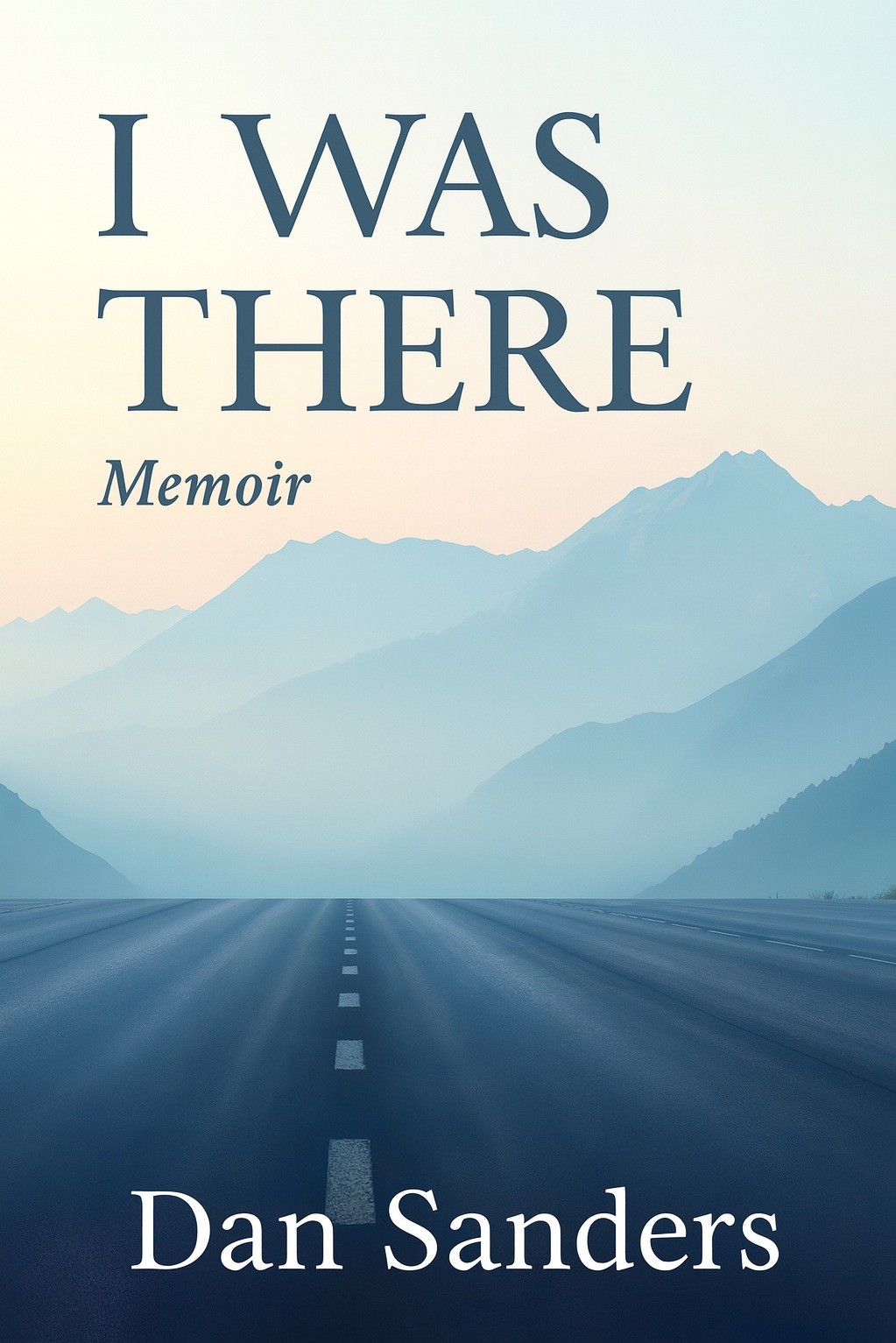
I published my first book on March 5th. It’s called I Was There. I probably should’ve called it Who Am I, because it’s a memoir, and since I can’t hang a famous name on it, no one really cares. If I were a famous musician, actor, or politician, it wouldn’t matter if my entire memoir was just me sitting by a luxury pool all day sipping fancy drinks made by an impeccable butler — or better yet, a Butlerette in a miniskirt — people would be clamoring to buy it.

On Amazon, where my book is available, I’m competing with the likes of Maya Angelou, Malcolm X, and Trevor Noah’s mother, for God’s sake — all of whom have written memoirs. And that’s just naming the lesser-known ones, except maybe Trevor’s mother, though I suspect everyone but me knows who she is. I’ll add, with sincere condolences, that all are deceased, and underline that I am not willing to die for this book.

I have considered changing the name to something like Outlaw, rewriting it just a bit — not changing the facts, just throwing in more drama and sex. I could confabulate. In writing, confabulation is when you unknowingly fill in gaps with invented details because your mind wants the story to feel complete, smooth, or emotionally coherent. It’s not lying. It’s not embellishment on purpose. It’s the brain saying, “Let me tidy this up for you,” and slipping in something that feels true even if it isn’t. Then I could list my book under Autofiction, which could easily be misunderstood as autoerotica — and that should outsell Trevor’s mother.

A few weeks ago, I was talking to a good friend who’s also writing a book. Hers is about murder, and as I said to her, she has a better chance of gaining buyers because everyone knows what murder is. Along with not dying for this book, I’m also not willing to kill for it. And let me quickly add that my friend is not the murderess in her book either. Though I’ll bet she’s a killer in a miniskirt.

I also need to say my book is not boring. The folks who have read it have all been sincerely enthusiastic in their positive reviews. It deals with ten very turbulent times in my life — ten years when this country was an amalgam of ideas, movements, people, music, war, and yes, even sex. I was involved in some amazing moments with some amazing people, some known to history — people who, if they wrote a memoir today, would give Trevor’s mother a run for her money.

But you see, what I did, I did quietly. Not a lot of fanfare or fangirls or fantastic shenanigans. Maybe what I need to do now is go out and do something to call attention to myself. Maybe run for President on the WTF Party — that’s the What The Fuck Party — or maybe the LWRS Party, the Left Wing Radical Scum Party. You may have heard mention of that breed of human; I think they’re currently under investigation by the residents at 1600 Pennsylvania Avenue.

But the truth is, I never meant to make a splash with my book — not even in a luxury backyard pool with fancy drinks being served by a Butlerette in a miniskirt. I just wanted to tell my story to a few friends and family while there was still time. Part of the problem, I think, is that many of my friends thought I was writing a completely different book — probably about my hazy, crazy days in radio, which I barely mention.

If all of a sudden some major publisher caught on to my book, a major studio made it into a major and successful motion picture, and I suddenly had fame and fortune and miniskirt‑clad Butlerettes running around, I know I’d be looking for the nearest exit to the highest mountain I could find.

In short, I think maybe Emily Dickinson was right, and her idea fits my personality better.

Emily Dickinson wrote:

I’m Nobody! Who are you?
Are you — Nobody — too?
Then there’s a pair of us!
Don’t tell! they’d banish us — you know!

How dreary — to be — Somebody!
How public — like a Frog —
To tell your name — the livelong June —
To an admiring Bog!

Maybe that’s the whole point: I never wanted to be Somebody. I just wanted to leave a trail for the other Nobodies to follow home.

Leave a comment

This site uses Akismet to reduce spam. Learn how your comment data is processed.

Rating: 1 out of 5.

SUBSCRIBING IS FREE

I Was There

There’s a moment, when you finish a book that came out of your own bones, where the world goes strangely quiet. Not peaceful quiet — more like the hush that settles over the harbor right before the fog rolls in. You stand there thinking, Well, I guess I really did this.

“I Was There” didn’t start as a book. It started as scraps — memories, radio nights, the odd corners of life that stick to you like sea salt. I wasn’t trying to write anything grand. I was just trying to make sense of the noise in my head before it drifted off like a gull that couldn’t be bothered to land.

But stories have their own stubborn tide. They kept washing back up at my feet. And eventually I realized I wasn’t collecting them — they were collecting me.

Now the thing is out there in the world, floating around on Goodreads and Amazon like a bottle tossed into the Atlantic. People can pick it up, shake it, hold it to the light, decide if they want to walk a few miles with me. Some already have. Some will. Some won’t. The tide doesn’t ask permission.

What matters is this: the stories aren’t trapped anymore. They’re free to wander, to be misunderstood, to be loved, to be argued with, to be read at 2 a.m. by someone who can’t sleep and needs to know they’re not the only one who’s lived through a few storms.

If you want to take a look, here’s the Goodreads page — no passwords, no secret handshake, just the book sitting there waiting: Click the little arrow on the left side of the Goodreads page under the word read and a drop-down will appear with the link on it.

https://www.goodreads.com/book/show/249304682-i-was-there

I’ve walked a long road to get here. Some of it was smooth, most of it wasn’t, and all of it ended up in these pages. If you decide to read it, I hope you find something in there that feels like truth — or at least something that feels like company.

The tide keeps moving. The stories keep coming. And I’m still here, walking the shoreline.

Leave a comment

This site uses Akismet to reduce spam. Learn how your comment data is processed.

NO CHARGE FOR SUBSCRIPTIONS

I’m On Goodreads

I woke up to sunshine and clear skies, and the news that five people I’ve never met are already reading my book. I guess this thing is officially out in the wild. If you use Goodreads, you can add I Was There to your “Want to Read” or “Currently Reading” shelf. It helps the algorithm gods notice the little guys.

https://www.goodreads.com/book/show/249304682-i-was-there

Leave a comment

This site uses Akismet to reduce spam. Learn how your comment data is processed.

Rating: 1 out of 5.

My Easter Ramble.

This moment comes from a stretch of my life when I was being moved across the country by U.S. Marshals—an experience that was tense, surreal, and, somehow, funny. I learned early on that if I could get the Marshals to crack a smile, the miles went by a little easier. This particular memory landed on Easter Sunday, somewhere in the endless wheat fields of Kansas, when the only thing to do was look out the window and try to keep the mood human.

“The one day I am sure of on this trip was Easter Sunday, and I remember that because as we traveled through the wheat fields of Kansas—miles and miles of nothing but wheat—I said to the Marshals, ‘You guys know it’s Easter?’ and one replied sarcastically, ‘Yeah, ya’ want to go to church?’ I replied, ‘No, I’m not much on churchgoing, but I thought we might have an Easter egg hunt, and I’ll be glad to play the part of the egg.’ This was the second time I made them laugh.”

For the whole story, the complete book follows the bouncing link at the bottom. But to help avoid Amazon’s paranoid algorithm, I’ll borrow a line from the Grateful Dead:

“Just one thing I ask of you, just one thing for me

Please forget you know my name, my darling Sugaree…”

Shake it, shake it, Sugaree — just don’t tell them that you know me.

Here’s the link to the full book: Here’s the link to the full book: https://a.co/d/016MrqUQ

Leave a comment

This site uses Akismet to reduce spam. Learn how your comment data is processed.

Rating: 1 out of 5.

My Book, “I Was There”

This book took years. Not because I was writing every day, but because I wasn’t. I’d circle back, pick up a thread, lose it again. Life got in the way. So did doubt. So did the internet. Heck, sometimes cleaning my kitchen had to take priority. Below are a couple of sections from two of the first chapters. The book is available in both paperback and Kindle formats. You don’t need a Kindle device or a special Kindle account to read my book. Anyone can read it on a computer, phone, or tablet using either the free Kindle app or the Kindle Cloud Reader, which opens right in your web browser with no download needed.

I hope you’ll enjoy the read. Those who have read it so far have told me how much they have enjoyed it.

From Chapter 2

“Several years earlier, I had begun writing letters to my draft board. Lyndon Johnson was still president, Nixon waiting in the wings. The letters weren’t meant for Johnson, but I imagined him reading them anyway—grimacing, maybe, before tossing them aside. The draft board wrote back a few times, reminding me I was deferred under 3‑A college status. Eventually, they recalculated me as 1‑A. Combat‑ready. And I welcomed it. You can’t refuse what hasn’t been offered. I was done hiding behind loopholes.”

From Chapter 3

Inside, the induction ceremony began. The room smelled of sweat. The air was thick with the breath of boys pretending not to shake. The recruiter’s voice was flat, rehearsed, like he’d stopped listening years ago.

“Please repeat after me…”

“I do solemnly swear…”

Repeat. Repeat? Hell, I could barely breathe.

“…that I will bear true faith…”

And suddenly I wasn’t in Whitehall anymore. I was back on the football field, hearing my coach yell, “Go in hell‑bent for leather, Little Sandy!” My dad was Big Sandy. The coach used that nickname to rile me up. Hell‑bent for leather — without fear.

My heart picked up the chant until it drowned out everything else.

Then came the words: Step forward.

I sat down.”

For the whole story, follow this link https://a.co/d/016lhY1F

Rating: 1 out of 5.

My Book Has Been Released

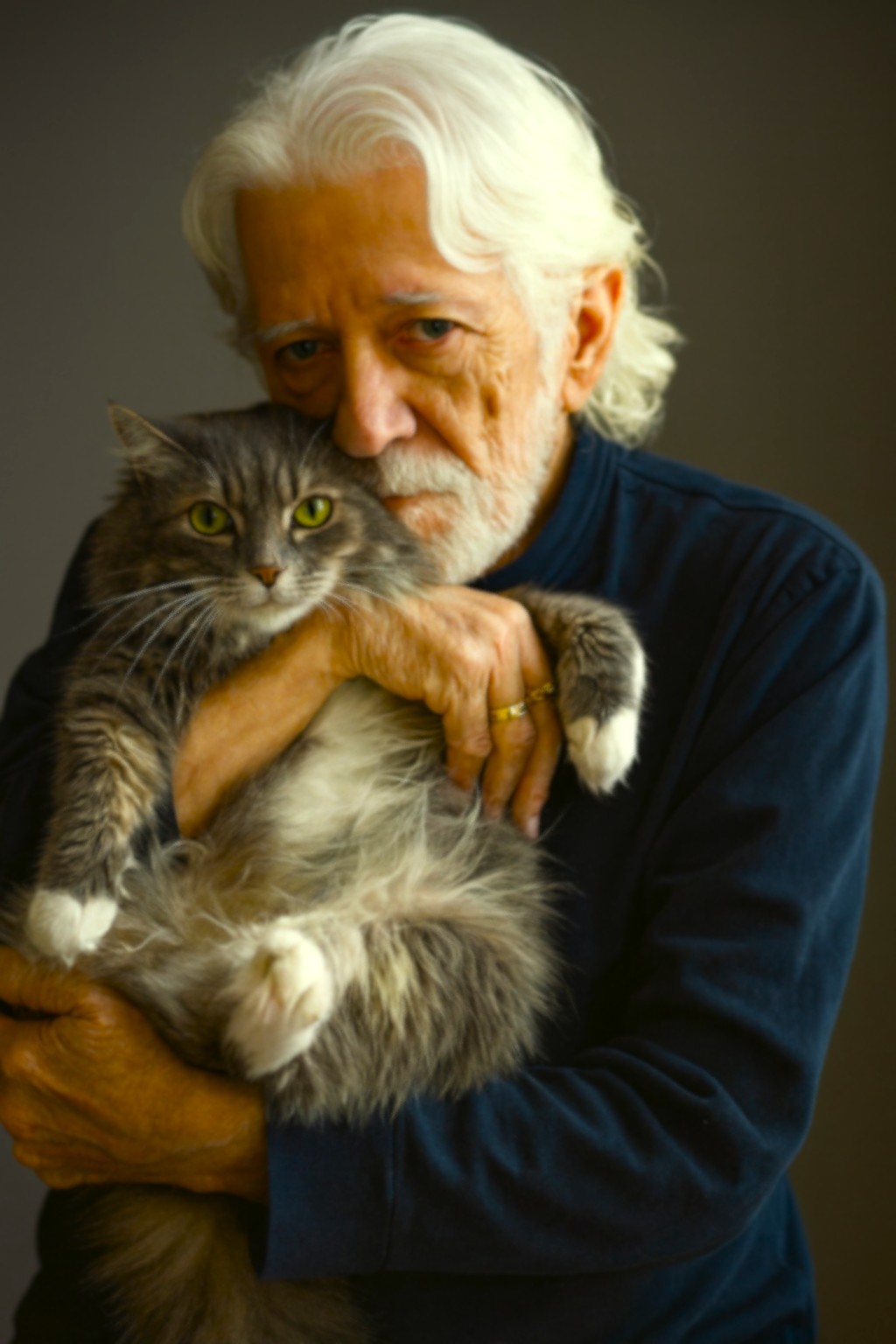
Dan Sanders grew up on Staten Island and learned early how to navigate the edges of things—family, faith, war, and the long road toward becoming himself. He spent years in radio, activism, and community work before settling in the Boston area, where he writes about the moments that refuse to stay quiet. He lives in what he calls Rambling Harbor with his cat, Shianna, and continues to tell the stories that shaped him, one honest line at a time.

The Road to “I Was There”

It didn’t happen all at once. It wasn’t a straight shot. It was a long road — with detours, breakdowns, and a few stretches where I didn’t touch the wheel at all.

This book took years. Not because I was writing every day, but because I wasn’t. I’d circle back, pick up a thread, lose it again. Life got in the way. So did doubt. So did the internet.

But the story never left. It waited. And every time someone asked — “Are you still working on it?” or “When’s the book coming out?” — it reminded me that I was still on the road.

So thank you. To everyone who kept asking. To those who read the early chapters, who saw the fog and the mountains and said, “Keep going.”

The book is out now. It’s called “I Was There”. Because I was. And now, so are you.

And who knows what comes next — maybe that’s the best part. Maybe even another book

follow this link to the Amazon page: https://a.co/d/01jMzMsm

About Me
I’m a dreamer with some rough edges, a word‑slinger, an actor, a picture‑maker, and a guy who hangs onto the stories that don’t always behave. I write from a small harbor shaped by memory, Boston weather, and all the quiet corners where truth sits down and refuses to move.
I Was There is one road I’ve walked. There’ll be others. There always are.

Leave a comment

This site uses Akismet to reduce spam. Learn how your comment data is processed.

Rating: 1 out of 5.

Mentors

Mentors can come from the docks, the back roads and back alleys, or, surprisingly, a monastery in Kentucky. Thomas Merton was one of mine. He wasn’t my only mentor, but he was a steady voice that helped me find clarity.

He was born in 1915 in Prades, France—a place distant from here, and even further removed from the Trappist life he ultimately embraced. Throughout his life, he authored 50 books, wrote 2,000 poems, and kept journals that revealed a relentless pursuit of personal growth.

What I admired wasn’t just that he was a monk. It was the strength underneath. He questioned everything, including himself. He spent time in silence, listening to things most of us drown out with noise, drinking, TV, or anything else we use to avoid facing ourselves.

He wasn’t afraid to say he didn’t have all the answers. Sometimes, he wasn’t even sure he was asking the right questions. That kind of honesty can surprise you and help you see things more clearly.

He taught me that solitude isn’t about escaping. It’s about taking care of yourself, like cleaning a boat so it keeps moving. He showed me that silence isn’t empty; it’s where change happens. He also taught me that being human is slow, difficult work, often done without recognition and against challenges.

I’ve had other mentors—some loud, some quiet, some unexpected. But Merton taught me how to be still without losing myself, how to listen, and how to stay honest even when the truth is hard to accept.

Every year on his birthday, I remember him. Though he was born in France in 1915 and eventually became a Kentucky monk, he somehow found his way into my journey. Even from behind monastery walls, he found ways to help others see new possibilities.

We don’t choose all our mentors. Some arrive unexpectedly, shaped by life, and turn out to be just what we need to keep going.

Now, fifty years later, after running up and down many roads, I find myself once again sitting in silence. Being alone is sometimes the hardest part—quiet, remembering who I have been, and, most importantly, who I am. I sometimes drift with the tide, or swim against it when necessary, here on the shores of Rambling Harbor.

Leave a comment

This site uses Akismet to reduce spam. Learn how your comment data is processed.

Gridiron for Leg Irons

In the winter of
Nineteen hundred and sixty-four
Something was going on,
Called the Vietnam War.

But all we could hear,
At the stadium that night
Was the roar of the crowd,
As we continued our fight.

But older friends
Had joined the fray,
And died in a swamp
Many worlds away.

The play was called.
And I started my run.
As another friend died
Under the gun.

The play I remember
Was Buck-forty-five
As the government kept telling
Us, lie after lie.

Then came the day
They said I must go.
But I stood on the line and shouted
My NO!!

They locked me in chains,
Both hands and
Both feet.
But the mind of the boy
Would not face defeat.

The judge said,
Son, “What will you do?”
I said, “Your honor.
It is all up to you.”

If you think I was wrong, then
To jail, I must go.
If you believe I was right
There’s a great Broadway show.
Perhaps we could go.

And with those words
In the blink of an eye
I traded the gridiron
For leg irons
And two years
At Danbury FCI.

Rating: 1 out of 5.

Leave a comment

This site uses Akismet to reduce spam. Learn how your comment data is processed.


A Radio Christmas Remembered

The holidays always make people feel nostalgic. I know I do, even though I don’t really take part in what feels like holiday madness these days, instead of real joy. I get a kick out of the ads that promise big savings if I just spend twice as much as usual.

New Year’s Day has always been a time for me to reflect, feel grateful, and sometimes regretful. Even when I was young, there was always someone or a moment to remember. As we get older, those memories matter even more.

I haven’t done live radio since 2006, and sometimes I miss it. It’s hard not to miss something you dreamed about as a kid and finally got to do. But when I talk to friends, they remind me that radio isn’t what it used to be. Now it’s all programmed and controlled by corporations, with little room for real personalities. I was lucky to work in radio when it meant something, when underground FM was fun and creative.

I wrote the next story a few years back, but it actually happened more than 40 years ago. I’m sharing it again because it’s real and it means a lot to me. People have told me it’s one of their favorite stories, and it’s one of my favorite Christmas memories, too.

A Radio Christmas Remembered

It was a quietly magical December, around 1982. Snow was blowing outside in the middle of the night—well, 3 a.m. is hardly morning. The kind of snow that sneaks up on you, drifting quietly and getting deeper. It moved across the empty parking lot, turning this lonely spot into something like the Montana or Wyoming prairie. It was the perfect scene as Merle Haggard sang about wanting the Big City to let him go. Even though I wasn’t far from Boston, it was easy to feel cut off from the world, watching the snow shape the night. I probably wouldn’t see another person for at least three more hours. I was the only one on duty from midnight to 6 a.m. I could still see most of my car, but I wasn’t sure I’d be able to move it in the morning, even if someone could get to me.

As the keeper of the light, I stayed in touch with others who were awake during the darkest hours—the night people. I’ve always liked night people. There’s a passion in how they move through life—caring, yet often a little lonely, choosing the quiet roads and the small hours. My way of connecting with them was through a country radio station in the basement of a small strip mall in the middle of nowhere. Still, our AM signal reached far and wide, especially at night—traveling over flat land and even across the ocean, carried on the darkness. I was the only show in town, the only one playing music on the AM dial in that forgotten time zone.

About once a week, a cross-country trucker would call me. When he got to Rhode Island and picked up my signal, he’d say, “The California Kid is on the line.” This time, he wished me a Happy Holiday and, as always, asked for a few songs to help him make it to Maine. I was his companion on the road.

I also got calls from Alice. She drove all over the area, servicing ATMs, and would call once or twice a week while she worked. I never met Alice; she was a bit like the coyotes that roamed the parking lot, always staying out of sight. I called her Dallas Alice, after the Little Feat song Willin’, which I played for her every time she called.

On that snowy night, Alice called to wish me a Merry Christmas and told me to wait a few minutes, then look outside. After we hung up, I played Willin’ and walked up the steps to the door. There, already gathering snow, was a small pre-lit Christmas tree and a card that read, “Merry Christmas from Dallas Alice.” I saw her footprints in the snow. She had parked close to the entrance so she could get back to the main road quickly.

I never met Alice, but her kindness lingered long after that night. I never met the California Kid either, yet in the passion of their journeys and the gentle connections forged in the dark, we shared something rare—a caring warmth that glowed quietly in the lonely hours. On that cold, snowy night so many years ago, a woman named Alice—Dallas Alice—and a trucker called the California Kid gave me memories that still make me smile every Christmas.

Every Christmas, I remember the way we reached for each other across the airwaves—passionate, caring, and yes, a little lonely, but never truly alone.


Rating: 1 out of 5.

Leave a comment

This site uses Akismet to reduce spam. Learn how your comment data is processed.

November 15, 1969 — Vietnam Moratorium

On this day in 1969, the Vietnam Moratorium Committee staged one of the most potent anti-war protests in American history. Students, activists, religious leaders, veterans—millions of us—took to the streets, calling for an end to the war and the withdrawal of American troops.

And I was there. I remember the sound of voices rising together, the signs carried high, Peace Now, Bring the Boys Home, Stop the Killing. It wasn’t fringe, it wasn’t small. It was a broad coalition of Americans from every walk of life, standing shoulder to shoulder in a peaceful, nonviolent demand for change.

The Moratorium wasn’t just one day. It was a series of protests, teach-ins, vigils, and marches that grew month after month. On November 15, 1969, it culminated in Washington, D.C., where more than half a million people gathered—the largest anti-war demonstration in U.S. history. From Arlington National Cemetery to the Capitol Building, we marched and listened to voices that carried moral weight: Senator George McGovern, Coretta Scott King, Pete Seeger, Muhammad Ali, John Kerry, Daniel Ellsberg, and Abbie Hoffman.

President Nixon wasn’t swayed. Just weeks earlier, he had given his “silent majority” speech, asking Americans to back his plan for “Vietnamization”—gradually withdrawing U.S. troops while shifting responsibility to South Vietnamese forces. He claimed to have a secret plan to end the war, but offered no details. His approval ratings soared, and many rallied behind him.

But for those of us in the streets, the war was not an abstract policy. It was blood and loss, friends drafted, lives shattered. We weren’t silent, and we weren’t a minority. We were the conscience of a nation, refusing to let the killing continue unnoticed.

Looking back, the Vietnam Moratorium was more than a protest. It was a turning point in public opinion, proof that ordinary people could gather in extraordinary numbers to demand peace. It showed the world that America’s heart was divided, and that many of us believed the war was morally, politically, and economically wrong.

I was there, and I carry that memory with me still—the chants, the music, the hope, and the stubborn belief that voices raised together can bend history.

Leave a comment

This site uses Akismet to reduce spam. Learn how your comment data is processed.

Mystical Moments

I’ve always believed in mysticism, not as superstition. But as the language of the Universe, symbols, rhythms, numbers, and crows that visited me in an unexpected place at an unexpected time. But they were there. Not long after my wife passed away, the crow woman was my loving nickname for her. For me, numbers are one of the many ways to listen deeper, to honor the unseen, to shape memory and resistance with rhythm. Some of that comes from my mother’s Cherokee Heritage, some of which flows through my veins.

My nephew keeps nudging me when he constantly posts just the numbers 333, that’s all, no explanations, just the numbers, but he knows I know.

I often see numbers repeated; it’s the constant repetition that matters. I’ve been seeing numbers a lot lately, this time it’s 1111 and 444, again and again. In many different places, on clocks, receipts, timestamps, and even in the quiet corners of memory.

1111 is the Breath’s invitation. A portal. A whisper from the Universe that something is aligning. It shows up when I’m on the edge of a new chapter—when the words are ready, when the healing deepens, when the sanctuary expands.

444 is the Breath’s shelter. A reminder that I’m not alone. That our ancestors, angels, or whatever name we give to the unseen, are walking beside me. It arrives when the work is hard, when the jaw clenches, when the lungs ache—and it says: “Keep going. You’re protected.”

Together, they’ve become part of my sanctuary strategy. Not superstition, but poetic geometry. A way to track the invisible architecture of healing.

“The match strikes at 1111.
The harbor holds at 444.”

I don’t claim to know the whole meaning. But I know how it feels. And that’s enough.

It’s FREE to subscribe.

Leave a comment

This site uses Akismet to reduce spam. Learn how your comment data is processed.