

Mentors can come from the docks, the back roads and back alleys, or, surprisingly, a monastery in Kentucky. Thomas Merton was one of mine. He wasn’t my only mentor, but he was a steady voice that helped me find clarity.
He was born in 1915 in Prades, France—a place distant from here, and even further removed from the Trappist life he ultimately embraced. Throughout his life, he authored 50 books, wrote 2,000 poems, and kept journals that revealed a relentless pursuit of personal growth.
What I admired wasn’t just that he was a monk. It was the strength underneath. He questioned everything, including himself. He spent time in silence, listening to things most of us drown out with noise, drinking, TV, or anything else we use to avoid facing ourselves.
He wasn’t afraid to say he didn’t have all the answers. Sometimes, he wasn’t even sure he was asking the right questions. That kind of honesty can surprise you and help you see things more clearly.
He taught me that solitude isn’t about escaping. It’s about taking care of yourself, like cleaning a boat so it keeps moving. He showed me that silence isn’t empty; it’s where change happens. He also taught me that being human is slow, difficult work, often done without recognition and against challenges.
I’ve had other mentors—some loud, some quiet, some unexpected. But Merton taught me how to be still without losing myself, how to listen, and how to stay honest even when the truth is hard to accept.
Every year on his birthday, I remember him. Though he was born in France in 1915 and eventually became a Kentucky monk, he somehow found his way into my journey. Even from behind monastery walls, he found ways to help others see new possibilities.
We don’t choose all our mentors. Some arrive unexpectedly, shaped by life, and turn out to be just what we need to keep going.
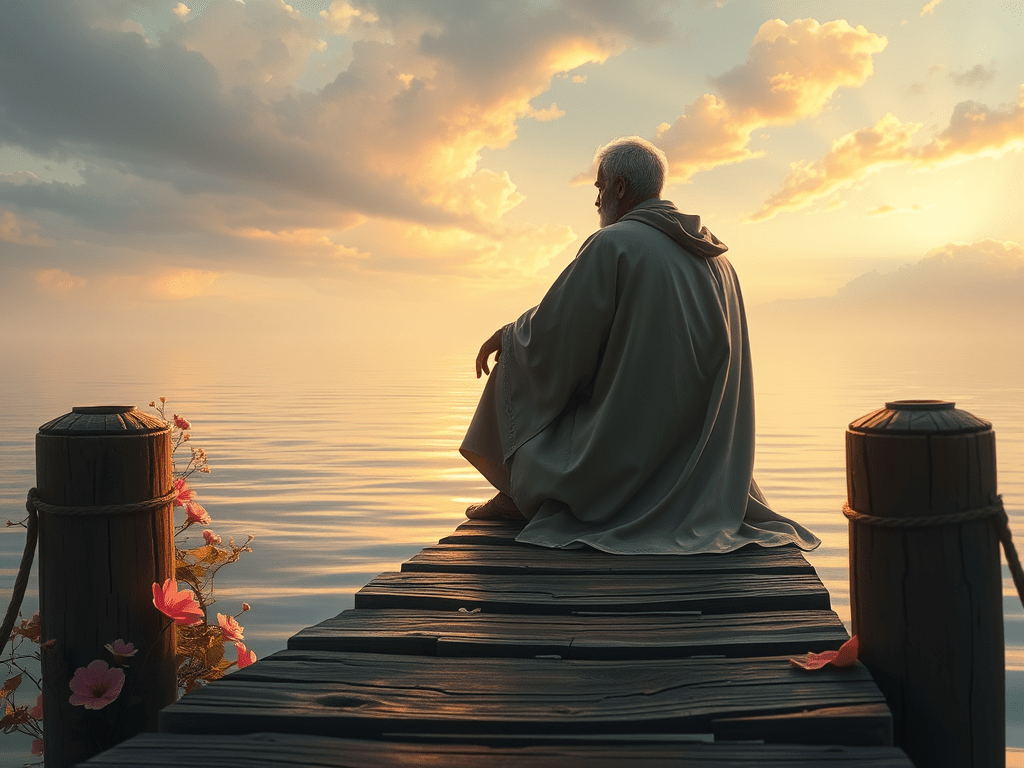
Now, fifty years later, after running up and down many roads, I find myself once again sitting in silence. Being alone is sometimes the hardest part—quiet, remembering who I have been, and, most importantly, who I am. I sometimes drift with the tide, or swim against it when necessary, here on the shores of Rambling Harbor.

 Rambling Harbor
Leave a comment