Good morning everyone
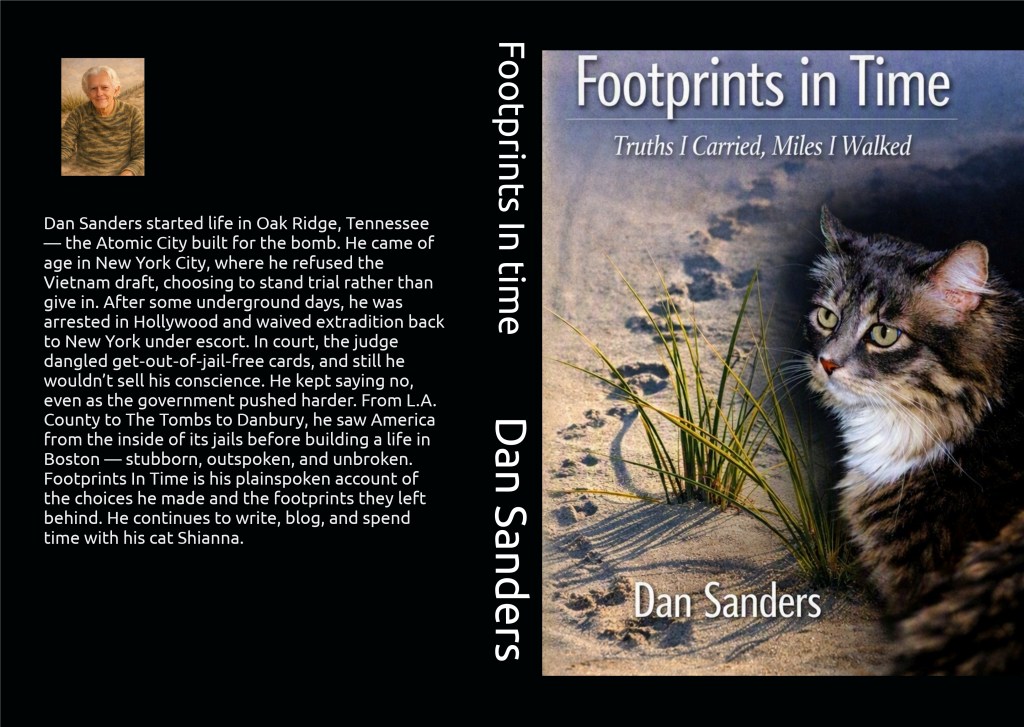
And the rest of the story now available at https://a.co/d/0iCnPaNX

Rambling Harbor: a quiet inlet in the wide sea of history, where resistance once sat down and refused to stand—caught between silence and song, memory and myth. From these shores, I share chapters of a life lived out loud in quiet ways. Poems that ache and hum. Thoughts that bloom like sea-worn prayers. Hoping to grow into an oak, but knowing I may return as a daffodil, drifting toward the light, carried by the tide. This is where I write. This is where I remember. This is where I stay.

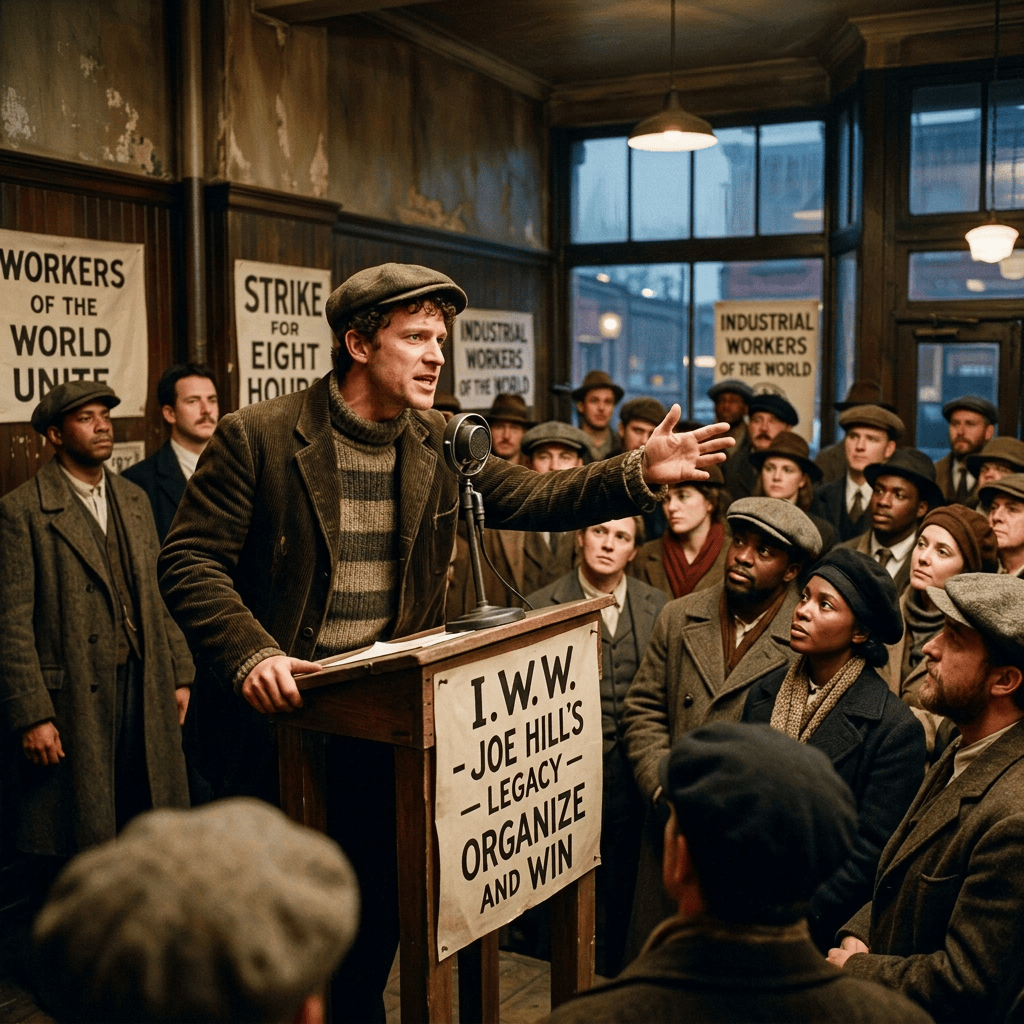
Joe Hill wasn’t just a labor organizer — he was the kind of guy who could walk into a room full of scared, exhausted workers and make them believe they mattered. A Swedish immigrant, a wandering worker, a songwriter with a knife‑sharp tongue, he wrote the songs that turned picket lines into something like church: The Preacher and the Slave, Casey Jones, There Is Power in a Union. Songs you could shout over factory noise or sing under your breath when the boss walked by.
Hill joined the Industrial Workers of the World, the Wobblies — the union that didn’t care about your race, your job, your skill level, or whether you had two nickels to rub together. If you worked, you belonged. That alone made him dangerous to the people who liked their workers quiet and scared.
In 1914, Hill was arrested in Utah for a murder he almost certainly didn’t commit. The trial was a mess — no motive, no real evidence, just a man the state wanted gone. And they got their wish: Hill was executed by firing squad in 1915. But here’s the thing — the man refused to die properly. His last words were basically, “Don’t mourn. Organize.” And that line became a fuse.
His ashes were scattered in every state except Utah, because the Wobblies figured he’d already spent enough time there. And every time workers stood up — miners, factory hands, farm laborers, nurses, teachers — Joe Hill was the ghost in the room, the voice saying, You’re worth more than they tell you.
That’s why Joan Baez could stand on the Woodstock stage in 1969, pregnant, rain coming down, and sing Joe Hill like she was calling him out of the ground. And the crowd — half stoned, half soaked, all alive — felt it. Because Joe Hill isn’t a man anymore. He’s a reminder.
You can kill a person.
You can’t kill an idea.
And Joe Hill was the idea that working people deserve a life.
Today’s the birthday of the woman Teddy Roosevelt once called “the most dangerous woman in America.” And she was eighty‑seven. Eighty‑seven.
Mary Harris Jones — Mother Jones — the old Irish battle‑axe who outlived half the men trying to shut her up. She wasn’t dangerous because she carried a gun. She was dangerous because she carried the truth, and she swung it like a pickaxe.
This was a woman who buried four kids, lost her husband, watched her business burn to the ground, and instead of folding up, she turned herself into a one‑woman earthquake. She walked into coal towns where the bosses owned the cops, the judges, the damn air, and she told them she wasn’t leaving until the workers got treated like human beings instead of replaceable parts.
She marched with miners coughing up black dust. She marched with mill kids who should’ve been playing stickball instead of losing fingers in machines. She marched with whoever needed marching — because she understood something America still forgets every other Tuesday: nothing changes unless somebody makes noise.
Roosevelt called her “dangerous.”
Hell yes she was.
Dangerous the way a storm is dangerous when you’ve built your house out of lies.
Dangerous the way a grandmother is dangerous when she’s done being polite.
Mother Jones didn’t ask permission. She didn’t wait for the right moment. She didn’t care if the powerful men in suits thought she was too loud, too old, too stubborn. She fought like hell for the living, and she never apologized for it.
So today, raise a glass — coffee, whiskey, whatever’s handy — to the tiny Irish woman who scared a president and shook the country awake.
Happy birthday, Mother Jones.
Still dangerous. Still needed.
“God almighty made women and the Rockefeller gang of thieves made the ladies.”
Mary Harris Jones Mother Jone
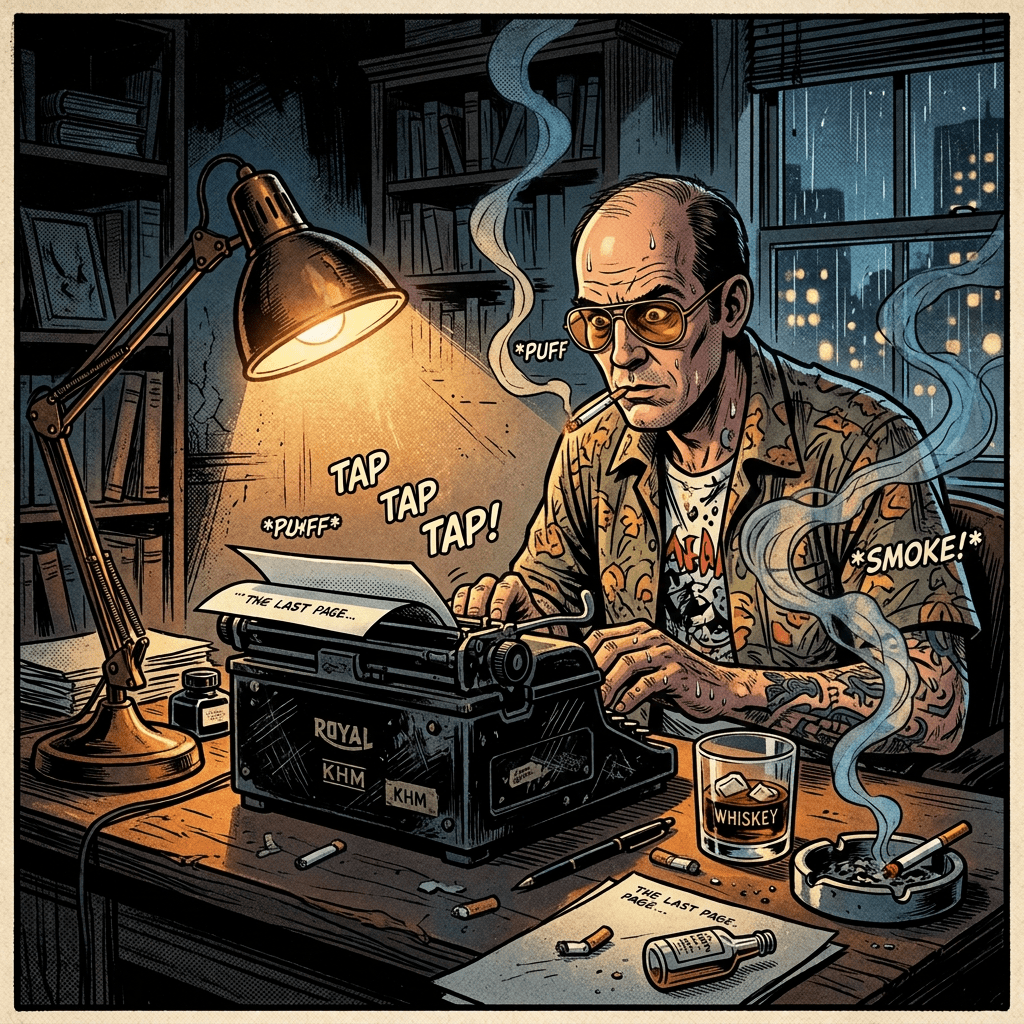
Today is the birthday of Hunter S. Thompson, born in Louisville, Kentucky, 1937 — and I wake up feeling like the sky’s got a little extra static in it. Like the day itself is leaning forward, waiting for somebody to do something reckless and honest.
There’s a certain charge in the air when you think about Thompson. Not the Hollywood cartoon of him — the real man, the one who wrote like he had a live wire jammed straight into his spine. The one who understood that America wasn’t a postcard, it was a fever dream, and the only way to tell the truth about it was to dive in headfirst and come up swinging.
I think about him the way I think about a storm rolling over the harbor — that low, electric rumble, the kind that makes you stand a little straighter because you know something’s about to break loose. He wasn’t tidy. He wasn’t polite. He didn’t sand down the edges. He was the edge.
Louisville boy. Southern heat in his blood. A kid who saw early that the “official version” of anything was usually the biggest lie in the room. So he made his own version — louder, stranger, funnier, truer. He wrote like someone who refused to pretend the country wasn’t half‑mad already.
And maybe that’s why he still hits me so hard.
Because he reminds me that the world doesn’t need more polite little sentences. It needs people willing to say what they actually see. It needs voices that don’t flinch.
On his birthday, I picture him barreling down some Kentucky back road in a beat‑up convertible, sunglasses on, hair flying, muttering about Nixon or the Derby or whatever fresh American absurdity had caught his attention. And he’s laughing — that cracked, dangerous laugh — because he knew the joke was always on the people who thought they were in charge.
Maybe that’s the lesson today.
Live a little louder.
Tell the truth even when it’s ugly.
Write the thing that scares you.
Don’t sand down your voice to make anybody comfortable.
Hunter S. Thompson didn’t just write about America — he wrestled it, bit it, spit it out, and handed us the bones.
Happy birthday, Hunter.
The harbor feels rowdier today, and I’m not fighting it.
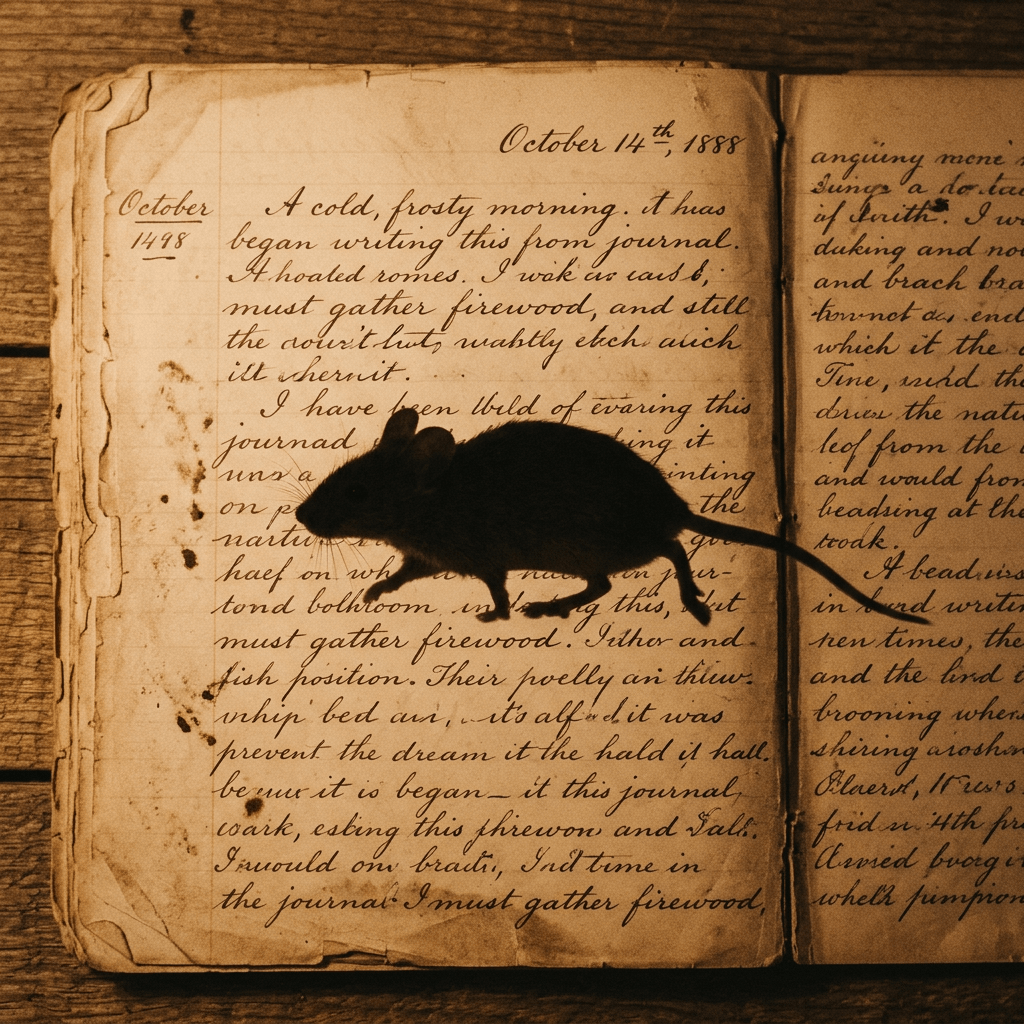
I’ve been thinking since March 5th of 2026, when I published my book, that I should rewrite it — not because I expect sales to suddenly skyrocket, but because I left out some things, explanations that would have mattered. Like the fact that I have this mystical mouse named Archibald MacLeish who shows up in the beginning. I just assumed everyone would sort of get it, and then it started occurring to me, over and over again, that no, not everyone does get it. What’s the big deal about the mouse?
So let me say it plainly.
In my book, I talk about this make‑believe mouse named Archibald MacLeish. He’s a small, mystical presence who slips in and out of the story, but the name itself comes from something real in my life. Back in school, my science teacher kept a classroom mouse, and he named that little creature Archibald MacLeish. At the time, I didn’t know much about the man behind the name, but my teacher did — and he believed in giving things names that meant something.
Later, I learned who the real Archibald MacLeish was — an American poet who wrote about democracy as something you do, not something you admire from a distance. He believed in dissent, in thinking for yourself, in the dignity of choosing your own path.
So the mouse in my book is that mouse — the one supporting my dissent. Not just the classroom mouse, and not just the poet, but the whole chain of belief behind it: a teacher who saw something in me, a poet who stood for freedom of thought, and a reminder that even the smallest presence can carry a big idea.
That’s the namesake. That’s the reason. That’s why the mouse is Archibald MacLeish. That’s why he shows up at the induction center.
And I should have explained that as an introduction to the little guy — why he’s there and given him the honor and the dues he deserved. I think folks would have felt the depth of his presence.
I write about people’s birthdays, so I figured I’d give this guy a try.
Dan Sanders was born on May 20 in Knoxville, Tennessee, and before he knew much of anything he was hauled into the strange hum of Oak Ridge — the Atomic City, where the sidewalks were clean, the secrets were thick, and the grown‑ups talked in half‑sentences. He spent his first ten years there, learning early that the world doesn’t always tell you the truth straight on.
Then came the moves, one after another, the kind of drifting that teaches a kid to keep his eyes open and his back to the wall. Eventually he landed in New York City with his parents, a place loud enough to either swallow you whole or teach you how to stand your ground. He chose standing.
When the Vietnam War came calling, he not only didn’t answer — he sent a resounding NO echoing through the induction center, loud enough that the walls probably still remember it. And the country made him pay for that honesty. He spent time in federal prison for refusing the war, learning a different kind of geography: steel bars, long nights, and the strange brotherhood of men who wouldn’t bend. It didn’t break him. It sharpened him.
He made his way from New York to Boston, where he built a quieter life without ever losing the grit of where he came from. Over the years he became a broadcaster, a writer, a guy who pays attention to the small moments most people walk right past. His work — whether memoir, poetry, or the stories he tells out loud — carries that mix of blunt honesty and dry wit that only comes from a life actually lived, not imagined.
Born on this day, May 20, Dan Sanders grew up between the secrets of Oak Ridge, the chaos of New York, the hard lessons of prison, and the hard‑earned calm of Boston — carrying all of it in the way he writes, remembers, and tells the truth as he sees it.
Subscribing is free because any money is from number of clicks and advertisers’ readers.
May 17th 1973, the Senate Watergate Committee opened its hearings.
On May 17, 1973, most Americans first heard the names E. Howard Hunt and G. Gordon Liddy—the men behind the Democratic National Committee headquarters break-in that would topple a presidency.
Those names meant something different to me; they weren’t just headlines, but men I actually encountered in the same prison.
Arrested in 1971, I moved through The Tombs and several transfers, arriving at Danbury in 1972—before Watergate gripped the nation. When Hunt and Liddy were convicted in early 1973 and already federal inmates, they entered my world.
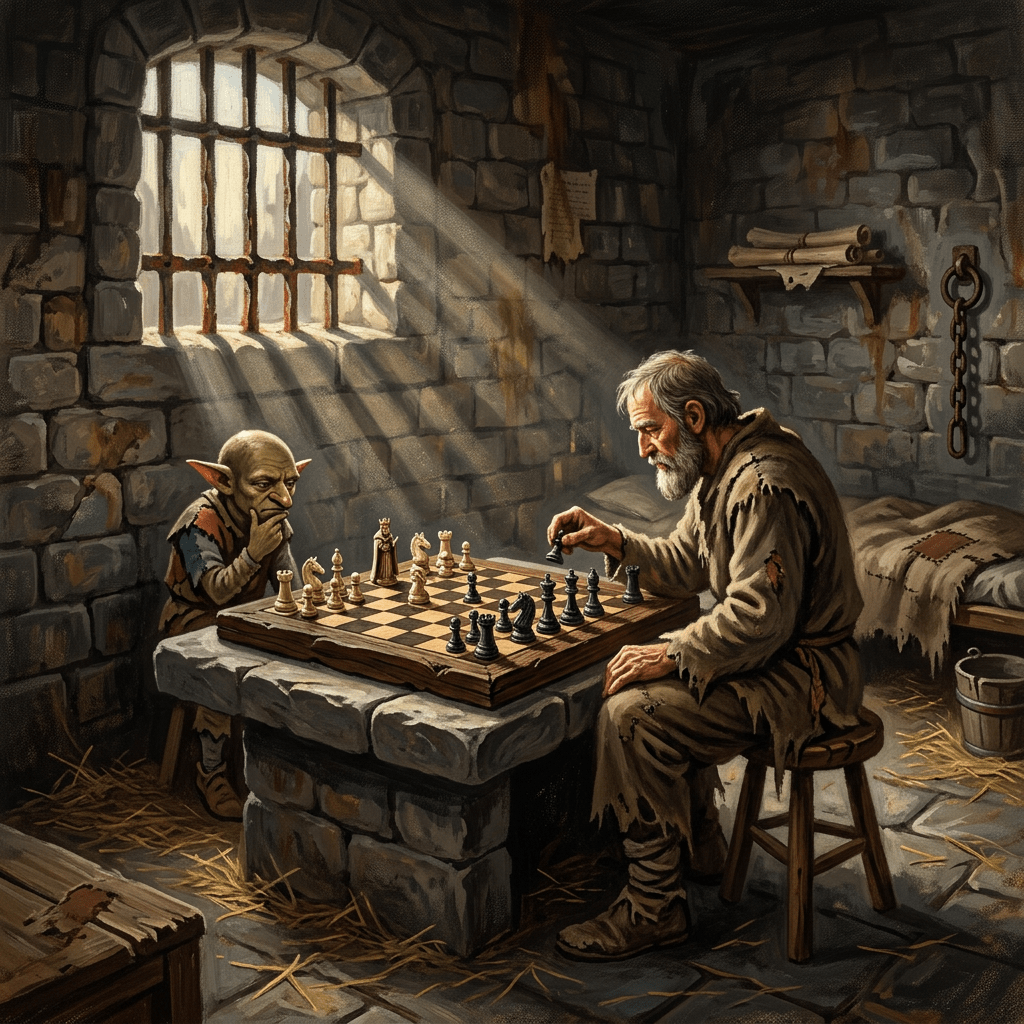
I played chess with E. Howard Hunt, the former CIA man, whose calm, almost courtly manner made him a polite opponent. That year, G. Gordon Liddy and I were both in solitary, not for the same reasons or in the same cell, but in the same block.
And here’s the strange truth:
Liddy and I shared one thing — an absolute refusal to cooperate with the authorities.
His refusal came from ideology and bravado; mine, from conscience. But to the Bureau of Prisons, defiance is defiance, and it lands you in the same concrete box.
It was surreal: America watched Watergate on TV while I shared a prison with the men who set it in motion. History unfolded in Washington, but some of them sat across from me at chess or were locked in solitary confinement down the tier.
Some people arrive in this world like a whisper. Wavy Gravy showed up like a marching band that took a wrong turn and decided to stay.
Born on this day in 1936, back when the world was still in black‑and‑white, he somehow grew into one of the most colorful human beings to ever wander through the American story. Hugh Romney was the name on the paperwork, but the universe had other plans. It needed a jester. A peacekeeper. A clown with a conscience. A man who could talk down a crowd of 400,000 hungry, muddy, half‑mad festival‑goers at Woodstock with nothing but a microphone and a grin.
He fed people. He calmed people. He made them laugh when they were ready to break. He turned compassion into a kind of performance art, and he never stopped believing that humor could be a tool for survival. The Hog Farm, the Seva Foundation, the endless parade of red noses and tie‑dye — it was all part of the same mission: make the world a little lighter, a little kinder, a little more human.
Wavy Gravy reminds us that you can take the work seriously without taking yourself seriously. That mischief can be mercy. That joy can be a form of resistance. And that sometimes the best way to keep the peace is to show up dressed like a psychedelic Santa Claus and tell everyone it’s going to be okay.
On the day he was born, the universe clearly decided it needed more color. And all these years later, we’re still living in the glow.
From Rambling Harbor, where the tide rolls in with its own kind of cosmic joke, I tip my hat to the man who proved you can change the world with a laugh and a ladle.
FREE SUBSCRIBING
I was just remembering the old Trump slogan “Drill, Baby, Drill,” and while I know a lot of folks are hurting because of the price of oil, I still think this: if there’s no earth left to drive on, the price of gas doesn’t matter.
Oil drilling harms the Earth in multiple, well‑documented ways, affecting land, water, air, wildlife, and the climate. The damage begins long before the first drop of oil is pumped and continues through extraction, transport, and burning.
Oil drilling isn’t just a technical process or an economic talking point. It tears open land that never asked to be touched, poisons water that once ran clear and leaves behind a kind of silence that feels heavier than sound. Every spill, every leak, every plume of smoke is another reminder that the earth absorbs more than we ever admit — and it remembers longer than we ever will.
That’s the ground my poem “The Scorched Land” stands on. It came from the moment I realized the planet isn’t just a stage for our mistakes — it’s a witness. A witness to the forests scraped away for access roads, the oceans slicked with oil, the air thickened by what we pull from below. These aren’t abstract harms. They’re wounds. And the earth carries them the way a body carries scars.
The poem lives in that uneasy space where anger and grief meet the stubborn belief that we can still do better. It’s not political. It’s personal. It’s the voice you hear when the world goes quiet enough for you to notice what’s been lost and what’s still worth saving.
If you’ve ever felt that shift under your feet — that sense that the ground itself is keeping score — then “The Scorched Land” is the part of this post meant for you.
And if you want the part of this story that doesn’t fit neatly into facts or headlines, it’s in the poem that grew out of all this.
The Scorched Land
When the last of us remain on this scorched land,
We will watch the ancient footage of our folly—
How we spurned the cries of nature and her hand,
How we slowly drained the lifeblood of this planet.
We will see the glaciers melt, and oceans rise,
We will see the forests burn, and deserts spread,
We will see storms, floods, droughts, and fires,
We will see the mass extinction of the living dead.
We will wonder how we could have been so blind—
How could we have let our greed destroy our home?
How could we have ignored the signs of our decline?
How could we have sealed our fate with a catacomb?
Subscriptions don’t bite and they are free
Maybe it’s just me—many times in cases like this it is at least mostly me—and before I go any further, I want to say I did not watch it. Instead, I watched the New York Knicks get some Boston Celtics revenge against the Philadelphia 76ers. But this morning the news is all over the event like bugs on a bumper, and the event I’m referring to is the Met Gala. An evening where individual costumes commonly range from $50,000 to $200,000, the Met Gala is officially known as the Costume Institute Benefit. It exists to financially support the Costume Institute of the Metropolitan Museum of Art. Unlike other Met departments, the Costume Institute is self‑funded. According to reporting summarized by The New Republic, the Met Gala has raised approximately $166.5 million over the past decade—an average of about $16–17 million per year. What makes this arrangement striking is not simply the sum raised, but the structure behind it: the museum collects the revenue while the immense aesthetic costs are absorbed by designers and luxury brands. The result is an event framed as philanthropy but sustained by a logic that more closely resembles high‑end advertising.
In the end, watching the Met Gala felt less like witnessing fashion and more like staring straight into the neon heart of conspicuous consumption. All that glitter, all that theater, all that money draped over people who can barely walk in it — it hits me like a scream I can’t quite swallow. Maybe it’s just the guy in clean jeans and a sweatshirt talking, but there’s something grounding about clothes meant to be lived in, not displayed like trophies. And standing in the shadow of all that gaudiness, I’m reminded how far spectacle can drift from anything that feels real.
SUBSCRIBING IS ALWAYS FREE
Pete Seeger was born on May 3, 1919, in New York City. He became a legendary American folk musician, songwriter, and activist whose long career made a significant impact on music and social movements. Seeger wasn’t just part of the folk revival — he was one of the engines driving it. In the 1940s and ’50s, most of America listened to crooners and big bands. Seeger was dragging a long-neck banjo across union halls, college campuses, and picket lines. He taught people that folk music wasn’t a museum piece. It was a living language of protest, hope, and ordinary people trying to make the world a little fairer.rer.
When he joined The Weavers in 1948, the group became a kind of Trojan horse for social change. They took traditional songs — work songs, spirituals, Appalachian ballads — and smuggled them into the mainstream. Their version of “Goodnight, Irene” hit No. 1 in 1950, and suddenly millions of Americans were humming a tune from the Black folk tradition. That was Seeger’s quiet genius: he made the radical feel familiar.
But success painted a target on their backs. The early 1950s were the height of the McCarthy era, when suspicion was a national pastime, and anyone with left‑leaning politics was treated like a threat. Seeger had been outspoken about labor rights, racial justice, and peace — long before it was fashionable — and that made him an easy mark. The Weavers were dragged into the anti‑communist hysteria, labeled subversive, and effectively erased from radio and television. Concerts were canceled. Record contracts evaporated. Their career didn’t just stall; it was deliberately strangled. Seeger was subpoenaed by the House Un-American Activities Committee in 1955. He refused to name names or apologize for his beliefs. He did not hide behind the Fifth Amendment. Instead, he told Congress he had a right to sing for anyone he pleased. It was a bold act of conscience, and it cost him dearly. He was indicted for contempt and blacklisted for years.
Even after these setbacks, Seeger stayed active in music. He wrote and made famous songs like “Where Have All the Flowers Gone?,” “If I Had a Hammer,” and “Turn! Turn! Turn!” These songs became important for civil rights, labor, and anti‑war movements. His version of “We Shall Overcome” helped make it a key song in the civil rights movement.
Seeger was also a committed activist beyond music. He worked for environmental causes, especially the cleanup of the Hudson River, and remained involved as he aged. He inspired artists like Bob Dylan and Bruce Springsteen to continue his tradition of songs about social issues.
Seeger died January 27, 2014, at 94, but his songs and beliefs continue to inspire. He believed music could unite people.
SUBSCRIPTION ARE FREE
Today is Earth Day, and every year it rolls around, I think about how it didn’t begin with a parade or a proclamation, but with a book — Rachel Carson’s Silent Spring back in 1962. One woman sitting at a desk, writing about pesticides and poisoned water, managed to shake the country awake, at least for a moment.
And then there was Gaylord Nelson, a senator from Wisconsin who must’ve felt like he was shouting into the wind. He went on speaking tours, trying to get pollution onto the national radar. The people heard him. The politicians mostly shrugged and went back to whatever they were doing.
So the people did what people sometimes have to do: they organized themselves. They made enough noise that the country couldn’t ignore it anymore. That noise became the first Earth Day in 1970.
Standing here in Rambling Harbor, watching the tide drag the morning light across the water, it’s hard not to think about how long we’ve been warned, and how slow we’ve been to listen. The planet keeps sending messages. The question is whether we’re finally ready to answer.
NO CHARGE FOR SUBSCRIBING







Leave a Reply