Psychedelics, Prayer, and the Big Question: What’s Really Going On?

I’m scrolling Facebook, minding my own business, and up pops Timothy Leary — yeah, that Timothy Leary — calling LSD a “microscope for consciousness.” And I’m sitting there thinking, Jesus, Tim, that’s one hell of a claim. But it stuck with me. Got under my skin a little. Made me wonder about awareness, perception, and all the ways people try to crack open the hood on their own minds.

Leary swore psychedelics could peel back the wallpaper and show you what’s really going on behind the scenes. But the more I chewed on it, the more I thought: are drugs the only way people get there? Or have monks and mystics been hitting the same level of awareness for centuries without dropping anything stronger than tea?

You look at Buddhist monks — guys who sit still longer than most of us can stay awake — and they talk about slipping into states where the “self” just dissolves. No ego, no boundaries, no noise. Sounds a hell of a lot like what Leary’s crowd described, minus the tie‑dye and the Grateful Dead soundtrack. They get there through breath, silence, and discipline. No shortcuts. No chemical boost. Just decades of showing up.

Then you’ve got Christian mystics writing about ecstatic union with God, Sufi mystics spinning themselves into divine drunkenness, Indigenous traditions using rhythm and fasting to shift consciousness. Different cultures, different methods — but they all end up describing the same thing: a mind cracked open wider than the everyday grind ever allows.

Leary’s microscope was chemical. The monk’s is meditation. The mystic’s is prayer. The Sufi’s is rhythm.

Different tools, same damn question: What is consciousness, really? Is it just neurons firing, or is there something deeper we can tune into if we know how?

Science is still poking at it with machines. Religion is still trying to wrap words around it. And regular people — folks like you and me — are still trying to experience it without losing our balance.

Some take the long road — decades of practice, discipline, devotion. Some take the shortcut — a few hours that feel like a lifetime.

And honestly?

Who are we to say the drugs aren’t the HOV lane to the same destination? Who are we to say the monk and the psychonaut aren’t both touching the same absolute truths — just arriving by different routes?

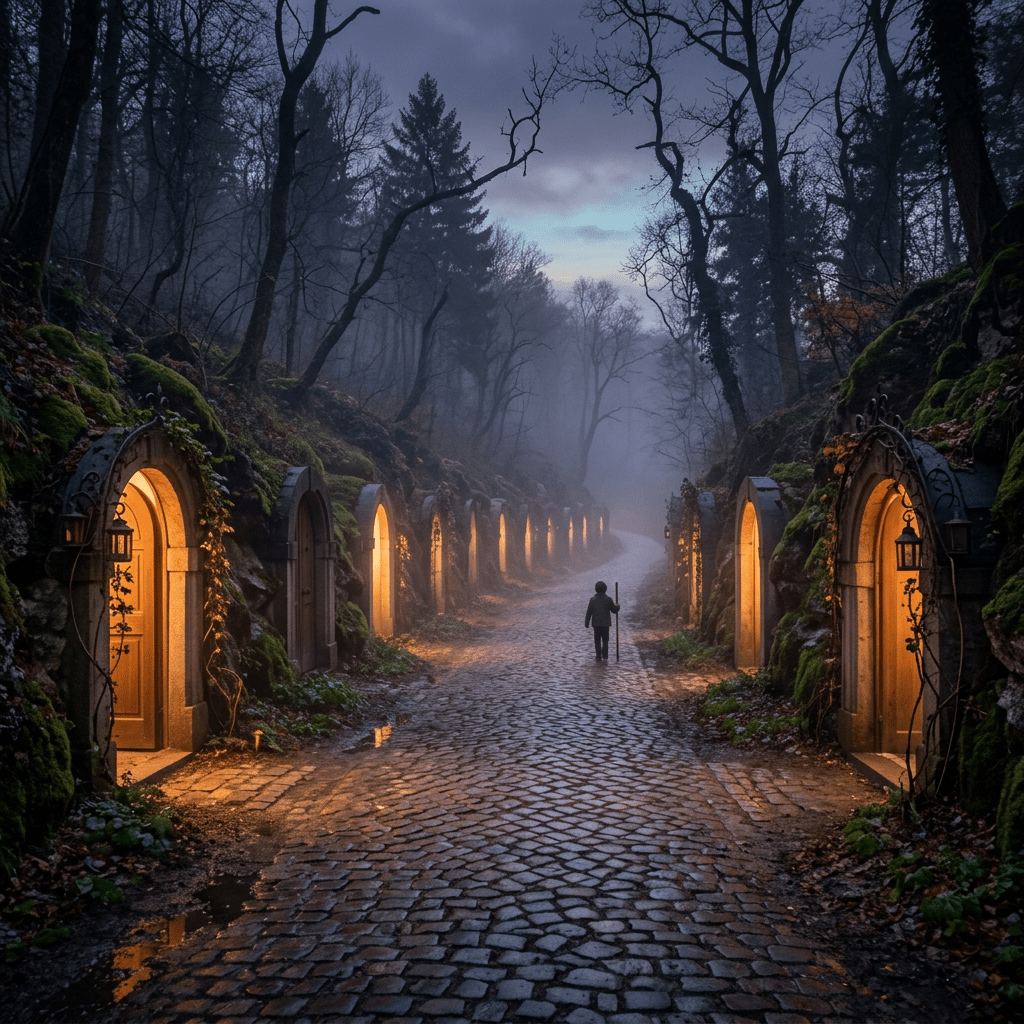
Maybe awareness has more than one doorway. And maybe every doorway leads to the same room.

Don’t get me wrong — I’m not telling you to drop acid or freeze your backside on a monastery rock. I’m just thinking out loud here.
Leave a comment

This site uses Akismet to reduce spam. Learn how your comment data is processed.

Howard Phillips Lovecraft-H.P. Lovecraft,

Born August 20th, 1890, Howard Phillips Lovecraft-H.P. Lovecraft,

It’s the birthday of H.P. Lovecraft, born Howard Phillips Lovecraft in Providence, Rhode Island, back in 1890 — a man who somehow turned the quiet corners of New England into a map of cosmic dread. Funny how a place like Providence, with its brick houses and sleepy streets, could produce someone who spent his life staring into the abyss and then reporting back on what stared right back at him.

Lovecraft wasn’t writing about monsters, not really. He was writing about that feeling you get at three in the morning when the world tilts just a little, and you realize you’re smaller than you ever imagined. He gave that feeling names — Cthulhu, Yog‑Sothoth, the whole tentacled family reunion — but the real terror was always the same: the universe doesn’t care. And he wrote that truth with the intensity of a man who felt it in his bones.

He lived most of his life broke, anxious, and tucked away in rented rooms, scribbling stories that wouldn’t become famous until long after he was gone. There’s something almost New England about that — the stubbornness, the quiet grind, the belief that the work matters even if nobody’s listening yet. Providence shaped him, and in return he reshaped Providence into a place where shadows have weight and old houses whisper at night.

On his birthday, I think about how strange it is that a man who rarely traveled farther than the Northeast managed to chart entire galaxies of fear. And how his stories, written in the margins of his own troubled life, still echo through books, movies, games, and the imaginations of anyone who’s ever felt the cold breath of the unknown on the back of their neck.

Lovecraft didn’t give us hope. He gave us honesty — the kind that crawls under your skin and stays there. And maybe that’s why he endures. Because sometimes the world really does feel bigger, darker, and stranger than we can handle. And he was the one who said, “Yes. It is. And here’s what that looks like.”

And when you look at the end of his life, it fits the man: a quiet death in 1937, only 46, worn down by illness and poverty, leaving behind stories that outlived him by decades. Today his grave in Swan Point Cemetery has become its own kind of pilgrimage site. The headstone now famously reads “I AM PROVIDENCE.” Visitors leave coins, stones, shells, little figurines, handwritten notes — small offerings to a man who spent his life writing about the vast, uncaring universe.

And lately, there’s this odd little tradition that’s grown legs: bottles of vodka left at the grave. Lovecraft hated alcohol, wouldn’t touch the stuff, so maybe it’s a joke, maybe it’s a dare, maybe it’s just fans being weird in the way fans get weird. But the strange part is how the offerings sometimes move. A bottle set neatly at the base of the stone ends up a few feet away the next morning. Stones rearrange themselves. Notes shift. Cemetery staff say it’s wind or animals or teenagers, and maybe it is. But standing there, looking at that grave with its quiet declaration — I AM PROVIDENCE — you can’t help feeling that the man who wrote about the thin places in the world might still have one around him. A little ripple. A little nudge. A little reminder that mystery doesn’t always need monsters.

Just a grave, a name, a bottle of vodka that won’t stay put, and the sense that even now, something old and curious is paying attention.

See less

Leave a comment

This site uses Akismet to reduce spam. Learn how your comment data is processed.

From the Shores of Styx

A baby cries
from the shores of Styx.

A child cries
from the darkness of a ghetto.

A baby cries,
and a child cries.

A mother cries
as a father dies.

A war starts.
Jobs end.
A house is lost.
A father dies.

The child grows.
The child says why,
but the man knows,
like those before him knew.

And so
the child sighed
as the man dies.

From the shores of Styx,
from the deepest part of Stygian,
a baby cries again—
screaming out of the darkness,
crawling out of the gloom,
refusing to keep the circle.

The child from the darkest recesses of Stygian
screams: I will fight for light,
and though I may lose
and die alone in the dark,
I will have created a glimmer
of hope.

As the man cries,
the woman dies,
and once again
a child rises from the darkness of Stygian,
screaming: I will create light.

And the circle remains
unbroken.

Author’s Note
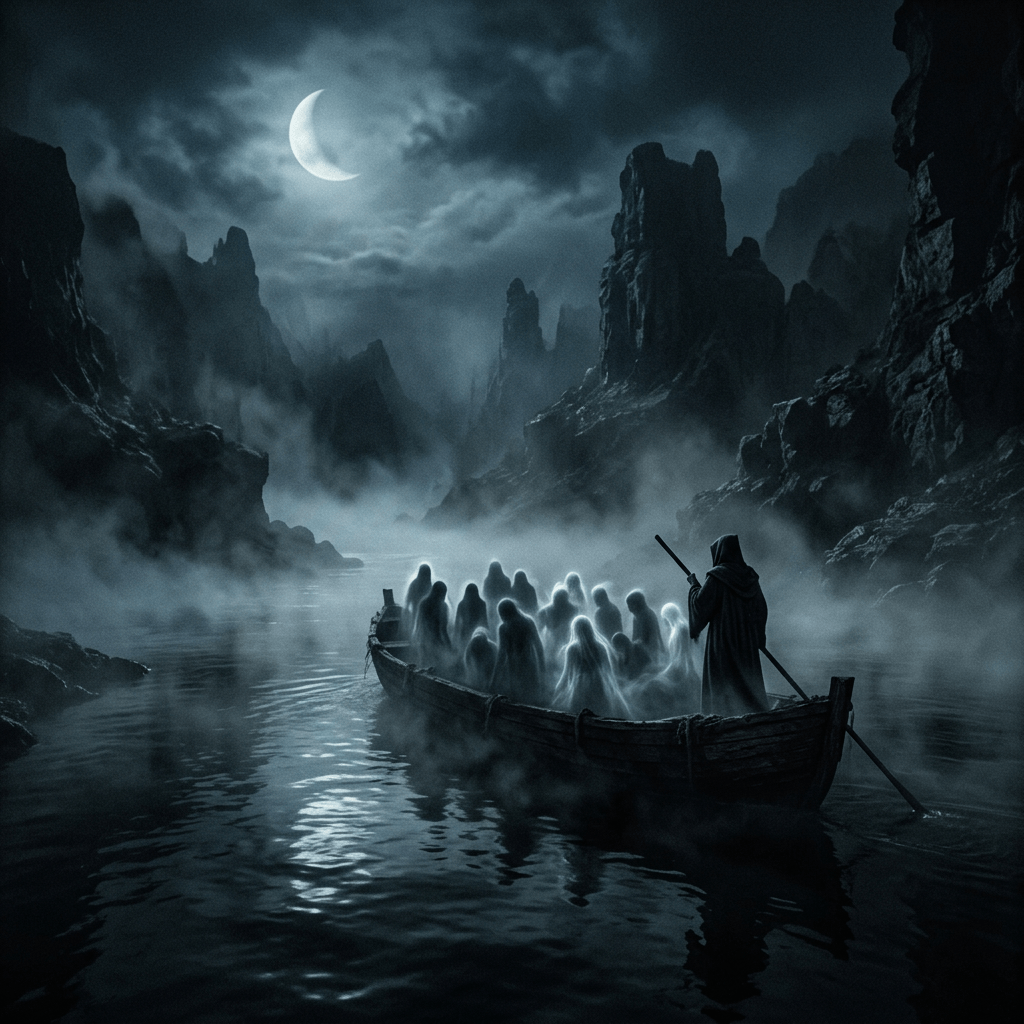
In Greek mythology, Styx is both a goddess and the river that forms the boundary between the world of the living and the underworld. The rivers Styx, Phlegethon, Acheron, Lethe, and Cocytus all converge in a great marsh at the center of the underworld. The word Stygian refers to the deep darkness associated with that realm.

2 responses to “From the Shores of Styx”

  1. John Blair Avatar
    John Blair

    In this circle, is there any hope? Or is acceptance of the circle of life hope?

    Liked by 1 person

    1. Dan Sanders Avatar

      That life continues is part of the hope, and that the child continues to break free from the darkness, proclaiming they will create light from the darkness, is more of the hope. Of course, the unbroken circle of despair could be an idea of lost hope.

      Like

Leave a comment

This site uses Akismet to reduce spam. Learn how your comment data is processed.

Rating: 1 out of 5.

I’m On Goodreads

I woke up to sunshine and clear skies, and the news that five people I’ve never met are already reading my book. I guess this thing is officially out in the wild. If you use Goodreads, you can add I Was There to your “Want to Read” or “Currently Reading” shelf. It helps the algorithm gods notice the little guys.

https://www.goodreads.com/book/show/249304682-i-was-there

Leave a comment

This site uses Akismet to reduce spam. Learn how your comment data is processed.

Rating: 1 out of 5.

Mentors

Mentors can come from the docks, the back roads and back alleys, or, surprisingly, a monastery in Kentucky. Thomas Merton was one of mine. He wasn’t my only mentor, but he was a steady voice that helped me find clarity.

He was born in 1915 in Prades, France—a place distant from here, and even further removed from the Trappist life he ultimately embraced. Throughout his life, he authored 50 books, wrote 2,000 poems, and kept journals that revealed a relentless pursuit of personal growth.

What I admired wasn’t just that he was a monk. It was the strength underneath. He questioned everything, including himself. He spent time in silence, listening to things most of us drown out with noise, drinking, TV, or anything else we use to avoid facing ourselves.

He wasn’t afraid to say he didn’t have all the answers. Sometimes, he wasn’t even sure he was asking the right questions. That kind of honesty can surprise you and help you see things more clearly.

He taught me that solitude isn’t about escaping. It’s about taking care of yourself, like cleaning a boat so it keeps moving. He showed me that silence isn’t empty; it’s where change happens. He also taught me that being human is slow, difficult work, often done without recognition and against challenges.

I’ve had other mentors—some loud, some quiet, some unexpected. But Merton taught me how to be still without losing myself, how to listen, and how to stay honest even when the truth is hard to accept.

Every year on his birthday, I remember him. Though he was born in France in 1915 and eventually became a Kentucky monk, he somehow found his way into my journey. Even from behind monastery walls, he found ways to help others see new possibilities.

We don’t choose all our mentors. Some arrive unexpectedly, shaped by life, and turn out to be just what we need to keep going.

Now, fifty years later, after running up and down many roads, I find myself once again sitting in silence. Being alone is sometimes the hardest part—quiet, remembering who I have been, and, most importantly, who I am. I sometimes drift with the tide, or swim against it when necessary, here on the shores of Rambling Harbor.

Leave a comment

This site uses Akismet to reduce spam. Learn how your comment data is processed.

“Between Manger and Cave”

A couple of nights ago, I watched a rarity on television, an excellent show, Kevin Costner Presents: The First Christmas. As I listened to Costner’s narration, I couldn’t help but think back to my seminary days and wish someone had taught this version then. What struck me, beyond Costner’s presentation and delivery, was how different it was from what the Bible teaches or what churches traditionally teach. Instead of repeating familiar pageantry, it offered a retelling grounded in historical imagination and modern scholarship, a version that, to my mind, feels closer to the reality of what may have happened.

The Gospels of Matthew and Luke give us the only biblical accounts of Jesus’ birth, and they are spare, theological narratives. Luke tells us of Mary and Joseph traveling to Bethlehem because of the census, of the child lying in a manger because “there was no room in the inn,” and of the shepherds who were the first witnesses. Matthew, by contrast, emphasizes prophecy fulfilled: the Magi following a star, Herod’s paranoia, and the slaughter of the innocents. Both accounts are symbolic, designed to show Jesus as Messiah and Savior, but they leave many historical details unspoken.

Costner’s special, however, fills in those gaps with realism. It places the birth not in a wooden stable but in a cave—a detail supported by early Christian writers like Justin Martyr and by archaeological evidence from Bethlehem. Caves were common shelters for animals, far more plausible than the tidy manger scene we’ve inherited from centuries of pageantry. That single shift changes everything: from rustic charm to raw survival. Mary and Joseph are portrayed as vulnerable teenagers under Roman oppression. Herod’s cruelty is dramatized with unflinching detail, and the shepherds and Magi are woven together in a single narrative, reflecting how oral traditions often collapse timelines. The effect is a story that feels raw and human, less about prophecy and more about survival in a dangerous world. And in many ways, that realism rings truer than the theological gloss of the Gospel accounts.

Step by step, the differences become clear. The journey to Bethlehem in Luke is framed as obedience to a Roman decree; in the show, it is hardship and fear. The birth in Luke is humble, marked by a manger; in the show, it is stark, set in a cave carved into rock, damp and shadowed, where animals were kept. The witnesses in Luke and Matthew are divided: shepherds first, Magi later, but the show collapses them into a single dramatic moment, reflecting how memory and oral tradition often blend.

Herod’s violence in Matthew is theological, a warning about worldly power; in the show, it is visceral, a reminder of the brutality of history.

In the end, the Gospels give us a theological testimony, while Costner’s special offers a reconstruction that feels historically plausible. One stresses prophecy and divine purpose; the other stresses realism and human struggle. And if accuracy is the measure, Costner’s version may come closer to the facts of the Nativity than the Gospel accounts themselves.

Watching Costner’s retelling reminded me that stories never sit still; they shift with the teller, the time, and the need. The Gospels gave us prophecy and promise, the churches gave us ritual and pageant, and Costner gave us grit and survival. Somewhere between manger and cave, shepherd and Magi, theology and history, the truth of the Nativity flickers. And maybe that’s the point: every generation must find its own way to cradle the child, whether in scripture, in spectacle, or in memory. For me, Costner’s version felt less like myth and more like history, a ritual of faith, doubt, and wonder that refuses to fade, even under the harsh light of television.

And isn’t it something when Hollywood, of all places, edges closer to the facts than the pulpit? The Gospels gave us prophecy, the churches gave us pageantry, and Costner gave us caves, grit, and teenage parents. Two thousand years later, it takes a cowboy narrator to remind us that the Nativity was not a pageant in a stable but a birth in a cave, messy, human, and all the more believable.

CODA: If you’d like to see the full special for yourself, here are the official streaming options:

  • Watch on Disney+
  • Watch on ABC.com

Runtime: 1h 24m | Rating: TV-PG

Leave a comment

This site uses Akismet to reduce spam. Learn how your comment data is processed.

Rating: 1 out of 5.

Mystical Moments

I’ve always believed in mysticism, not as superstition. But as the language of the Universe, symbols, rhythms, numbers, and crows that visited me in an unexpected place at an unexpected time. But they were there. Not long after my wife passed away, the crow woman was my loving nickname for her. For me, numbers are one of the many ways to listen deeper, to honor the unseen, to shape memory and resistance with rhythm. Some of that comes from my mother’s Cherokee Heritage, some of which flows through my veins.

My nephew keeps nudging me when he constantly posts just the numbers 333, that’s all, no explanations, just the numbers, but he knows I know.

I often see numbers repeated; it’s the constant repetition that matters. I’ve been seeing numbers a lot lately, this time it’s 1111 and 444, again and again. In many different places, on clocks, receipts, timestamps, and even in the quiet corners of memory.

1111 is the Breath’s invitation. A portal. A whisper from the Universe that something is aligning. It shows up when I’m on the edge of a new chapter—when the words are ready, when the healing deepens, when the sanctuary expands.

444 is the Breath’s shelter. A reminder that I’m not alone. That our ancestors, angels, or whatever name we give to the unseen, are walking beside me. It arrives when the work is hard, when the jaw clenches, when the lungs ache—and it says: “Keep going. You’re protected.”

Together, they’ve become part of my sanctuary strategy. Not superstition, but poetic geometry. A way to track the invisible architecture of healing.

“The match strikes at 1111.
The harbor holds at 444.”

I don’t claim to know the whole meaning. But I know how it feels. And that’s enough.

It’s FREE to subscribe.

Leave a comment

This site uses Akismet to reduce spam. Learn how your comment data is processed.