King Philip’s War — the version they never taught us

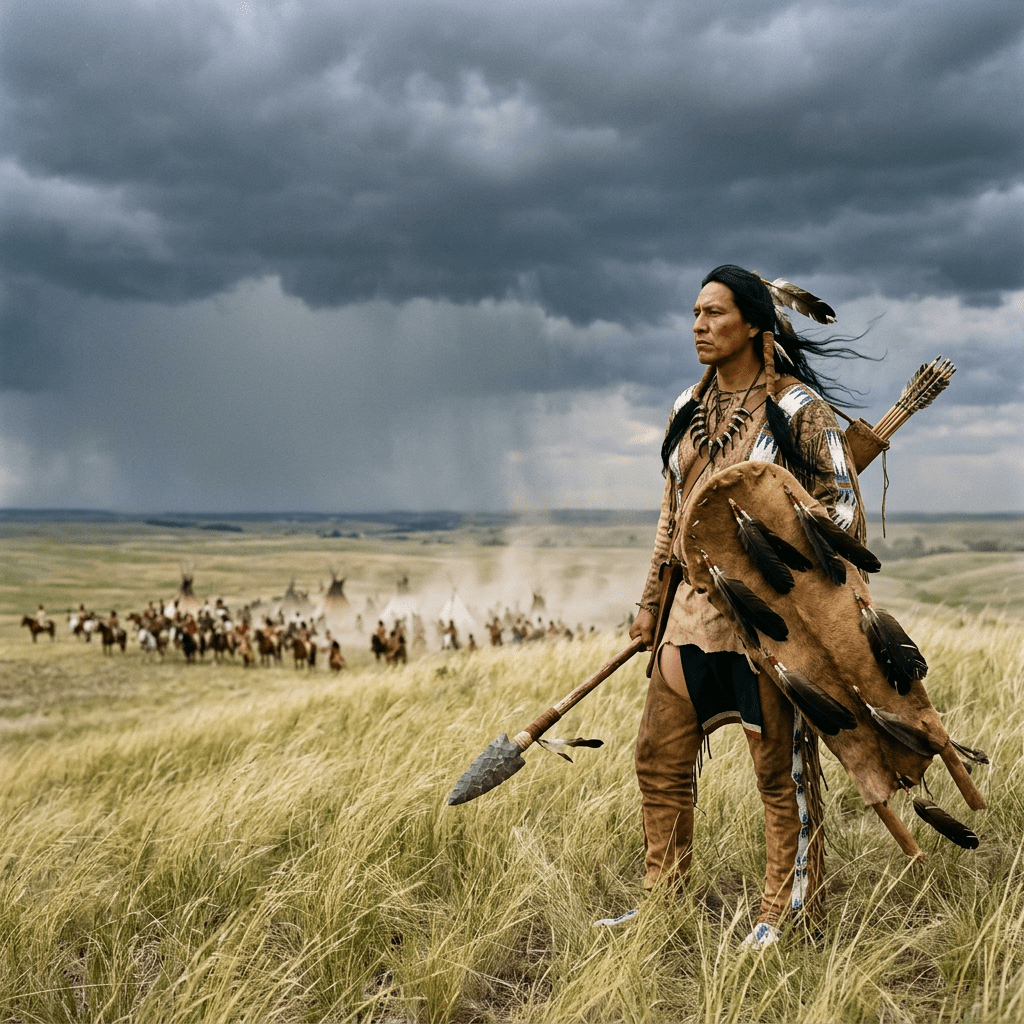
They don’t put this in the glossy schoolbooks, but New England was born in blood long before anybody slapped a Minuteman on a license plate. King Philip’s War — 1675 to 1676 — was the kind of fight that leaves a scar on a whole region, even if the region pretends it never happened.

Metacom — the English called him King Philip because God forbid they learn a Native name — was the son of Massasoit, the same Massasoit who fed the Pilgrims when they were starving and clueless. The Wampanoag kept the peace for fifty years. Half a century. Longer than most countries manage. And how did the colonists repay that? Land grabs. Broken treaties. “Misunderstandings” that always seemed to end with the English owning more shoreline.

Eventually, Metacom had had enough. And when he pushed back — when he finally said “no more” — the colonists called it savagery. They called it a massacre. They called it everything except what it was: a people fighting for the last pieces of their home.

The war burned through New England like a fever. Entire towns were wiped off the map. Twelve of them are gone completely. Proportionally, more people died here than in any war this country ever fought afterward — Civil War included. Think about that. The deadliest war in American history happened before there was an America.

And when it was over — when Metacom was killed — they cut off his head and stuck it on a pike in Plymouth. Left it there for twenty‑five years. A generation grew up walking past it. That’s not a metaphor. That’s not a legend. That’s the kind of thing a place remembers even when it pretends it doesn’t.

Thousands of Wampanoag, Narragansett, and Nipmuc people were killed. Thousands more were enslaved and shipped to the Caribbean like cargo. New England likes to talk about its abolitionist heart, its moral backbone, its “cradle of liberty.” Funny how the cradle always leaves out the bones underneath.

And here’s the part that hits closest to home:

You and I — we went to school in the same New England. We learned about the Pilgrims, the Puritans, the Revolution, the Tea Party, and Paul Revere galloping around like he invented midnight. But Metacom? King Philip’s War? Maybe a sentence. Maybe a footnote. Maybe nothing at all.

That silence isn’t an accident. It’s a choice. A whole region deciding which ghosts get to speak and which ones get paved over.

Leave a comment

This site uses Akismet to reduce spam. Learn how your comment data is processed.

Mentors

Mentors can come from the docks, the back roads and back alleys, or, surprisingly, a monastery in Kentucky. Thomas Merton was one of mine. He wasn’t my only mentor, but he was a steady voice that helped me find clarity.

He was born in 1915 in Prades, France—a place distant from here, and even further removed from the Trappist life he ultimately embraced. Throughout his life, he authored 50 books, wrote 2,000 poems, and kept journals that revealed a relentless pursuit of personal growth.

What I admired wasn’t just that he was a monk. It was the strength underneath. He questioned everything, including himself. He spent time in silence, listening to things most of us drown out with noise, drinking, TV, or anything else we use to avoid facing ourselves.

He wasn’t afraid to say he didn’t have all the answers. Sometimes, he wasn’t even sure he was asking the right questions. That kind of honesty can surprise you and help you see things more clearly.

He taught me that solitude isn’t about escaping. It’s about taking care of yourself, like cleaning a boat so it keeps moving. He showed me that silence isn’t empty; it’s where change happens. He also taught me that being human is slow, difficult work, often done without recognition and against challenges.

I’ve had other mentors—some loud, some quiet, some unexpected. But Merton taught me how to be still without losing myself, how to listen, and how to stay honest even when the truth is hard to accept.

Every year on his birthday, I remember him. Though he was born in France in 1915 and eventually became a Kentucky monk, he somehow found his way into my journey. Even from behind monastery walls, he found ways to help others see new possibilities.

We don’t choose all our mentors. Some arrive unexpectedly, shaped by life, and turn out to be just what we need to keep going.

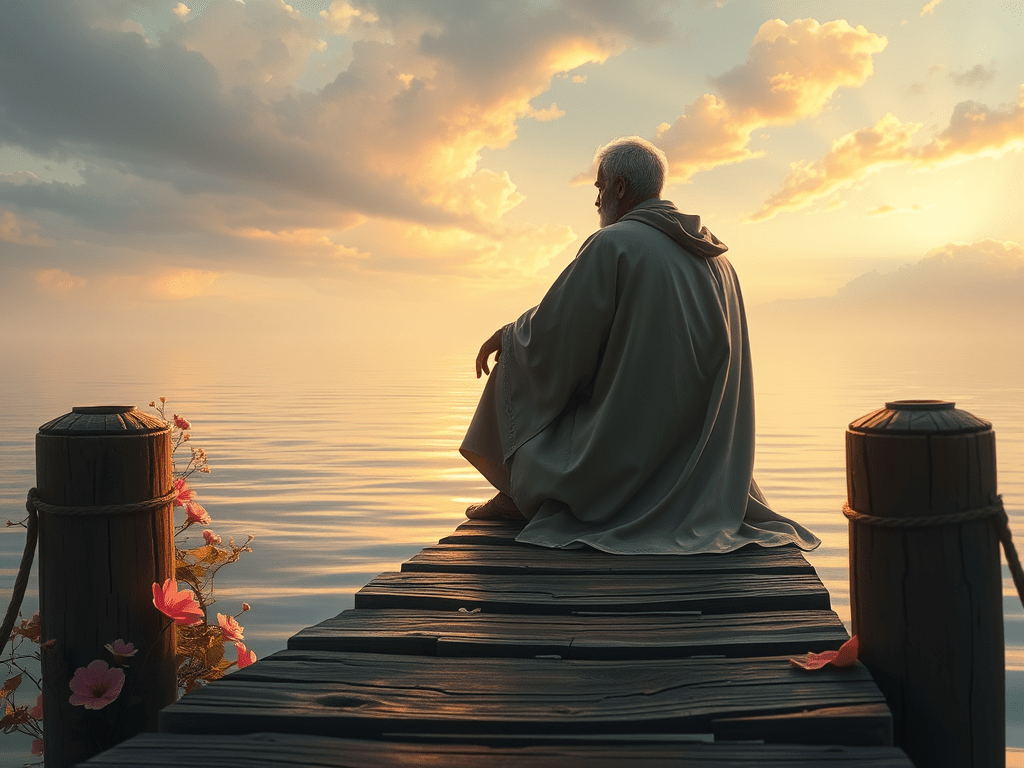
Now, fifty years later, after running up and down many roads, I find myself once again sitting in silence. Being alone is sometimes the hardest part—quiet, remembering who I have been, and, most importantly, who I am. I sometimes drift with the tide, or swim against it when necessary, here on the shores of Rambling Harbor.

Leave a comment

This site uses Akismet to reduce spam. Learn how your comment data is processed.

“Between Manger and Cave”

A couple of nights ago, I watched a rarity on television, an excellent show, Kevin Costner Presents: The First Christmas. As I listened to Costner’s narration, I couldn’t help but think back to my seminary days and wish someone had taught this version then. What struck me, beyond Costner’s presentation and delivery, was how different it was from what the Bible teaches or what churches traditionally teach. Instead of repeating familiar pageantry, it offered a retelling grounded in historical imagination and modern scholarship, a version that, to my mind, feels closer to the reality of what may have happened.

The Gospels of Matthew and Luke give us the only biblical accounts of Jesus’ birth, and they are spare, theological narratives. Luke tells us of Mary and Joseph traveling to Bethlehem because of the census, of the child lying in a manger because “there was no room in the inn,” and of the shepherds who were the first witnesses. Matthew, by contrast, emphasizes prophecy fulfilled: the Magi following a star, Herod’s paranoia, and the slaughter of the innocents. Both accounts are symbolic, designed to show Jesus as Messiah and Savior, but they leave many historical details unspoken.

Costner’s special, however, fills in those gaps with realism. It places the birth not in a wooden stable but in a cave—a detail supported by early Christian writers like Justin Martyr and by archaeological evidence from Bethlehem. Caves were common shelters for animals, far more plausible than the tidy manger scene we’ve inherited from centuries of pageantry. That single shift changes everything: from rustic charm to raw survival. Mary and Joseph are portrayed as vulnerable teenagers under Roman oppression. Herod’s cruelty is dramatized with unflinching detail, and the shepherds and Magi are woven together in a single narrative, reflecting how oral traditions often collapse timelines. The effect is a story that feels raw and human, less about prophecy and more about survival in a dangerous world. And in many ways, that realism rings truer than the theological gloss of the Gospel accounts.

Step by step, the differences become clear. The journey to Bethlehem in Luke is framed as obedience to a Roman decree; in the show, it is hardship and fear. The birth in Luke is humble, marked by a manger; in the show, it is stark, set in a cave carved into rock, damp and shadowed, where animals were kept. The witnesses in Luke and Matthew are divided: shepherds first, Magi later, but the show collapses them into a single dramatic moment, reflecting how memory and oral tradition often blend.

Herod’s violence in Matthew is theological, a warning about worldly power; in the show, it is visceral, a reminder of the brutality of history.

In the end, the Gospels give us a theological testimony, while Costner’s special offers a reconstruction that feels historically plausible. One stresses prophecy and divine purpose; the other stresses realism and human struggle. And if accuracy is the measure, Costner’s version may come closer to the facts of the Nativity than the Gospel accounts themselves.

Watching Costner’s retelling reminded me that stories never sit still; they shift with the teller, the time, and the need. The Gospels gave us prophecy and promise, the churches gave us ritual and pageant, and Costner gave us grit and survival. Somewhere between manger and cave, shepherd and Magi, theology and history, the truth of the Nativity flickers. And maybe that’s the point: every generation must find its own way to cradle the child, whether in scripture, in spectacle, or in memory. For me, Costner’s version felt less like myth and more like history, a ritual of faith, doubt, and wonder that refuses to fade, even under the harsh light of television.

And isn’t it something when Hollywood, of all places, edges closer to the facts than the pulpit? The Gospels gave us prophecy, the churches gave us pageantry, and Costner gave us caves, grit, and teenage parents. Two thousand years later, it takes a cowboy narrator to remind us that the Nativity was not a pageant in a stable but a birth in a cave, messy, human, and all the more believable.

CODA: If you’d like to see the full special for yourself, here are the official streaming options:

  • Watch on Disney+
  • Watch on ABC.com

Runtime: 1h 24m | Rating: TV-PG

Leave a comment

This site uses Akismet to reduce spam. Learn how your comment data is processed.

Rating: 1 out of 5.