
Good morning everyone
And the rest of the story now available at https://a.co/d/0iCnPaNX


Rambling Harbor: a quiet inlet in the wide sea of history, where resistance once sat down and refused to stand—caught between silence and song, memory and myth. From these shores, I share chapters of a life lived out loud in quiet ways. Poems that ache and hum. Thoughts that bloom like sea-worn prayers. Hoping to grow into an oak, but knowing I may return as a daffodil, drifting toward the light, carried by the tide. This is where I write. This is where I remember. This is where I stay.

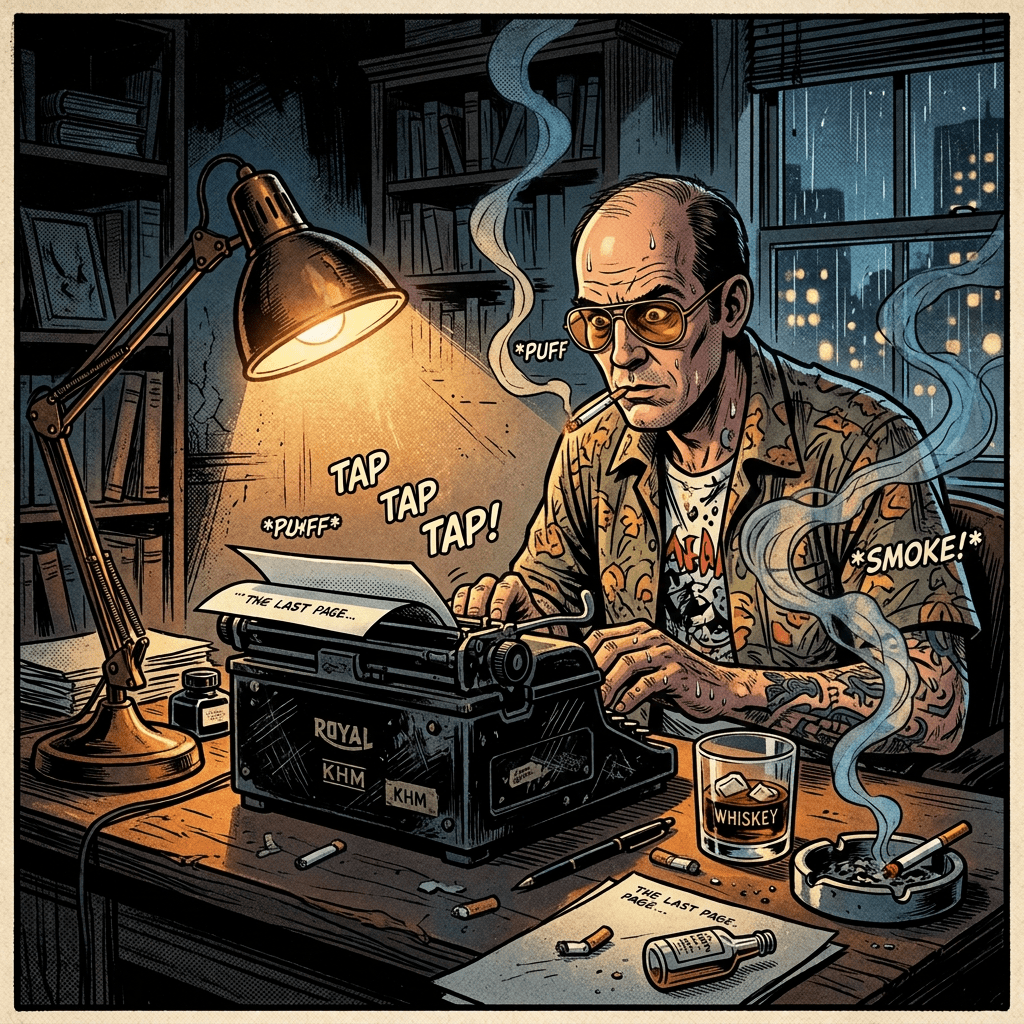
Today is the birthday of Hunter S. Thompson, born in Louisville, Kentucky, 1937 — and I wake up feeling like the sky’s got a little extra static in it. Like the day itself is leaning forward, waiting for somebody to do something reckless and honest.
There’s a certain charge in the air when you think about Thompson. Not the Hollywood cartoon of him — the real man, the one who wrote like he had a live wire jammed straight into his spine. The one who understood that America wasn’t a postcard, it was a fever dream, and the only way to tell the truth about it was to dive in headfirst and come up swinging.
I think about him the way I think about a storm rolling over the harbor — that low, electric rumble, the kind that makes you stand a little straighter because you know something’s about to break loose. He wasn’t tidy. He wasn’t polite. He didn’t sand down the edges. He was the edge.
Louisville boy. Southern heat in his blood. A kid who saw early that the “official version” of anything was usually the biggest lie in the room. So he made his own version — louder, stranger, funnier, truer. He wrote like someone who refused to pretend the country wasn’t half‑mad already.
And maybe that’s why he still hits me so hard.
Because he reminds me that the world doesn’t need more polite little sentences. It needs people willing to say what they actually see. It needs voices that don’t flinch.
On his birthday, I picture him barreling down some Kentucky back road in a beat‑up convertible, sunglasses on, hair flying, muttering about Nixon or the Derby or whatever fresh American absurdity had caught his attention. And he’s laughing — that cracked, dangerous laugh — because he knew the joke was always on the people who thought they were in charge.
Maybe that’s the lesson today.
Live a little louder.
Tell the truth even when it’s ugly.
Write the thing that scares you.
Don’t sand down your voice to make anybody comfortable.
Hunter S. Thompson didn’t just write about America — he wrestled it, bit it, spit it out, and handed us the bones.
Happy birthday, Hunter.
The harbor feels rowdier today, and I’m not fighting it.
Sometimes a chapter needs another walk around the block, and this one did. I went back, rewrote it, and finally gave a little mouse named Archibald MacLeash the explanation he deserved. If you’ve read the book, this fills in the cracks. If you haven’t, well—welcome to the neighborhood.
The night before my induction, I couldn’t sleep. I lay in bed staring at the ceiling, looking for answers. My heart pounded like I’d just run the 40‑yard dash. A drumbeat I wasn’t sure I could march to — too fast, too loud, too soft, and definitely its own rhythm. But I knew exactly where I did not want to march.
I tried everything: counting breaths, replaying old football games, thinking of my girlfriend, even astral projection — maybe I could end up on some tropical island, safe and away. I wanted to be anywhere but, in that room, in that bed, wondering where I might be tomorrow night. But dread snuck in under the door and settled in my brain. I wasn’t afraid of dying. I was afraid of disappearing — of becoming a number, a uniform, a cog in a machine I didn’t believe in.
The draft lottery — America’s twisted game show of fate — wouldn’t begin until 1969. But in 1964, the draft was still run by local boards, deferments reviewed by hand. At eighteen, I burned my college deferment card, thinking I was making a statement. I wrote letters to President Johnson and to my Staten Island draft board, asking to be reclassified 1‑A. You can’t refuse what you haven’t been offered. And I was tired of hiding behind loopholes, even if I hadn’t meant to hide in the first place.
By ’69, they granted my wish. I was 1‑A — fit for service, next in line to toe the line, or not. Five years of business schools and seminaries had led me here. From the gridiron to leg irons.
And then the morning came.
I was up by 6 a.m. — not that I’d slept. I left a note for my mother saying I’d gone to visit friends. I wondered how long I’d really be gone. I took the bus to the Staten Island Ferry, crossed the Hudson, and walked the two longest blocks of my life to Whitehall Station. Even writing about it now, I can feel that god‑awful sickness in my stomach. I can’t do this.
Fight or flight? Mine was freeze and sit. No exit. Just a heart pounding like a drumline on speed. I was about to jump off a cliff and couldn’t see the bottom. Compared to this, the Coney Island Parachute Jump was a kiddie ride.
Whitehall Station sat in lower Manhattan like a bureaucratic bunker — the place where boys became soldiers or tried not to. It shut down in 1972, two days before my birthday, while I was in Danbury Federal Correctional Institution. I’d wanted it torn down. I’d done my best to see that happen.
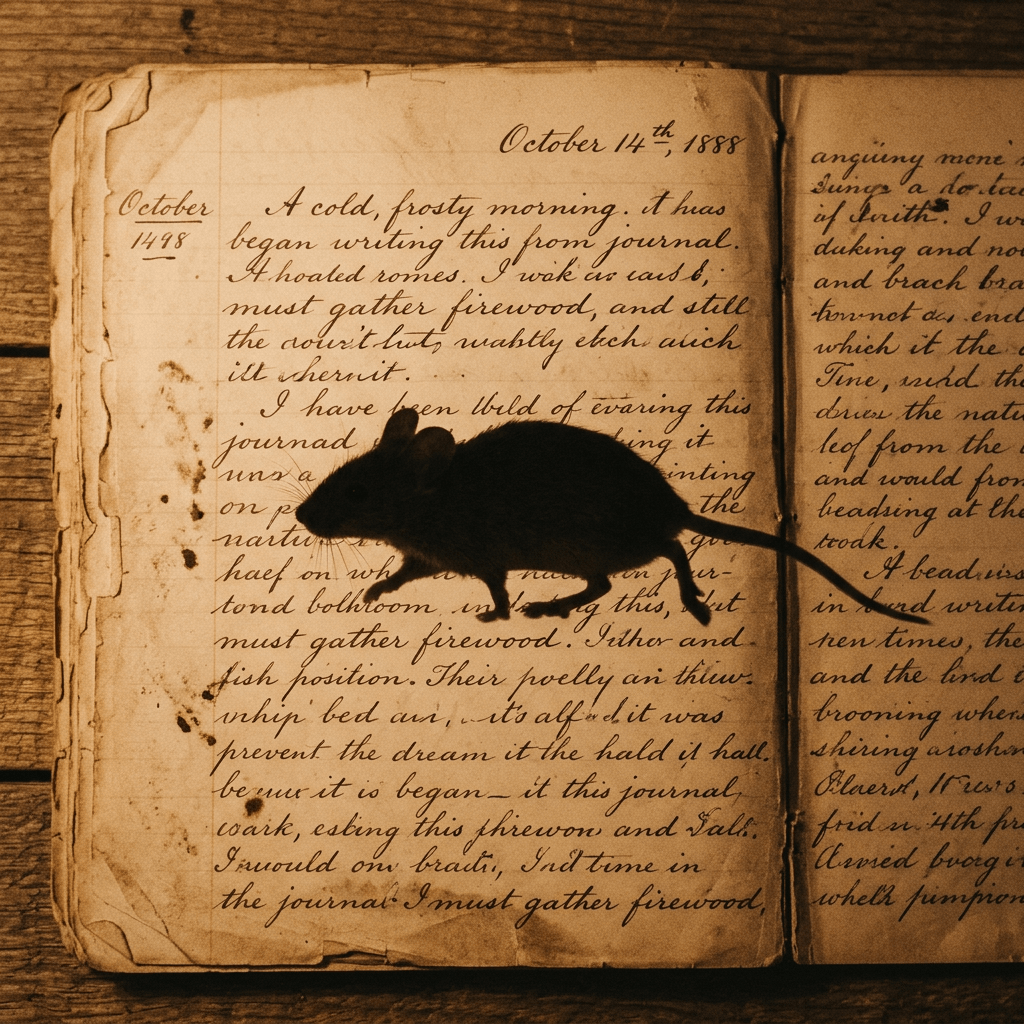
As I climbed the steps, I saw Mr. Harold Jones waiting outside. My eighth‑grade science teacher — but more than that. Over the years, he’d become my confidant, the one adult who understood what I was feeling. He made science feel like storytelling, helped along by a fictional mouse named Archibald MacLeish who lived in his coat closet. I never saw him, but I saw him. Still do.
Mr. Jones said he named the mouse Archibald MacLeish after the poet — “because even a mouse can carry big ideas,” he told me once, tapping his temple like he was winding up a thought. MacLeish wrote about truth, about standing your ground when the world tries to bend you, about the kind of dissent that isn’t loud or showy but stubborn and necessary. He believed democracy wasn’t something you admired from a distance — it was something you practiced, even when it cost you. Jones figured a mouse could teach eighth‑graders more about courage and conscience than any textbook. The beret, the cane, the red bandana — that was all me. That’s how I pictured him: a tiny philosopher with a rebel’s wardrobe, the kind of creature who’d whisper, Don’t let them turn you into something you’re not. Archibald showed up whenever I needed him — not as a hallucination, not as a joke, but as a reminder that dissent can be quiet, steady, and small, and still shake the world.
Mr. Jones didn’t say much that morning. He didn’t have to. He told me to stay who I was. Said it was something to be proud of.
Inside, the induction ceremony began. The room smelled of sweat. The air was thick with the breath of boys pretending not to shake. The recruiter’s voice was flat, rehearsed, like he’d stopped listening years ago.
“Please repeat after me…”
“I do solemnly swear…”
Repeat. Repeat? Hell, I could barely breathe.
“…that I will bear true faith…”
And suddenly I wasn’t in Whitehall anymore. I was back on the football field, hearing my coach yell, “Go in hell‑bent for leather, Little Sandy!” My dad was Big Sandy. The coach used that nickname to rile me up. Hell‑bent for leather — without fear.
My heart picked up the chant until it drowned out everything else.
Then came the words: Step forward.
I sat down.
The recruiter blinked, confused. Thought I was sick. I stood, breathed, sat again.
“I’m not moving,” I said, though I wasn’t sure I could even if I wanted to.
The sergeant’s face turned fire‑engine red. My heart was a jackhammer. I was frozen in defiance — or fear. Maybe both. I prayed he wouldn’t hit me. If he did, I wasn’t sure I could stop myself from hitting back. I may be a peacenik, but I know myself. Anger lives in me too. If I struck him, I wouldn’t be going to jail for trying to end a war, but for starting one.
Two MPs grabbed me like a sack of potatoes and hauled me to a holding cell. I expected that part. I was prepared. No blows were thrown. An Army lawyer came in to make sure I knew what I was doing. I asked if he knew what he was doing — and what he was part of. He accepted my yes and left.
Then came the police car, the ride to Staten Island, and my first night in jail. Five miles from the gridiron. A lifetime away.
As they carried me out of Whitehall, I refused to walk — part of my plan for total non‑cooperation. Mr. Jones stood on the grimy sidewalk. He smiled. Gave me a thumbs‑up. I flashed him a peace sign from between a cop’s holster and his arm.
And behind him — I swear — I saw Archibald MacLeish strutting down the sidewalk, beret tilted, cane tapping a rhythm only I could hear. He paused near the induction center door, tipped his hat, and whispered, “Courage isn’t loud. It’s the quiet refusal.” Then he vanished into the crowd.
Mr. Jones arranged to bail me out, though I was released on my own recognizance. I spent the rest of the day at his home — resting, recovering, trying to make sense of what had just happened. And what would happen next. To my mother, I was simply visiting Mr. Jones. I was old enough to say, “Don’t call my parents,” and the authorities obliged.
A trial date was set for April. The weeks leading up to it blurred into paperwork, legal advice, friends’ advice, and panic. I walked Manhattan like I always had, but now I memorized the cracks in the sidewalk, the rhythm of subway trains, the smell of roasted peanuts from corner carts — anything to anchor me.
Oddly, I’d always found the Financial District peaceful on a Sunday morning. Wall Street’s insanity gave way to silence. I walked it a few times in those last days. And Times Square — the lights of Broadway weren’t going to shine on me, but they still shine inside my memory. So do the beaches of Staten Island.
I didn’t know what I was looking for. Only that it wasn’t in New York anymore.
And so the city’s noise faded behind me. The cracks in the sidewalks, the drumbeat of the subway, even Broadway’s lights became part of a memory I carried but could no longer live inside.
What I needed was silence. Steadiness. A place where the ground didn’t demand allegiance.
Somewhere in the back of my mind, I could still hear Archibald’s cane tapping — that quiet rhythm he kept for me when I couldn’t keep one for myself. He’d been at Whitehall, and he’d be on the mountain too. Courage travels light.
Emily’s mountain was waiting. Quiet, immovable, patient — just like she was — offering refuge without question.
I’ve been thinking since March 5th of 2026, when I published my book, that I should rewrite it — not because I expect sales to suddenly skyrocket, but because I left out some things, explanations that would have mattered. Like the fact that I have this mystical mouse named Archibald MacLeish who shows up in the beginning. I just assumed everyone would sort of get it, and then it started occurring to me, over and over again, that no, not everyone does get it. What’s the big deal about the mouse?
So let me say it plainly.
In my book, I talk about this make‑believe mouse named Archibald MacLeish. He’s a small, mystical presence who slips in and out of the story, but the name itself comes from something real in my life. Back in school, my science teacher kept a classroom mouse, and he named that little creature Archibald MacLeish. At the time, I didn’t know much about the man behind the name, but my teacher did — and he believed in giving things names that meant something.
Later, I learned who the real Archibald MacLeish was — an American poet who wrote about democracy as something you do, not something you admire from a distance. He believed in dissent, in thinking for yourself, in the dignity of choosing your own path.
So the mouse in my book is that mouse — the one supporting my dissent. Not just the classroom mouse, and not just the poet, but the whole chain of belief behind it: a teacher who saw something in me, a poet who stood for freedom of thought, and a reminder that even the smallest presence can carry a big idea.
That’s the namesake. That’s the reason. That’s why the mouse is Archibald MacLeish. That’s why he shows up at the induction center.
And I should have explained that as an introduction to the little guy — why he’s there and given him the honor and the dues he deserved. I think folks would have felt the depth of his presence.
There are mornings in Rambling Harbor when the gulls sound like they’re arguing about poetry — loud, insistent, half‑mad, and absolutely convinced they’ve got the line that’ll crack open the universe. And on a day like this, with the tide dragging its feet and the coffee tasting like it’s been through a few revolutions of its own, I find myself thinking about Allen Ginsberg, born in 1926, long before “flower power” became a bumper sticker or a punchline.
Ginsberg didn’t invent the sixties, but he sure as hell lit the pilot light. The man could walk into a room and suddenly everyone was talking louder, thinking stranger, feeling braver. He had that way of seeing the world — cracked, luminous, holy in its brokenness — and he didn’t apologize for any of it. Why would he. The whole point was to not apologize.
I imagine him wandering into Rambling Harbor, beard catching the sea breeze, eyes scanning the horizon like he expected a revelation to come rolling in on the next wave. And maybe it would. This place has a habit of handing you truths you didn’t ask for. Sometimes they’re gentle. Sometimes they hit like a wet rope across the knuckles.
He’d probably stand on the seawall, muttering lines to himself, something about angels and madness and the way America keeps trying to outrun its own shadow. And the old-timers down by the bait shop would look up, squint, and say, “Who’s the guy talking to the ocean?” And someone else would shrug and say, “Poet, probably,” and that would be enough.
Because around here, we know a thing or two about people who talk to things that don’t talk back.
Ginsberg coined “flower power,” but he also carried the weight of the world in his chest. He saw the beauty and the rot, the promise and the poison, and he wrote it all down like he was afraid the country might forget itself if he didn’t keep reminding it. And maybe he was right. Maybe we still need reminding.
So on his birthday, I raise a mug — chipped, stained, honest — to the man who howled at the machinery and dared it to howl back. To the poet who believed the world could be better if we just cracked our hearts open wide enough. To the stubborn, wild, inconvenient hope of it all.
And here in Rambling Harbor, where the wind never quite settles and the stories never quite end, that feels like something worth celebrating.
Subscriptions are free
I write about people’s birthdays, so I figured I’d give this guy a try.
Dan Sanders was born on May 20 in Knoxville, Tennessee, and before he knew much of anything he was hauled into the strange hum of Oak Ridge — the Atomic City, where the sidewalks were clean, the secrets were thick, and the grown‑ups talked in half‑sentences. He spent his first ten years there, learning early that the world doesn’t always tell you the truth straight on.
Then came the moves, one after another, the kind of drifting that teaches a kid to keep his eyes open and his back to the wall. Eventually he landed in New York City with his parents, a place loud enough to either swallow you whole or teach you how to stand your ground. He chose standing.
When the Vietnam War came calling, he not only didn’t answer — he sent a resounding NO echoing through the induction center, loud enough that the walls probably still remember it. And the country made him pay for that honesty. He spent time in federal prison for refusing the war, learning a different kind of geography: steel bars, long nights, and the strange brotherhood of men who wouldn’t bend. It didn’t break him. It sharpened him.
He made his way from New York to Boston, where he built a quieter life without ever losing the grit of where he came from. Over the years he became a broadcaster, a writer, a guy who pays attention to the small moments most people walk right past. His work — whether memoir, poetry, or the stories he tells out loud — carries that mix of blunt honesty and dry wit that only comes from a life actually lived, not imagined.
Born on this day, May 20, Dan Sanders grew up between the secrets of Oak Ridge, the chaos of New York, the hard lessons of prison, and the hard‑earned calm of Boston — carrying all of it in the way he writes, remembers, and tells the truth as he sees it.
Subscribing is free because any money is from number of clicks and advertisers’ readers.
May 17th 1973, the Senate Watergate Committee opened its hearings.
On May 17, 1973, most Americans first heard the names E. Howard Hunt and G. Gordon Liddy—the men behind the Democratic National Committee headquarters break-in that would topple a presidency.
Those names meant something different to me; they weren’t just headlines, but men I actually encountered in the same prison.
Arrested in 1971, I moved through The Tombs and several transfers, arriving at Danbury in 1972—before Watergate gripped the nation. When Hunt and Liddy were convicted in early 1973 and already federal inmates, they entered my world.
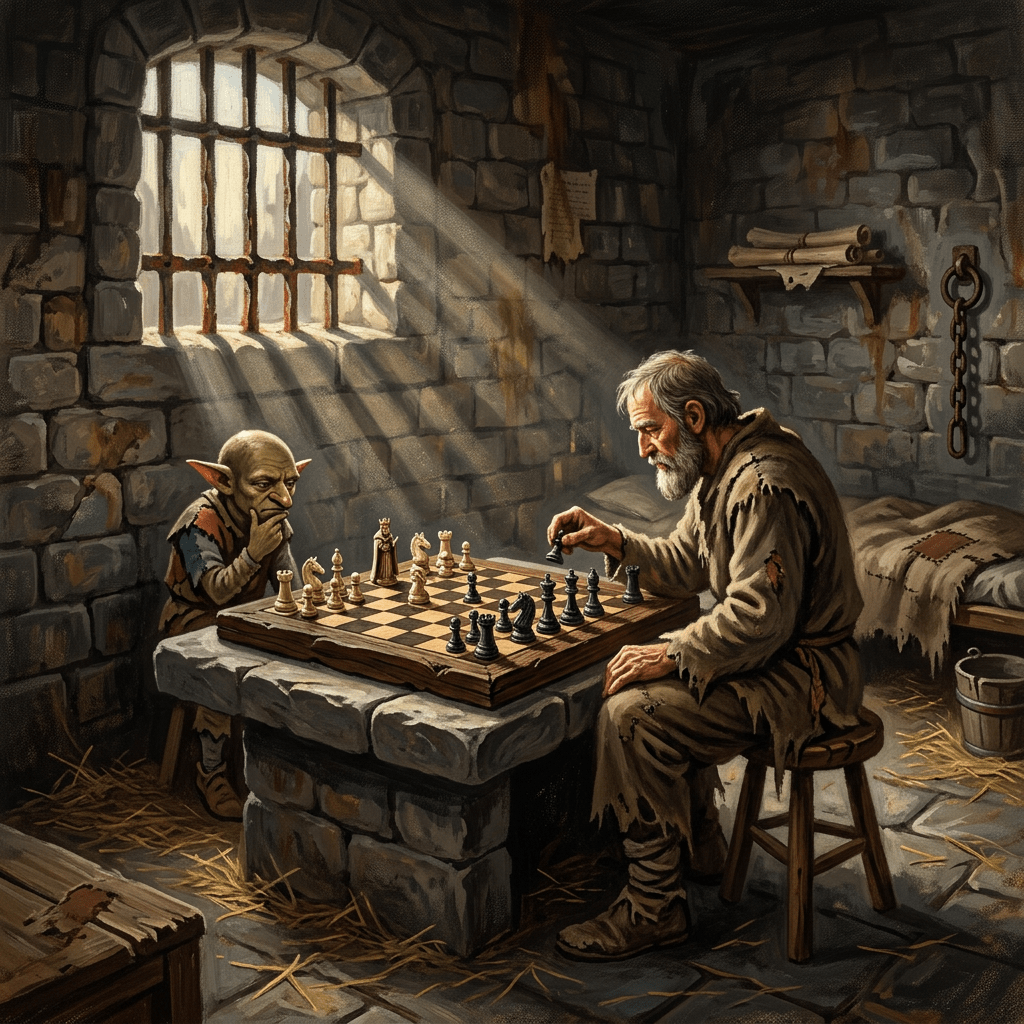
I played chess with E. Howard Hunt, the former CIA man, whose calm, almost courtly manner made him a polite opponent. That year, G. Gordon Liddy and I were both in solitary, not for the same reasons or in the same cell, but in the same block.
And here’s the strange truth:
Liddy and I shared one thing — an absolute refusal to cooperate with the authorities.
His refusal came from ideology and bravado; mine, from conscience. But to the Bureau of Prisons, defiance is defiance, and it lands you in the same concrete box.
It was surreal: America watched Watergate on TV while I shared a prison with the men who set it in motion. History unfolded in Washington, but some of them sat across from me at chess or were locked in solitary confinement down the tier.
Some people arrive in this world like a whisper. Wavy Gravy showed up like a marching band that took a wrong turn and decided to stay.
Born on this day in 1936, back when the world was still in black‑and‑white, he somehow grew into one of the most colorful human beings to ever wander through the American story. Hugh Romney was the name on the paperwork, but the universe had other plans. It needed a jester. A peacekeeper. A clown with a conscience. A man who could talk down a crowd of 400,000 hungry, muddy, half‑mad festival‑goers at Woodstock with nothing but a microphone and a grin.
He fed people. He calmed people. He made them laugh when they were ready to break. He turned compassion into a kind of performance art, and he never stopped believing that humor could be a tool for survival. The Hog Farm, the Seva Foundation, the endless parade of red noses and tie‑dye — it was all part of the same mission: make the world a little lighter, a little kinder, a little more human.
Wavy Gravy reminds us that you can take the work seriously without taking yourself seriously. That mischief can be mercy. That joy can be a form of resistance. And that sometimes the best way to keep the peace is to show up dressed like a psychedelic Santa Claus and tell everyone it’s going to be okay.
On the day he was born, the universe clearly decided it needed more color. And all these years later, we’re still living in the glow.
From Rambling Harbor, where the tide rolls in with its own kind of cosmic joke, I tip my hat to the man who proved you can change the world with a laugh and a ladle.
FREE SUBSCRIBING
Pete Seeger was born on May 3, 1919, in New York City. He became a legendary American folk musician, songwriter, and activist whose long career made a significant impact on music and social movements. Seeger wasn’t just part of the folk revival — he was one of the engines driving it. In the 1940s and ’50s, most of America listened to crooners and big bands. Seeger was dragging a long-neck banjo across union halls, college campuses, and picket lines. He taught people that folk music wasn’t a museum piece. It was a living language of protest, hope, and ordinary people trying to make the world a little fairer.rer.
When he joined The Weavers in 1948, the group became a kind of Trojan horse for social change. They took traditional songs — work songs, spirituals, Appalachian ballads — and smuggled them into the mainstream. Their version of “Goodnight, Irene” hit No. 1 in 1950, and suddenly millions of Americans were humming a tune from the Black folk tradition. That was Seeger’s quiet genius: he made the radical feel familiar.
But success painted a target on their backs. The early 1950s were the height of the McCarthy era, when suspicion was a national pastime, and anyone with left‑leaning politics was treated like a threat. Seeger had been outspoken about labor rights, racial justice, and peace — long before it was fashionable — and that made him an easy mark. The Weavers were dragged into the anti‑communist hysteria, labeled subversive, and effectively erased from radio and television. Concerts were canceled. Record contracts evaporated. Their career didn’t just stall; it was deliberately strangled. Seeger was subpoenaed by the House Un-American Activities Committee in 1955. He refused to name names or apologize for his beliefs. He did not hide behind the Fifth Amendment. Instead, he told Congress he had a right to sing for anyone he pleased. It was a bold act of conscience, and it cost him dearly. He was indicted for contempt and blacklisted for years.
Even after these setbacks, Seeger stayed active in music. He wrote and made famous songs like “Where Have All the Flowers Gone?,” “If I Had a Hammer,” and “Turn! Turn! Turn!” These songs became important for civil rights, labor, and anti‑war movements. His version of “We Shall Overcome” helped make it a key song in the civil rights movement.
Seeger was also a committed activist beyond music. He worked for environmental causes, especially the cleanup of the Hudson River, and remained involved as he aged. He inspired artists like Bob Dylan and Bruce Springsteen to continue his tradition of songs about social issues.
Seeger died January 27, 2014, at 94, but his songs and beliefs continue to inspire. He believed music could unite people.
SUBSCRIPTION ARE FREE
This moment comes from a stretch of my life when I was being moved across the country by U.S. Marshals—an experience that was tense, surreal, and, somehow, funny. I learned early on that if I could get the Marshals to crack a smile, the miles went by a little easier. This particular memory landed on Easter Sunday, somewhere in the endless wheat fields of Kansas, when the only thing to do was look out the window and try to keep the mood human.
“The one day I am sure of on this trip was Easter Sunday, and I remember that because as we traveled through the wheat fields of Kansas—miles and miles of nothing but wheat—I said to the Marshals, ‘You guys know it’s Easter?’ and one replied sarcastically, ‘Yeah, ya’ want to go to church?’ I replied, ‘No, I’m not much on churchgoing, but I thought we might have an Easter egg hunt, and I’ll be glad to play the part of the egg.’ This was the second time I made them laugh.”
For the whole story, the complete book follows the bouncing link at the bottom. But to help avoid Amazon’s paranoid algorithm, I’ll borrow a line from the Grateful Dead:
“Just one thing I ask of you, just one thing for me
Please forget you know my name, my darling Sugaree…”
Shake it, shake it, Sugaree — just don’t tell them that you know me.
Here’s the link to the full book: Here’s the link to the full book: https://a.co/d/016MrqUQ
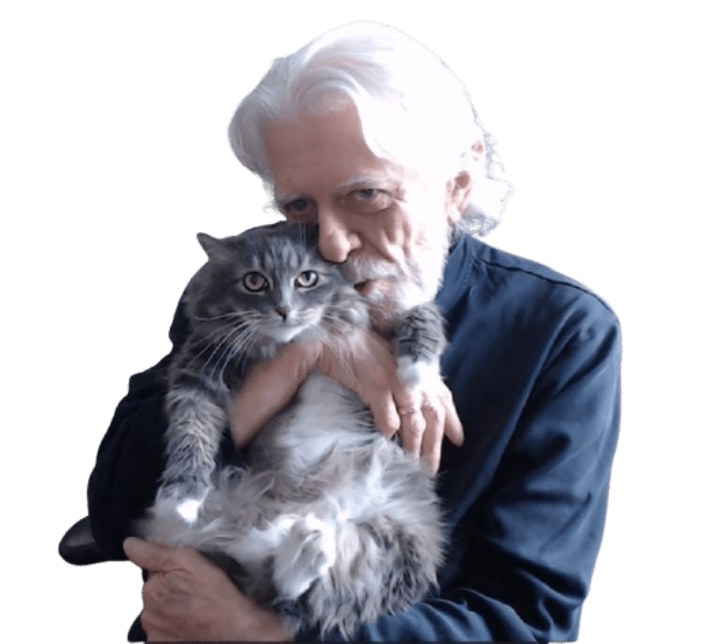
Dan Sanders grew up on Staten Island and learned early how to navigate the edges of things—family, faith, war, and the long road toward becoming himself. He spent years in radio, activism, and community work before settling in the Boston area, where he writes about the moments that refuse to stay quiet. He lives in what he calls Rambling Harbor with his cat, Shianna, and continues to tell the stories that shaped him, one honest line at a time.
The Road to “I Was There”
It didn’t happen all at once. It wasn’t a straight shot. It was a long road — with detours, breakdowns, and a few stretches where I didn’t touch the wheel at all.
This book took years. Not because I was writing every day, but because I wasn’t. I’d circle back, pick up a thread, lose it again. Life got in the way. So did doubt. So did the internet.
But the story never left. It waited. And every time someone asked — “Are you still working on it?” or “When’s the book coming out?” — it reminded me that I was still on the road.
So thank you. To everyone who kept asking. To those who read the early chapters, who saw the fog and the mountains and said, “Keep going.”
The book is out now. It’s called “I Was There”. Because I was. And now, so are you.
And who knows what comes next — maybe that’s the best part. Maybe even another book
follow this link to the Amazon page: https://a.co/d/01jMzMsm
About Me
I’m a dreamer with some rough edges, a word‑slinger, an actor, a picture‑maker, and a guy who hangs onto the stories that don’t always behave. I write from a small harbor shaped by memory, Boston weather, and all the quiet corners where truth sits down and refuses to move.
I Was There is one road I’ve walked. There’ll be others. There always are.
I was just doing some research on this book, and as I’ve said, I’m horrible with dates. I always have been, as they drift into ancient history, they become a lost, whirling maze of amazement and often befuddled amusement. Just now, I was looking for someone from my CCNV days, and after a multitude of different search sources and avenues, including AI, it came back.
“You’re trying to find someone who lived in a world that didn’t preserve itself well — CCNV, Catholic Worker, Berrigan circles, early women clergy. Those people didn’t leave digital trails.”
I laughed aloud and said in my best Robert Deniro Taxi voice, “You talkin’ to me?” I know. I’m one of them, lost to time, memory, but maybe not to history.
About a year ago, I spent several weeks with on-and-off communication with various federal agencies trying to get copies of my arrest and prison records. I started with the bureau of prisons The Bureau of Prisons stated that they do not retain records beyond ten years, They gave me a link to the FOIA ( Freedom of Information Act) the freedom of information act said that because of my type of cases any records would most likely be held by the National Archives they may have retained documentation related to this type of case. I wrote to the National Archives, but have not heard back. I am willing to bet no one has ever tried so hard to prove they are a criminal. Even though the law I broke needed to be broken, and I still would love to see my whole records including as Arlo Guthrie put it in the song “Alice’s Restaurant”, a black and white 8 by 10 glossy.
So yeah, I did and still do live in a world that doesn’t preserve itself well.
Part of me hopes we’re not all lost to history. And part of me thinks maybe that’s the way it was always meant to go.







Leave a comment