

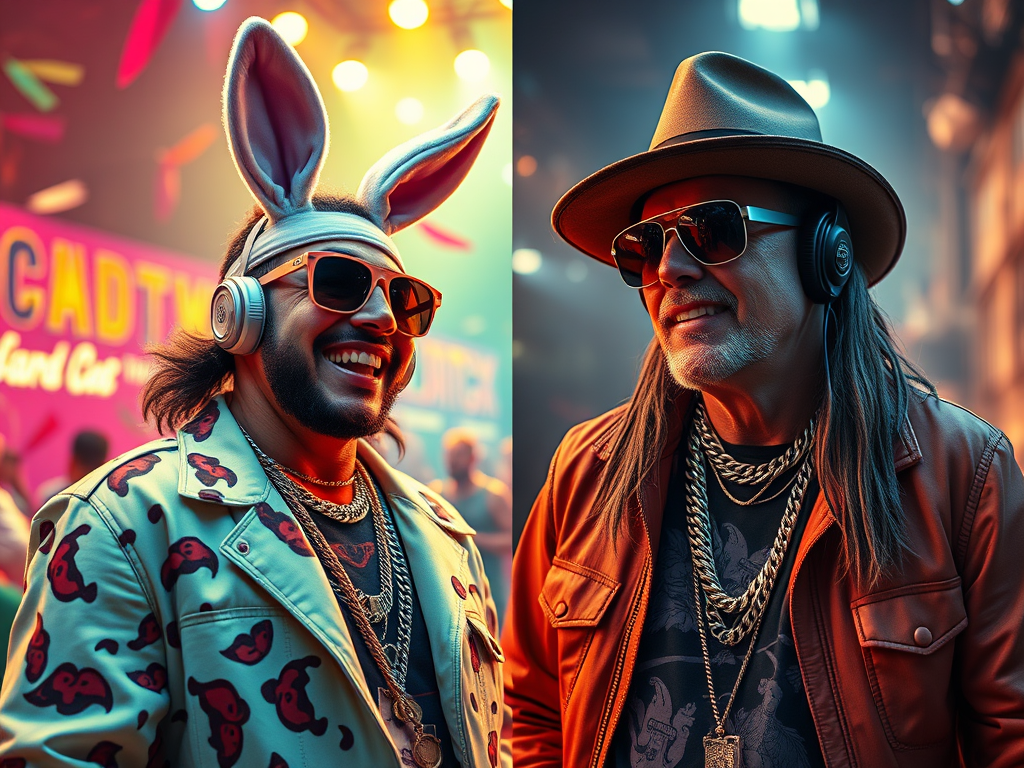
Morning Ramble: Bad Bunny, Kid Rock, and the Strange Weather of Culture
Some days, the cultural weather rolls in sideways, and you find yourself watching people online argue about whether Bad Bunny or Kid Rock is the “real” entertainer. This debate misses the core point: what matters isn’t which entertainer is more legitimate, but the type of culture each represents. Comparing them is like comparing a lighthouse to a lawnmower — both make noise, but only one helps you find your way home.
Bad Bunny — Benito — is out there bending sound like light through a prism, turning reggaetón, trap, pop, and whatever else he feels like into something that feels alive. He’s got Grammys, stadiums, and a global fanbase that sings in Spanish with their whole chest, even if they only understand every third word. He’s fluid, political when he wants to be, joyful when he chooses to be, and unbothered by the borders other people try to draw around him.
Kid Rock, meanwhile, is still trying to convince the world he’s the same guy from the “Cowboy” era, even though the world has rotated a few dozen times since then. The swagger hardened into shouting, the rebellion calcified into grievance, and the lyrics… well, let’s just say they don’t exactly age like wine. More like something you’d find in a forgotten cooler behind a shed.
And that’s why—let me be crystal clear—I would choose the Super Bowl halftime show over Kid Rock and TPUSA. Not out of spite or politics, but because the moment feels like a reflection on what culture can grow into, not what it leaves behind. It comes down to the music, the message, the energy—the difference between expanding the world or holding it still.
Bad Bunny writes about identity, heartbreak, joy, pride, and the messy business of being human. Kid Rock writes about… well, sometimes things you wouldn’t want on your search history. One artist is building bridges; the other is burning daylight.
But the funny thing about music is that it’s weather. It shifts. It tells you what season the culture is in. Bad Bunny is a warm front rolling in from the Caribbean, reshaping the atmosphere. Kid Rock is a cold gust from a bar that closed at 1 a.m. and forgot to turn off the neon sign.
Maybe that’s the whole point: choosing between them isn’t really about music — it’s about the kind of world we want to live in. Are we supporting a culture that grows and remixes itself, or one that clings to the past and resists change? This is the real choice at the heart of the argument.
Anyway, that’s what washed up on the harbor today. The tide brings what it brings.
Have a good morning. As the Super Bowl approaches—a time that should be about sports, not politics—I’ll keep exploring the truth about why Bad Bunny, Kid Rock, and the halftime show matter in this cultural conversation.


 Rambling Harbor
Leave a comment