One Afternoon in My Life


I was just out walking, minding my own business, when two women waved me over for a handful of blueberries. One was my neighbor. The other I’d never seen before. Lazara. And from the first hello, she had that thing — that quiet spell some people carry without trying.

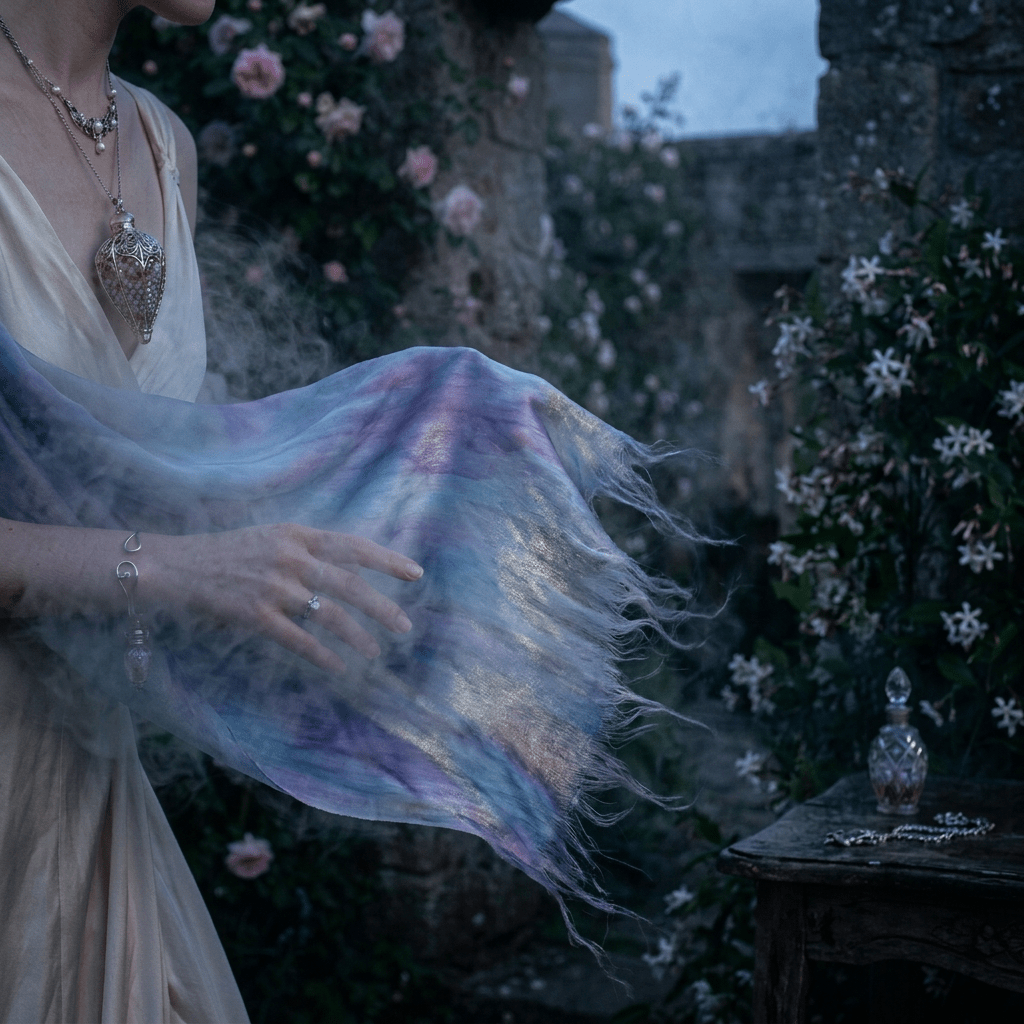
She was beautiful in a way that didn’t announce itself with trumpets, just settled into you. Cuban Spanish beauty with a slow, smoldering warmth under the surface — dark eyes that held both kindness and a little danger. And with me, it’s always the danger that hooks first. Something in her eyes said she’d lived through storms and carried a few of them with her, and instead of warning me off, it pulled me in. That danger wasn’t for the world — it felt aimed right at me, the kind of spark that makes you lean closer even while some old part of your brain whispers you should know better. It’s the lure, the attraction waiting to be uncovered. Like she’d lived through storms and learned to move with them instead of running. Her skin had that sun‑warmed glow that makes you think of late afternoons on a beach you’ve never been to but suddenly ache for. And her hair — loose curls framing her face in a way that made you notice everything: the curve of her mouth, the softness in her cheeks, the quiet fire behind her eyes.

But it wasn’t just how she looked. It was how she moved. There was a natural rhythm to her, a confidence that didn’t need to be loud. She walked like someone who knew exactly who she was — steady, grounded, unhurried — and that alone carried its own kind of heat. The kind that sneaks up on you. The kind that makes the world tilt a little.

The afternoon sun was warm on my shoulders, summer air sweet enough to make you forget the news for five minutes, and suddenly the world slowed down like it remembered how to breathe. The goodness coming off her was unmistakable — quiet, steady, like light through leaves.

I didn’t know then that eight years earlier, in her thirties, she’d been knocked flat by a heart attack. She never told me. I dug that up later, doing my usual nosing around. Maybe staring down death sharpened her sense of life, or maybe she was just born with more goodness than the rest of us get.

We were talking, just easy talk, when I mentioned I’d always wanted to go back to Staten Island where I grew up. I said it like a passing thought, something half buried. She didn’t blink. Didn’t hesitate. She turned toward me — those loose curls shifting, her eyes locking on mine — and said, “I’ll drive you to Staten Island.”

And the way she said it… that’s what knocked me flat. There was movement in her voice, a kind of forward‑leaning energy, like she was already halfway to the car. No drama. No big gesture. Just truth. Real caring. Like she meant every word down to the bone.

But in my heart and mind there was doubt, disbelief — the old reflex that says people don’t really show up like that. Still, she said it. And for a moment, I believed her. For a moment, the world felt possible again.

She also told me she was scared about going back to Cuba to visit family — ICE agents running wild, people getting grabbed or shot, the whole mess. She’s a legal citizen, but that thin veil of uncertainty hangs over people like her anyway. Still, none of it dimmed her. She shone right through it.

That’s where the poem starts: in an ordinary afternoon that suddenly glows. A reminder to myself that life still has moments that break through the noise, if you let them. And that you keep going — heart attack, ICE, politics, whatever — because the alternative is letting the bastards grind you down, and I’m not ready to hand them that victory.

ONE EASY AFTERNOON


She came out of the sunlight
like it owed her something—
Cuban‑Spanish fire wrapped in loose curls,
eyes that could stop a man mid‑sentence
and make him forget what he was saying.
Her beauty wasn’t polite;
it had muscle, it had history,
it carried the salt of the Bronx
and the warmth of Havana in the same breath.
Talking to her felt like standing too close
to a flame you don’t want to walk away from.

I didn’t know much about Lazara then—
just a woman whose presence
could tilt an afternoon on its axis.
Heat rising off her like August pavement,
light catching in her curls
as if the sun had chosen her on purpose.
She moved with that quiet confidence
some people earn the hard way—
storms survived, borders crossed,
a life lived without apology.

Talking to her knocked a few years off me,
made me feel forty again—
lighter, looser, like the world
hadn’t scraped me down to the bone.
But youth doesn’t return;
it just flickers,
a quick spark in the dark,
then steps back.
Still, that spark lit something
I thought had gone cold.

Later I realized it wasn’t just her—
it was the shock of company.
I live quiet in Rambling Harbor,
weeks without seeing a soul,
like some old lighthouse
left running out of habit.
And yeah—
I stay alone for a reason.
You get hurt enough times,
you learn to keep the door shut.
Solitude becomes armor,
and after a while
you forget you’re even wearing it.

But one easy afternoon
reminds me I’m still wired for people,
even if I pretend I’m not.

Solitary teaches you tricks—
how to keep the outside world
out of the inside of your head,
how to convince yourself
you don’t need anyone.
But that’s hunger talking.
You can starve alone, sure—
but you’re not living.

Then two women laugh,
talk soft, talk easy,
don’t ask for anything
except that I show up
and be human for a minute.
And suddenly I’m not the guy
holed up in his home
like the world’s contagious.
I’m just me—
the version I forget exists.

And Lazara—
the way she turned toward me
when I mentioned Staten Island,
those curls shifting,
her eyes locking on mine,
her whole body leaning forward
like she was already halfway to the car—
and she said,
“I’ll drive you to Staten Island.”
Just like that.
No hesitation.
No second‑guessing.
Bronx confidence,
straight shot,
no brakes.
And it knocked me flat.
Because I wanted to believe her—
God, I did—
but disbelief is a habit
that clings like rust
from the old ferry rails
I grew up leaning on.

I don’t need crowds.
I don’t need noise.
I don’t need the pot‑bellied beer sluggers
on the other side of the building
talking about women
like they’re reading off batting averages.
I’ve never belonged there.
Women have always felt
more creative,
more awake,
more worth looking at
than men drowning in their own suds.

But that afternoon—
that simple, accidental afternoon—
brought all my senses back online.
Like muscle memory
I didn’t know I still had.
It was like someone cracked open a window
in a room I’d been sleeping in for years
and let the air rush back in.

And when the day settled,
I saw how long I’ve been living
half asleep.
Solitude turned into armor,
then habit,
then a lie I told myself
because it was easier
than wanting anything.
Easier than risking
one more disappointment.

But the truth is simple:
I’m not built to be completely alone,
no matter how good I’ve gotten at it.
If one small afternoon
can wake me like that,
then maybe I’m still capable
of feeling alive
around the right people.

Maybe I haven’t rusted shut.
Maybe I’m still part of the human race,
even if I only visit it
once in a while.

And at the end,
I’ll never be forty again—
that door’s shut,
the hinges gone,
the whole damn frame pulled out.
But for a few hours
I felt that spark,
the one I thought had slipped
through the cracks years ago.
It rose anyway,
steady and stubborn,
right there in the middle
of an ordinary afternoon.

And it reminded me—
clear as sunlight on the harbor—
that I’m still here,
still warm,
still capable of lighting up
from the inside out
when the right moment
leans in close
and says my name.

Leave a comment

This site uses Akismet to reduce spam. Learn how your comment data is processed.

Hunter S. Thompson

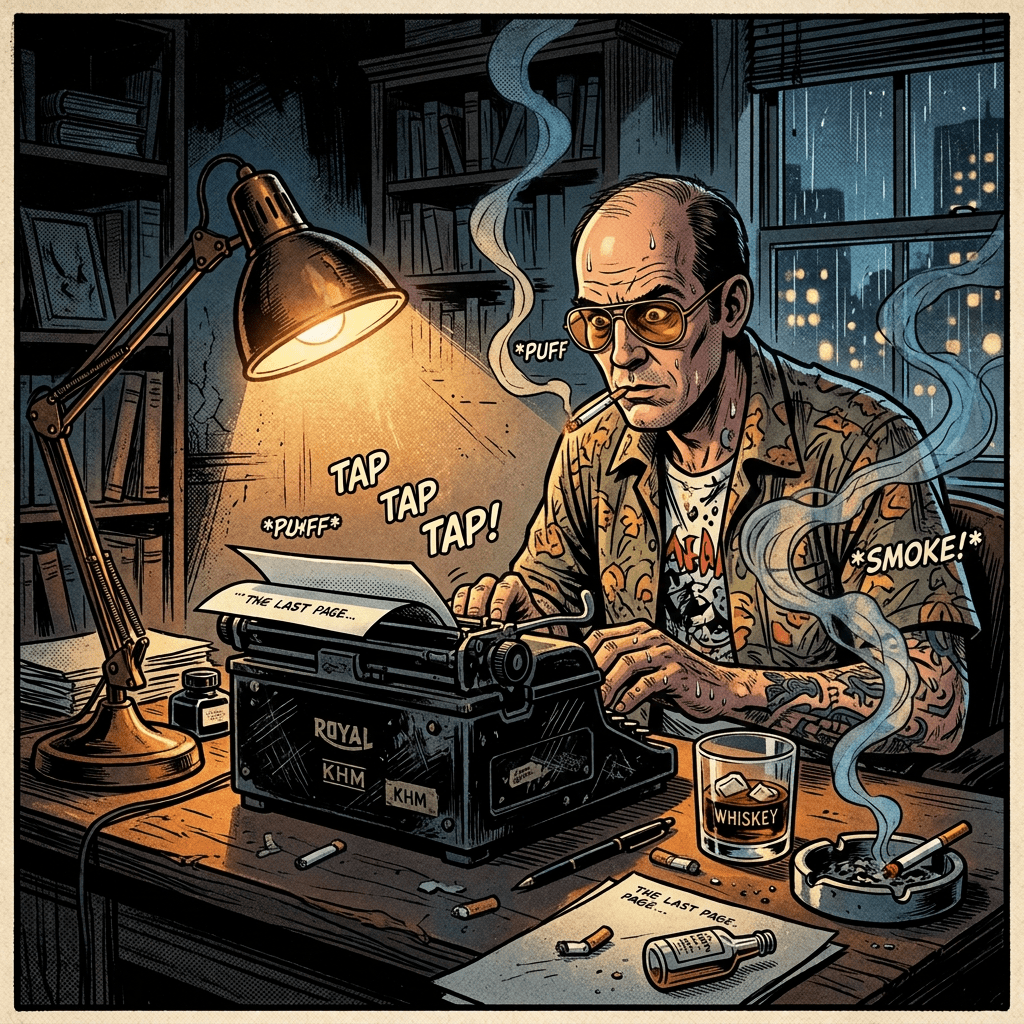
Today is the birthday of Hunter S. Thompson, born in Louisville, Kentucky, 1937 — and I wake up feeling like the sky’s got a little extra static in it. Like the day itself is leaning forward, waiting for somebody to do something reckless and honest.

There’s a certain charge in the air when you think about Thompson. Not the Hollywood cartoon of him — the real man, the one who wrote like he had a live wire jammed straight into his spine. The one who understood that America wasn’t a postcard, it was a fever dream, and the only way to tell the truth about it was to dive in headfirst and come up swinging.

I think about him the way I think about a storm rolling over the harbor — that low, electric rumble, the kind that makes you stand a little straighter because you know something’s about to break loose. He wasn’t tidy. He wasn’t polite. He didn’t sand down the edges. He was the edge.

Louisville boy. Southern heat in his blood. A kid who saw early that the “official version” of anything was usually the biggest lie in the room. So he made his own version — louder, stranger, funnier, truer. He wrote like someone who refused to pretend the country wasn’t half‑mad already.

And maybe that’s why he still hits me so hard.
Because he reminds me that the world doesn’t need more polite little sentences. It needs people willing to say what they actually see. It needs voices that don’t flinch.

On his birthday, I picture him barreling down some Kentucky back road in a beat‑up convertible, sunglasses on, hair flying, muttering about Nixon or the Derby or whatever fresh American absurdity had caught his attention. And he’s laughing — that cracked, dangerous laugh — because he knew the joke was always on the people who thought they were in charge.

Maybe that’s the lesson today.
Live a little louder.
Tell the truth even when it’s ugly.
Write the thing that scares you.
Don’t sand down your voice to make anybody comfortable.

Hunter S. Thompson didn’t just write about America — he wrestled it, bit it, spit it out, and handed us the bones.

Happy birthday, Hunter.
The harbor feels rowdier today, and I’m not fighting it.

Leave a comment

This site uses Akismet to reduce spam. Learn how your comment data is processed.

July 16th, 1945, The Big Boom and Me

On this day back in ’45 — 5:29 and 45 seconds in the damn morning — the desert out in Alamogordo lit up like somebody flipped on a second sun just to see what kind of trouble it could make. A bunch of scientists stood around in welder’s goggles, slathering on suntan lotion like they were prepping for a day at Revere Beach instead of kicking off the nuclear age.

Enrico Fermi, cool as a guy waiting for the T that’s already late, took bets on whether they’d ignite just New Mexico or the whole planet. Real casual end‑of‑the‑world office pool.

Then the thing goes off — BOOM — sky goes white, sand melts into this ghostly green radioactive glass, like the desert tried to make its own cursed souvenir.

Ken Bainbridge, Harvard physicist running the whole Manhattan Project circus, turns to Oppenheimer — the man who’d spend the rest of his life haunted by the glow — and drops the line only someone with a New England soul could deliver clean: “We are all sons of bitches now.”

Weeks later, August 6th and 9th, Hiroshima and Nagasaki were leveled — the only time nuclear weapons have ever been used in war. A permanent scar on humanity, no matter how you slice it.

Bainbridge spent the rest of his life trying to undo the monster he helped midwife into existence.

And about a year after all that, I boomed onto the planet myself — born into a prefab little government town called Oak Ridge, where the fences hummed, the jet fighters buzzed overhead, and every entrance had a guard who looked like he’d seen too much. I spent my first ten years around atomic plants, security checkpoints, and the strange quiet of a place built to help make the damn thing in the first place.

Thirty years later, I was getting myself arrested trying to stop nuclear proliferation — life’s funny like that, it circles back with a badge and a pair of handcuffs.

Leave a comment

This site uses Akismet to reduce spam. Learn how your comment data is processed.

The Man Who Refused to Live on Autopilot Henry David Thoreau

It’s the birthday of Henry David Thoreau, born July 12, 1817, in Concord, Massachusetts—a man who treated conscience the way some people treat religion. He didn’t just write about living deliberately; he practiced it like a stubborn art form. Poet, philosopher, abolitionist, tax resister, transcendentalist—Thoreau collected titles the way other people collect parking tickets.

And here’s the thing: every time I read about Thoreau refusing to pay taxes that supported slavery, I think about my own little rebellion a century later. When the phone tax went up to help bankroll the Vietnam War, I looked at that bill and said, “Nope.” Ten percent, gone. I refused to pay it, wrote it right on the check. It wasn’t Walden Pond, but it was my own small patch of moral ground, and I stood on it.

Thoreau would’ve understood. He believed a person’s duty wasn’t to obey, but to stay awake. To look at the world and decide what you can live with—and what you absolutely cannot.

I’ve walked around Walden Pond more times than I can count. Not in some tourist way, but in the way you walk a place that’s part of your own story. I’ve stood inside the space where he built that cabin, imagining him shaping those boards, thinking those thoughts, refusing to let the world flatten him out. There’s something electric about standing where a stubborn soul once stood. You feel the charge in your feet.

Thoreau didn’t ask permission to live the way he believed. He just lived it. And maybe that’s why his birthday still matters. It’s a reminder that resistance isn’t always loud. Sometimes it’s a quiet walk around a pond. Sometimes it’s a tax you refuse to pay. Sometimes it’s simply deciding your life is yours, and you’re going to live it with your eyes open.

On July 12, I think about Thoreau’s stubbornness, and I think about mine. Different wars, different taxes, different centuries—but the same old human urge to stand where your conscience tells you to stand.

And to keep walking.

Leave a comment

This site uses Akismet to reduce spam. Learn how your comment data is processed.

4th of July and Fireworks

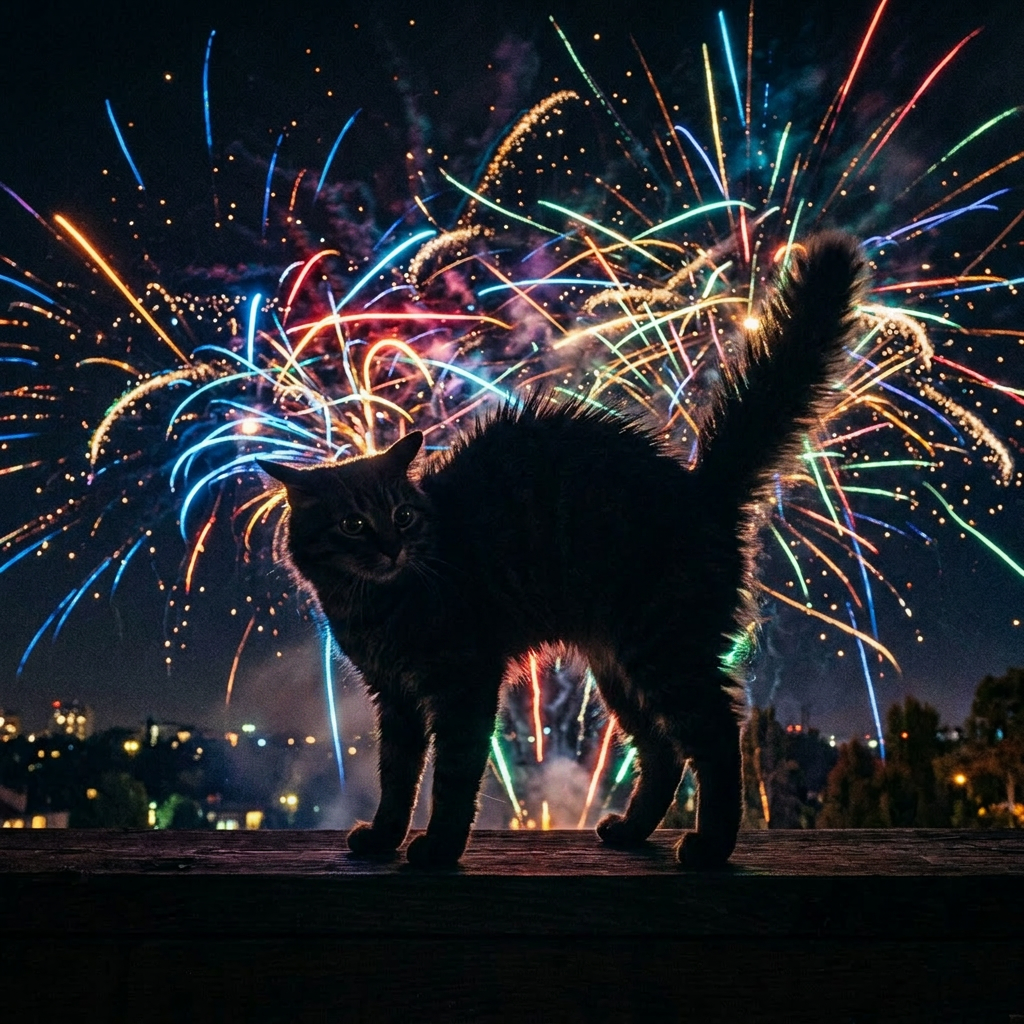
Listening to fireworks being set off by the locals — not the organized town or city displays, but the people I’m stuck calling my neighbors — the ones who somehow get a thrill out of blasting sky rockets and bomb‑like booms that shake the walls and crawl right up your spine. Shianna is pressed against me, trembling, looking for shelter, for safety, maybe even for some explanation I can’t give her. And in the thick, steamy night, with the air cracking open around us, I found myself wondering what it would be like to be a child in a war‑torn country, hearing real bombs dropped by adults fighting over reasons that never make sense to the ones who suffer for them. To watch your home, your school, the field where you ran and laughed blown into pieces you don’t recognize. To lie in your bed and hear explosions creeping closer and closer to the place you’re trying to make a life, and to wonder what your world will look like when morning comes — if morning comes at all.

And sitting there with my cat shaking against me, I realized how easy it is for a whole life to be reduced to waiting for the next sound, the next shock, the next thing that might take everything. The fireworks stopped eventually. The quiet came back. But it wasn’t the kind of quiet that comforts. It was the kind that reminds you how fragile the world really is, and how thin the line is between the night you survive and the one you don’t.

Leave a comment

This site uses Akismet to reduce spam. Learn how your comment data is processed.

1976 — The Year I Came Home to a Place I’d Never Been Before

Boston — and the whole country — is celebrating 250 years of existence, and at the same time I’m celebrating 50 years since I first came to the place that has always felt like home. Half a century ago I walked into Boston for the first time, not knowing a damn thing about the city except that something in it pulled at me. Now, as the nation marks its big anniversary, I’m marking mine — fifty years in a place I had never been that somehow felt like I had never left.

Some time in the late days of ’75 or the early days of ’76, I crawled out of a produce dumpster in Baltimore. Yes, really. I was living at Jonah House then, part of the Community for Creative Non‑Violence, and my Sunday duties — along with my friend Phil Berrigan — were to head down to the produce terminal and gather all the discarded fruits and vegetables. The terminal had this rule: if anything hit the ground, it had to be thrown out. Didn’t matter if it was a perfect apple or a bruised banana. Somehow it never occurred to them to wash it and give it to folks who needed it.

So Sundays were our scavenger days. The terminal was closed, the gates quiet, and Phil and I could climb in and out of dumpsters at will. This wasn’t just picking things off the ground — though there was some of that — it was literal dumpster diving, hoping the bananas hadn’t liquefied and the tomatoes hadn’t turned into soup. We’d haul home whatever we could carry, wash it all, keep what Jonah House needed, then walk the neighborhood leaving bags of good food on doorsteps. We lived in one of the poorest sections of Baltimore, and this was one small way to push back against the madness.

Anyway, one day I heaved myself up out of that dumpster, and before I knew it, I was heaving myself out of another kind of dumpster — a dump called the Hillbilly Ranch, a country bar in Boston. I had decided to leave Jonah House, take my stepson Jimmy — the courts had given me custody — and make a new life in the town of the original revolutionaries.

The Hillbilly Ranch sat right on the edge of the Combat Zone, Boston’s old adult‑entertainment district — a few crooked blocks of strip joints, peep shows, porn theaters, massage parlors, and bars that didn’t pretend to be anything other than what they were. The Zone was neon and noise, hustlers and lost souls, cops who looked the other way, and a steady hum of trouble that never quite boiled over but never went cold either. It was the kind of place where the sidewalk felt alive under your feet, where you could smell beer, sweat, perfume, and desperation all mixing together in the humid night air. A carnival of the city’s underbelly, running full tilt just a stone’s throw from the Common.

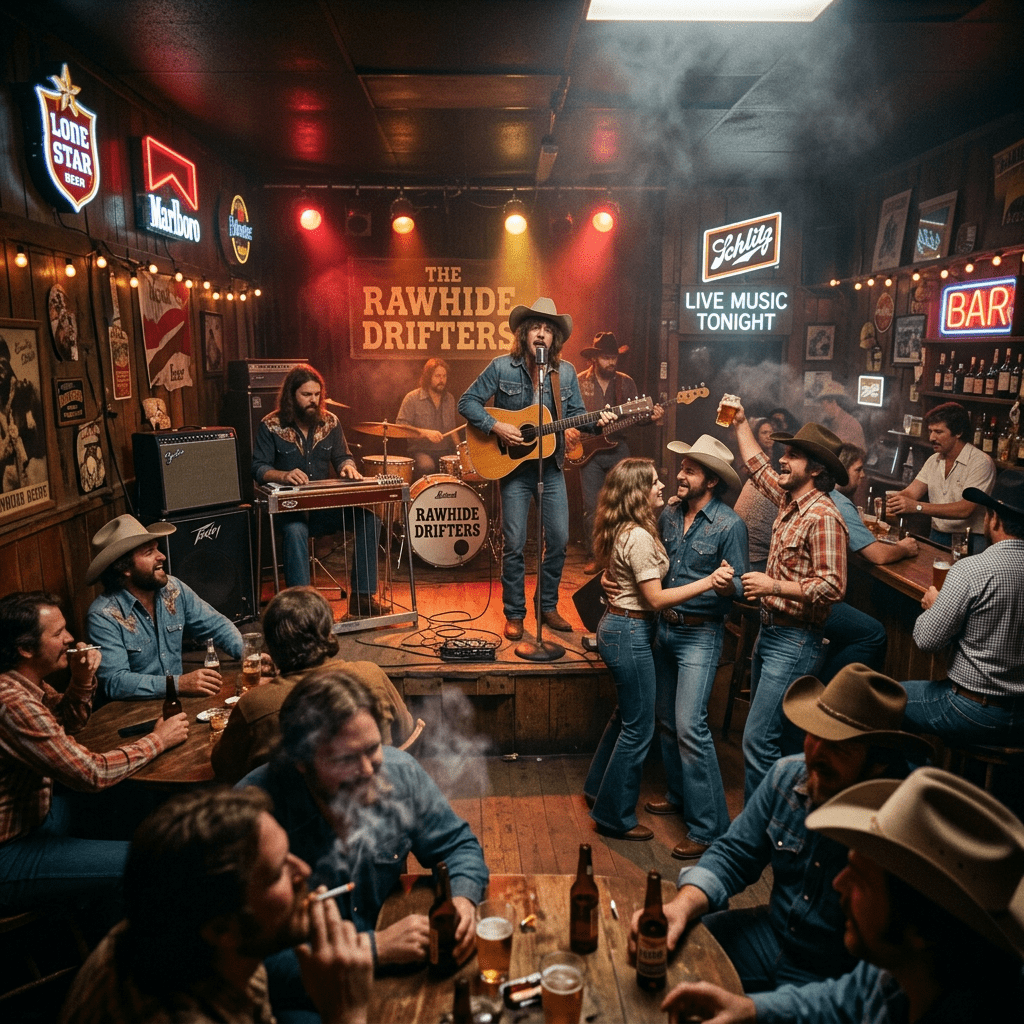
And right there, tucked into that chaos, was the Hillbilly Ranch — the first place I walked into in Boston. A country‑western honky‑tonk with wagon wheels nailed to the walls, neon beer signs, wood paneling, and a floor that stuck to your boots. The crowd looked like someone shook the whole city and let whoever fell out land inside: cowboys who weren’t cowboys, bikers, hippies, sailors, Southie hard‑cases, and tourists who had no idea what they’d wandered into.

It occurs to me now that the movie Road House shows a few scenes that feel like cousins to what the Hillbilly Ranch really was — the neon, the noise, the rough crowd, the band trying to hold the room together while trouble simmered in the corners. But Road House was Hollywood danger, stuntmen and sugar glass, a fantasy of barroom violence dressed up with muscles and movie lighting. The Hillbilly Ranch was all that and more — no stuntmen, no retakes, no Patrick Swayze walking in to clean up the place. Just a real Boston honky‑tonk sitting on the edge of the Combat Zone, fed nightly by the Zone’s parade of characters.

The bathroom was a trough urinal — no stalls, no sinks, no privacy, no mercy. You went in, did your business, and hoped you didn’t slip.

But the real heartbeat of the Ranch was the music. Boston had a surprisingly strong country‑western undercurrent back then — not the polished Nashville stuff, but barroom country, Telecasters through cheap amps, fiddles that could cut glass. The Ranch was home base for the local pickers, the guys who played five nights a week and drank six. You’d get bluegrass pickers who’d show up with banjos and mandolins and turn the place into a barn dance, and honky‑tonk trios with drummers who looked like they’d slept in the van.

Touring road bands came through too — southern and midwestern groups grinding their way up the East Coast. Tight rhythm sections, steel guitar players who could make you cry, singers who’d lived every word they sang. They’d roll in, plug in, and blow the doors off the place.

And then there were the almost‑famous ones — former sidemen from bigger acts, songwriters who’d had one regional hit, guitar players who’d toured with someone you’d heard of. They’d show up, play their hearts out, and disappear into the night.

The crowd was part of the show. They leaned right up to the stage — bikers, sailors, hippies, Southie hard‑cases, and lost souls who’d wandered in from the Zone. If the band was good, the room lit up. If the band was bad, the room let them know. It was a working‑class music bar, and the musicians respected that.

It was loud, sweaty, raw — no fancy lighting, no sound engineer, just a stage, a few amps, and a band trying to win over a room full of characters. It was the kind of place where a fiddle solo could stop a fight, or start one.

And funny enough, for all the grit and neon and honky‑tonk chaos of the Hillbilly Ranch, my first Fourth of July in Boston was the exact opposite — standing out on the Esplanade at the Hatch Shell, watching Arthur Fiedler conduct what turned out to be his last performance at the Hatch Shell.

Arthur Fiedler wasn’t just a conductor — he was Boston’s heartbeat in a white jacket. He’d led the Pops for half a century, dragging classical music out of the velvet‑rope concert halls and putting it right in the hands of regular people. He made the Pops a Boston institution, a family tradition, a summer ritual. He believed music belonged to everyone — the dockworkers, the office clerks, the kids running around on the grass — and he played like he was giving the whole city a gift. When Fiedler stepped onto that Hatch Shell stage, Boston showed up. He was as much a part of the city as the Charles River itself.

One night I’m in a bar where a fiddle solo might start a fight, and a few months later I’m listening to the Boston Pops under the summer sky, the river breathing behind us, the whole city gathered like a family. Boston could swing from rough to beautiful without warning, and I was learning that fast.

And standing there that night, I knew I had found my new home — a place I had never been that somehow felt like I had never left.


Leave a comment

This site uses Akismet to reduce spam. Learn how your comment data is processed.