

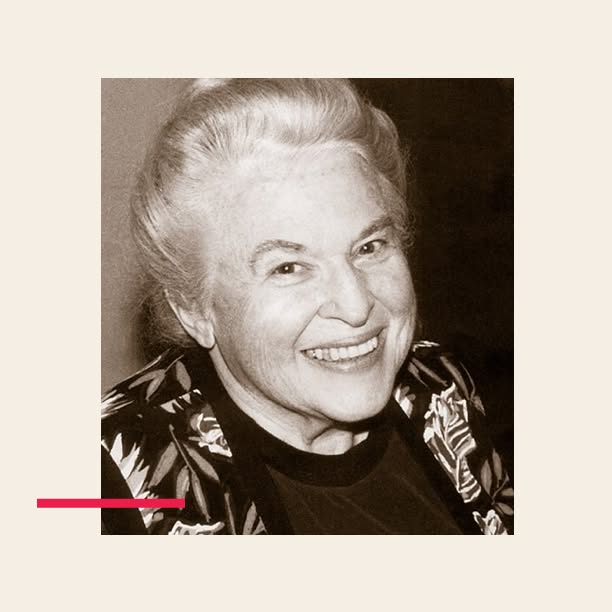
And She Was My Friend
I still remember the first time Fay “Honey” Knopp walked into the visiting room at Danbury FCI, carrying this strange little bubble of gentleness into a place built to crush it. Visiting rooms in federal joints all smell the same — burnt coffee, disinfectant, old linoleum, and the quiet hum of resignation — but Honey had a way of making the air feel different, like she’d opened a window nobody else could see. She wasn’t dramatic, wasn’t trying to save anybody in some big cinematic way. She just sat down across from me with her notebook and her Quaker calm, and suddenly the place didn’t feel quite so much like a cage.
Those visits mattered. They still do. They were a lifeline tossed across concrete and razor wire, and I grabbed on like a drowning man. And here’s the thing Honey didn’t just visit me. She visited all of us — the war resisters, the conscientious objectors, the ones who refused to pick up a gun and got locked up for it. She made her rounds like a minister of mercy, and she didn’t care if the world thought we were troublemakers or traitors or fools. She showed up anyway.
And when I came out — when I finally walked out of Danbury with that strange mix of relief and disorientation that hits you the moment the gate clanks shut behind you — Honey threw me a coming‑out party at her home. Imagine that. A party. For a guy just out of federal prison. She did it for all of us, every war resister who stepped back into the world blinking like we’d been underwater too long. Her house became this unofficial harbor, a place where you could breathe again, where you weren’t defined by your inmate number, where you could sit at her table and feel human.
Years later, when I learned more about her life, I realized I’d been sitting with a legend and didn’t even know it. Honey Knopp wasn’t just a kind soul with a notebook. She was born in Bridgeport in 1918, valedictorian, art school, New School, UCLA — a whole life of curiosity before she ever set foot in a prison. She found her calling at a Quaker peace demonstration in ’39 and never stopped walking toward the fire: pacifism, civil rights, nuclear disarmament, all stitched together by this stubborn belief that human beings could be better than the systems we built.
By the mid‑50s she was visiting imprisoned conscientious objectors. By ’62 she was in Geneva telling the world to stop poisoning children with nuclear fallout. And in ’68 — the year the country was tearing itself apart — she co‑founded Prisoner Visitation and Support, the very program that eventually brought her to me. She built a national network so people locked away by the government wouldn’t disappear into silence.
Then came the ’70s, and Honey started talking abolition — real abolition — before it was fashionable or even understandable to most folks. She wrote Instead of Prisons, a handbook that basically said: stop building cages, start building communities. Reduce the population. Replace punishment with something that actually heals. She pushed restorative justice before the term had any traction. She worked with sexual offenders, too — not because it was easy or popular, but because she believed you couldn’t help victims if you pretended offenders were monsters instead of broken people who needed treatment.
Honey didn’t flinch from the hard stuff. She walked straight into it with her notebook and her faith and her unshakeable belief that mercy wasn’t weakness — it was the strongest force on earth.
There’s a school named after her now, and the Safer Society Foundation still carries her torch. But for me, her legacy isn’t in the institutions or the programs. It’s in those quiet afternoons in Danbury, and in that coming‑out party at her home — the one where she welcomed me back into the world like I was a long‑lost nephew instead of a guy fresh out of federal custody.
Honey Knopp walked into prisons with nothing but compassion and walked out leaving seeds behind — seeds she planted in people like me. Seeds that still grow. She showed up when the world said we were disposable. She showed up when it mattered.
And I’ll never forget it.


Leave a Reply