

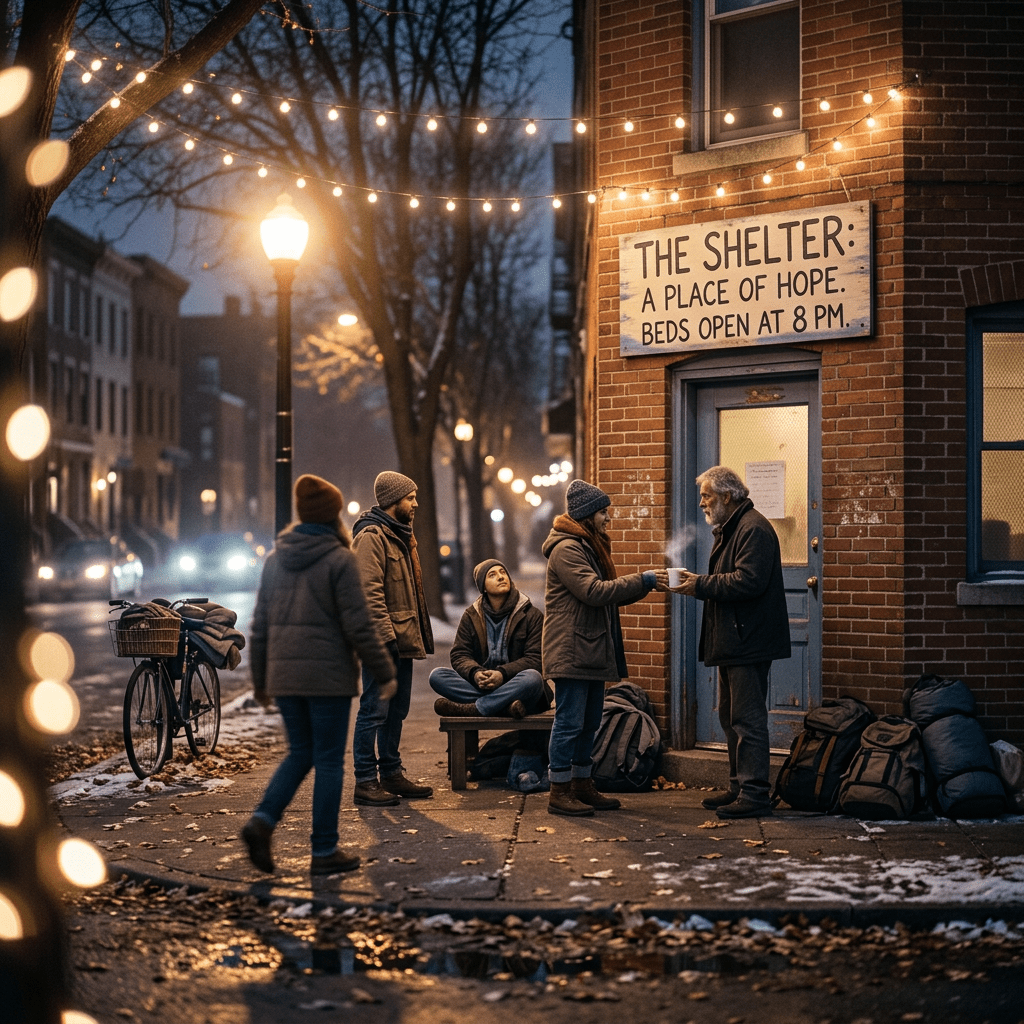
Born Today: August 14th 1943, Mitch Snyder
I met Mitch in prison, and later we shared a home at CCNV in D.C. That’s where I saw the man behind the headlines—the fire, the flaws, the stubborn heart, and the relentless drive to stand with people the system would rather forget. Anyone who has read my book knows the depth of our friendship.
Born August 14, 1943, Mitch Snyder was a prominent American advocate for people experiencing homelessness. His life was as complicated as it was impactful, a long arc from troubled youth to fierce activist, from a kid abandoned in Brooklyn to a national voice demanding dignity for the unhoused.
Snyder’s early life was marked by hardship and rebellion. Growing up in Brooklyn, he faced his father’s abandonment and drifted into criminal activity that eventually landed him in prison. But prison was also where Mitch began to change. Influenced by fellow inmates and by his reading — including the Bible — he joined hunger strikes and work stoppages over prisoners’ rights. He found purpose in resistance.
During his time at Danbury Correctional, Mitch met two men who shaped the rest of his life: Daniel and Philip Berrigan. Both were anti‑war priests serving time for destroying draft records in protest of the Vietnam War. Their commitment to justice and nonviolent resistance struck Mitch hard. They showed him activism wasn’t just anger — it was discipline, courage, and sacrifice. Mitch joined them in hunger strikes and work stoppages, learning firsthand how fasting could force attention onto issues the powerful preferred to ignore. He carried that lesson with him for the rest of his life.
After his release, Mitch moved to Washington, D.C. and joined the Community for Creative Non‑Violence (CCNV). The group had roots in anti‑war activism but evolved into one of the most forceful voices for people experiencing homelessness. Mitch’s leadership brought national attention to the crisis. He staged public funerals for people who died on the streets, occupied abandoned buildings, and used hunger strikes to pressure the government into action.
One of his most famous actions was occupying an abandoned federal building. After intense pressure on the Reagan administration, the building was leased to CCNV for $1 a year to serve as a shelter. It was a symbolic victory — a reminder that the government had responsibilities it couldn’t simply shrug off.
Mitch’s life wasn’t without controversy. His sacrifices — including leaving his family — and the toll activism took on him were debated publicly. But his commitment never wavered. He gave everything he had to the cause, and the weight of that struggle eventually became too much. In 1990, overwhelmed by the ongoing crisis and the lack of meaningful governmental response, Mitch took his own life.
His story was later told in the biopic Samaritan: The Mitch Snyder Story, with Martin Sheen portraying him. But for those of us who knew him, Mitch wasn’t a symbol or a headline. He was a complicated, brilliant, stubborn man who refused to look away from suffering — and demanded the same from the rest of us.
Mitch Snyder’s legacy is a testament to the power of individual activism and the impact one person can have on society. His life reminds us that homelessness is not a statistic — it’s a human crisis demanding compassion, courage, and relentless advocacy. His work continues to inspire those who believe in giving voice to the voiceless and standing with people the system would rather erase.
And for me, he remains the man I met in prison, the man I later lived with at CCNV, the man who gave me a home and a safe place when I once again found myself running for my life and helped me begin a new life. And always he will remain flaws and all the man I call my friend.


Leave a comment