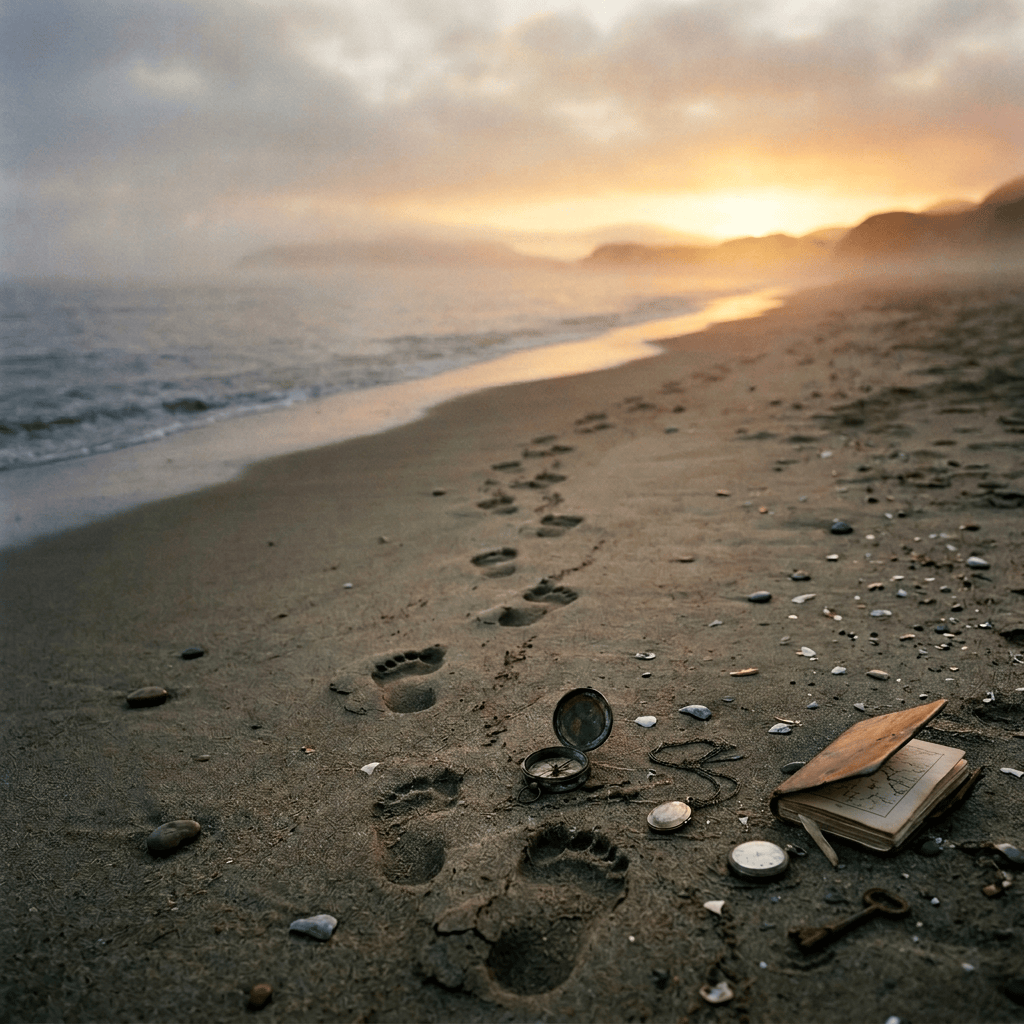
Footprints In Time — On Sale This Week

My memoir Footprints In Time is on a Kindle Countdown Deal this week. If you’ve been meaning to grab it, now’s the time — and Kindle Unlimited readers can read it free.

I wanted to share a moment from one of the chapters — a stretch of life that still sits heavy in my memory. It was Biloxi, right after Camille tore through the coast, when everything felt raw and unsettled and we were just trying to keep moving.

“And for us, it was another chapter in that wild, dangerous, beautiful stretch of life with Joannie and the kids — the years when we lived on nerve, instinct, and whatever the universe handed us. Camille didn’t stop us. She just became part of the story.

Camille moved on, but something in the air around us didn’t settle. You can feel it when another storm is forming — not wind, not rain, just that quiet dread that sits behind your ribs. We left Biloxi carrying that feeling west, and it followed us straight into the next trouble waiting under the bright lights.”

follow the link to the book: https://a.co/d/09t0S86m

Leave a Reply

This site uses Akismet to reduce spam. Learn how your comment data is processed.

Arthur Miller

Born Today October 17th October,1915 Arthur Miller

Today marks the birthday of — born in New York City in 1915, raised in the hum and grind of a country already learning how to mythologize itself. Miller didn’t write about heroes; he wrote about the ordinary men who got chewed up by the machinery. Death of a Salesman hit the stage in 1949, dragging Willy Loman — part dreamer, part ghost, part every man who ever believed the pitch — into the harsh light. Willy was loosely modeled on Miller’s uncle, Manny Newman, a man chasing the American Dream long after it stopped running.

Miller followed that with The Crucible in 1952, a story that pretended to be about 1692 Salem but was really about the fevered paranoia of McCarthyism — the communist “witch hunts” that turned neighbors into informants and suspicion into a national pastime. And in one of those perfect American ironies, Miller himself was dragged before the House Un‑American Activities Committee four years later. He refused to name names. They found him in contempt. The country he wrote about so fiercely turned its spotlight on him, demanding he play along. He didn’t.

Years later, in 2000, Miller wrote:

“Poetry may seem an odd word for a witch-hunt, but I saw there was something of the marvelous in the spectacle of a whole village, if not an entire province, whose imagination was captured by a vision of something that wasn’t there… The Crucible… became the awesome evidence of the power of human imagination inflamed, the poetry of suggestion, and the tragedy of heroic resistance to a society possessed to the point of ruin.”

That line hits harder now than it did then. Because from 2016 straight through 2026 — and still counting — we’ve had our own front‑row seat to imagination gone feral. Whole communities whipped into a frenzy over shadows, rumors, and fantasies dressed up as gospel truth. We’ve watched people swear allegiance to things that weren’t there, fight battles no one was waging, and torch friendships, families, and futures over ghosts.

Miller warned us about what happens when a society becomes possessed — when fear becomes fuel, when suspicion becomes scripture, when imagination stops being creative and starts being corrosive. His plays weren’t just stories; they were flare guns fired into the night.

And here we are, still hoping we don’t follow the same path all the way to ruin.

Subscriptions are free.

Leave a Reply

This site uses Akismet to reduce spam. Learn how your comment data is processed.

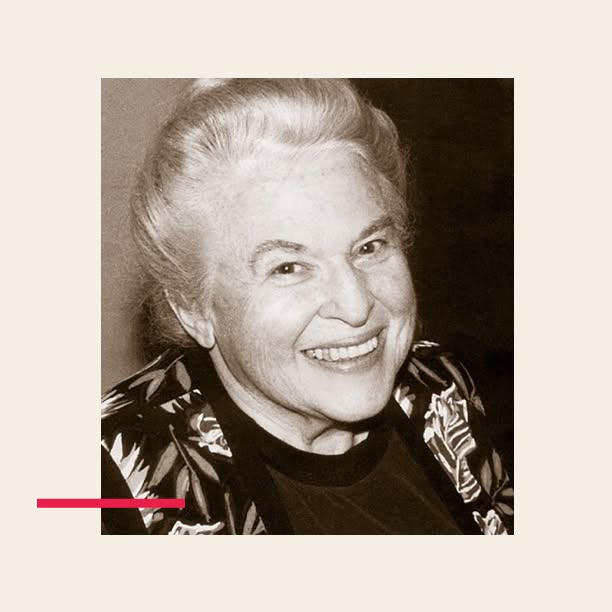
Fay “Honey” Knopp: Quaker, Abolitionist, Prison Visitor

And She Was My Friend

I still remember the first time Fay “Honey” Knopp walked into the visiting room at Danbury FCI, carrying this strange little bubble of gentleness into a place built to crush it. Visiting rooms in federal joints all smell the same — burnt coffee, disinfectant, old linoleum, and the quiet hum of resignation — but Honey had a way of making the air feel different, like she’d opened a window nobody else could see. She wasn’t dramatic, wasn’t trying to save anybody in some big cinematic way. She just sat down across from me with her notebook and her Quaker calm, and suddenly the place didn’t feel quite so much like a cage.

Those visits mattered. They still do. They were a lifeline tossed across concrete and razor wire, and I grabbed on like a drowning man. And here’s the thing Honey didn’t just visit me. She visited all of us — the war resisters, the conscientious objectors, the ones who refused to pick up a gun and got locked up for it. She made her rounds like a minister of mercy, and she didn’t care if the world thought we were troublemakers or traitors or fools. She showed up anyway.

And when I came out — when I finally walked out of Danbury with that strange mix of relief and disorientation that hits you the moment the gate clanks shut behind you — Honey threw me a coming‑out party at her home. Imagine that. A party. For a guy just out of federal prison. She did it for all of us, every war resister who stepped back into the world blinking like we’d been underwater too long. Her house became this unofficial harbor, a place where you could breathe again, where you weren’t defined by your inmate number, where you could sit at her table and feel human.

Years later, when I learned more about her life, I realized I’d been sitting with a legend and didn’t even know it. Honey Knopp wasn’t just a kind soul with a notebook. She was born in Bridgeport in 1918, valedictorian, art school, New School, UCLA — a whole life of curiosity before she ever set foot in a prison. She found her calling at a Quaker peace demonstration in ’39 and never stopped walking toward the fire: pacifism, civil rights, nuclear disarmament, all stitched together by this stubborn belief that human beings could be better than the systems we built.

By the mid‑50s she was visiting imprisoned conscientious objectors. By ’62 she was in Geneva telling the world to stop poisoning children with nuclear fallout. And in ’68 — the year the country was tearing itself apart — she co‑founded Prisoner Visitation and Support, the very program that eventually brought her to me. She built a national network so people locked away by the government wouldn’t disappear into silence.

Then came the ’70s, and Honey started talking abolition — real abolition — before it was fashionable or even understandable to most folks. She wrote Instead of Prisons, a handbook that basically said: stop building cages, start building communities. Reduce the population. Replace punishment with something that actually heals. She pushed restorative justice before the term had any traction. She worked with sexual offenders, too — not because it was easy or popular, but because she believed you couldn’t help victims if you pretended offenders were monsters instead of broken people who needed treatment.

Honey didn’t flinch from the hard stuff. She walked straight into it with her notebook and her faith and her unshakeable belief that mercy wasn’t weakness — it was the strongest force on earth.

There’s a school named after her now, and the Safer Society Foundation still carries her torch. But for me, her legacy isn’t in the institutions or the programs. It’s in those quiet afternoons in Danbury, and in that coming‑out party at her home — the one where she welcomed me back into the world like I was a long‑lost nephew instead of a guy fresh out of federal custody.

Honey Knopp walked into prisons with nothing but compassion and walked out leaving seeds behind — seeds she planted in people like me. Seeds that still grow. She showed up when the world said we were disposable. She showed up when it mattered.

And I’ll never forget it.

Leave a Reply

This site uses Akismet to reduce spam. Learn how your comment data is processed.

Indigenous Peoples Day (Even If the Calendar Lies)

It’s Columbus Day on paper, sure — the same paper that once said the world was flat and men in funny hats “discovered” continents already full of nations, languages, and people who didn’t need discovering.

But out here, in the real world, you can feel the truth humming under the asphalt.
The wind off the harbor doesn’t whisper Columbus. It whispers the names of people who were here long before any European decided he’d found something.

Every year they trot out the same story: brave explorer, bold voyage, blah blah blah.
But the older I get, the more it sounds like a bad cover band playing a song nobody asked for.

Today isn’t about Columbus.
Today’s about the people who survived him.

It’s about the ones who kept their drums beating even when the government tried to silence them.
It’s about the languages that refused to die.
It’s about the kids growing up now who know damn well their history didn’t start with a ship hitting the wrong shoreline.

And here’s the thing worth saying out loud, even if the calendars and politicians won’t:
Only two states bother to tell the truth today — South Dakota and Wisconsin — calling this day what it should’ve been all along: Native American Day.
Everyone else is still clinging to Columbus like a bad habit they can’t quit.

Call it what you want — the calendar, the politicians, the folks who still cling to the old myth like it’s a security blanket.
But I’m calling it Indigenous Peoples Day, because the truth deserves louder company than the lie.

And if that makes me a rebel?
Good.
Some holidays need rebelling against.

Camille, Biloxi and the Big Blow

Hurricane season’s back on the weather reports again — all those swirling graphics and tight‑lipped meteorologists pointing at the Gulf — and every time I watch them I get pulled straight back to one night in Biloxi. The night Camille came for us, and I realized some storms don’t just hit, they remember you.
When Camille Came Calling — And Found Us in Biloxi
Every coastal town has that storm — the one people still talk about like it happened last night. For Biloxi, Mississippi, that storm was Hurricane Camille, August 1969. A Category 5 buzz‑saw that didn’t just hit the coast — it carved its name into it.

And we were there.

Joanie — yes, that Joanie, the one I zig‑zagged across America with, three kids in the back seat, living on forged prescriptions, stolen returns, and whatever luck we could scrape together — she and I were holed up in a motel in Biloxi when Camille decided to make her entrance.

It wasn’t a fancy place. Just one of those Gulf Coast motels with a flickering neon sign and an air conditioner that rattled like it was trying to escape the window frame. We were just passing through, same as always. A night or two, then back on the road. But storms don’t care about your itinerary.

Camille came in fast — too fast. No slow buildup, no polite warning. Just a sudden shift in the air, a pressure drop you could feel in your teeth, and then the wind started talking in that voice storms use when they mean business.

The kids were restless, Joanie was pacing, and I kept looking out the motel window like I expected the Gulf itself to come walking up the street. The rain hit sideways. The walls shook. You could hear things outside breaking — metal, wood, whatever wasn’t nailed down well enough. Camille didn’t knock. She kicked the damn door in.

People talk about the storm surge — 24, 25 feet of water rolling in like a moving wall — but what I remember most is the sound. A freight train mixed with a scream. A kind of roaring that makes you understand, deep down, that nature doesn’t give a damn about you or your motel room or your borrowed life.

And here’s the part that matters:
We survived because that motel sat on a hill — just enough elevation, just far enough inland, to keep the surge from swallowing us whole.
If we’d been a quarter‑mile closer to the water, or down on flat ground, this story might’ve ended differently. But luck — or fate, or whatever you want to call it — put us in a place that stayed above the worst of Camille’s rage.

When the sun finally crawled up, Biloxi looked scraped clean. Boats in places boats shouldn’t be. Houses shifted off foundations. Debris everywhere. Camille had come through like she owned the place.

Later storms would come — Katrina being the big one — but for a long time, Camille was the yardstick. The one everyone measured fear against.

And for us, it was another chapter in that wild, dangerous, beautiful stretch of life with Joanie and the kids — the years when we lived on nerve, instinct, and whatever the universe handed us. Camille didn’t stop us. She just became part of the story.

Subscriptions are free

Leave a Reply

This site uses Akismet to reduce spam. Learn how your comment data is processed.

October 7th, 1955: Allen Ginsberg Howl‑ed

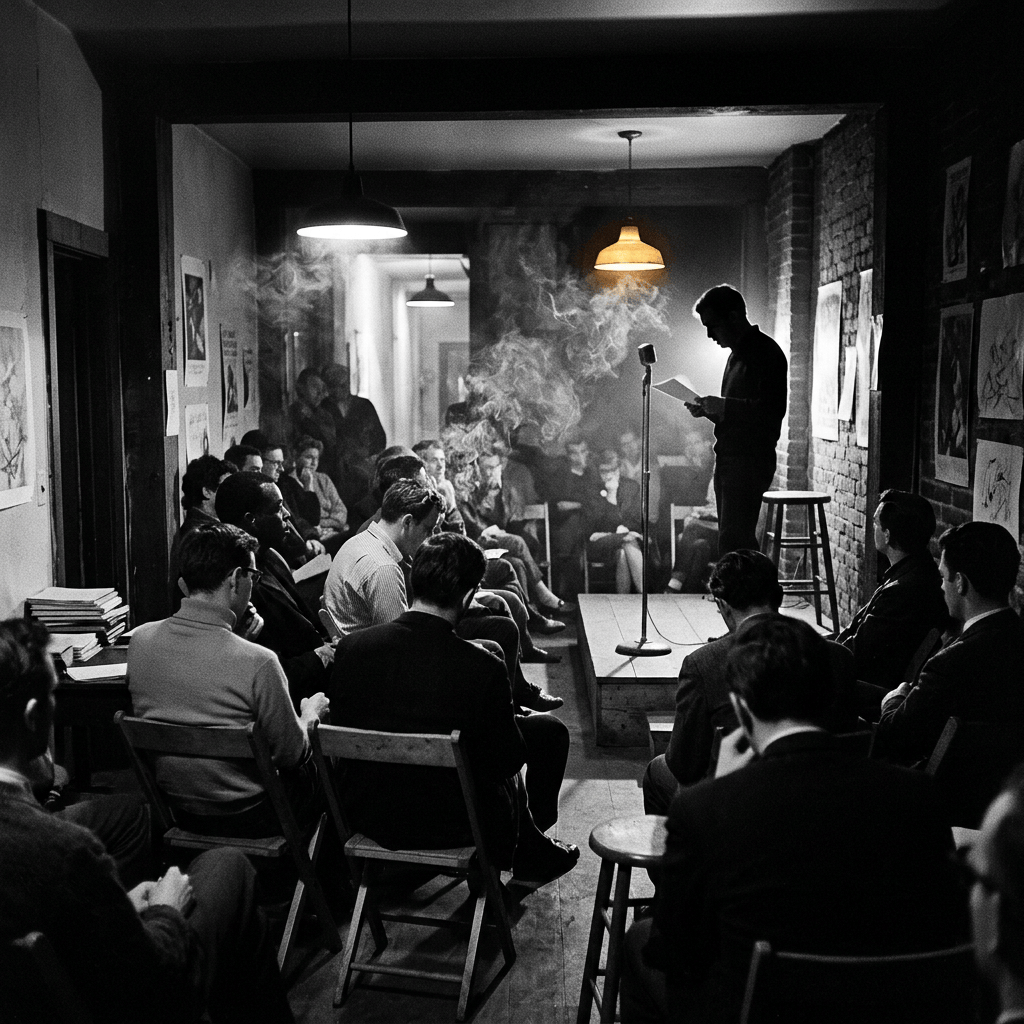
HOWL didn’t debut in some polished marble hall. It broke loose in a raw little San Francisco room — the Six Gallery — on an October night in ’55, a place so new it still smelled like paint and half‑formed dreams.

Kenneth Rexroth — older, sharp‑eyed, already a force in San Francisco’s underground — was the one who pulled the whole night into shape. He wasn’t a Beat, not by generation or temperament, but he had the instincts of a man who knew when something dangerous and alive was about to happen. Rexroth organized the Six Gallery reading, gathered the oddballs and live wires: Gary Snyder, Allen Ginsberg, and Jack Kerouac drifting in like a man who’d already seen tomorrow and wasn’t sure it would treat him kindly.

And the poem Ginsberg brought — Howl — wasn’t some polite little verse. It was a long, lung‑bursting cry from the underside of America: madness, jazz, sex, sorrow, angels, broken streets, and the machinery of the country grinding people down. It was Ginsberg grabbing the world by the collar and saying: look at what’s happening to us. The lines were huge, meant to be taken in one breath, like a wave hitting a seawall. Raw, unfiltered, dangerous enough that the room tightened before he even started reading.

Nobody in that cramped, smoky room knew they were about to witness the birth of the Beats — not the myth, not the bumper‑sticker version, but the real thing: young men with too much fire in their chests and no interest in slowing down.

Ginsberg was 29, had never done a reading, and probably felt his heartbeat in his teeth. He started quiet, almost cautious, like he wasn’t sure the words would stay upright. Then he found that long, rolling breath — the Whitman lung, the jazz lung — pulling in air like he meant to swallow the whole West Coast and spit it back out in lines that didn’t ask permission.

Kerouac sat cross‑legged on the floor, chanting “Go… go… go…” like some beat‑up guardian angel trying to shove a friend through the door of destiny. And the crowd — half drunk, half holy — felt the room tilt. Something was happening. Something big. Something that didn’t give a damn about polite America or its tidy fences.

By the time Ginsberg finished Howl, the place was electric. Not applause — something wilder. The kind of noise people make when they realize the world just shifted under their feet.

Leave a Reply

This site uses Akismet to reduce spam. Learn how your comment data is processed.

Just a Reminder

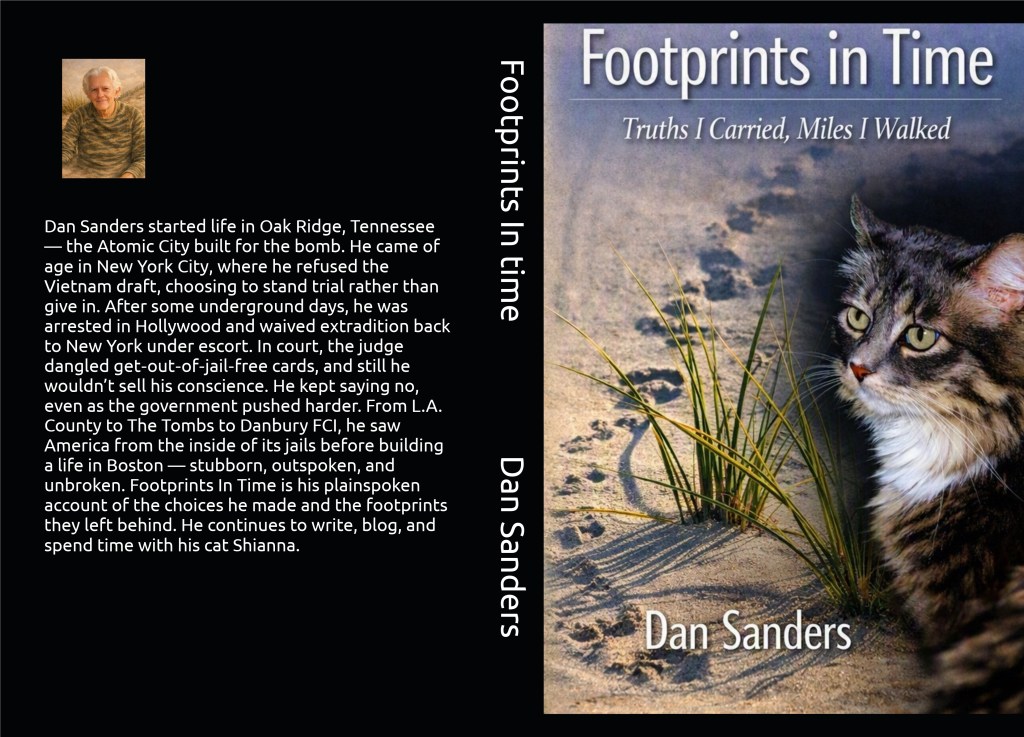
Book cover of 'Footprints in Time' by Dan Sanders, featuring a photo of the author and an illustration of a cat near footprints in the sand.

My book is now available on Amazon in both paperback and digital formats. Even if you don’t use a Kindle, Amazon lets you read free sample pages right on the site so you can get a feel for it before deciding. And for folks who do read digitally, Amazon also has a free lending feature that lets someone who owns the book loan it to a friend for a short time. Below is a short excerpt from one of the chapters — just a small piece of the larger journey.

From The Book

“What I never told Joannie was that the FBI was looking for me. There was something in her I didn’t trust — the pills, the fog, the way she drifted in and out of herself. I was always afraid that in some stupor she’d let something slip, tell the wrong person the wrong thing. Until I landed in prison, I’m sure she had no idea who I really was or what I’d done before she met me.

And to be honest, I was enjoying the adventure. The kid whose biggest wish was that his life not be boring was getting his wish.”

Leave a Reply

This site uses Akismet to reduce spam. Learn how your comment data is processed.

Chicago Cubs Cursed in 1945

On this day back in ’45, Chicago tossed a guy out of Wrigley for trying to walk in with a goat — and not just any guy, but Billy Goat Sianis, the Greek tavern keeper who ran the joint across the street. Picture it: Cubs up two games to one, the whole city buzzing, Tigers rolling into Game Four, and Billy decides he’s gonna sweeten the luck. So he buys two tickets — one for himself, one for Murphy the goat — and marches right up to the gate like this is the most normal thing in the world.

The ushers take one look at Murphy, who’s probably chewing on a railing or staring down a hot dog vendor, and say absolutely not. Billy pushes it up the ladder all the way to P.K. Wrigley himself, who gives the final verdict: “The man can come in. The goat stinks.” And that’s when Billy, insulted and probably half-amused, drops the hammer: “Fine. The Cubs will never win a World Series so long as the goat isn’t allowed in Wrigley Field.”

Boom — curse delivered.

The Cubs promptly lose the next three games, Detroit walks off with the trophy, and Billy sends Wrigley a telegram that basically says, “Who stinks now?” Pure Boston-level spite, delivered from Chicago.

And here’s the kicker: for decades afterward, the Cubs tried everything — parading goats around, blessing the field, breaking curses like they were smashing cheap dishes — but the Fall Classic stayed out of reach. A whole franchise haunted by one stubborn tavern owner and his smelly sidekick.

That’s the kind of story you tell in a bar on a cold night — a little ridiculous, a little tragic, and absolutely perfect.

Leave a Reply

This site uses Akismet to reduce spam. Learn how your comment data is processed.

Falls Moodiness, Nostalgia Overload, Ramble

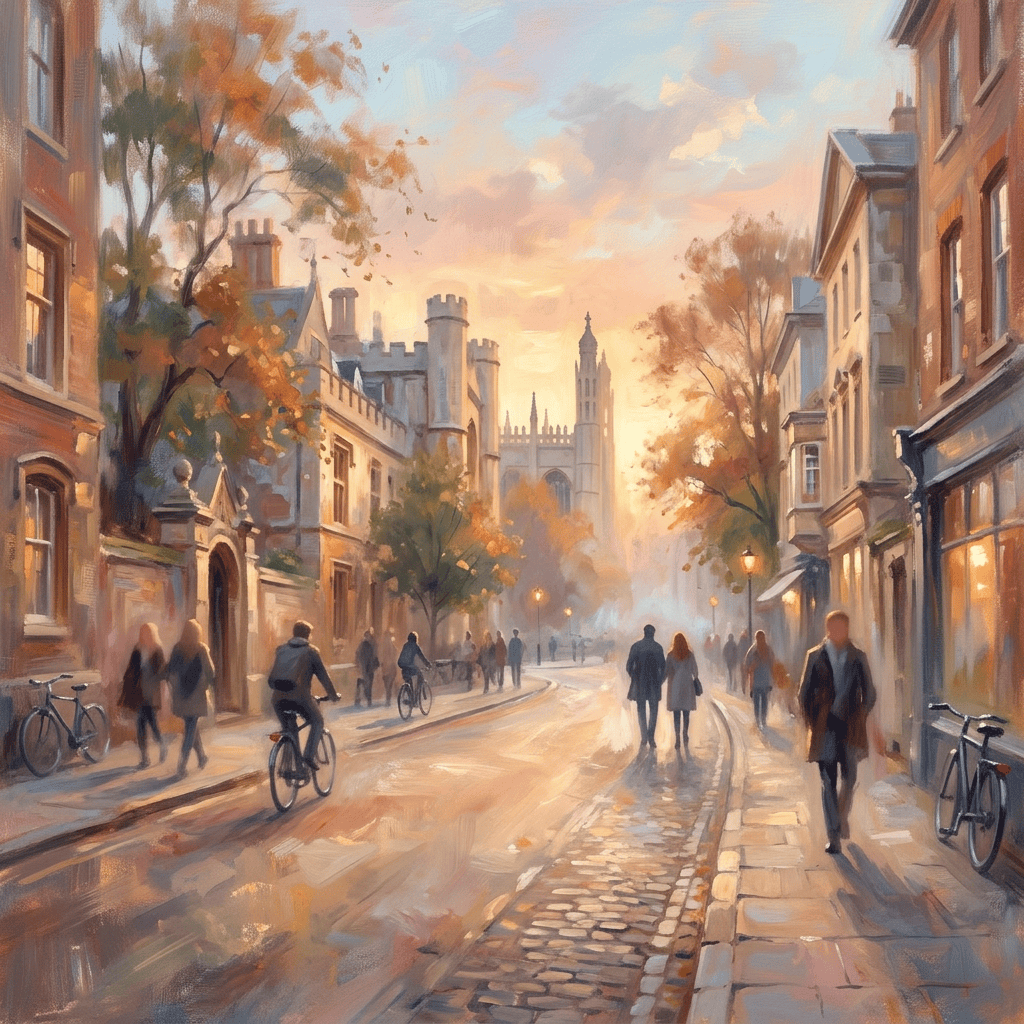
Thornton Wilder was born in Madison, Wisconsin — a place with wide skies and long horizons. But his best line, the one about enjoying the ice cream while it’s on your plate, hits even harder when you’re standing somewhere a little less poetic. Somewhere like Mass Ave as it empties into Cambridge, right where the city exhales and the old bars used to be.

There was a time when that stretch was its own kind of chapel — neon lights humming, doors swinging open, music leaking into the night air. Places where people fell in and out of love, made promises they meant for at least an hour, and told stories that got better every time they were retold. Most of those bars are gone now, replaced by whatever the future thinks we need. Still, if you pay attention, the ghosts walk beside you, connecting past to present.

And that’s where Wilder’s line lands:

“My advice to you is not to inquire why or whither but just enjoy your ice cream while it’s on your plate.”

You hear that on a street like Mass Ave, and it stops being a clever quote. It becomes a truth you can feel in your chest. Because that whole stretch — the old bars, the new storefronts, the people drifting toward the river or the Red Line — it’s all a reminder that nothing stays the way it was. Not the places, not the people, not the nights you thought would last forever.

But the moment you’re in?

That’s still yours.

Maybe it’s the way the late light hits the pavement.

Maybe it’s the memory of a bar that isn’t there anymore.

Maybe it’s just the simple fact that you’re alive enough to notice any of it.

That’s the ice cream.

That’s the sweetness he meant.

I’ve spent decades trying to decode the “why” of things — why this turn, why that loss, why the road bent instead of straightening. But walking Mass Ave toward Cambridge, you realize the road doesn’t owe you an explanation. It just asks you to keep moving, to keep noticing, to keep tasting whatever small sweetness is still on your plate.

Not asking why.

Not asking whither.

Just letting the moment be what it is — fleeting, imperfect, and somehow beautiful because it won’t come again.

Mass Ave in my memory.

Cambridge in my heart.

And the two of them — the street I haven’t seen in years and the city that still knows my name — they slide together and become part of the ice cream on my plate.

Because even if they’re yesterday’s places, they still melt into today — a little sweet, a little sad, the kind of taste you don’t forget.

And that’s enough to carry me forward, even from here.

And for this day, that’s enough.

Leave a Reply

This site uses Akismet to reduce spam. Learn how your comment data is processed.

Peanuts

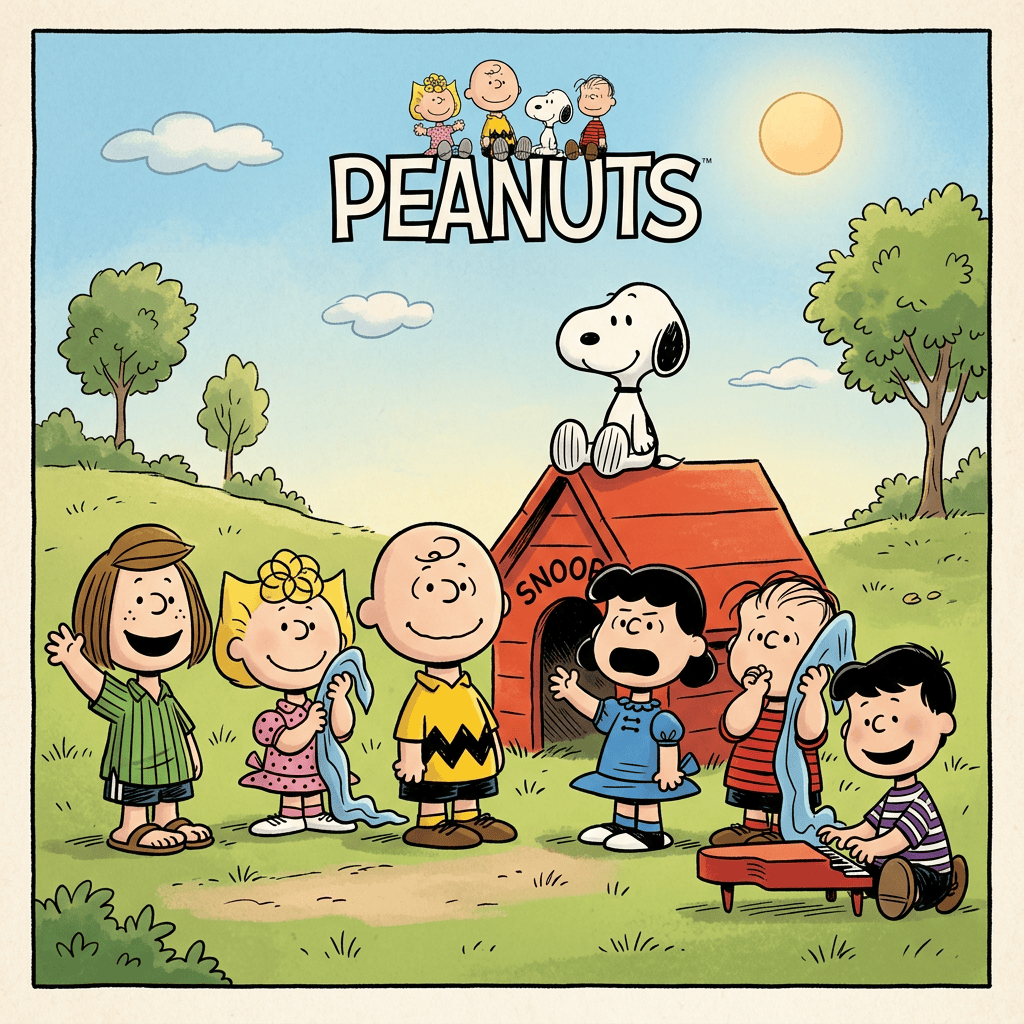
Peanuts first hit the papers 65 years ago today, back in 1950, when a quiet kid from Minneapolis named Charles Schulz finally got his shot. He’d been “Sparky” once — the smallest kid in every room, skipped ahead so fast he never quite caught up, the kind of kid other kids pick on because they can. His kindergarten teacher told him he’d be an artist someday, and Sparky, being Sparky, took it seriously. By first grade he was drawing Popeye like he’d been born with ink in his veins, and he figured, well, that’s it then — cartoonist or bust.

School didn’t do him any favors. Shy, timid, failing something every year, he gave up on college before college could give up on him. He signed up for a correspondence art course — the kind where you mail your dreams in an envelope and hope someone mails them back improved.

Then 1950 rolls around and Sparky walks into a big syndicate office with his best work under his arm. Eight papers pick him up. Eight. Not exactly the stuff of legend — until it was. Peanuts goes from those eight little papers to more than 2,600 in 75 countries. Charlie Brown, Snoopy, Linus, Lucy — suddenly they’re everywhere, like old friends you didn’t know you had.

Schulz worked like a man who didn’t trust luck. Every morning started with a jelly doughnut, then he’d sit there waiting for an idea to show up — sometimes in minutes, sometimes after a long, lonely stretch. He did everything himself: script, art, lettering. Wouldn’t hire an inker. Said it’d be like a golfer hiring someone to make his putts. And he meant it. In fifty years he took one vacation — five weeks for his 75th birthday. That’s not dedication; that’s devotion.

On February 12th, 2000, Schulz died quietly at home. The next morning, the final Peanuts strip ran. Snoopy on top of his red doghouse, typewriter in front of him, reading a farewell letter from the man who’d drawn him into existence. Schulz wrote that he’d been fortunate — almost fifty years with Charlie Brown and the gang — but he couldn’t keep up the daily grind anymore. And he said something simple and perfect: his family didn’t want Peanuts continued by anyone else.

How could he ever forget them, he wrote.

And you know what? None of us ever did.

Leave a Reply

This site uses Akismet to reduce spam. Learn how your comment data is processed.

Subscriptions are always free: