Mother Knows for Better Clothes — And I Hated Every Damn Minute of It

Mother knows for better clothes… it’s back to Robert Hall again.
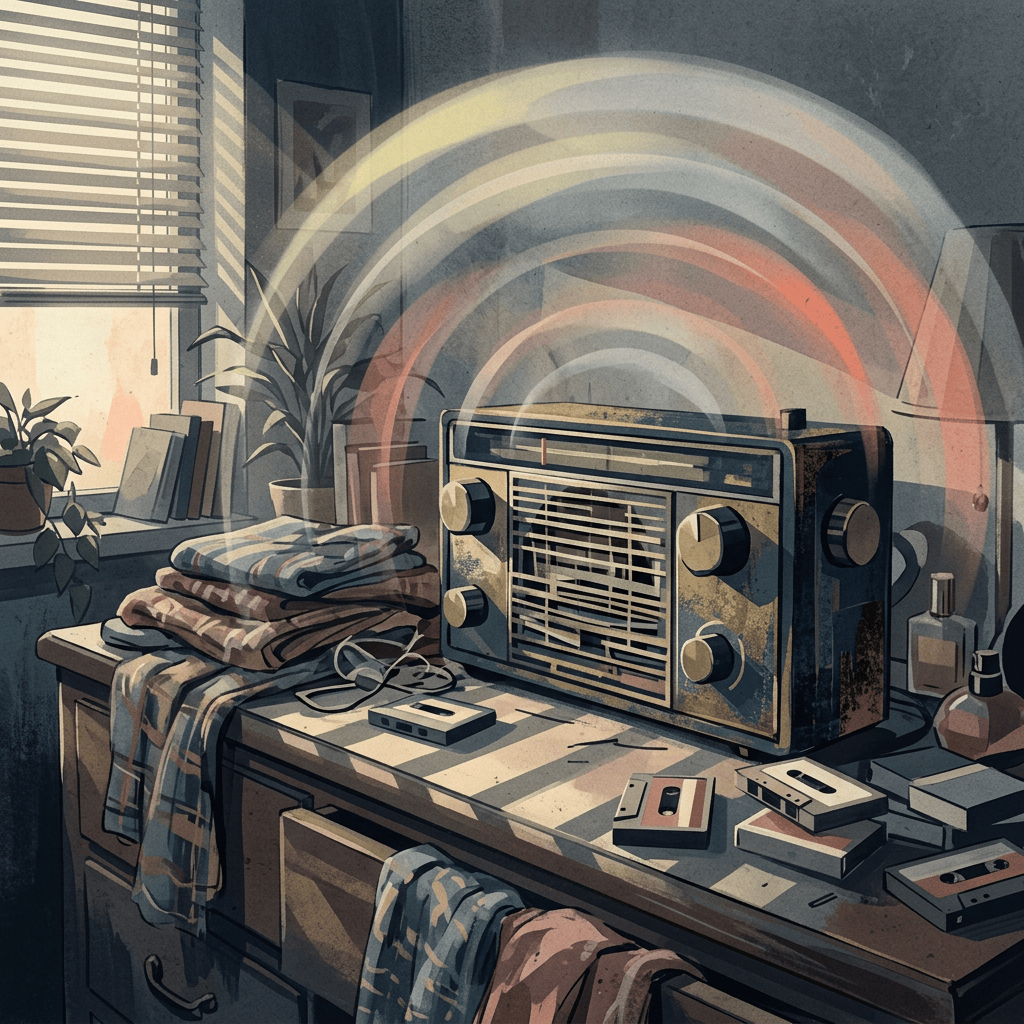
That jingle was the soundtrack of doom every August of my childhood. You couldn’t escape it. Radio, TV, store speakers — like they were trying to brainwash us into being happy about summer ending. I wasn’t fooled. I hated it. Hated the jingle, hated the reminder, hated the whole back‑to‑school circus.

Summer was freedom. Bare feet, scraped knees, long days that didn’t care what time it was. Then suddenly some cheery voice on TV starts singing about “better clothes,” like that was supposed to make me excited to go sit in a classroom again. Better clothes? Who cared. I wasn’t trying to impress anybody. I just wanted one more week of sun, one more night of staying out too late, one more morning where I didn’t have to drag myself out of bed.

I remember telling a good friend of mine once — I said, “I hated going back to school. I hated summer ending.”
She looked at me like I’d confessed to a crime.
“But I thought you were a good student?”
And I told her the truth: “I was a good student. I still hated it.”

People think being good at something means you enjoy it. Not true. I was good at school the way some people are good at shoveling snow — you do it because you have to, not because you love it. I could read, write, answer questions, get the grades. Fine. But the whole ritual of “back to school” felt like being marched back into captivity.

And that damn jingle didn’t help.
It was like a warning siren: Fun’s over, kid. Get your notebooks.
Even now, decades later, I can hear it clear as day. The bright, chirpy voices. The fake cheer. The promise of “better clothes” like that was supposed to make everything okay.

It never did.

Summer always ended too fast, and school always started too soon. And Robert Hall — with their bargain pants and their relentless advertising — made sure you knew exactly when your freedom was about to be taken away again.

So yeah. I hated hearing it.
I hated going back to school.
I hated summer ending.
And I still think that jingle was one of the most effective pieces of psychological warfare ever unleashed on American children.

Leave a comment

This site uses Akismet to reduce spam. Learn how your comment data is processed.

    Eleven Days in September

    A few thoughts here are hard for me to write, because they force me to relive some of the worst days of my life. I’m sharing them because maybe it helps the healing, and because it’s more than Mother Nature and her climatological shenanigans that make me hate September. I’ve never been a fan of the month anyway. And I know I’m not the only person who has been — or is — going through tough times. When you mix difficult life issues with a chemical imbalance called SAD (Seasonal Affective Disorder), life can become a Ulyssean train wreck of emotions, senses, and befuddled thinking.

    SAD is a mood disorder tied to seasonal changes, usually showing up as depression beginning in the fall and lasting through winter. It’s caused by a disturbance in the body’s circadian system. My condition is minor compared to what some people I know experience. I once worked with a woman who could cry at a funny joke — and she wasn’t pretending. And then there are the doubters who say things like: get over it; it’s not real; don’t let things get you down. This piece is for anyone who’s heard that too many times. I often think of James Joyce’s line: “Your battles inspired me — not the obvious material battles but those that were fought and won behind your forehead.”

    In June of 1997, summer — the season of good times and hope — shattered into a million heart‑piercing fragments. After a misdiagnosis that let her cancer grow unchecked, my wife finally learned the truth. By then, the prognosis was treatable but not curable. It would one day take her life.

    So we began living six months at a time. From one blood test and body scan to the next, we held our breath, never knowing if this time would be the last. We did that every six months for fourteen years.

    Jennifer began thirty radiation treatments in a row. The burns were third‑degree. She would lie curled on the floor outside the treatment room, in pain from the day before, waiting for the next round. I was always with her — holding her as tightly as I could, sometimes curled beside her on that cold hallway floor, trying desperately to absorb even a sliver of her agony.

    After radiation came two weeks of intensive chemotherapy. And then, almost a year later, as her body began to heal, she developed severe panic attacks. She couldn’t leave the house or be left alone. Once, I was gone for no more than fifteen minutes. When I returned, she was clinging to her chair, sweating, crying, begging me never to leave again.

    Jennifer was not a coward. She was strong. Brave. But the disease was killing her in ways no scan could measure. I had already quit my job in broadcasting. There would be other jobs — or not. I wanted to be home so she would never feel alone.

    By the end of 1997, we had at least put cancer in remission. With good doctors, counseling, and Jennifer’s relentless determination, she resumed what passed — at least to the outside world — as everyday life. Inside our home, we cocooned, believing that if we locked the world out, nothing could get in to harm us. The two of us were enough. And that’s how we lived — six months at a time, always together.

    I had my own ways of coping — music and writing. I learned to live not just one day at a time, but sometimes one minute at a time. I didn’t yet realize how deeply life was carving its marks into me.

    By the summer of 2009, traditional chemotherapy stopped working. Our six‑month reprieves ended with the doctor’s quiet words: “There is no more we can do to beat cancer back; it is spreading rapidly now.” I cried that day. But the worst day was still ahead. Suddenly, six months felt like a long time.

    One last treatment was available: a Phase 1 clinical trial. Jennifer agreed to try it. She said she knew the drugs probably wouldn’t save her life, but maybe someday they would save someone else. She joked that lab rats had better lives than she did.

    Jennifer had always been grateful that chemo hadn’t taken her long, beautiful blond hair. But these new drugs were brutal. Her hair came out in clumps on her pillow. I watched her body change from the vibrant ocean swimmer she had been to someone frail and barely recognizable. The woman who could outwalk and outswim me now needed help to move from one room to the next. The end was closing in. This would be our last summer together.

    And this is where a question began — one I still carry today: What did Jennifer suffer quietly, never telling me?

    I know she hid things. Not because she didn’t trust me, but because she loved me. She curled her pain inward so I wouldn’t have to carry all of it with her. I think about the fears she must have swallowed whole. Not the obvious ones — not the fear of cancer or dying or treatments that burned her skin and hollowed her bones. Those she faced openly. Those she let me see.

    It’s the quieter fears I wonder about — the ones behind her eyes.

    Maybe she feared becoming a burden. Maybe she feared watching me watch her suffer. Maybe she feared losing herself long before she lost her life — the swimmer, the walker, the strong woman who once outpaced me on any beach. Maybe she feared the shrinking of her world, the panic that made the front door feel like a cliff’s edge. And maybe — though she never said it — she feared leaving me alone in a house that once echoed with two voices.

    There was pain she hid too. The physical pain, yes — the burns, the nausea, the exhaustion that made her bones feel hollow. But also the humiliation of losing independence, of needing help to move from one room to the next. She tried to stand straighter when I entered the room. She tried to smile when she was breaking.

    I wonder what thoughts she kept from me in those last months. Did she count her remaining days? Did she lie awake listening to her own breathing? Did she realize before I did that we would not grow old together?

    I will never know. Her silence wasn’t distance — it was devotion. She protected me from the full weight of her fear, even when she was too weak to lift her head. That was her last act of love.

    Sometimes I wish she hadn’t. Not because I needed to know, but because she shouldn’t have had to carry any of it alone. I would have held every fear, every pain, every trembling thought. I would have carried it all if she had let me.

    But she didn’t. She was always like that — even at the end. Protecting me quietly, suffering quietly, loving quietly.

    And so the question remains — the one I will carry for the rest of my life: What did she endure in silence so I wouldn’t have to?

    I’ll never know. And maybe that’s the shape love sometimes takes — the part that remains unknowable.

    On September 14th, 2011, the hospice nurse who visited us daily said, “Maybe it’s time for inpatient hospice care.” She tried to soften it with “it’s not always a one‑way trip,” but I knew it would be. And so did Jennifer. Sometimes I wake up at night trembling, tears flowing down my cheeks as I follow the red taillights of the ambulance taking her on her last road trip. I have traveled every mile of that trip in my mind, and always will.

    I spent the next eleven days in hospice, sleeping with my arms around my dying wife, waking to the sound of her breathing or gently pressing my lips to hers to check for air. And sometimes, I heard the sound that still echoes in my head at night — the death rattle.

    On the morning of September 25th at 7:28, I didn’t have to check. Something felt different. The room felt hollow. Jennifer’s soul was gone. She had quietly slipped away sometime in the night. I wondered if she whispered goodbye and I didn’t hear. Knowing her, she probably didn’t want to wake me. Seminary never taught me this: the human soul is real. And hers had left the room.

    The first three years after her death are a blur. I drank — sometimes fine scotch, sometimes whatever I could afford. I wrote poems deep into the night and listened to music until morning. A neighbor joked that I was channeling Edgar Allan Poe. Maybe I was. My doctor prescribed tranquilizers, antidepressants, and sleeping pills. A shrink told me I had PTSD. I snapped: “You’re nuts. PTSD? I haven’t been in a war.” They explained that I had been in a fourteen‑year battle against an enemy I couldn’t see — and that I lost the one person I couldn’t bear to lose.

    I stopped the pills nine years ago. I stopped drinking ten years ago this December. I understand now: the dreams and flashbacks are part of a condition I’ll likely carry for life. And September will always be the hardest.

    My first major break — the first time I truly lost my grip — was when a little white cat named Chloe died. The cat Jennifer had loved so much. The last living, touchable thing I had of her. The day I lost Chloe, I melted down. I nearly wrecked the exam room. Two friends explained to the staff what was happening, and they kindly said, “Let him go. We’ll clean up later.” Chloe’s body became Jennifer’s. Just like that morning in hospice when I had to be pulled away from my wife.

    The most recent time was a few years ago, when Jennifer’s sister Gayle died. No one knows how important Gayle was to me. But in short: if there had never been a Gayle, there would have never been a Jennifer.

    Every day, I try to be happy. I made a poster I look at each morning: “The dream lives; you were her dream; be happy.” I was loved. Deeply. Fiercely. And she would want me to be happy. I try. I really do. But then September comes, and the battle intensifies.

    Still, I try to be as brave as she was — the woman who curled up on a hospital floor and still found the strength to fight. The woman who joined Phase 1 trials not only for herself, but for someone she’d never meet. She wanted us to grow old together. She wanted me to be happy.

    But damn you, September. Your fall beauty hides your cruelty — the short days, long shadows, lonely nights, and memories that never fade.

    I’ve survived fifteen Septembers without her. I will survive this one. And the next. Because carrying the weight of those years means I’m still carrying her.

    And I know I’m not the only one who has traveled this road. Grief has a thousand faces, and none of them walk alone. I hope that by writing this — by laying out the bumps, the breaks, the nights that nearly swallowed me — it might help someone else get over their own rough patches and keep on keeping on.

    I know if I can, they can.

    Leave a comment

    This site uses Akismet to reduce spam. Learn how your comment data is processed.

    July 16th, 1945, The Big Boom and Me

    On this day back in ’45 — 5:29 and 45 seconds in the damn morning — the desert out in Alamogordo lit up like somebody flipped on a second sun just to see what kind of trouble it could make. A bunch of scientists stood around in welder’s goggles, slathering on suntan lotion like they were prepping for a day at Revere Beach instead of kicking off the nuclear age.

    Enrico Fermi, cool as a guy waiting for the T that’s already late, took bets on whether they’d ignite just New Mexico or the whole planet. Real casual end‑of‑the‑world office pool.

    Then the thing goes off — BOOM — sky goes white, sand melts into this ghostly green radioactive glass, like the desert tried to make its own cursed souvenir.

    Ken Bainbridge, Harvard physicist running the whole Manhattan Project circus, turns to Oppenheimer — the man who’d spend the rest of his life haunted by the glow — and drops the line only someone with a New England soul could deliver clean: “We are all sons of bitches now.”

    Weeks later, August 6th and 9th, Hiroshima and Nagasaki were leveled — the only time nuclear weapons have ever been used in war. A permanent scar on humanity, no matter how you slice it.

    Bainbridge spent the rest of his life trying to undo the monster he helped midwife into existence.

    And about a year after all that, I boomed onto the planet myself — born into a prefab little government town called Oak Ridge, where the fences hummed, the jet fighters buzzed overhead, and every entrance had a guard who looked like he’d seen too much. I spent my first ten years around atomic plants, security checkpoints, and the strange quiet of a place built to help make the damn thing in the first place.

    Thirty years later, I was getting myself arrested trying to stop nuclear proliferation — life’s funny like that, it circles back with a badge and a pair of handcuffs.

    Leave a comment

    This site uses Akismet to reduce spam. Learn how your comment data is processed.

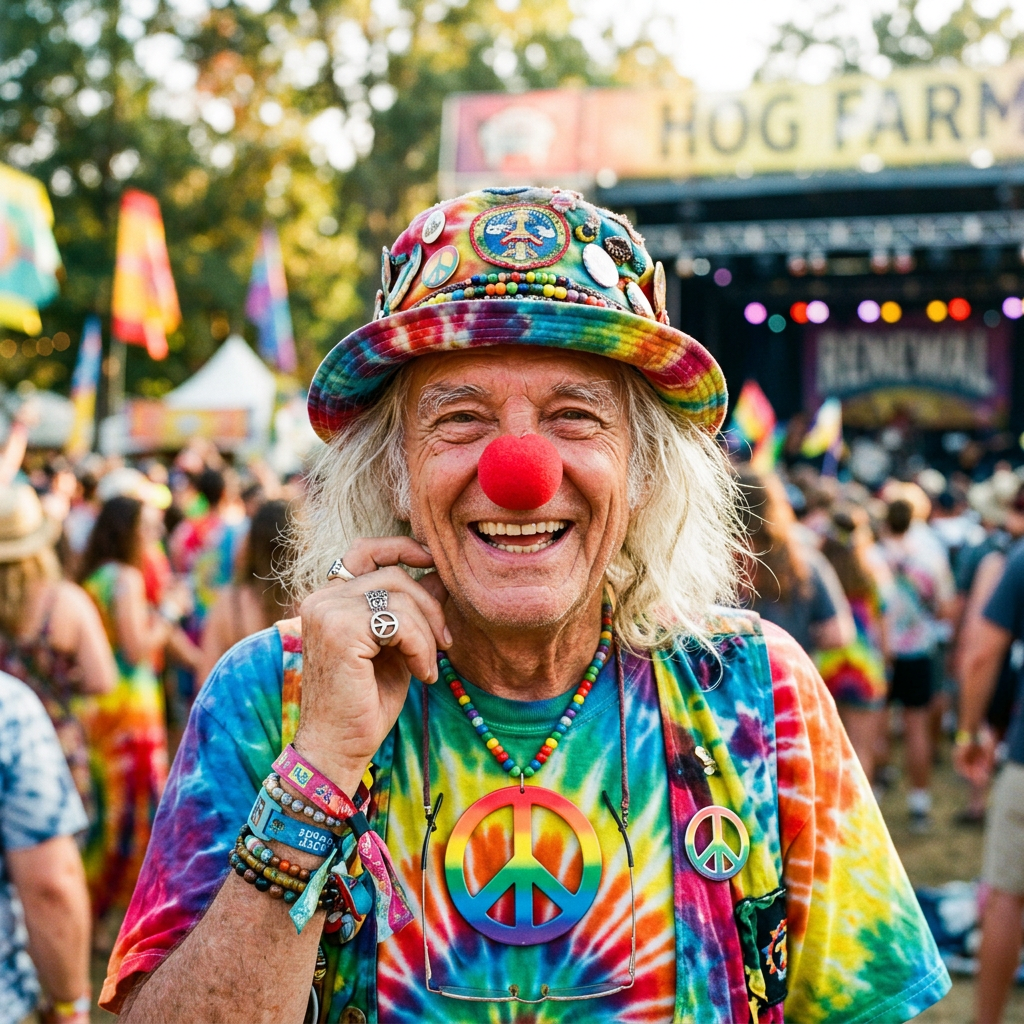
    Wavy Gravy Was Born Today

    Some people arrive in this world like a whisper. Wavy Gravy showed up like a marching band that took a wrong turn and decided to stay.

    Born on this day in 1936, back when the world was still in black‑and‑white, he somehow grew into one of the most colorful human beings to ever wander through the American story. Hugh Romney was the name on the paperwork, but the universe had other plans. It needed a jester. A peacekeeper. A clown with a conscience. A man who could talk down a crowd of 400,000 hungry, muddy, half‑mad festival‑goers at Woodstock with nothing but a microphone and a grin.

    He fed people. He calmed people. He made them laugh when they were ready to break. He turned compassion into a kind of performance art, and he never stopped believing that humor could be a tool for survival. The Hog Farm, the Seva Foundation, the endless parade of red noses and tie‑dye — it was all part of the same mission: make the world a little lighter, a little kinder, a little more human.

    Wavy Gravy reminds us that you can take the work seriously without taking yourself seriously. That mischief can be mercy. That joy can be a form of resistance. And that sometimes the best way to keep the peace is to show up dressed like a psychedelic Santa Claus and tell everyone it’s going to be okay.

    On the day he was born, the universe clearly decided it needed more color. And all these years later, we’re still living in the glow.

    From Rambling Harbor, where the tide rolls in with its own kind of cosmic joke, I tip my hat to the man who proved you can change the world with a laugh and a ladle.

    Leave a comment

    This site uses Akismet to reduce spam. Learn how your comment data is processed.

    FREE SUBSCRIBING

    Mother’s Day

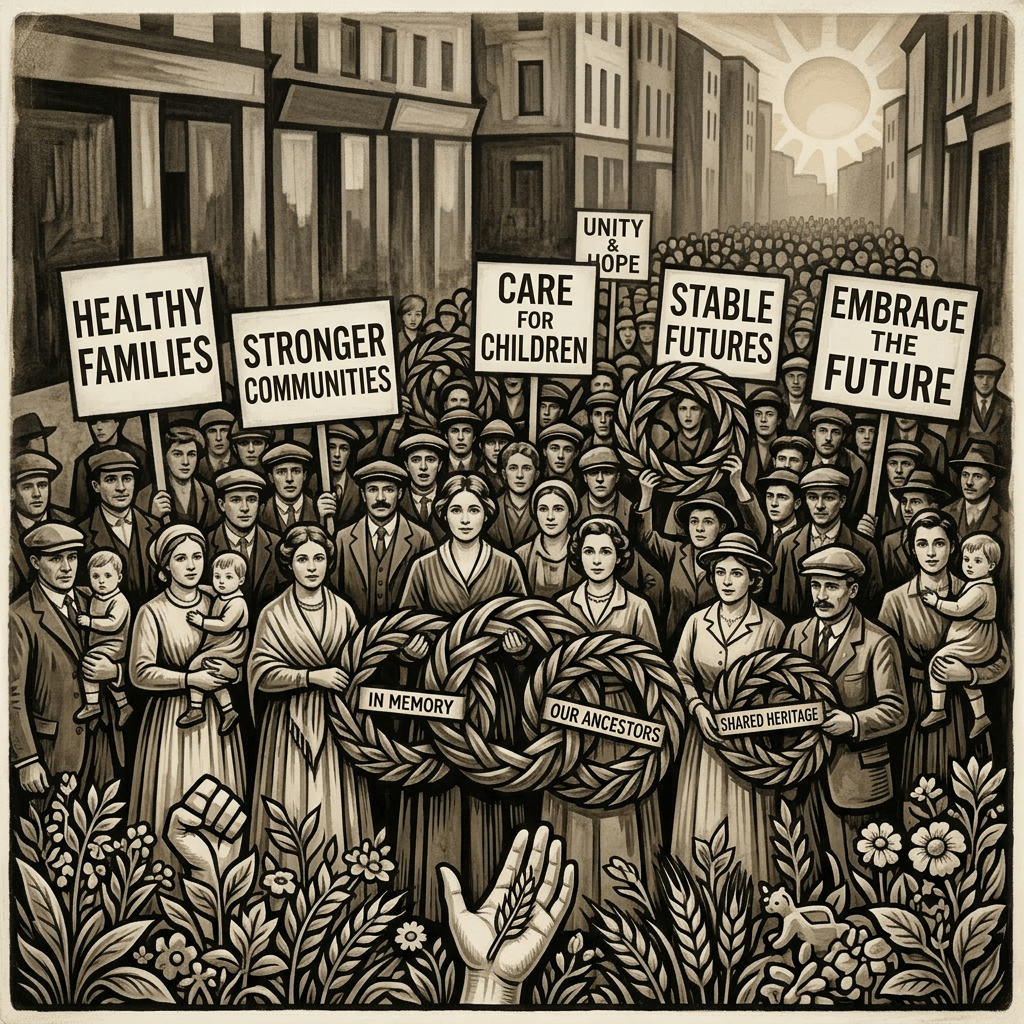
    Mother’s Day didn’t start with flowers, cards, or brunch. Its earliest roots in the United States came from women who were trying to hold their communities together in the face of disease, war, and political division.

    Ann Reeves Jarvis, a West Virginia woman who lived through the mid‑1800s, spent her life organizing “Mothers’ Work Clubs” to fight outbreaks of measles, typhoid, and diphtheria in Appalachian towns. These clubs inspected milk, taught sanitation, and even quarantined homes when needed. During the Civil War, she insisted her groups care for both Union and Confederate soldiers, and after the war she organized a Mother’s Friendship Day in 1868 to help reunite divided families.

    Around the same time, Julia Ward Howe — abolitionist, suffragist, and author of The Battle Hymn of the Republic — issued her 1870 Mother’s Day Proclamation, calling for women to gather in the name of peace after witnessing the devastation of the Civil War and the Franco‑Prussian War. She envisioned an international congress of women dedicated to preventing war. A few communities observed her proposed “Mother’s Day for Peace,” but it didn’t take hold nationally.

    The holiday as we know it today came from Anna Jarvis, Ann Jarvis’s daughter. After her mother’s death, she campaigned for a day to honor the sacrifices and quiet labor of mothers. In 1908, she held the first official Mother’s Day service at her mother’s church in Grafton, West Virginia. Within five years, nearly every state observed it, and in 1914, President Woodrow Wilson declared Mother’s Day a national holiday, celebrated on the second Sunday in May.

    Ironically, Anna Jarvis spent the rest of her life fighting the commercialization of the holiday she created — protesting florists, card companies, and anyone who turned her solemn tribute into a business opportunity.

    Leave a comment

    This site uses Akismet to reduce spam. Learn how your comment data is processed.

    SUBSCRIPTIONS ARE ALWAYS FREE

    A Message of Hope — A story about friendship, courage, and the small ways hope still finds us.

    I have a friend I’ve known since 1980, someone who used to listen to my overnight radio show when she was only sixteen. She would call me in the middle of the night, and we’d talk. I remember wishing her a happy eighteenth birthday at midnight. We met many years later in a grocery store when she was in her thirties, just before Halloween, at a time when my personal life was going through struggles as my wife battled cancer. I hadn’t seen her standing there, but I guess she remembered my voice, and I heard her say with a question mark in her voice, Sanders? And I then remember the voice that had kept me company through a phone so long ago. I like to tell her it was over the Candy Corn aisle, but she denies that memory. Still, I’ve always liked the idea that hope can show up in the corniest places. We’ve remained friends ever since. And before you get the wrong idea and think you know where this is going, here’s where it takes a sharp left.

    My friend has been married and has a daughter and a granddaughter. I met her daughter once, when I think she was around eight years old—a beautiful young child. That daughter is now older than her mother was when she used to call that lonely late-night DJ. My friend comes from a religious upbringing, and her daughter, through her own choices, has been pursuing a life in the ministry as a student at a local school.

    Here comes that left turn again. A few days ago, I got a message from my friend saying her daughter was preparing to go to Minneapolis, Minnesota, and that she was both proud and petrified. I told her I could understand both. Of course, we all know the horror unfolding in the city.

    My friend is well aware of my resistance to the Vietnam War, my time in prison for refusing induction, my involvement with Phil and Dan Berrigan, as well as my own stay in seminary and a basic life of resistance to oppression in all its ugly forms. And I know that’s one reason she chose to tell me about her daughter’s upcoming adventure.

    So why am I telling you this story? Because it’s a story of hope. In this world where ugliness is all around us—where women can be shot as their last words still echo in our minds, “I’m not mad at you, dude”; where our president tries to conquer the world and tear down democracy one White House brick at a time; where someone I’ve known and worked with can try to justify what ICE is doing and justify that shooting—when I’m at my darkest and it feels like everyone has lost all sense of morality and right or wrong… out of nowhere, I got a message of hope.

    This beautiful young child I met so many years ago is heading into the belly of the beast to try to influence and bear witness to the truth. And I’m sharing this with you because I have friends who feel as scared and disappointed as I have—friends who, in their own ways, have tried to bring truth and hope into the world, who want things to change and get better, and who have felt disappointed, hopeless, and lost as things just keep getting worse.

    And maybe part of why this hit me so hard is because this isn’t just anyone’s daughter. This is the daughter of a woman who has been woven through almost half my life—a friend who once called a lonely late-night DJ at sixteen, who somehow stayed woven through the fabric of my life through decades of change, disappointment, and small miracles. I care what happens to her. I care what happens to her daughter. And knowing that this young woman is stepping into the world with courage, conviction, and a sense of calling… well, that felt like a comforting hand on my shoulder in a dark room.

    Hope doesn’t always arrive with trumpets. Sometimes it shows up as a message from an old friend, telling you her daughter is heading into the storm because she believes in something better. She leaves on Wednesday. And for a moment—just long enough—you remember that belief is still possible, and you feel yourself steady a bit. I hope this story offers the same small steadiness to anyone who’s felt their strength wavering.

    Leave a comment

    This site uses Akismet to reduce spam. Learn how your comment data is processed.

    Subscribing to my website is free.

    A Radio Christmas Remembered

    The holidays always make people feel nostalgic. I know I do, even though I don’t really take part in what feels like holiday madness these days, instead of real joy. I get a kick out of the ads that promise big savings if I just spend twice as much as usual.

    New Year’s Day has always been a time for me to reflect, feel grateful, and sometimes regretful. Even when I was young, there was always someone or a moment to remember. As we get older, those memories matter even more.

    I haven’t done live radio since 2006, and sometimes I miss it. It’s hard not to miss something you dreamed about as a kid and finally got to do. But when I talk to friends, they remind me that radio isn’t what it used to be. Now it’s all programmed and controlled by corporations, with little room for real personalities. I was lucky to work in radio when it meant something, when underground FM was fun and creative.

    I wrote the next story a few years back, but it actually happened more than 40 years ago. I’m sharing it again because it’s real and it means a lot to me. People have told me it’s one of their favorite stories, and it’s one of my favorite Christmas memories, too.

    A Radio Christmas Remembered

    It was a quietly magical December, around 1982. Snow was blowing outside in the middle of the night—well, 3 a.m. is hardly morning. The kind of snow that sneaks up on you, drifting quietly and getting deeper. It moved across the empty parking lot, turning this lonely spot into something like the Montana or Wyoming prairie. It was the perfect scene as Merle Haggard sang about wanting the Big City to let him go. Even though I wasn’t far from Boston, it was easy to feel cut off from the world, watching the snow shape the night. I probably wouldn’t see another person for at least three more hours. I was the only one on duty from midnight to 6 a.m. I could still see most of my car, but I wasn’t sure I’d be able to move it in the morning, even if someone could get to me.

    As the keeper of the light, I stayed in touch with others who were awake during the darkest hours—the night people. I’ve always liked night people. There’s a passion in how they move through life—caring, yet often a little lonely, choosing the quiet roads and the small hours. My way of connecting with them was through a country radio station in the basement of a small strip mall in the middle of nowhere. Still, our AM signal reached far and wide, especially at night—traveling over flat land and even across the ocean, carried on the darkness. I was the only show in town, the only one playing music on the AM dial in that forgotten time zone.

    About once a week, a cross-country trucker would call me. When he got to Rhode Island and picked up my signal, he’d say, “The California Kid is on the line.” This time, he wished me a Happy Holiday and, as always, asked for a few songs to help him make it to Maine. I was his companion on the road.

    I also got calls from Alice. She drove all over the area, servicing ATMs, and would call once or twice a week while she worked. I never met Alice; she was a bit like the coyotes that roamed the parking lot, always staying out of sight. I called her Dallas Alice, after the Little Feat song Willin’, which I played for her every time she called.

    On that snowy night, Alice called to wish me a Merry Christmas and told me to wait a few minutes, then look outside. After we hung up, I played Willin’ and walked up the steps to the door. There, already gathering snow, was a small pre-lit Christmas tree and a card that read, “Merry Christmas from Dallas Alice.” I saw her footprints in the snow. She had parked close to the entrance so she could get back to the main road quickly.

    I never met Alice, but her kindness lingered long after that night. I never met the California Kid either, yet in the passion of their journeys and the gentle connections forged in the dark, we shared something rare—a caring warmth that glowed quietly in the lonely hours. On that cold, snowy night so many years ago, a woman named Alice—Dallas Alice—and a trucker called the California Kid gave me memories that still make me smile every Christmas.

    Every Christmas, I remember the way we reached for each other across the airwaves—passionate, caring, and yes, a little lonely, but never truly alone.


    Rating: 1 out of 5.

    Leave a comment

    This site uses Akismet to reduce spam. Learn how your comment data is processed.

    Chapter 1: Ties, Offices, and Draft Cards

    I need to revisit something I said in the introduction. I called my life ordinary. That was a misfire. Looking back, it’s been anything but. What I should’ve said is that there were ordinary moments scattered through an otherwise extraordinary life. I grew up alongside kids who mapped out their futures with surgical precision—future CEOs, most likely. Me? I had a plan too, though it felt more like a whispered plea to the universe: Please, God, don’t let my life be beige. No cubicle coma. No death by fluorescent light. I’ll tell you soon how close I came to that fate—until I tossed my tie into the Hudson River like a message in a bottle. Still the best decision I ever made.

    As I started writing about my life, one emotion kept erupting like a brainquake—volcanic, relentless. It left me slack-jawed, arms limp, staring at the screen like I’d just seen a ghost. If you’ve ever tried writing in that state, you know it’s like trying to type underwater. And that emotion? The gut-punch realization that, holy hell, this is ancient history. Am I really that old? Who was she? Who was he? Did I actually do that? A Ulyssean train wreck of memory and feeling, barreling through time.

    From the moment we’re born, we’re shaped by sound, sight, touch, and experience.

    I was sixteen in 1962 when the Cuban Missile Crisis hit—a high-stakes staring contest between the U.S. and the Soviet Union, triggered by Soviet missiles in Cuba. It was the closest we ever came to turning the Cold War into a full-blown nuclear nightmare. But in my corner of Staten Island, the “wonder years” of the 1950s still lingered like the scent of summer on a football jersey. My friends and I spent our days at the beach, dreaming of October and kickoff season. But that October was different. For thirteen days, the whole country held its breath. I did too, hoping the football field would still be there when morning came.

    My dad had worked on the Manhattan Project. He didn’t talk much about it, but I knew he carried the weight. He once said the first bomb should’ve been dropped on Mt. Fuji as a warning, not on Hiroshima. That act, he believed, was revenge—rage disguised as strategy. And now, just seventeen years later, we were back on the brink, flirting with annihilation.

    Three books helped shape me in those early years. First was Elie Wiesel’s Night—a raw, haunting account of surviving Auschwitz and Buchenwald. Years later, I’d sit at the dinner table with a Tufts professor who’d lived through it. His stories etched themselves into my memory like carvings in stone. The second was Black Like Me, where John Howard Griffin darkened his skin and walked through the segregated South to see what it meant to be Black in America. I couldn’t have known then that I’d one day I’d call Phil Berrigan—a white priest who rode with the Freedom Riders—a friend. The third was Fail-Safe, serialized during the Cuban Missile Crisis itself. It imagined a nuclear war sparked by a glitch. Fiction, yes—but terrifyingly plausible.

    Heavy reading for a sixteen-year-old. I don’t know what other kids were reading, but those books rewired my brain. The wonder years ended in 1962. I graduated from high school in ’64, skipped the ceremony, and refused the yearbook photo. Some of my teammates had gone off to war. Some came back in boxes. I didn’t want the pomp. I wanted silence. My mom was quietly heartbroken. My dad understood, though he never said so.

    In ’63 and ’64, I had a summer gig at WSLT Radio in Ocean City, New Jersey. Two hours each way from Staten Island, but I had a license and a dream. Sunday mornings were mine—I was king of the airwaves. The worst part was driving through Newark, where the air tasted like burnt rubber and my gum absorbed the pollution. I think of that now, as climate change becomes the new crisis.

    I was supposed to start at Pace University in September ’64. Tuition paid. The catch? A lifetime at Cunard Steamship Company. I lasted six weeks. One hot day, I walked into Battery Park and threw my tie into the Hudson. That was my declaration of independence. My boss called. My mom worried. My dad? Not surprised.

    I kept the Sunday radio gig.

    Meanwhile, the world was shifting. In December ’63, Eugene Keyes burned his draft card on Christmas Day. In May ’64, I got mine—and joined a protest in Union Square. Fifty of us. My mom thought I was with my girlfriend. My dad probably knew better. Burning that card was symbolic. I had a deferment, and I wasn’t headed to Vietnam. But I broke two laws: failing to carry the card and destroying government property. I kept the ashes in my pocket.

    I haven’t been back to New York since 1968. But one day, I’ll return to Battery Park. And remember.


    ________________________________________

    Leave a comment

    This site uses Akismet to reduce spam. Learn how your comment data is processed.

    Rating: 1 out of 5.

    CHAPTER TWO: MEETING EMILY

    I met Emily in the fall of 1967, during the anti-war march on the Pentagon. That protest—tens of thousands strong—was a rupture. D.C. felt electric and volatile, like the air before a lightning strike. The war was surging, and so was the resistance. Students, clergy, veterans, poets, and provocateurs collided, not always in harmony. The movement was splintering: some preached peace, others demanded revolution. Everyone wanted change, but no one agreed on its shape.

    Several years before this, I started writing letters to my draft board. Lyndon B. Johnson was still president, Nixon waiting in the wings. The letters weren’t meant for Johnson, but I imagined him reading them anyway—grimacing, maybe, before tossing them aside. The draft board replied a few times, reminding me I was deferred under 3-A college status. Eventually, they recalculated me as 1-A. Combat-ready. And I welcomed it. You can’t refuse what hasn’t been offered. I was done hiding behind loopholes.

    I’ve never had patience for those who ran to Canada, claimed bone spurs, or found clever ways to dodge the draft. If others were saying yes by dying, I could damn well risk my freedom to say no—with my body, not just my words. That was the point. Resistance isn’t clean. It’s not comfortable. It’s not supposed to be.

    I first met a friend of Emily’s who invited me to speak at George Washington University about my involvement. Emily was there. Back of the room. Silent. Motionless. She claimed a corner as if it were a refuge. Twenty, maybe twenty-five people in a vast lecture hall. Most clustered together, ready to pounce. She stood apart. Her small frame held a quiet strength.

    As I spoke, the questions came hard—verbal rotten tomatoes, launched like missiles. Who was I to think I could end a war? Why did I care? I was safe. I was free. But I kept looking toward her. She hadn’t said a word, yet
    I felt held by her silence.

    And then she spoke. Softly. Simply. Powerfully.

    “Wouldn’t you want them to do the same for you,” she said, “if it were your children being napalmed?”

    That sentence still echoes. In 1967, napalm wasn’t theoretical—it was the image on the evening news, the smell in the back of our throats. Her words cut through the noise like truth often does. Amid the shouting, she was the still point.

    We met again later that year at another protest in New York City. Reverend Martin Luther King Jr. was speaking at Riverside Church. That speech—his first significant break with the Johnson administration—was a thunderclap. He called the U.S. “the greatest purveyor of violence in the world.” It cost him allies, but it galvanized many of us. Emily and I never saw him speak. Instead, we ended up at Coney Island—my first and only time there.

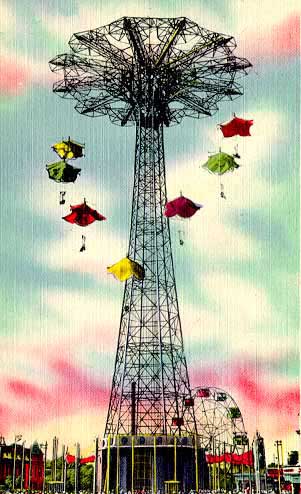
    She convinced me to ride the Parachute Jump, a steel skeleton of a tower that looked like it had been designed by someone with a grudge against gravity. Two-person canvas seat. Lifted 250 feet into the sky. Dropped like a stone. Caught, eventually, by a parachute that felt more like a suggestion than a guarantee.

    She said it would be fun. I said yes, mostly to impress her. It was not fun. It was terrifying. But she laughed, hugged me, and called me brave. Said it was one of the best experiences of her life. I didn’t understand how she could enjoy it. But I was falling for her faster than that drop from the tower. Before we parted, she told me: if I ever needed a safe place, she had land in West Virginia.

    The Pentagon was thunder. Riverside was lightning. But Emily—Emily was shelter. In the roar of fractured movements and rising resistance, she offered stillness. Her words didn’t shout; they landed like balm. Even that wild ride at Coney Island, terrifying as it was, became a metaphor: the world drops you, but sometimes you’re caught—not by canvas or steel, but by someone who sees you.

    Before we parted, she offered land in West Virginia—a place untouched by sirens or slogans. A sanctuary. And I began to wonder: maybe the revolution wasn’t just in the streets. Perhaps it was also in the quiet spaces we build with each other.

    After more than fifty years, I’ve learned that quiet doesn’t always live in geography. Sometimes it’s tucked into memory, into rituals that outlast the hands that once performed them. And sometimes, it’s the comfort and warmth of remembering the people who held me when the world did not.

    Maybe that’s the revolution too—not just in the streets, but in the stillness we carry forward.

    And the real question is this: when the world lets you down, who catches you?

    A mountain. A mouse. A friend on a grimy sidewalk. Sometimes, that’s enough.