
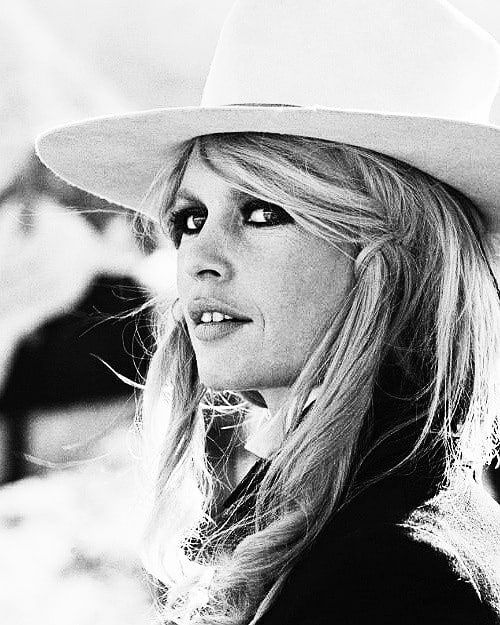
Brigitte Bardot: The Timeless Beauty Who Fought for Animals

Born today, September 28th, 1934 — Brigitte Bardot, the woman who once lit up my quiet Staten Island nights and later proved her beauty meant something because she fought like hell for animals.

I used to sneak out to the TV room late at night when we lived on Staten Island, moving slow so the floorboards wouldn’t betray me. The whole neighborhood went silent after dark — that deep suburban hush where even the refrigerator sounded like it was breathing. I’d keep the TV turned down low, just enough to catch the outline of her. Brigitte Bardot. My first lust, my first love, the first woman who made something warm and confusing rise in my chest before I even knew what desire was. I never got over her. You don’t get over the first person who teaches you that beauty can hit like a wave.

She’d appear on the screen like she wasn’t entering a movie but stepping into the room with me. Even in black‑and‑white she carried her own sunlight. Bardot didn’t act — she existed, and you felt it. She moved with that loose, natural confidence, like she didn’t care whether the world approved or not. And I’d sit there in the dim glow, the whole house asleep, watching her with the kind of focus only a kid discovering something powerful can have.

There was a quiet sensuality in her, something that made you lean forward without meaning to. Not loud, not cheap — just a presence that pulled you in. The way she held her face, the way her eyes lingered, the way she carried herself like she knew exactly who she was. She made those quiet Staten Island nights feel bigger, warmer, more alive. She made me feel alive.

As I got older, I learned the rest — the fame, the storms, the way she walked away from the industry at the height of her power. But what stayed with me most wasn’t the movies. It was the stand she took for animals. When she left acting behind and threw herself into protecting creatures who had no voice, she showed a different kind of beauty — the kind that comes from conviction. She fought hard, loud, and without apology. That mattered to me. Still does. There’s a strength in choosing compassion, and she chose it over and over again.

Now, at this point in my life, I can say it plain: I’d want a woman with a body that carries its own kind of beauty, sure — but also a good heart. Someone with that mix Bardot had: presence and principle. Warmth and backbone. A person who doesn’t just look good in a photograph but stands for something when it counts.

Even now, when I see an old photo of her — that tousled hair, that steady gaze, that sense she was already halfway to someplace freer — I feel that same quiet heat again. That first spark. That first awakening. Some memories fade. Some loves soften. But Bardot, in her own way, stayed.
Leave a comment

This site uses Akismet to reduce spam. Learn how your comment data is processed.

Rocky Horror at the Orson Welles Cinema and Tim Curry

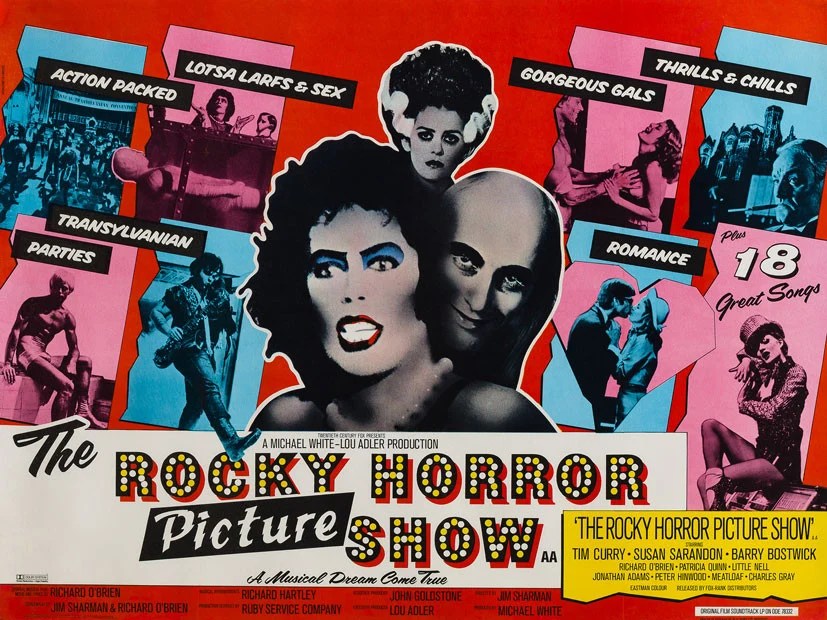
The Orson Welles Cinema in Cambridge was one of those places that didn’t just show movies — it created events. By the late seventies, the midnight screening of The Rocky Horror Picture Show had turned into something closer to a weekly pilgrimage. You didn’t just go to see a film. You went to be part of something strange, loud, funny, and absolutely alive.

The theater itself had a kind of scrappy charm. It wasn’t a palace like the big Boston houses. It was smaller, more intimate, a little rough around the edges — the perfect place for a movie that didn’t fit anywhere else. When the lights went down and the opening lips filled the screen, the whole room shifted. People shouted lines, threw props, danced in the aisles. It was chaos, but it was joyful chaos, the kind that makes you feel like you’re part of a tribe.

And of course, Tim Curry was part of that magic. Not in person — he never performed live at the Orson Welles — but his presence filled the room every time Frank‑N‑Furter strutted down that staircase in heels and pearls. His performance in the 1975 film was the heartbeat of the whole thing. Every midnight showing was built around him, around that wild mix of danger, humor, seduction, and pure theatrical electricity he brought to the role. You could feel the crowd lean forward when he appeared, like they were greeting an old friend.

The Orson Welles screenings helped turn Rocky Horror from a movie into a ritual. People came week after week. Some dressed as Columbia or Magenta, some as Riff Raff, and some just came to watch the madness unfold. The shadow cast acted out the film in front of the screen, timing every gesture to Curry’s voice. It didn’t matter that he wasn’t there in the flesh — his performance was the anchor, the spark, the reason the whole thing worked.

By the time the Orson Welles Cinema closed in 1986, Rocky Horror had already become a legend. But for a lot of people in Cambridge and Boston, the real memories weren’t just of the movie — they were of those midnight gatherings, the laughter, the shouting, the feeling that for a couple of hours you were part of something bigger, stranger, and more fun than anything else in town.

And now they’re both gone. The Orson Welles is dust, the midnight crowds long scattered, but Tim Curry’s Frank‑N‑Furter still shines like a spark from a world that will never come again.

Leave a comment

This site uses Akismet to reduce spam. Learn how your comment data is processed.

Sunday Morning Sex Ramble

If you thought your Sunday morning coffee packed a punch, wait until you get a taste of this story. Scandal, silk stockings, and a dash of notoriety—Mae West and her infamous play are about to spice up your brunch scroll.

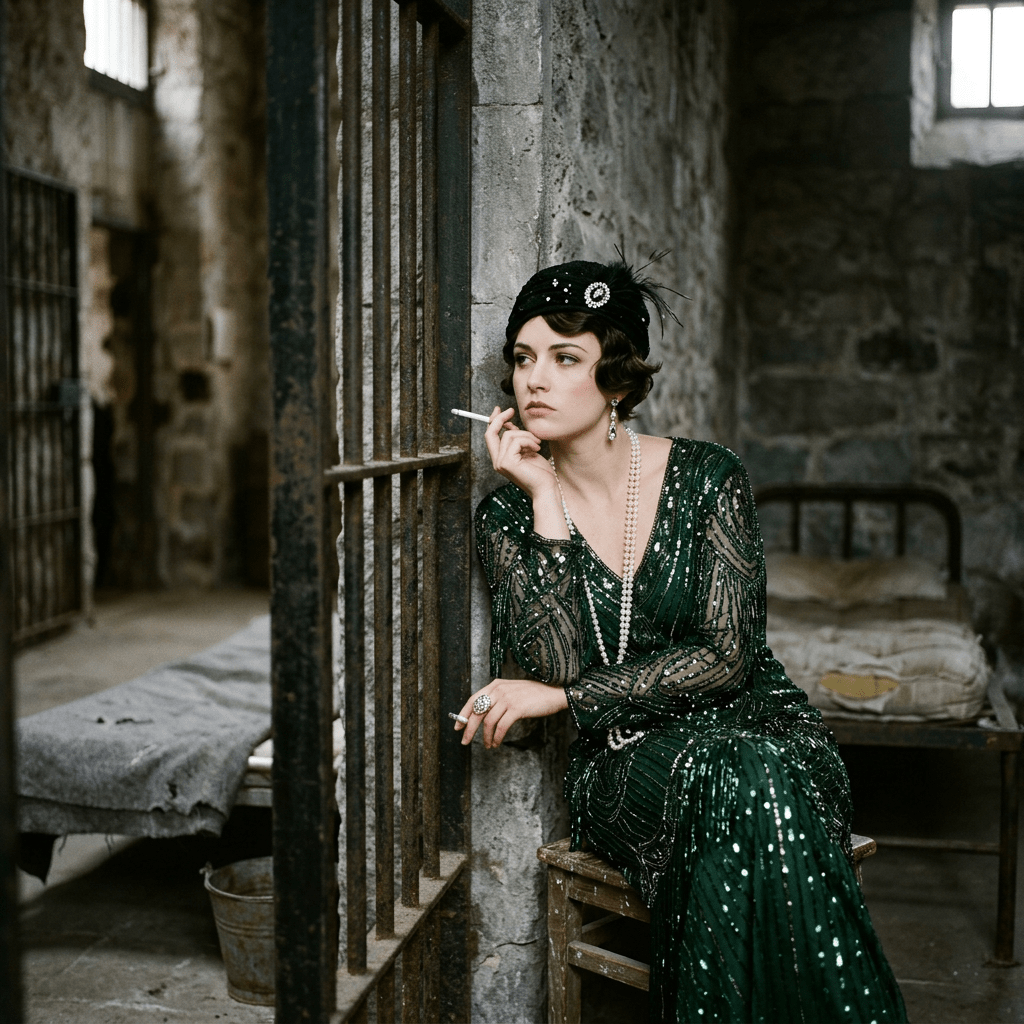
On this day in 1927, actress Mae West was sentenced to 10 days in jail for starring in the play Sex, which she also wrote and directed. It was her first Broadway show. Although Sex received terrible reviews, it drew huge crowds. After 41 weeks, police arrived and arrested the cast and crew, but only West ended up in jail. She was charged with “producing an immoral show and maintaining a public nuisance.” She said, “I wrote the story myself. It’s about a girl who lost her reputation and never missed it.” This reminds me of the movie I suggested the other day, “Professor Marston and the Wonder Women” (2017), which explores similar themes of reputation, societal norms, and strong female characters.

While in jail, West had to give up her silk stockings but was allowed to keep her silk underwear. She had her own private cell and charmed the warden and his wife, who invited her to dinner at their home each night. She made friends with other inmates while making beds and dusting. In her free time, she read business articles about different Hollywood studios. She was released two days early for good behavior.

The following year, she wrote and starred in the play Diamond Lil (1928) on Broadway, and it was a big success. She went to Hollywood, got a part in Night After Night (1932), and was allowed to rewrite her scenes. In her first scene, a hatcheck girl says to her, “Goodness, what beautiful diamonds!” and West says, “Goodness has nothing to do with it, dearie.” It was a hit, and the next year she co-starred with Cary Grant in I’m No Angel (1933). By 1935, she was said to be the second-highest-paid person in the United States, after William Randolph Hearst.

Mae West knew a thing or two about stirring the pot—and sometimes, that’s exactly what Sunday mornings are for.

Leave a comment

This site uses Akismet to reduce spam. Learn how your comment data is processed.

Rating: 1 out of 5.

There is no charge to subscribe