My Easter Ramble.

This moment comes from a stretch of my life when I was being moved across the country by U.S. Marshals—an experience that was tense, surreal, and, somehow, funny. I learned early on that if I could get the Marshals to crack a smile, the miles went by a little easier. This particular memory landed on Easter Sunday, somewhere in the endless wheat fields of Kansas, when the only thing to do was look out the window and try to keep the mood human.

“The one day I am sure of on this trip was Easter Sunday, and I remember that because as we traveled through the wheat fields of Kansas—miles and miles of nothing but wheat—I said to the Marshals, ‘You guys know it’s Easter?’ and one replied sarcastically, ‘Yeah, ya’ want to go to church?’ I replied, ‘No, I’m not much on churchgoing, but I thought we might have an Easter egg hunt, and I’ll be glad to play the part of the egg.’ This was the second time I made them laugh.”

For the whole story, the complete book follows the bouncing link at the bottom. But to help avoid Amazon’s paranoid algorithm, I’ll borrow a line from the Grateful Dead:

“Just one thing I ask of you, just one thing for me

Please forget you know my name, my darling Sugaree…”

Shake it, shake it, Sugaree — just don’t tell them that you know me.

Here’s the link to the full book: Here’s the link to the full book: https://a.co/d/016MrqUQ

Leave a comment

This site uses Akismet to reduce spam. Learn how your comment data is processed.

Rating: 1 out of 5.

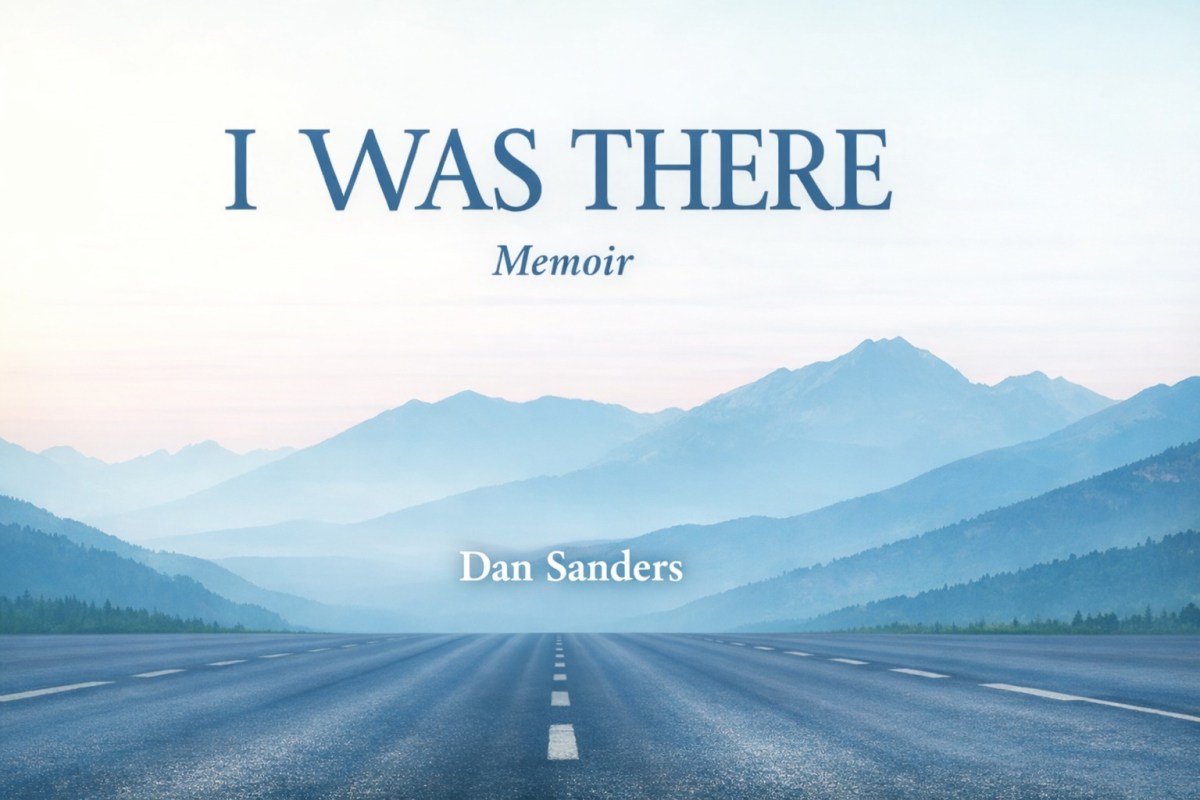
My Book, “I Was There”

This book took years. Not because I was writing every day, but because I wasn’t. I’d circle back, pick up a thread, lose it again. Life got in the way. So did doubt. So did the internet. Heck, sometimes cleaning my kitchen had to take priority. Below are a couple of sections from two of the first chapters. The book is available in both paperback and Kindle formats. You don’t need a Kindle device or a special Kindle account to read my book. Anyone can read it on a computer, phone, or tablet using either the free Kindle app or the Kindle Cloud Reader, which opens right in your web browser with no download needed.

I hope you’ll enjoy the read. Those who have read it so far have told me how much they have enjoyed it.

From Chapter 2

“Several years earlier, I had begun writing letters to my draft board. Lyndon Johnson was still president, Nixon waiting in the wings. The letters weren’t meant for Johnson, but I imagined him reading them anyway—grimacing, maybe, before tossing them aside. The draft board wrote back a few times, reminding me I was deferred under 3‑A college status. Eventually, they recalculated me as 1‑A. Combat‑ready. And I welcomed it. You can’t refuse what hasn’t been offered. I was done hiding behind loopholes.”

From Chapter 3

Inside, the induction ceremony began. The room smelled of sweat. The air was thick with the breath of boys pretending not to shake. The recruiter’s voice was flat, rehearsed, like he’d stopped listening years ago.

“Please repeat after me…”

“I do solemnly swear…”

Repeat. Repeat? Hell, I could barely breathe.

“…that I will bear true faith…”

And suddenly I wasn’t in Whitehall anymore. I was back on the football field, hearing my coach yell, “Go in hell‑bent for leather, Little Sandy!” My dad was Big Sandy. The coach used that nickname to rile me up. Hell‑bent for leather — without fear.

My heart picked up the chant until it drowned out everything else.

Then came the words: Step forward.

I sat down.”

For the whole story, follow this link https://a.co/d/016lhY1F

Rating: 1 out of 5.

My Book Has Been Released

Dan Sanders grew up on Staten Island and learned early how to navigate the edges of things—family, faith, war, and the long road toward becoming himself. He spent years in radio, activism, and community work before settling in the Boston area, where he writes about the moments that refuse to stay quiet. He lives in what he calls Rambling Harbor with his cat, Shianna, and continues to tell the stories that shaped him, one honest line at a time.

The Road to “I Was There”

It didn’t happen all at once. It wasn’t a straight shot. It was a long road — with detours, breakdowns, and a few stretches where I didn’t touch the wheel at all.

This book took years. Not because I was writing every day, but because I wasn’t. I’d circle back, pick up a thread, lose it again. Life got in the way. So did doubt. So did the internet.

But the story never left. It waited. And every time someone asked — “Are you still working on it?” or “When’s the book coming out?” — it reminded me that I was still on the road.

So thank you. To everyone who kept asking. To those who read the early chapters, who saw the fog and the mountains and said, “Keep going.”

The book is out now. It’s called “I Was There”. Because I was. And now, so are you.

And who knows what comes next — maybe that’s the best part. Maybe even another book

follow this link to the Amazon page: https://a.co/d/01jMzMsm

About Me
I’m a dreamer with some rough edges, a word‑slinger, an actor, a picture‑maker, and a guy who hangs onto the stories that don’t always behave. I write from a small harbor shaped by memory, Boston weather, and all the quiet corners where truth sits down and refuses to move.
I Was There is one road I’ve walked. There’ll be others. There always are.

Leave a comment

This site uses Akismet to reduce spam. Learn how your comment data is processed.

Rating: 1 out of 5.

Chapter 1: Ties, Offices, and Draft Cards

I need to revisit something I said in the introduction. I called my life ordinary. That was a misfire. Looking back, it’s been anything but. What I should’ve said is that there were ordinary moments scattered through an otherwise extraordinary life. I grew up alongside kids who mapped out their futures with surgical precision—future CEOs, most likely. Me? I had a plan too, though it felt more like a whispered plea to the universe: Please, God, don’t let my life be beige. No cubicle coma. No death by fluorescent light. I’ll tell you soon how close I came to that fate—until I tossed my tie into the Hudson River like a message in a bottle. Still the best decision I ever made.

As I started writing about my life, one emotion kept erupting like a brainquake—volcanic, relentless. It left me slack-jawed, arms limp, staring at the screen like I’d just seen a ghost. If you’ve ever tried writing in that state, you know it’s like trying to type underwater. And that emotion? The gut-punch realization that, holy hell, this is ancient history. Am I really that old? Who was she? Who was he? Did I actually do that? A Ulyssean train wreck of memory and feeling, barreling through time.

From the moment we’re born, we’re shaped by sound, sight, touch, and experience.

I was sixteen in 1962 when the Cuban Missile Crisis hit—a high-stakes staring contest between the U.S. and the Soviet Union, triggered by Soviet missiles in Cuba. It was the closest we ever came to turning the Cold War into a full-blown nuclear nightmare. But in my corner of Staten Island, the “wonder years” of the 1950s still lingered like the scent of summer on a football jersey. My friends and I spent our days at the beach, dreaming of October and kickoff season. But that October was different. For thirteen days, the whole country held its breath. I did too, hoping the football field would still be there when morning came.

My dad had worked on the Manhattan Project. He didn’t talk much about it, but I knew he carried the weight. He once said the first bomb should’ve been dropped on Mt. Fuji as a warning, not on Hiroshima. That act, he believed, was revenge—rage disguised as strategy. And now, just seventeen years later, we were back on the brink, flirting with annihilation.

Three books helped shape me in those early years. First was Elie Wiesel’s Night—a raw, haunting account of surviving Auschwitz and Buchenwald. Years later, I’d sit at the dinner table with a Tufts professor who’d lived through it. His stories etched themselves into my memory like carvings in stone. The second was Black Like Me, where John Howard Griffin darkened his skin and walked through the segregated South to see what it meant to be Black in America. I couldn’t have known then that I’d one day I’d call Phil Berrigan—a white priest who rode with the Freedom Riders—a friend. The third was Fail-Safe, serialized during the Cuban Missile Crisis itself. It imagined a nuclear war sparked by a glitch. Fiction, yes—but terrifyingly plausible.

Heavy reading for a sixteen-year-old. I don’t know what other kids were reading, but those books rewired my brain. The wonder years ended in 1962. I graduated from high school in ’64, skipped the ceremony, and refused the yearbook photo. Some of my teammates had gone off to war. Some came back in boxes. I didn’t want the pomp. I wanted silence. My mom was quietly heartbroken. My dad understood, though he never said so.

In ’63 and ’64, I had a summer gig at WSLT Radio in Ocean City, New Jersey. Two hours each way from Staten Island, but I had a license and a dream. Sunday mornings were mine—I was king of the airwaves. The worst part was driving through Newark, where the air tasted like burnt rubber and my gum absorbed the pollution. I think of that now, as climate change becomes the new crisis.

I was supposed to start at Pace University in September ’64. Tuition paid. The catch? A lifetime at Cunard Steamship Company. I lasted six weeks. One hot day, I walked into Battery Park and threw my tie into the Hudson. That was my declaration of independence. My boss called. My mom worried. My dad? Not surprised.

I kept the Sunday radio gig.

Meanwhile, the world was shifting. In December ’63, Eugene Keyes burned his draft card on Christmas Day. In May ’64, I got mine—and joined a protest in Union Square. Fifty of us. My mom thought I was with my girlfriend. My dad probably knew better. Burning that card was symbolic. I had a deferment, and I wasn’t headed to Vietnam. But I broke two laws: failing to carry the card and destroying government property. I kept the ashes in my pocket.

I haven’t been back to New York since 1968. But one day, I’ll return to Battery Park. And remember.


________________________________________

Leave a comment

This site uses Akismet to reduce spam. Learn how your comment data is processed.

Rating: 1 out of 5.