
Howard Phillips Lovecraft-H.P. Lovecraft,

Born August 20th, 1890, Howard Phillips Lovecraft-H.P. Lovecraft,

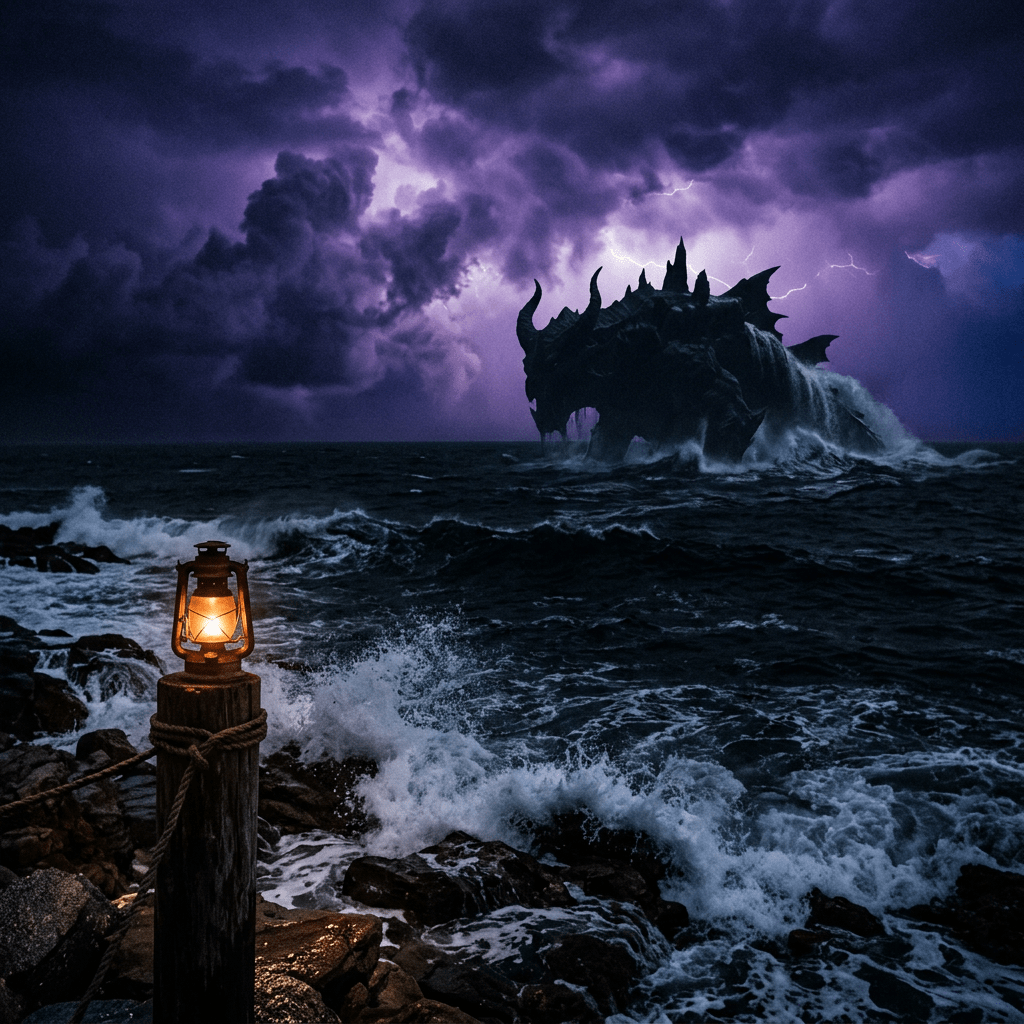
It’s the birthday of H.P. Lovecraft, born Howard Phillips Lovecraft in Providence, Rhode Island, back in 1890 — a man who somehow turned the quiet corners of New England into a map of cosmic dread. Funny how a place like Providence, with its brick houses and sleepy streets, could produce someone who spent his life staring into the abyss and then reporting back on what stared right back at him.

Lovecraft wasn’t writing about monsters, not really. He was writing about that feeling you get at three in the morning when the world tilts just a little, and you realize you’re smaller than you ever imagined. He gave that feeling names — Cthulhu, Yog‑Sothoth, the whole tentacled family reunion — but the real terror was always the same: the universe doesn’t care. And he wrote that truth with the intensity of a man who felt it in his bones.

He lived most of his life broke, anxious, and tucked away in rented rooms, scribbling stories that wouldn’t become famous until long after he was gone. There’s something almost New England about that — the stubbornness, the quiet grind, the belief that the work matters even if nobody’s listening yet. Providence shaped him, and in return he reshaped Providence into a place where shadows have weight and old houses whisper at night.

On his birthday, I think about how strange it is that a man who rarely traveled farther than the Northeast managed to chart entire galaxies of fear. And how his stories, written in the margins of his own troubled life, still echo through books, movies, games, and the imaginations of anyone who’s ever felt the cold breath of the unknown on the back of their neck.

Lovecraft didn’t give us hope. He gave us honesty — the kind that crawls under your skin and stays there. And maybe that’s why he endures. Because sometimes the world really does feel bigger, darker, and stranger than we can handle. And he was the one who said, “Yes. It is. And here’s what that looks like.”

And when you look at the end of his life, it fits the man: a quiet death in 1937, only 46, worn down by illness and poverty, leaving behind stories that outlived him by decades. Today his grave in Swan Point Cemetery has become its own kind of pilgrimage site. The headstone now famously reads “I AM PROVIDENCE.” Visitors leave coins, stones, shells, little figurines, handwritten notes — small offerings to a man who spent his life writing about the vast, uncaring universe.

And lately, there’s this odd little tradition that’s grown legs: bottles of vodka left at the grave. Lovecraft hated alcohol, wouldn’t touch the stuff, so maybe it’s a joke, maybe it’s a dare, maybe it’s just fans being weird in the way fans get weird. But the strange part is how the offerings sometimes move. A bottle set neatly at the base of the stone ends up a few feet away the next morning. Stones rearrange themselves. Notes shift. Cemetery staff say it’s wind or animals or teenagers, and maybe it is. But standing there, looking at that grave with its quiet declaration — I AM PROVIDENCE — you can’t help feeling that the man who wrote about the thin places in the world might still have one around him. A little ripple. A little nudge. A little reminder that mystery doesn’t always need monsters.

Just a grave, a name, a bottle of vodka that won’t stay put, and the sense that even now, something old and curious is paying attention.

See less

Leave a comment

This site uses Akismet to reduce spam. Learn how your comment data is processed.

A Radio Christmas Remembered

The holidays always make people feel nostalgic. I know I do, even though I don’t really take part in what feels like holiday madness these days, instead of real joy. I get a kick out of the ads that promise big savings if I just spend twice as much as usual.

New Year’s Day has always been a time for me to reflect, feel grateful, and sometimes regretful. Even when I was young, there was always someone or a moment to remember. As we get older, those memories matter even more.

I haven’t done live radio since 2006, and sometimes I miss it. It’s hard not to miss something you dreamed about as a kid and finally got to do. But when I talk to friends, they remind me that radio isn’t what it used to be. Now it’s all programmed and controlled by corporations, with little room for real personalities. I was lucky to work in radio when it meant something, when underground FM was fun and creative.

I wrote the next story a few years back, but it actually happened more than 40 years ago. I’m sharing it again because it’s real and it means a lot to me. People have told me it’s one of their favorite stories, and it’s one of my favorite Christmas memories, too.

A Radio Christmas Remembered

It was a quietly magical December, around 1982. Snow was blowing outside in the middle of the night—well, 3 a.m. is hardly morning. The kind of snow that sneaks up on you, drifting quietly and getting deeper. It moved across the empty parking lot, turning this lonely spot into something like the Montana or Wyoming prairie. It was the perfect scene as Merle Haggard sang about wanting the Big City to let him go. Even though I wasn’t far from Boston, it was easy to feel cut off from the world, watching the snow shape the night. I probably wouldn’t see another person for at least three more hours. I was the only one on duty from midnight to 6 a.m. I could still see most of my car, but I wasn’t sure I’d be able to move it in the morning, even if someone could get to me.

As the keeper of the light, I stayed in touch with others who were awake during the darkest hours—the night people. I’ve always liked night people. There’s a passion in how they move through life—caring, yet often a little lonely, choosing the quiet roads and the small hours. My way of connecting with them was through a country radio station in the basement of a small strip mall in the middle of nowhere. Still, our AM signal reached far and wide, especially at night—traveling over flat land and even across the ocean, carried on the darkness. I was the only show in town, the only one playing music on the AM dial in that forgotten time zone.

About once a week, a cross-country trucker would call me. When he got to Rhode Island and picked up my signal, he’d say, “The California Kid is on the line.” This time, he wished me a Happy Holiday and, as always, asked for a few songs to help him make it to Maine. I was his companion on the road.

I also got calls from Alice. She drove all over the area, servicing ATMs, and would call once or twice a week while she worked. I never met Alice; she was a bit like the coyotes that roamed the parking lot, always staying out of sight. I called her Dallas Alice, after the Little Feat song Willin’, which I played for her every time she called.

On that snowy night, Alice called to wish me a Merry Christmas and told me to wait a few minutes, then look outside. After we hung up, I played Willin’ and walked up the steps to the door. There, already gathering snow, was a small pre-lit Christmas tree and a card that read, “Merry Christmas from Dallas Alice.” I saw her footprints in the snow. She had parked close to the entrance so she could get back to the main road quickly.

I never met Alice, but her kindness lingered long after that night. I never met the California Kid either, yet in the passion of their journeys and the gentle connections forged in the dark, we shared something rare—a caring warmth that glowed quietly in the lonely hours. On that cold, snowy night so many years ago, a woman named Alice—Dallas Alice—and a trucker called the California Kid gave me memories that still make me smile every Christmas.

Every Christmas, I remember the way we reached for each other across the airwaves—passionate, caring, and yes, a little lonely, but never truly alone.


Rating: 1 out of 5.

Leave a comment

This site uses Akismet to reduce spam. Learn how your comment data is processed.

Chapter 1: Ties, Offices, and Draft Cards

I need to revisit something I said in the introduction. I called my life ordinary. That was a misfire. Looking back, it’s been anything but. What I should’ve said is that there were ordinary moments scattered through an otherwise extraordinary life. I grew up alongside kids who mapped out their futures with surgical precision—future CEOs, most likely. Me? I had a plan too, though it felt more like a whispered plea to the universe: Please, God, don’t let my life be beige. No cubicle coma. No death by fluorescent light. I’ll tell you soon how close I came to that fate—until I tossed my tie into the Hudson River like a message in a bottle. Still the best decision I ever made.

As I started writing about my life, one emotion kept erupting like a brainquake—volcanic, relentless. It left me slack-jawed, arms limp, staring at the screen like I’d just seen a ghost. If you’ve ever tried writing in that state, you know it’s like trying to type underwater. And that emotion? The gut-punch realization that, holy hell, this is ancient history. Am I really that old? Who was she? Who was he? Did I actually do that? A Ulyssean train wreck of memory and feeling, barreling through time.

From the moment we’re born, we’re shaped by sound, sight, touch, and experience.

I was sixteen in 1962 when the Cuban Missile Crisis hit—a high-stakes staring contest between the U.S. and the Soviet Union, triggered by Soviet missiles in Cuba. It was the closest we ever came to turning the Cold War into a full-blown nuclear nightmare. But in my corner of Staten Island, the “wonder years” of the 1950s still lingered like the scent of summer on a football jersey. My friends and I spent our days at the beach, dreaming of October and kickoff season. But that October was different. For thirteen days, the whole country held its breath. I did too, hoping the football field would still be there when morning came.

My dad had worked on the Manhattan Project. He didn’t talk much about it, but I knew he carried the weight. He once said the first bomb should’ve been dropped on Mt. Fuji as a warning, not on Hiroshima. That act, he believed, was revenge—rage disguised as strategy. And now, just seventeen years later, we were back on the brink, flirting with annihilation.

Three books helped shape me in those early years. First was Elie Wiesel’s Night—a raw, haunting account of surviving Auschwitz and Buchenwald. Years later, I’d sit at the dinner table with a Tufts professor who’d lived through it. His stories etched themselves into my memory like carvings in stone. The second was Black Like Me, where John Howard Griffin darkened his skin and walked through the segregated South to see what it meant to be Black in America. I couldn’t have known then that I’d one day I’d call Phil Berrigan—a white priest who rode with the Freedom Riders—a friend. The third was Fail-Safe, serialized during the Cuban Missile Crisis itself. It imagined a nuclear war sparked by a glitch. Fiction, yes—but terrifyingly plausible.

Heavy reading for a sixteen-year-old. I don’t know what other kids were reading, but those books rewired my brain. The wonder years ended in 1962. I graduated from high school in ’64, skipped the ceremony, and refused the yearbook photo. Some of my teammates had gone off to war. Some came back in boxes. I didn’t want the pomp. I wanted silence. My mom was quietly heartbroken. My dad understood, though he never said so.

In ’63 and ’64, I had a summer gig at WSLT Radio in Ocean City, New Jersey. Two hours each way from Staten Island, but I had a license and a dream. Sunday mornings were mine—I was king of the airwaves. The worst part was driving through Newark, where the air tasted like burnt rubber and my gum absorbed the pollution. I think of that now, as climate change becomes the new crisis.

I was supposed to start at Pace University in September ’64. Tuition paid. The catch? A lifetime at Cunard Steamship Company. I lasted six weeks. One hot day, I walked into Battery Park and threw my tie into the Hudson. That was my declaration of independence. My boss called. My mom worried. My dad? Not surprised.

I kept the Sunday radio gig.

Meanwhile, the world was shifting. In December ’63, Eugene Keyes burned his draft card on Christmas Day. In May ’64, I got mine—and joined a protest in Union Square. Fifty of us. My mom thought I was with my girlfriend. My dad probably knew better. Burning that card was symbolic. I had a deferment, and I wasn’t headed to Vietnam. But I broke two laws: failing to carry the card and destroying government property. I kept the ashes in my pocket.

I haven’t been back to New York since 1968. But one day, I’ll return to Battery Park. And remember.


________________________________________

Leave a comment

This site uses Akismet to reduce spam. Learn how your comment data is processed.

Rating: 1 out of 5.