Mother Knows for Better Clothes — And I Hated Every Damn Minute of It

Mother knows for better clothes… it’s back to Robert Hall again.
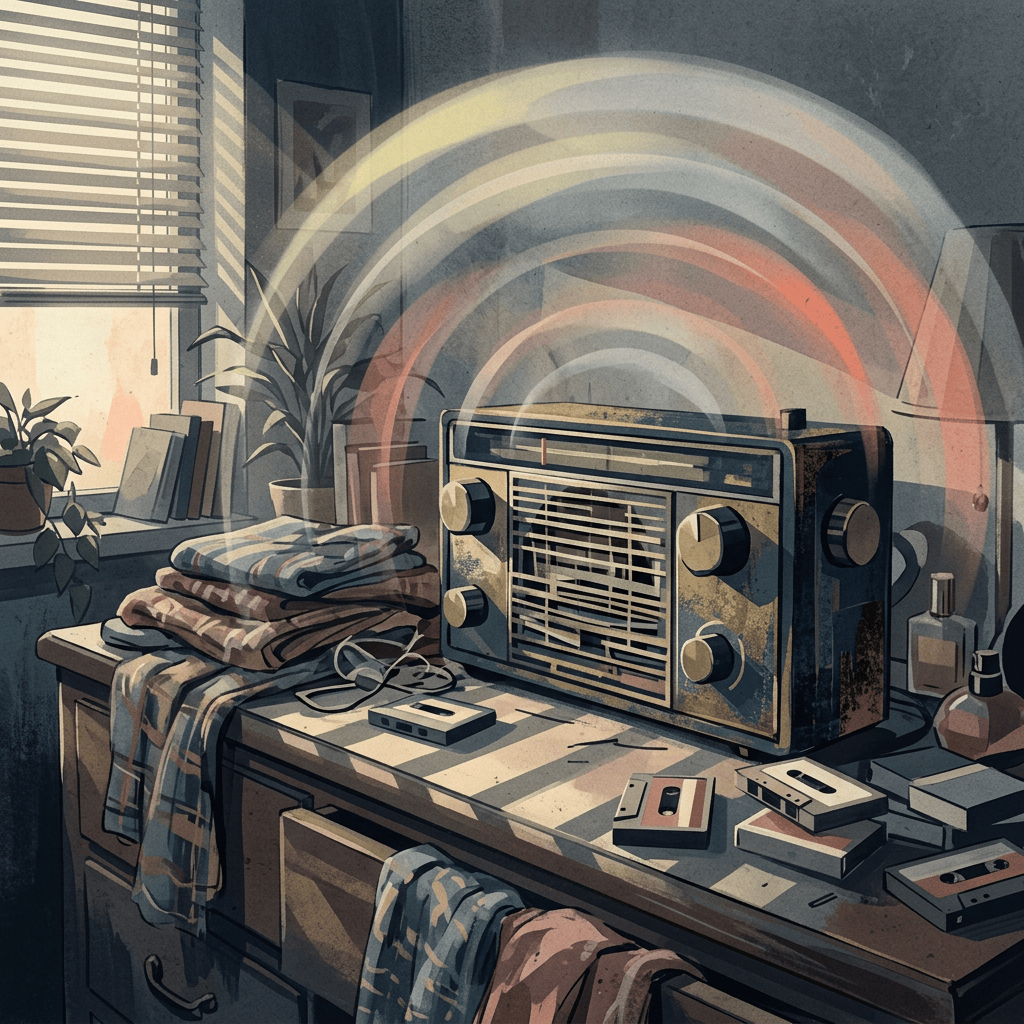
That jingle was the soundtrack of doom every August of my childhood. You couldn’t escape it. Radio, TV, store speakers — like they were trying to brainwash us into being happy about summer ending. I wasn’t fooled. I hated it. Hated the jingle, hated the reminder, hated the whole back‑to‑school circus.

Summer was freedom. Bare feet, scraped knees, long days that didn’t care what time it was. Then suddenly some cheery voice on TV starts singing about “better clothes,” like that was supposed to make me excited to go sit in a classroom again. Better clothes? Who cared. I wasn’t trying to impress anybody. I just wanted one more week of sun, one more night of staying out too late, one more morning where I didn’t have to drag myself out of bed.

I remember telling a good friend of mine once — I said, “I hated going back to school. I hated summer ending.”
She looked at me like I’d confessed to a crime.
“But I thought you were a good student?”
And I told her the truth: “I was a good student. I still hated it.”

People think being good at something means you enjoy it. Not true. I was good at school the way some people are good at shoveling snow — you do it because you have to, not because you love it. I could read, write, answer questions, get the grades. Fine. But the whole ritual of “back to school” felt like being marched back into captivity.

And that damn jingle didn’t help.
It was like a warning siren: Fun’s over, kid. Get your notebooks.
Even now, decades later, I can hear it clear as day. The bright, chirpy voices. The fake cheer. The promise of “better clothes” like that was supposed to make everything okay.

It never did.

Summer always ended too fast, and school always started too soon. And Robert Hall — with their bargain pants and their relentless advertising — made sure you knew exactly when your freedom was about to be taken away again.

So yeah. I hated hearing it.
I hated going back to school.
I hated summer ending.
And I still think that jingle was one of the most effective pieces of psychological warfare ever unleashed on American children.

Leave a comment

This site uses Akismet to reduce spam. Learn how your comment data is processed.

    Eleven Days in September

    A few thoughts here are hard for me to write, because they force me to relive some of the worst days of my life. I’m sharing them because maybe it helps the healing, and because it’s more than Mother Nature and her climatological shenanigans that make me hate September. I’ve never been a fan of the month anyway. And I know I’m not the only person who has been — or is — going through tough times. When you mix difficult life issues with a chemical imbalance called SAD (Seasonal Affective Disorder), life can become a Ulyssean train wreck of emotions, senses, and befuddled thinking.

    SAD is a mood disorder tied to seasonal changes, usually showing up as depression beginning in the fall and lasting through winter. It’s caused by a disturbance in the body’s circadian system. My condition is minor compared to what some people I know experience. I once worked with a woman who could cry at a funny joke — and she wasn’t pretending. And then there are the doubters who say things like: get over it; it’s not real; don’t let things get you down. This piece is for anyone who’s heard that too many times. I often think of James Joyce’s line: “Your battles inspired me — not the obvious material battles but those that were fought and won behind your forehead.”

    In June of 1997, summer — the season of good times and hope — shattered into a million heart‑piercing fragments. After a misdiagnosis that let her cancer grow unchecked, my wife finally learned the truth. By then, the prognosis was treatable but not curable. It would one day take her life.

    So we began living six months at a time. From one blood test and body scan to the next, we held our breath, never knowing if this time would be the last. We did that every six months for fourteen years.

    Jennifer began thirty radiation treatments in a row. The burns were third‑degree. She would lie curled on the floor outside the treatment room, in pain from the day before, waiting for the next round. I was always with her — holding her as tightly as I could, sometimes curled beside her on that cold hallway floor, trying desperately to absorb even a sliver of her agony.

    After radiation came two weeks of intensive chemotherapy. And then, almost a year later, as her body began to heal, she developed severe panic attacks. She couldn’t leave the house or be left alone. Once, I was gone for no more than fifteen minutes. When I returned, she was clinging to her chair, sweating, crying, begging me never to leave again.

    Jennifer was not a coward. She was strong. Brave. But the disease was killing her in ways no scan could measure. I had already quit my job in broadcasting. There would be other jobs — or not. I wanted to be home so she would never feel alone.

    By the end of 1997, we had at least put cancer in remission. With good doctors, counseling, and Jennifer’s relentless determination, she resumed what passed — at least to the outside world — as everyday life. Inside our home, we cocooned, believing that if we locked the world out, nothing could get in to harm us. The two of us were enough. And that’s how we lived — six months at a time, always together.

    I had my own ways of coping — music and writing. I learned to live not just one day at a time, but sometimes one minute at a time. I didn’t yet realize how deeply life was carving its marks into me.

    By the summer of 2009, traditional chemotherapy stopped working. Our six‑month reprieves ended with the doctor’s quiet words: “There is no more we can do to beat cancer back; it is spreading rapidly now.” I cried that day. But the worst day was still ahead. Suddenly, six months felt like a long time.

    One last treatment was available: a Phase 1 clinical trial. Jennifer agreed to try it. She said she knew the drugs probably wouldn’t save her life, but maybe someday they would save someone else. She joked that lab rats had better lives than she did.

    Jennifer had always been grateful that chemo hadn’t taken her long, beautiful blond hair. But these new drugs were brutal. Her hair came out in clumps on her pillow. I watched her body change from the vibrant ocean swimmer she had been to someone frail and barely recognizable. The woman who could outwalk and outswim me now needed help to move from one room to the next. The end was closing in. This would be our last summer together.

    And this is where a question began — one I still carry today: What did Jennifer suffer quietly, never telling me?

    I know she hid things. Not because she didn’t trust me, but because she loved me. She curled her pain inward so I wouldn’t have to carry all of it with her. I think about the fears she must have swallowed whole. Not the obvious ones — not the fear of cancer or dying or treatments that burned her skin and hollowed her bones. Those she faced openly. Those she let me see.

    It’s the quieter fears I wonder about — the ones behind her eyes.

    Maybe she feared becoming a burden. Maybe she feared watching me watch her suffer. Maybe she feared losing herself long before she lost her life — the swimmer, the walker, the strong woman who once outpaced me on any beach. Maybe she feared the shrinking of her world, the panic that made the front door feel like a cliff’s edge. And maybe — though she never said it — she feared leaving me alone in a house that once echoed with two voices.

    There was pain she hid too. The physical pain, yes — the burns, the nausea, the exhaustion that made her bones feel hollow. But also the humiliation of losing independence, of needing help to move from one room to the next. She tried to stand straighter when I entered the room. She tried to smile when she was breaking.

    I wonder what thoughts she kept from me in those last months. Did she count her remaining days? Did she lie awake listening to her own breathing? Did she realize before I did that we would not grow old together?

    I will never know. Her silence wasn’t distance — it was devotion. She protected me from the full weight of her fear, even when she was too weak to lift her head. That was her last act of love.

    Sometimes I wish she hadn’t. Not because I needed to know, but because she shouldn’t have had to carry any of it alone. I would have held every fear, every pain, every trembling thought. I would have carried it all if she had let me.

    But she didn’t. She was always like that — even at the end. Protecting me quietly, suffering quietly, loving quietly.

    And so the question remains — the one I will carry for the rest of my life: What did she endure in silence so I wouldn’t have to?

    I’ll never know. And maybe that’s the shape love sometimes takes — the part that remains unknowable.

    On September 14th, 2011, the hospice nurse who visited us daily said, “Maybe it’s time for inpatient hospice care.” She tried to soften it with “it’s not always a one‑way trip,” but I knew it would be. And so did Jennifer. Sometimes I wake up at night trembling, tears flowing down my cheeks as I follow the red taillights of the ambulance taking her on her last road trip. I have traveled every mile of that trip in my mind, and always will.

    I spent the next eleven days in hospice, sleeping with my arms around my dying wife, waking to the sound of her breathing or gently pressing my lips to hers to check for air. And sometimes, I heard the sound that still echoes in my head at night — the death rattle.

    On the morning of September 25th at 7:28, I didn’t have to check. Something felt different. The room felt hollow. Jennifer’s soul was gone. She had quietly slipped away sometime in the night. I wondered if she whispered goodbye and I didn’t hear. Knowing her, she probably didn’t want to wake me. Seminary never taught me this: the human soul is real. And hers had left the room.

    The first three years after her death are a blur. I drank — sometimes fine scotch, sometimes whatever I could afford. I wrote poems deep into the night and listened to music until morning. A neighbor joked that I was channeling Edgar Allan Poe. Maybe I was. My doctor prescribed tranquilizers, antidepressants, and sleeping pills. A shrink told me I had PTSD. I snapped: “You’re nuts. PTSD? I haven’t been in a war.” They explained that I had been in a fourteen‑year battle against an enemy I couldn’t see — and that I lost the one person I couldn’t bear to lose.

    I stopped the pills nine years ago. I stopped drinking ten years ago this December. I understand now: the dreams and flashbacks are part of a condition I’ll likely carry for life. And September will always be the hardest.

    My first major break — the first time I truly lost my grip — was when a little white cat named Chloe died. The cat Jennifer had loved so much. The last living, touchable thing I had of her. The day I lost Chloe, I melted down. I nearly wrecked the exam room. Two friends explained to the staff what was happening, and they kindly said, “Let him go. We’ll clean up later.” Chloe’s body became Jennifer’s. Just like that morning in hospice when I had to be pulled away from my wife.

    The most recent time was a few years ago, when Jennifer’s sister Gayle died. No one knows how important Gayle was to me. But in short: if there had never been a Gayle, there would have never been a Jennifer.

    Every day, I try to be happy. I made a poster I look at each morning: “The dream lives; you were her dream; be happy.” I was loved. Deeply. Fiercely. And she would want me to be happy. I try. I really do. But then September comes, and the battle intensifies.

    Still, I try to be as brave as she was — the woman who curled up on a hospital floor and still found the strength to fight. The woman who joined Phase 1 trials not only for herself, but for someone she’d never meet. She wanted us to grow old together. She wanted me to be happy.

    But damn you, September. Your fall beauty hides your cruelty — the short days, long shadows, lonely nights, and memories that never fade.

    I’ve survived fifteen Septembers without her. I will survive this one. And the next. Because carrying the weight of those years means I’m still carrying her.

    And I know I’m not the only one who has traveled this road. Grief has a thousand faces, and none of them walk alone. I hope that by writing this — by laying out the bumps, the breaks, the nights that nearly swallowed me — it might help someone else get over their own rough patches and keep on keeping on.

    I know if I can, they can.

    Leave a comment

    This site uses Akismet to reduce spam. Learn how your comment data is processed.

    July 16th, 1945, The Big Boom and Me

    On this day back in ’45 — 5:29 and 45 seconds in the damn morning — the desert out in Alamogordo lit up like somebody flipped on a second sun just to see what kind of trouble it could make. A bunch of scientists stood around in welder’s goggles, slathering on suntan lotion like they were prepping for a day at Revere Beach instead of kicking off the nuclear age.

    Enrico Fermi, cool as a guy waiting for the T that’s already late, took bets on whether they’d ignite just New Mexico or the whole planet. Real casual end‑of‑the‑world office pool.

    Then the thing goes off — BOOM — sky goes white, sand melts into this ghostly green radioactive glass, like the desert tried to make its own cursed souvenir.

    Ken Bainbridge, Harvard physicist running the whole Manhattan Project circus, turns to Oppenheimer — the man who’d spend the rest of his life haunted by the glow — and drops the line only someone with a New England soul could deliver clean: “We are all sons of bitches now.”

    Weeks later, August 6th and 9th, Hiroshima and Nagasaki were leveled — the only time nuclear weapons have ever been used in war. A permanent scar on humanity, no matter how you slice it.

    Bainbridge spent the rest of his life trying to undo the monster he helped midwife into existence.

    And about a year after all that, I boomed onto the planet myself — born into a prefab little government town called Oak Ridge, where the fences hummed, the jet fighters buzzed overhead, and every entrance had a guard who looked like he’d seen too much. I spent my first ten years around atomic plants, security checkpoints, and the strange quiet of a place built to help make the damn thing in the first place.

    Thirty years later, I was getting myself arrested trying to stop nuclear proliferation — life’s funny like that, it circles back with a badge and a pair of handcuffs.

    Leave a comment

    This site uses Akismet to reduce spam. Learn how your comment data is processed.

    Matches and Money: A Sanctuary Strategy for Resistance

    Tomorrow, Saturday, October 18th, is the nationwide “No Kings March”. And I’ve been beating myself silly because this time I’ve decided that I can’t go—not that I don’t want to, but that I can’t. The primary reason is that my back has been so bad this week, I’ve spent most of my time in what’s called the non-violent prone position. In this case, that means flat on my bed.

    And while I was lying there, writing the great American resistance novel on my ceiling, I kept thinking about an article I’d just read by Brian Huba published in”The Hill” today, October 17th. He was talking about another form of resistance—one I’ve always believed in. The kind that hits them where it hurts: the pocketbook.

    Now, I’m not pretending that my low participation in the general ebb and flow of the almighty buying power of the dollar will make much difference. And I’m not saying it can replace the power of demonstration—of people gathering to make our voices heard and to send a signal, both to each other and to the Gestapo in DC: ‘We are not alone.’

    But I’ve been thinking about pressure. Not the kind that crushes, but the kind that carves. The type that reshapes stone into sanctuary. And lately, I’ve come to believe that the most potent pressure we can apply—politically, spiritually, economically—is a two-part ritual: matches and money.

    Let me explain.

    We’ve been taught to march. To chant. To gather in the streets with cardboard signs and aching knees. And yes, there’s power in that, and there’s power in the crowd. But maybe the real revolution isn’t in the march, but in the match? Not the kind that burns buildings. The kind that lights candles. That ignites awareness. That says: ‘I see what you’re doing, and I will not fund it.’

    Because the truth is: the system doesn’t fear our voices. It loves our wallets, our money, and it fears losing them. It fears our cancellations, our divestments, our refusal to play along. When we cancel a subscription, we’re not just saving $14.99—we’re pulling a thread from the tapestry of complicity. When we stop feeding the beast, the beast gets hungry.

    Brian Huba said it plainly: maybe the most radical thing we can do right now isn’t to protest in the streets, but to unsubscribe, to stop paying for platforms that profit from our pain. To match our outrage with economic consequences.

    So, I’m lighting matches. Quiet ones. Symbolic ones. I’m canceling, redirecting, reimagining. I’m spending like a poet—every dollar a stanza, every boycott a verse. I’m building a sanctuary where resistance isn’t just loud, it’s strategic.

    Because when matches meet money, we don’t just protest. We pressure. We don’t just speak. We shift.

    And yes—I will march again.

    But first, I get the MRI.

    First, I listen to the good doctors—the ones I trust to tell me how to walk without pain, how to stand without flinching.

    Because resistance isn’t just about showing up. It’s about showing up whole.

    And when I do march again, and I will return, I’ll be carrying my flag and my banners, not just as protest, but as testimony.

    Proof that healing is part of the revolution, too.

    —Dan

    Rambling Harbor, where even the receipts are revolutionary

    Leave a comment

    This site uses Akismet to reduce spam. Learn how your comment data is processed.

    Chapter 3:Whitehall Station Army Induction Center

    My father died in December 1967. Cancer. A slow, cruel thief that stole him piece by piece until all that remained was silence. I was twenty-one, and the world was already loud with war.

    The night before my induction, sleep refused to visit. I lay in bed, staring at the ceiling like it owed me answers. My heart was a metronome gone rogue—too fast, too loud, too erratic. I tried counting breaths, replaying old football games, pretending I was anywhere but here. But dread crept under the door and settled in my bones. I wasn’t afraid of dying. I was scared of disappearing—of becoming a number, a uniform, a cog in a machine I didn’t believe in.

    The draft lottery, America’s twisted game show of fate, didn’t begin until December 1, 1969. But in 1964, the draft was still operating under a local board system, where deferments (for college, hardship, etc.) and classifications were manually reviewed. In 1964, when I was eighteen, I burned my college deferment draft card, thinking I was making a statement. At the same time, I began writing letters to the President of the United States, Lyndon B. Johnson, expressing my opposition to the war and to my draft board on Staten Island, requesting reclassification to 1-A. You can’t refuse what you haven’t been offered. And I was tired of, if not exactly hiding behind loopholes, then at least I was tired of accepting them.

    I was writing the first line of a much longer story. By ’69, they changed my deferment and reclassified me 1A—fit for service, next in line to toe the line, or not. I was on the verge of something, though I couldn’t name it. It had taken me 5 years between business schools and seminaries to get here. I think of that time as going from the gridiron to leg irons.

    And then the morning came. I was up and gone by 6 am. I wasn’t sleeping anyway, leaving a note for my mother, telling her I had gone to visit friends. I wondered how long I really would be gone. I took the bus to the Staten Island Ferry, which crosses the Hudson River. Whitehall Station was about two blocks from the Ferry terminal. It must have been the longest two blocks I have ever walked, and the slowest. I was in no hurry. Just writing about that morning, I can still feel that god-awful, sinking, sick feeling in my stomach; I can’t do this.

    You’ve heard of the fight-or-flight response. Mine was freeze and fall. No exit. Just a heart pounding like a drumline on speed, and a cliff edge I couldn’t see the bottom of. I was about to dive into the dark. Compared to this, the Coney Island Parachute Jump was a kiddie ride.

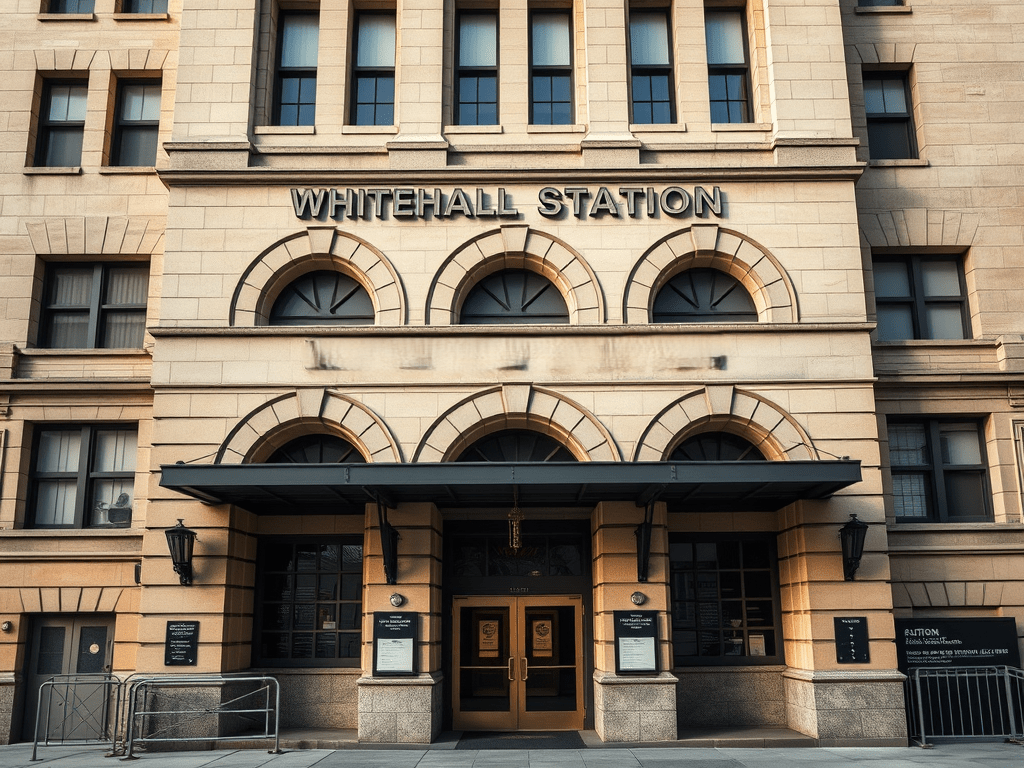
    Whitehall Station sat in lower Manhattan like a bureaucratic bunker—the Army’s induction center where boys became soldiers, or tried not to. It shut down on May 18, 1972, two days before my birthday, while I was sitting in the Danbury Federal Correctional Institution, partly because I wanted it torn down and had done my best to see that happen.

    As I walked up the last few steps to enter the building, I found Mr. Harold Jones waiting outside Whitehall Station. My eighth-grade science teacher, yes—but more than that, over my high school years, and not really having anyone else to talk to who seemed to understand what I was feeling, Mr. Jones became my confidant and my co-conspirator in resistance. He had made science feel like storytelling, helped along by a fictional mouse named Archibald MacLeish who lived in his coat closet. Archibald, named after the poet and war veteran, wore a French beret, a red bandana, and carried a cane. No one ever saw him, but I did. I still do. He walks proudly, head high, like he knows something the rest of us don’t. We said very little to each other that morning. I thank him for being there. He said something about me staying me, it was something to be proud of.

    The induction ceremony began. The room smelled of sweat and floor wax. The air was thick with the breath of boys pretending not to shake. The recruiter’s voice was flat, rehearsed, like he’d stopped listening after the first hundred times. Repeat after me, he began.

    “I do solemnly swear that I will support and defend the Constitution…”

    He barked it out. Repeat? Hell, I could barely breathe. I needed time. I needed space. I needed something other than this.

    “…that I will bear true faith…”

    And suddenly I wasn’t in Whitehall anymore. I was back on the football field, hearing my coach yell, “Go in hell-bent for leather, Little Sandy!” My dad was Big Sandy. The coach used that nickname to rile me up. Hell-bent for leather. Hell-bent for leather. My heart picked up the chant, louder and louder, until it drowned out everything else.

    Then came the words: “Step forward.”

    I sat down.

    The recruiter blinked, confused. Thought I was sick. I stood up, then sat again.

    “I’m not moving,” I said, though I wasn’t sure I could if I wanted to. The sergeant’s face seemed to turn fire-engine red with anger.

    My heart was a jackhammer. I was frozen in defiance—or maybe just fear. Either way, I wasn’t going forward.

    Two MPs grabbed me like a sack of potatoes and hauled me to a holding cell. I was questioned by some army lawyer type who wanted me to be sure I knew what I was doing, and I asked him if he was sure if he knew what he was doing. Then came the police car, the ride to Staten Island, and my first night in jail. From the gridiron to the county jail—five miles apart, a lifetime between.

    As I was carried out of Whitehall Station, I had started refusing to walk. Part of my plan was total non-cooperation. Mr. Jones stood on the grimy New York sidewalk. He smiled. Gave me a thumbs-up. And from between some cop’s gun holster and his arm, I flashed him a peace sign.

    And just behind him, in the blur of sirens and sidewalk noise, I saw Archibald MacLeish.

    Not in a coat closet this time—but strutting down the curb in his beret and red bandana, cane tapping a rhythm only I could hear. He paused, tipped his hat, and whispered, “Courage isn’t loud, Sandy. It’s the quiet refusal.”

    Then he vanished into the crowd.

    That image is etched deeper than any classroom memory.

    Mr. Jones arranged to bail me out, or hoped I’d be released on my own recognizance. I was up the next morning with a trial date set. I ended up at his home for the rest of the day—resting, recovering, trying to make more sense of what had just happened. But more importantly, what would happen next?

    To my mother, I was simply visiting Mr. Jones. I was old enough to say, “Don’t call my parents,” and the authorities obliged.

    A trial date was set for April. The lead-up was a blur of paperwork, legal advice, and quiet panic. I walked the streets of Manhattan like a ghost, memorizing the cracks in the sidewalk, the rhythm of subway trains, the smell of roasted peanuts from corner carts—anything to anchor me. I had oddly always found the Financial District of Manhattan relaxing on a Sunday morning. The insanity of Wall Street gave way to peace and silence. I walked Wall Street a few times in those last days in New York, and of course, Times Square, the lights of Broadway were not going to shine on me, but they do shine inside of me in my heart and memory. Just as the beaches of Staten Island still call to me.. I didn’t know what I was looking for, only that it wasn’t in New York anymore.

    I got a message to Emily at a Post Office Box in Alderson, and I asked if her mountain was still standing. In a week, she answered. She said yes, with directions at least for the ones that were for the roads.. So I packed up and headed south, winding through the back roads past Alderson, deep into the West Virginia woods. I wasn’t running. I was regrouping. The mountain had always been there—quiet, steady, like Emily herself. And in that silence, I could breathe again.

    The last stretch to Emily’s cabin was a two-mile hike up a narrow trail—no road, no signs, just the hush of the woods and the crunch of my boots on leaves. Each step peeled away the noise of the city, the courtroom, the cell. I carried no map, but the mountain knew the way. By the time I reached the clearing, my breath had steadied, and something in me had begun to loosen.

    The mountain didn’t ask for explanations. It didn’t care about draft classifications, courtroom dates, or the ache behind my eyes. It just stood there—solid, indifferent, eternal. Emily met me at the porch with a mug of hot cider and a silence that felt like a gift of grace. I sat down, let the steam rise, and listened to the wind move through the trees like a hymn. Somewhere in that hush, I heard the tap of a cane on stone. Archibald MacLeish, beret tilted just so, stepped out from behind an old oak tree and said, “You made it, Sandy. Not by marching, not by hiding—but by listening.” He tipped his hat, winked, and vanished again

    And for the first time in months, that night I slept.

    Leave a comment

    This site uses Akismet to reduce spam. Learn how your comment data is processed.

    Rating: 1 out of 5.