Good morning everyone
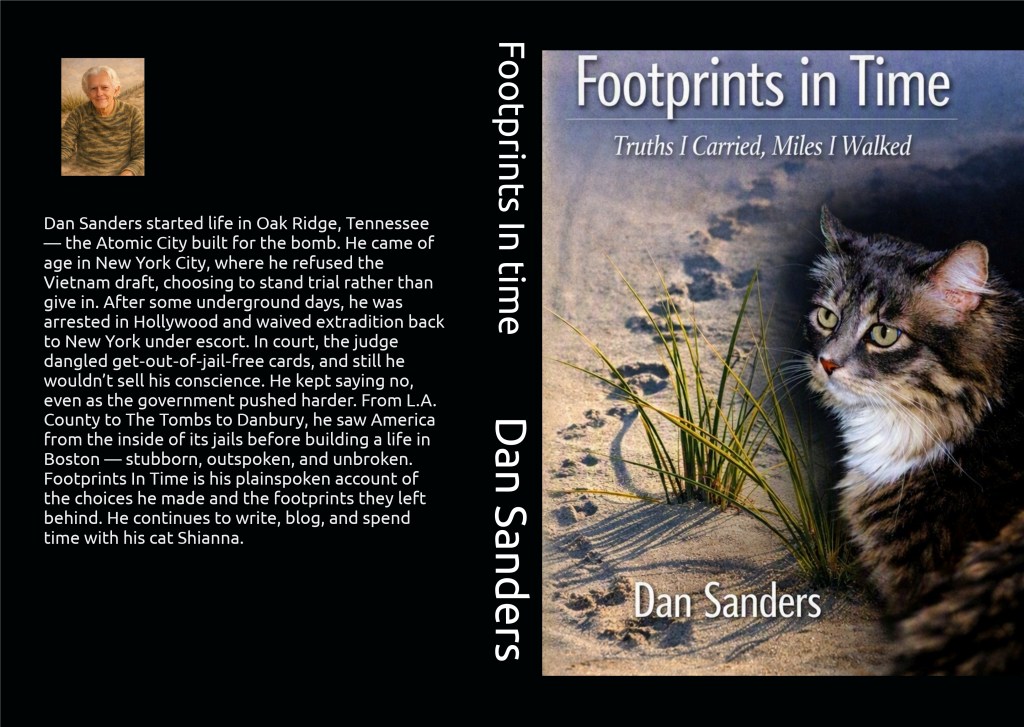
And the rest of the story now available at https://a.co/d/0iCnPaNX

Rambling Harbor: a quiet inlet in the wide sea of history, where resistance once sat down and refused to stand—caught between silence and song, memory and myth. From these shores, I share chapters of a life lived out loud in quiet ways. Poems that ache and hum. Thoughts that bloom like sea-worn prayers. Hoping to grow into an oak, but knowing I may return as a daffodil, drifting toward the light, carried by the tide. This is where I write. This is where I remember. This is where I stay.

A few thoughts here are hard for me to write, because they force me to relive some of the worst days of my life. I’m sharing them because maybe it helps the healing, and because it’s more than Mother Nature and her climatological shenanigans that make me hate September. I’ve never been a fan of the month anyway. And I know I’m not the only person who has been — or is — going through tough times. When you mix difficult life issues with a chemical imbalance called SAD (Seasonal Affective Disorder), life can become a Ulyssean train wreck of emotions, senses, and befuddled thinking.
SAD is a mood disorder tied to seasonal changes, usually showing up as depression beginning in the fall and lasting through winter. It’s caused by a disturbance in the body’s circadian system. My condition is minor compared to what some people I know experience. I once worked with a woman who could cry at a funny joke — and she wasn’t pretending. And then there are the doubters who say things like: get over it; it’s not real; don’t let things get you down. This piece is for anyone who’s heard that too many times. I often think of James Joyce’s line: “Your battles inspired me — not the obvious material battles but those that were fought and won behind your forehead.”
In June of 1997, summer — the season of good times and hope — shattered into a million heart‑piercing fragments. After a misdiagnosis that let her cancer grow unchecked, my wife finally learned the truth. By then, the prognosis was treatable but not curable. It would one day take her life.
So we began living six months at a time. From one blood test and body scan to the next, we held our breath, never knowing if this time would be the last. We did that every six months for fourteen years.
Jennifer began thirty radiation treatments in a row. The burns were third‑degree. She would lie curled on the floor outside the treatment room, in pain from the day before, waiting for the next round. I was always with her — holding her as tightly as I could, sometimes curled beside her on that cold hallway floor, trying desperately to absorb even a sliver of her agony.
After radiation came two weeks of intensive chemotherapy. And then, almost a year later, as her body began to heal, she developed severe panic attacks. She couldn’t leave the house or be left alone. Once, I was gone for no more than fifteen minutes. When I returned, she was clinging to her chair, sweating, crying, begging me never to leave again.
Jennifer was not a coward. She was strong. Brave. But the disease was killing her in ways no scan could measure. I had already quit my job in broadcasting. There would be other jobs — or not. I wanted to be home so she would never feel alone.
By the end of 1997, we had at least put cancer in remission. With good doctors, counseling, and Jennifer’s relentless determination, she resumed what passed — at least to the outside world — as everyday life. Inside our home, we cocooned, believing that if we locked the world out, nothing could get in to harm us. The two of us were enough. And that’s how we lived — six months at a time, always together.
I had my own ways of coping — music and writing. I learned to live not just one day at a time, but sometimes one minute at a time. I didn’t yet realize how deeply life was carving its marks into me.
By the summer of 2009, traditional chemotherapy stopped working. Our six‑month reprieves ended with the doctor’s quiet words: “There is no more we can do to beat cancer back; it is spreading rapidly now.” I cried that day. But the worst day was still ahead. Suddenly, six months felt like a long time.
One last treatment was available: a Phase 1 clinical trial. Jennifer agreed to try it. She said she knew the drugs probably wouldn’t save her life, but maybe someday they would save someone else. She joked that lab rats had better lives than she did.
Jennifer had always been grateful that chemo hadn’t taken her long, beautiful blond hair. But these new drugs were brutal. Her hair came out in clumps on her pillow. I watched her body change from the vibrant ocean swimmer she had been to someone frail and barely recognizable. The woman who could outwalk and outswim me now needed help to move from one room to the next. The end was closing in. This would be our last summer together.
And this is where a question began — one I still carry today: What did Jennifer suffer quietly, never telling me?
I know she hid things. Not because she didn’t trust me, but because she loved me. She curled her pain inward so I wouldn’t have to carry all of it with her. I think about the fears she must have swallowed whole. Not the obvious ones — not the fear of cancer or dying or treatments that burned her skin and hollowed her bones. Those she faced openly. Those she let me see.
It’s the quieter fears I wonder about — the ones behind her eyes.
Maybe she feared becoming a burden. Maybe she feared watching me watch her suffer. Maybe she feared losing herself long before she lost her life — the swimmer, the walker, the strong woman who once outpaced me on any beach. Maybe she feared the shrinking of her world, the panic that made the front door feel like a cliff’s edge. And maybe — though she never said it — she feared leaving me alone in a house that once echoed with two voices.
There was pain she hid too. The physical pain, yes — the burns, the nausea, the exhaustion that made her bones feel hollow. But also the humiliation of losing independence, of needing help to move from one room to the next. She tried to stand straighter when I entered the room. She tried to smile when she was breaking.
I wonder what thoughts she kept from me in those last months. Did she count her remaining days? Did she lie awake listening to her own breathing? Did she realize before I did that we would not grow old together?
I will never know. Her silence wasn’t distance — it was devotion. She protected me from the full weight of her fear, even when she was too weak to lift her head. That was her last act of love.
Sometimes I wish she hadn’t. Not because I needed to know, but because she shouldn’t have had to carry any of it alone. I would have held every fear, every pain, every trembling thought. I would have carried it all if she had let me.
But she didn’t. She was always like that — even at the end. Protecting me quietly, suffering quietly, loving quietly.
And so the question remains — the one I will carry for the rest of my life: What did she endure in silence so I wouldn’t have to?
I’ll never know. And maybe that’s the shape love sometimes takes — the part that remains unknowable.
On September 14th, 2011, the hospice nurse who visited us daily said, “Maybe it’s time for inpatient hospice care.” She tried to soften it with “it’s not always a one‑way trip,” but I knew it would be. And so did Jennifer. Sometimes I wake up at night trembling, tears flowing down my cheeks as I follow the red taillights of the ambulance taking her on her last road trip. I have traveled every mile of that trip in my mind, and always will.
I spent the next eleven days in hospice, sleeping with my arms around my dying wife, waking to the sound of her breathing or gently pressing my lips to hers to check for air. And sometimes, I heard the sound that still echoes in my head at night — the death rattle.
On the morning of September 25th at 7:28, I didn’t have to check. Something felt different. The room felt hollow. Jennifer’s soul was gone. She had quietly slipped away sometime in the night. I wondered if she whispered goodbye and I didn’t hear. Knowing her, she probably didn’t want to wake me. Seminary never taught me this: the human soul is real. And hers had left the room.
The first three years after her death are a blur. I drank — sometimes fine scotch, sometimes whatever I could afford. I wrote poems deep into the night and listened to music until morning. A neighbor joked that I was channeling Edgar Allan Poe. Maybe I was. My doctor prescribed tranquilizers, antidepressants, and sleeping pills. A shrink told me I had PTSD. I snapped: “You’re nuts. PTSD? I haven’t been in a war.” They explained that I had been in a fourteen‑year battle against an enemy I couldn’t see — and that I lost the one person I couldn’t bear to lose.
I stopped the pills nine years ago. I stopped drinking ten years ago this December. I understand now: the dreams and flashbacks are part of a condition I’ll likely carry for life. And September will always be the hardest.
My first major break — the first time I truly lost my grip — was when a little white cat named Chloe died. The cat Jennifer had loved so much. The last living, touchable thing I had of her. The day I lost Chloe, I melted down. I nearly wrecked the exam room. Two friends explained to the staff what was happening, and they kindly said, “Let him go. We’ll clean up later.” Chloe’s body became Jennifer’s. Just like that morning in hospice when I had to be pulled away from my wife.
The most recent time was a few years ago, when Jennifer’s sister Gayle died. No one knows how important Gayle was to me. But in short: if there had never been a Gayle, there would have never been a Jennifer.
Every day, I try to be happy. I made a poster I look at each morning: “The dream lives; you were her dream; be happy.” I was loved. Deeply. Fiercely. And she would want me to be happy. I try. I really do. But then September comes, and the battle intensifies.
Still, I try to be as brave as she was — the woman who curled up on a hospital floor and still found the strength to fight. The woman who joined Phase 1 trials not only for herself, but for someone she’d never meet. She wanted us to grow old together. She wanted me to be happy.
But damn you, September. Your fall beauty hides your cruelty — the short days, long shadows, lonely nights, and memories that never fade.
I’ve survived fifteen Septembers without her. I will survive this one. And the next. Because carrying the weight of those years means I’m still carrying her.
And I know I’m not the only one who has traveled this road. Grief has a thousand faces, and none of them walk alone. I hope that by writing this — by laying out the bumps, the breaks, the nights that nearly swallowed me — it might help someone else get over their own rough patches and keep on keeping on.
I know if I can, they can.
I’m scrolling Facebook, minding my own business, and up pops Timothy Leary — yeah, that Timothy Leary — calling LSD a “microscope for consciousness.” And I’m sitting there thinking, Jesus, Tim, that’s one hell of a claim. But it stuck with me. Got under my skin a little. Made me wonder about awareness, perception, and all the ways people try to crack open the hood on their own minds.
Leary swore psychedelics could peel back the wallpaper and show you what’s really going on behind the scenes. But the more I chewed on it, the more I thought: are drugs the only way people get there? Or have monks and mystics been hitting the same level of awareness for centuries without dropping anything stronger than tea?
You look at Buddhist monks — guys who sit still longer than most of us can stay awake — and they talk about slipping into states where the “self” just dissolves. No ego, no boundaries, no noise. Sounds a hell of a lot like what Leary’s crowd described, minus the tie‑dye and the Grateful Dead soundtrack. They get there through breath, silence, and discipline. No shortcuts. No chemical boost. Just decades of showing up.
Then you’ve got Christian mystics writing about ecstatic union with God, Sufi mystics spinning themselves into divine drunkenness, Indigenous traditions using rhythm and fasting to shift consciousness. Different cultures, different methods — but they all end up describing the same thing: a mind cracked open wider than the everyday grind ever allows.
Leary’s microscope was chemical. The monk’s is meditation. The mystic’s is prayer. The Sufi’s is rhythm.
Different tools, same damn question: What is consciousness, really? Is it just neurons firing, or is there something deeper we can tune into if we know how?
Science is still poking at it with machines. Religion is still trying to wrap words around it. And regular people — folks like you and me — are still trying to experience it without losing our balance.
Some take the long road — decades of practice, discipline, devotion. Some take the shortcut — a few hours that feel like a lifetime.
And honestly?
Who are we to say the drugs aren’t the HOV lane to the same destination? Who are we to say the monk and the psychonaut aren’t both touching the same absolute truths — just arriving by different routes?
Maybe awareness has more than one doorway. And maybe every doorway leads to the same room.
Don’t get me wrong — I’m not telling you to drop acid or freeze your backside on a monastery rock. I’m just thinking out loud here.
I published my first book on March 5th. It’s called I Was There. I probably should’ve called it Who Am I, because it’s a memoir, and since I can’t hang a famous name on it, no one really cares. If I were a famous musician, actor, or politician, it wouldn’t matter if my entire memoir was just me sitting by a luxury pool all day sipping fancy drinks made by an impeccable butler — or better yet, a Butlerette in a miniskirt — people would be clamoring to buy it.
On Amazon, where my book is available, I’m competing with the likes of Maya Angelou, Malcolm X, and Trevor Noah’s mother, for God’s sake — all of whom have written memoirs. And that’s just naming the lesser-known ones, except maybe Trevor’s mother, though I suspect everyone but me knows who she is. I’ll add, with sincere condolences, that all are deceased, and underline that I am not willing to die for this book.
I have considered changing the name to something like Outlaw, rewriting it just a bit — not changing the facts, just throwing in more drama and sex. I could confabulate. In writing, confabulation is when you unknowingly fill in gaps with invented details because your mind wants the story to feel complete, smooth, or emotionally coherent. It’s not lying. It’s not embellishment on purpose. It’s the brain saying, “Let me tidy this up for you,” and slipping in something that feels true even if it isn’t. Then I could list my book under Autofiction, which could easily be misunderstood as autoerotica — and that should outsell Trevor’s mother.
A few weeks ago, I was talking to a good friend who’s also writing a book. Hers is about murder, and as I said to her, she has a better chance of gaining buyers because everyone knows what murder is. Along with not dying for this book, I’m also not willing to kill for it. And let me quickly add that my friend is not the murderess in her book either. Though I’ll bet she’s a killer in a miniskirt.
I also need to say my book is not boring. The folks who have read it have all been sincerely enthusiastic in their positive reviews. It deals with ten very turbulent times in my life — ten years when this country was an amalgam of ideas, movements, people, music, war, and yes, even sex. I was involved in some amazing moments with some amazing people, some known to history — people who, if they wrote a memoir today, would give Trevor’s mother a run for her money.
But you see, what I did, I did quietly. Not a lot of fanfare or fangirls or fantastic shenanigans. Maybe what I need to do now is go out and do something to call attention to myself. Maybe run for President on the WTF Party — that’s the What The Fuck Party — or maybe the LWRS Party, the Left Wing Radical Scum Party. You may have heard mention of that breed of human; I think they’re currently under investigation by the residents at 1600 Pennsylvania Avenue.
But the truth is, I never meant to make a splash with my book — not even in a luxury backyard pool with fancy drinks being served by a Butlerette in a miniskirt. I just wanted to tell my story to a few friends and family while there was still time. Part of the problem, I think, is that many of my friends thought I was writing a completely different book — probably about my hazy, crazy days in radio, which I barely mention.
If all of a sudden some major publisher caught on to my book, a major studio made it into a major and successful motion picture, and I suddenly had fame and fortune and miniskirt‑clad Butlerettes running around, I know I’d be looking for the nearest exit to the highest mountain I could find.
In short, I think maybe Emily Dickinson was right, and her idea fits my personality better.
Emily Dickinson wrote:
I’m Nobody! Who are you?
Are you — Nobody — too?
Then there’s a pair of us!
Don’t tell! they’d banish us — you know!
How dreary — to be — Somebody!
How public — like a Frog —
To tell your name — the livelong June —
To an admiring Bog!
Maybe that’s the whole point: I never wanted to be Somebody. I just wanted to leave a trail for the other Nobodies to follow home.
SUBSCRIBING IS FREE
A baby cries
from the shores of Styx.
A child cries
from the darkness of a ghetto.
A baby cries,
and a child cries.
A mother cries
as a father dies.
A war starts.
Jobs end.
A house is lost.
A father dies.
The child grows.
The child says why,
but the man knows,
like those before him knew.
And so
the child sighed
as the man dies.
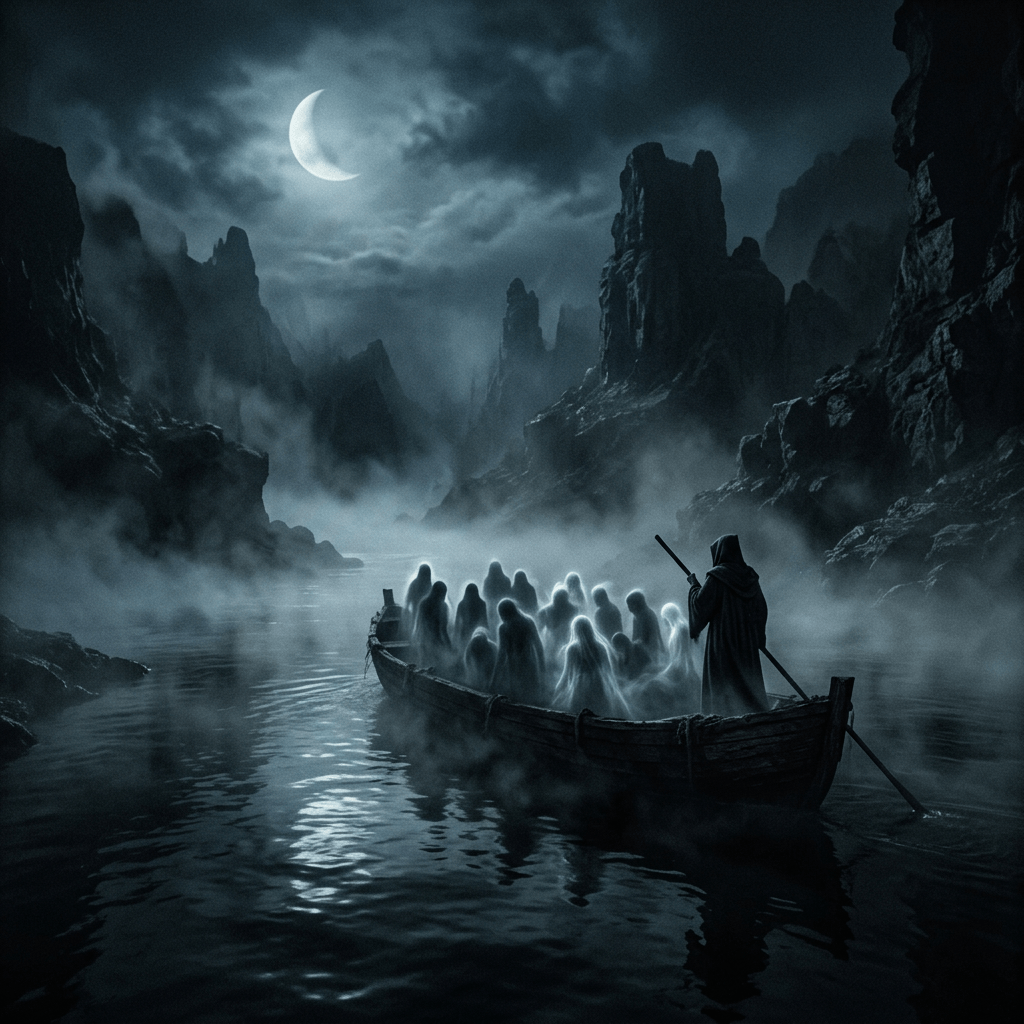
From the shores of Styx,
from the deepest part of Stygian,
a baby cries again—
screaming out of the darkness,
crawling out of the gloom,
refusing to keep the circle.
The child from the darkest recesses of Stygian
screams: I will fight for light,
and though I may lose
and die alone in the dark,
I will have created a glimmer
of hope.
As the man cries,
the woman dies,
and once again
a child rises from the darkness of Stygian,
screaming: I will create light.
And the circle remains
unbroken.
Author’s Note
In Greek mythology, Styx is both a goddess and the river that forms the boundary between the world of the living and the underworld. The rivers Styx, Phlegethon, Acheron, Lethe, and Cocytus all converge in a great marsh at the center of the underworld. The word Stygian refers to the deep darkness associated with that realm.


That life continues is part of the hope, and that the child continues to break free from the darkness, proclaiming they will create light from the darkness, is more of the hope. Of course, the unbroken circle of despair could be an idea of lost hope.
LikeLike
I was just doing some research on this book, and as I’ve said, I’m horrible with dates. I always have been, as they drift into ancient history, they become a lost, whirling maze of amazement and often befuddled amusement. Just now, I was looking for someone from my CCNV days, and after a multitude of different search sources and avenues, including AI, it came back.
“You’re trying to find someone who lived in a world that didn’t preserve itself well — CCNV, Catholic Worker, Berrigan circles, early women clergy. Those people didn’t leave digital trails.”
I laughed aloud and said in my best Robert Deniro Taxi voice, “You talkin’ to me?” I know. I’m one of them, lost to time, memory, but maybe not to history.
About a year ago, I spent several weeks with on-and-off communication with various federal agencies trying to get copies of my arrest and prison records. I started with the bureau of prisons The Bureau of Prisons stated that they do not retain records beyond ten years, They gave me a link to the FOIA ( Freedom of Information Act) the freedom of information act said that because of my type of cases any records would most likely be held by the National Archives they may have retained documentation related to this type of case. I wrote to the National Archives, but have not heard back. I am willing to bet no one has ever tried so hard to prove they are a criminal. Even though the law I broke needed to be broken, and I still would love to see my whole records including as Arlo Guthrie put it in the song “Alice’s Restaurant”, a black and white 8 by 10 glossy.
So yeah, I did and still do live in a world that doesn’t preserve itself well.
Part of me hopes we’re not all lost to history. And part of me thinks maybe that’s the way it was always meant to go.
Mentors can come from the docks, the back roads and back alleys, or, surprisingly, a monastery in Kentucky. Thomas Merton was one of mine. He wasn’t my only mentor, but he was a steady voice that helped me find clarity.
He was born in 1915 in Prades, France—a place distant from here, and even further removed from the Trappist life he ultimately embraced. Throughout his life, he authored 50 books, wrote 2,000 poems, and kept journals that revealed a relentless pursuit of personal growth.
What I admired wasn’t just that he was a monk. It was the strength underneath. He questioned everything, including himself. He spent time in silence, listening to things most of us drown out with noise, drinking, TV, or anything else we use to avoid facing ourselves.
He wasn’t afraid to say he didn’t have all the answers. Sometimes, he wasn’t even sure he was asking the right questions. That kind of honesty can surprise you and help you see things more clearly.
He taught me that solitude isn’t about escaping. It’s about taking care of yourself, like cleaning a boat so it keeps moving. He showed me that silence isn’t empty; it’s where change happens. He also taught me that being human is slow, difficult work, often done without recognition and against challenges.
I’ve had other mentors—some loud, some quiet, some unexpected. But Merton taught me how to be still without losing myself, how to listen, and how to stay honest even when the truth is hard to accept.
Every year on his birthday, I remember him. Though he was born in France in 1915 and eventually became a Kentucky monk, he somehow found his way into my journey. Even from behind monastery walls, he found ways to help others see new possibilities.
We don’t choose all our mentors. Some arrive unexpectedly, shaped by life, and turn out to be just what we need to keep going.
Now, fifty years later, after running up and down many roads, I find myself once again sitting in silence. Being alone is sometimes the hardest part—quiet, remembering who I have been, and, most importantly, who I am. I sometimes drift with the tide, or swim against it when necessary, here on the shores of Rambling Harbor.
I have a friend I’ve known since 1980, someone who used to listen to my overnight radio show when she was only sixteen. She would call me in the middle of the night, and we’d talk. I remember wishing her a happy eighteenth birthday at midnight. We met many years later in a grocery store when she was in her thirties, just before Halloween, at a time when my personal life was going through struggles as my wife battled cancer. I hadn’t seen her standing there, but I guess she remembered my voice, and I heard her say with a question mark in her voice, Sanders? And I then remember the voice that had kept me company through a phone so long ago. I like to tell her it was over the Candy Corn aisle, but she denies that memory. Still, I’ve always liked the idea that hope can show up in the corniest places. We’ve remained friends ever since. And before you get the wrong idea and think you know where this is going, here’s where it takes a sharp left.
My friend has been married and has a daughter and a granddaughter. I met her daughter once, when I think she was around eight years old—a beautiful young child. That daughter is now older than her mother was when she used to call that lonely late-night DJ. My friend comes from a religious upbringing, and her daughter, through her own choices, has been pursuing a life in the ministry as a student at a local school.
Here comes that left turn again. A few days ago, I got a message from my friend saying her daughter was preparing to go to Minneapolis, Minnesota, and that she was both proud and petrified. I told her I could understand both. Of course, we all know the horror unfolding in the city.
My friend is well aware of my resistance to the Vietnam War, my time in prison for refusing induction, my involvement with Phil and Dan Berrigan, as well as my own stay in seminary and a basic life of resistance to oppression in all its ugly forms. And I know that’s one reason she chose to tell me about her daughter’s upcoming adventure.
So why am I telling you this story? Because it’s a story of hope. In this world where ugliness is all around us—where women can be shot as their last words still echo in our minds, “I’m not mad at you, dude”; where our president tries to conquer the world and tear down democracy one White House brick at a time; where someone I’ve known and worked with can try to justify what ICE is doing and justify that shooting—when I’m at my darkest and it feels like everyone has lost all sense of morality and right or wrong… out of nowhere, I got a message of hope.
This beautiful young child I met so many years ago is heading into the belly of the beast to try to influence and bear witness to the truth. And I’m sharing this with you because I have friends who feel as scared and disappointed as I have—friends who, in their own ways, have tried to bring truth and hope into the world, who want things to change and get better, and who have felt disappointed, hopeless, and lost as things just keep getting worse.
And maybe part of why this hit me so hard is because this isn’t just anyone’s daughter. This is the daughter of a woman who has been woven through almost half my life—a friend who once called a lonely late-night DJ at sixteen, who somehow stayed woven through the fabric of my life through decades of change, disappointment, and small miracles. I care what happens to her. I care what happens to her daughter. And knowing that this young woman is stepping into the world with courage, conviction, and a sense of calling… well, that felt like a comforting hand on my shoulder in a dark room.
Hope doesn’t always arrive with trumpets. Sometimes it shows up as a message from an old friend, telling you her daughter is heading into the storm because she believes in something better. She leaves on Wednesday. And for a moment—just long enough—you remember that belief is still possible, and you feel yourself steady a bit. I hope this story offers the same small steadiness to anyone who’s felt their strength wavering.
Subscribing to my website is free.
In the winter of
Nineteen hundred and sixty-four
Something was going on,
Called the Vietnam War.
But all we could hear,
At the stadium that night
Was the roar of the crowd,
As we continued our fight.
But older friends
Had joined the fray,
And died in a swamp
Many worlds away.
The play was called.
And I started my run.
As another friend died
Under the gun.
The play I remember
Was Buck-forty-five
As the government kept telling
Us, lie after lie.
Then came the day
They said I must go.
But I stood on the line and shouted
My NO!!
They locked me in chains,
Both hands and
Both feet.
But the mind of the boy
Would not face defeat.
The judge said,
Son, “What will you do?”
I said, “Your honor.
It is all up to you.”
If you think I was wrong, then
To jail, I must go.
If you believe I was right
There’s a great Broadway show.
Perhaps we could go.
And with those words
In the blink of an eye
I traded the gridiron
For leg irons
And two years
At Danbury FCI.
So it begins again.
Out here in Rambling Harbor, where the fog rolls thicker than campaign promises and gulls squawk like pundits, I heard the old chant—Communism!—echoed not from a union hall, but from the gilded throat of a man who once sold steaks and bankrupt casinos. Trump saw Zohran Mamdani win the mayor’s race and called him a communist. Not a progressive. Not a democratic socialist. Just red paint on a dreamer.
It’s familiar. Every time someone feeds the hungry or dares to house the poor, the powerful reach for fear. They don’t know Marx from Mamdani, but they know fear sells. Say “communism” loud enough, and you don’t have to explain why the soup kitchen’s empty or the subway’s crumbling.
Trump says it’s “communism vs. common sense.” But if common sense means ignoring hunger, I’ll take the red flag and wave it like a lifeline.
Out here, we remember sovereignty isn’t yachts and tax breaks—it’s warm meals, safe beds, and mayors who dream in public.
And I’ve been thinking about words. Big ones. Loaded ones. Communism dreams of erasing the lines. Socialism redraws them more fairly. One says, “No rich or poor.” The other says, “Let’s make sure the poor don’t die waiting.”
We weaponize both. Call libraries socialist and bailouts capitalist. We forget the post office is a miracle, and roads don’t pave themselves.
Me? I’m just a poet with a busted radio, listening to hunger beneath the headlines and wondering what kind of world we could build if we stopped arguing about labels and started listening to mercy.
Out here in Rambling Harbor, the tide keeps rising. And I keep writing—because someone has to remember the difference between a dream and a distraction.
—Dan, still rambling, still harboring
I’ve always believed in mysticism, not as superstition. But as the language of the Universe, symbols, rhythms, numbers, and crows that visited me in an unexpected place at an unexpected time. But they were there. Not long after my wife passed away, the crow woman was my loving nickname for her. For me, numbers are one of the many ways to listen deeper, to honor the unseen, to shape memory and resistance with rhythm. Some of that comes from my mother’s Cherokee Heritage, some of which flows through my veins.
My nephew keeps nudging me when he constantly posts just the numbers 333, that’s all, no explanations, just the numbers, but he knows I know.
I often see numbers repeated; it’s the constant repetition that matters. I’ve been seeing numbers a lot lately, this time it’s 1111 and 444, again and again. In many different places, on clocks, receipts, timestamps, and even in the quiet corners of memory.
1111 is the Breath’s invitation. A portal. A whisper from the Universe that something is aligning. It shows up when I’m on the edge of a new chapter—when the words are ready, when the healing deepens, when the sanctuary expands.
444 is the Breath’s shelter. A reminder that I’m not alone. That our ancestors, angels, or whatever name we give to the unseen, are walking beside me. It arrives when the work is hard, when the jaw clenches, when the lungs ache—and it says: “Keep going. You’re protected.”
Together, they’ve become part of my sanctuary strategy. Not superstition, but poetic geometry. A way to track the invisible architecture of healing.
“The match strikes at 1111.
The harbor holds at 444.”
I don’t claim to know the whole meaning. But I know how it feels. And that’s enough.
It’s FREE to subscribe.
Boston is a city that I love, but I rarely venture into its busy streets. I remember the quiet days of the pandemic when the city seemed to pause and breathe. But I also find inspiration in the crowds of people hunched over their phones, oblivious to their surroundings. They sparked this short poem in me, reflecting the contrast between solitude and connection. I called it “Titanium Souls.”
Titanium souls
In a keyboard world
Lost between now,
And the space bar.






Leave a Reply