A Radio Christmas Remembered

The holidays always make people feel nostalgic. I know I do, even though I don’t really take part in what feels like holiday madness these days, instead of real joy. I get a kick out of the ads that promise big savings if I just spend twice as much as usual.

New Year’s Day has always been a time for me to reflect, feel grateful, and sometimes regretful. Even when I was young, there was always someone or a moment to remember. As we get older, those memories matter even more.

I haven’t done live radio since 2006, and sometimes I miss it. It’s hard not to miss something you dreamed about as a kid and finally got to do. But when I talk to friends, they remind me that radio isn’t what it used to be. Now it’s all programmed and controlled by corporations, with little room for real personalities. I was lucky to work in radio when it meant something, when underground FM was fun and creative.

I wrote the next story a few years back, but it actually happened more than 40 years ago. I’m sharing it again because it’s real and it means a lot to me. People have told me it’s one of their favorite stories, and it’s one of my favorite Christmas memories, too.

A Radio Christmas Remembered

It was a quietly magical December, around 1982. Snow was blowing outside in the middle of the night—well, 3 a.m. is hardly morning. The kind of snow that sneaks up on you, drifting quietly and getting deeper. It moved across the empty parking lot, turning this lonely spot into something like the Montana or Wyoming prairie. It was the perfect scene as Merle Haggard sang about wanting the Big City to let him go. Even though I wasn’t far from Boston, it was easy to feel cut off from the world, watching the snow shape the night. I probably wouldn’t see another person for at least three more hours. I was the only one on duty from midnight to 6 a.m. I could still see most of my car, but I wasn’t sure I’d be able to move it in the morning, even if someone could get to me.

As the keeper of the light, I stayed in touch with others who were awake during the darkest hours—the night people. I’ve always liked night people. There’s a passion in how they move through life—caring, yet often a little lonely, choosing the quiet roads and the small hours. My way of connecting with them was through a country radio station in the basement of a small strip mall in the middle of nowhere. Still, our AM signal reached far and wide, especially at night—traveling over flat land and even across the ocean, carried on the darkness. I was the only show in town, the only one playing music on the AM dial in that forgotten time zone.

About once a week, a cross-country trucker would call me. When he got to Rhode Island and picked up my signal, he’d say, “The California Kid is on the line.” This time, he wished me a Happy Holiday and, as always, asked for a few songs to help him make it to Maine. I was his companion on the road.

I also got calls from Alice. She drove all over the area, servicing ATMs, and would call once or twice a week while she worked. I never met Alice; she was a bit like the coyotes that roamed the parking lot, always staying out of sight. I called her Dallas Alice, after the Little Feat song Willin’, which I played for her every time she called.

On that snowy night, Alice called to wish me a Merry Christmas and told me to wait a few minutes, then look outside. After we hung up, I played Willin’ and walked up the steps to the door. There, already gathering snow, was a small pre-lit Christmas tree and a card that read, “Merry Christmas from Dallas Alice.” I saw her footprints in the snow. She had parked close to the entrance so she could get back to the main road quickly.

I never met Alice, but her kindness lingered long after that night. I never met the California Kid either, yet in the passion of their journeys and the gentle connections forged in the dark, we shared something rare—a caring warmth that glowed quietly in the lonely hours. On that cold, snowy night so many years ago, a woman named Alice—Dallas Alice—and a trucker called the California Kid gave me memories that still make me smile every Christmas.

Every Christmas, I remember the way we reached for each other across the airwaves—passionate, caring, and yes, a little lonely, but never truly alone.


Rating: 1 out of 5.

Leave a comment

This site uses Akismet to reduce spam. Learn how your comment data is processed.

November 15, 1969 — Vietnam Moratorium

On this day in 1969, the Vietnam Moratorium Committee staged one of the most potent anti-war protests in American history. Students, activists, religious leaders, veterans—millions of us—took to the streets, calling for an end to the war and the withdrawal of American troops.

And I was there. I remember the sound of voices rising together, the signs carried high, Peace Now, Bring the Boys Home, Stop the Killing. It wasn’t fringe, it wasn’t small. It was a broad coalition of Americans from every walk of life, standing shoulder to shoulder in a peaceful, nonviolent demand for change.

The Moratorium wasn’t just one day. It was a series of protests, teach-ins, vigils, and marches that grew month after month. On November 15, 1969, it culminated in Washington, D.C., where more than half a million people gathered—the largest anti-war demonstration in U.S. history. From Arlington National Cemetery to the Capitol Building, we marched and listened to voices that carried moral weight: Senator George McGovern, Coretta Scott King, Pete Seeger, Muhammad Ali, John Kerry, Daniel Ellsberg, and Abbie Hoffman.

President Nixon wasn’t swayed. Just weeks earlier, he had given his “silent majority” speech, asking Americans to back his plan for “Vietnamization”—gradually withdrawing U.S. troops while shifting responsibility to South Vietnamese forces. He claimed to have a secret plan to end the war, but offered no details. His approval ratings soared, and many rallied behind him.

But for those of us in the streets, the war was not an abstract policy. It was blood and loss, friends drafted, lives shattered. We weren’t silent, and we weren’t a minority. We were the conscience of a nation, refusing to let the killing continue unnoticed.

Looking back, the Vietnam Moratorium was more than a protest. It was a turning point in public opinion, proof that ordinary people could gather in extraordinary numbers to demand peace. It showed the world that America’s heart was divided, and that many of us believed the war was morally, politically, and economically wrong.

I was there, and I carry that memory with me still—the chants, the music, the hope, and the stubborn belief that voices raised together can bend history.

Leave a comment

This site uses Akismet to reduce spam. Learn how your comment data is processed.

I Was There When the Soup Was Still steaming, and now I’m steaming

Father J. Edward Guinan didn’t start a charity. He started a rebellion wrapped in mercy.

In 1970, fresh from the Paulist Council and the restless spirit of George Washington University, Guinan and a handful of students opened the Community for Creative Non-Violence (CCNV)—a communal home dedicated to radical service, protest, and poetic resistance. His vision was seismic and straightforward:
“To resist the violent; to gather the gentle; to help free compassion and mercy and truth from the stockades of our empire.”

I joined not long after being released from Danbury Federal Correctional Institution, where I’d served time for refusing induction into the Vietnam War. That refusal wasn’t just political—it was spiritual. I walked out of Danbury with a record and a rhythm, and CCNV gave me a place to put both.

We met at the Newman Center, planned protests like prayers, and fed strangers like family. The Zacchaeus Community Kitchen had just opened near the White House, and Mother Teresa—not yet a household name—came quietly to serve the first bowls of soup. She sat with the guests. That was enough.

In 1973, we launched the Hospitality House, offering medical care to the homeless. It wasn’t a clinic—it was a promise. We fed 200, sometimes 300 people a day. Seven days a week. No grants. Just grit.


By 1974, we opened Euclid House, a communal living space and organizing hub. We fasted for famine relief. We slept on floors. We argued about scripture and soup recipes. We were broke, burning with purpose, and building a sanctuary from scraps.

And now—in 2025—I find myself thinking about those days more than ever. The government is shut down. SNAP benefits are expiring. Families are forced to choose between rent and food. Shelters are full. The hunger we fought in 1973 is still here—just dressed in new bureaucracy.

And I’m mad as hell.
Not just at the politicians who play chicken with people’s lives.
But in the silence. The scrolling. The shrugging.
The way we let hunger become background noise.
Where is the outrage?
Where is the yelling on social media?
Where is the mercy?

CCNV wasn’t perfect. But it was real. It was radiant.
And I was there when the steam rose from the first pot,
when protest became presence,
and when mercy moved in.
You don’t have to go out and get arrested.
You don’t have to directly feed the hungry.
You don’t have to open your home to the homeless.
But for Christ’s sake—YELL.

Yell at the fat-cat politicians who play with poor people’s lives like it’s a game.
Yell like someone’s life depends on it.
Because it does.
Rambling Harbor is where memory meets resistance.
Where soup becomes scripture.
Where sanctuary is stitched from scraps.

I was there.
And I’m still here.
And I’m still yelling.
I’m no longer at CCNV. I’m not peeling potatoes or stirring soup.
But like in the movie Network—the one someone asked about the other day—I’m still yelling.
Through my posts. Through my websites. Through my letters to Congress.
I am yelling that I am mad as hell.
And if you’re not—
You could be.
You should be.

And for Christ’s sake, don’t tell me not to call the fat cats fat
When children are skinny from need.
I’m yelling.
And you could too.

Leave a comment

This site uses Akismet to reduce spam. Learn how your comment data is processed.

Wounded Knee

On December 29, 1890, U.S. troops surrounded a Sioux encampment, leading to the massacre of around 300 Lakota. This event foreshadowed a later occupation of Wounded Knee in 1973 by AIM activists.

It was cold on December 29 in the year 1890. And when one thinks about the year, it was only 134 years ago. Not that long ago when you consider that a woman in England, a few years ago, celebrated her 109th birthday. My grandfather was 98 when he died, and that was in 1968; this means he was born in 1866 and was a young man of 24 when the Massacre at Wounded Knee took place. My grandfather was Cherokee, and my mother was at least part Cherokee from her father; her mother was not known to me; both were born in the Smokey Mountains of Tennessee.

We are, in many ways, a young country. At least, we are young in terms of the arrival of the Pilgrims and the desecration of an ancient land and its original people. The people who had farmed and hunted the land for centuries before the settlers. People that revered nature and the animals that served their needs. They took only what they needed and would have never polluted the skies or dirtied the waters.

On that cold December day in 1890, 500 troops of the U.S. 7th cavalry, supported by Hotchkiss guns—lightweight, made for travel—allowed the Calvary to surround the encampment of the Miniconjou, Sioux (Lakota), and Hunkpapa. The army had orders to transport the Sioux by railroad to Omaha, Nebraska. The day before, the Sioux had given up their flight with the troops. They had agreed to turn themselves in peacefully at the Pine Ridge Agency in South Dakota. They were the last of the Sioux to do that.

In the process of disarming the Sioux, a deaf Sioux by the name of Black Coyote could not hear the order to surrender his rifle. This set off a fight that left approximately 300 Lakota women, men, and children dead. About 25 troops were killed; many believed to be the victims of friendly fire in the chaos. About 150 Lakota fled, and the rest were left on the ground to die from hypothermia.

After this battle, the most Medals of Honor, the highest recognition for bravery, were awarded to the Calvaery more than any U.S. soldiers of all wars in the United States—and to think it was all because a deaf Lakota could not hear the order to surrender his rifle.

In witness to how little we learned, 83 years later, on February 27, 1973, the town of Wounded Knee was seized peacefully by followers of the American Indian Movement (AIM). The control of the city lasted for 71 days. There is disagreement about whether the town was cordoned off as AIM claims or if the blockade occurred after the takeover. However, the reason that AIM was there was to oppose Oglala tribal chairman Richard A.” Dick” Wilson. Wounded Knee was chosen for obvious reasons.

By the morning of February 28, the police had set up roadblocks, cordoned off the area, and began arresting people trying to leave the town. The equipment brought by the military included fifteen armored personnel carriers, rifles, grenade launchers, flares, and 133,000 rounds of ammunition. There were paramilitary personnel armed with automatic weapons, snipers, helicopters, and armored personnel carriers equipped with .50 mm caliber machine guns.

One eyewitness, a journalist, chronicled…” sniper fire from federal helicopters,” “bullets dancing around in the dirt, and “sounds of shooting all over town.” Frank Clearwater, a Wounded Knee occupier, was shot in the head while asleep and died on April 25. Lawrence Lamont was shot in the heart and died on April 26. U.S. Marshall Lloyd Grimm was paralyzed from the waist down, again by a gunshot wound. AIM claims that the government tried starving the occupants, and the occupiers smuggled food and medical supplies past roadblocks set up by Dick Wilson.

Now, here comes what may be a surprise to the reader: I was an eyewitness to at least a part of the occupation and can certify that the military presence, the roadblocks, and the attempt to starve not just men but women and children as well were real.

On a moonless March night, I took a back road with a jeep loaded with peanut butter and bread. Actually, it wasn’t a road, just an expanse of Prairie, mile after mile of open areas, and somewhere, I had been told there was a well-worn buffalo trail that was difficult to see in the dark; obviously, headlights were not going to happen, never before or since have I wished as much to see a tree or a rock or at least a small hill or dried-up lake bed, anything to remember. I went into the town in and out. I returned while my heart was still pounding and counted 27 bullet holes in my jeep. There was some blood running down one arm and some cuts and blood coming through my jacket, but there was no way at that point to examine myself. I was not about to remove any clothing to determine if they had missed me entirely or not. I figured there was no real pain, and I was vertical, so it was not a problem. Maybe it was Jeep fragments or rocks thrown up from the ground.

I had dropped off my supplies and left the way I came in. When I read about bullets dancing around in the dark and the dirt, I smiled because some bullets were dancing behind, around, and in front of me. You will never see my name associated with this movement. I am sure that none of the occupants of that small town of Pine Ridge, South Dakota, knew my name. That was how I wanted it, and I wanted out as quickly as possible. I do not want to prove any of this; I was also not the only one; a good friend who no longer walks this earth made the same trip on a different day. Most of it can be proven by history. However, I will tell you that I often smile to think that some child ate and lived because of a peanut butter sandwich instead of a gun.

Coda: I have shrapnel lodged in my back. And a few other scares from that night. A few years ago, I was having an MRI on my spinal stenosis, and the technician saw the metal and asked through the intercom if I had ever been shot. I said yeah, maybe, Wounded Knee, he said no, I mean in your back. I didn’t bother explaining.

Rating: 1 out of 5.

Leave a comment

This site uses Akismet to reduce spam. Learn how your comment data is processed.

Clamshell Echoes: A Rambling Harbor Reflection on Seabrook and Sanctuary

There was a time when the salt air of New Hampshire carried more than the scent of low tide; it had the pulse of resistance. I remember it not as a headline or a footnote, but because I was there as part of the Clamshell Alliance, and we stood stubborn and unarmed against the Seabrook Nuclear Power Plant.

We weren’t just protesting a facility; we were trying to protect a way of life. The marshes, the estuaries, the fragile coastline — they weren’t just geography. And when the government said “progress,” we said “not here.”

My friend Ron Rieck, a pacifist apple picker with the soul of a poet, climbed the weather observation tower in January 1976 and stayed there for 36 cold hours. Alone but not isolated, he turned that tower into a lighthouse of resistance. I was supposed to go up there with him. That was the plan. But duty called me back to Baltimore, to Jonah House, where the work of peace and resistance and support was unfolding in its own sacred rhythm. I wasn’t there in body on the tower with Ron, but I was there in spirit, tethered by purpose and friendship.

In May of 1977, over 2,000 of us occupied the construction site. This time I was there. I felt the ground beneath me, the tension in the air, and the quiet resolve of people who knew they might be arrested but refused to be silenced. More than 1,400 of us were taken into custody. We slept on armory floors, shared stories, and turned confinement into communion.


The Clamshell Alliance wasn’t just a protest group—it was a blueprint for change. We organized in affinity groups, practiced nonviolence, and made sure our resistance was as disciplined as it was passionate. We weren’t radicals. We were caretakers. And we believed that energy should be clean, democratic, and rooted in respect for the land.

Seabrook eventually went online in 1990, but not without delay, bankruptcy, and a legacy of resistance that still echoes. The plant may have risen, but so did we. And in that growing, we shaped a movement that inspired anti-nuclear activism across the country. Jonah House, as the war in Vietnam ended, became involved in Nuclear disarmament, as Phil Berigan said. “Nuclear weapons are the scourge of the earth; to mine for them, manufacture them, deploy them, use them, is a curse against God, the human family, and the earth itself.”

Now, decades later, I sit in Rambling Harbor and remember. Not with bitterness, but with pride. Because sometimes, the most powerful thing you can do is stand still. To plant your feet in the sand and say, “This matters.”

We were clamshells—fragile, beautiful, and unbreakable in our unity. And though the tide has shifted, the memory remains. A protest becomes a poem. A moment becomes a movement. And a harbor becomes a sanctuary.

Here is a line from Allen Ginsberg’s Plutonian Ode: “I declare the end of War!” “I chant your absolute Vanity. Yes, you are pure Void.” “I enter your secret places with my mind…” “I call upon the soul of Man to arise and walk.”

Leave a comment

This site uses Akismet to reduce spam. Learn how your comment data is processed.

Mystical Moments

I’ve always believed in mysticism, not as superstition. But as the language of the Universe, symbols, rhythms, numbers, and crows that visited me in an unexpected place at an unexpected time. But they were there. Not long after my wife passed away, the crow woman was my loving nickname for her. For me, numbers are one of the many ways to listen deeper, to honor the unseen, to shape memory and resistance with rhythm. Some of that comes from my mother’s Cherokee Heritage, some of which flows through my veins.

My nephew keeps nudging me when he constantly posts just the numbers 333, that’s all, no explanations, just the numbers, but he knows I know.

I often see numbers repeated; it’s the constant repetition that matters. I’ve been seeing numbers a lot lately, this time it’s 1111 and 444, again and again. In many different places, on clocks, receipts, timestamps, and even in the quiet corners of memory.

1111 is the Breath’s invitation. A portal. A whisper from the Universe that something is aligning. It shows up when I’m on the edge of a new chapter—when the words are ready, when the healing deepens, when the sanctuary expands.

444 is the Breath’s shelter. A reminder that I’m not alone. That our ancestors, angels, or whatever name we give to the unseen, are walking beside me. It arrives when the work is hard, when the jaw clenches, when the lungs ache—and it says: “Keep going. You’re protected.”

Together, they’ve become part of my sanctuary strategy. Not superstition, but poetic geometry. A way to track the invisible architecture of healing.

“The match strikes at 1111.
The harbor holds at 444.”

I don’t claim to know the whole meaning. But I know how it feels. And that’s enough.

It’s FREE to subscribe.

Leave a comment

This site uses Akismet to reduce spam. Learn how your comment data is processed.

Chapter 1: Ties, Offices, and Draft Cards

I need to revisit something I said in the introduction. I called my life ordinary. That was a misfire. Looking back, it’s been anything but. What I should’ve said is that there were ordinary moments scattered through an otherwise extraordinary life. I grew up alongside kids who mapped out their futures with surgical precision—future CEOs, most likely. Me? I had a plan too, though it felt more like a whispered plea to the universe: Please, God, don’t let my life be beige. No cubicle coma. No death by fluorescent light. I’ll tell you soon how close I came to that fate—until I tossed my tie into the Hudson River like a message in a bottle. Still the best decision I ever made.

As I started writing about my life, one emotion kept erupting like a brainquake—volcanic, relentless. It left me slack-jawed, arms limp, staring at the screen like I’d just seen a ghost. If you’ve ever tried writing in that state, you know it’s like trying to type underwater. And that emotion? The gut-punch realization that, holy hell, this is ancient history. Am I really that old? Who was she? Who was he? Did I actually do that? A Ulyssean train wreck of memory and feeling, barreling through time.

From the moment we’re born, we’re shaped by sound, sight, touch, and experience.

I was sixteen in 1962 when the Cuban Missile Crisis hit—a high-stakes staring contest between the U.S. and the Soviet Union, triggered by Soviet missiles in Cuba. It was the closest we ever came to turning the Cold War into a full-blown nuclear nightmare. But in my corner of Staten Island, the “wonder years” of the 1950s still lingered like the scent of summer on a football jersey. My friends and I spent our days at the beach, dreaming of October and kickoff season. But that October was different. For thirteen days, the whole country held its breath. I did too, hoping the football field would still be there when morning came.

My dad had worked on the Manhattan Project. He didn’t talk much about it, but I knew he carried the weight. He once said the first bomb should’ve been dropped on Mt. Fuji as a warning, not on Hiroshima. That act, he believed, was revenge—rage disguised as strategy. And now, just seventeen years later, we were back on the brink, flirting with annihilation.

Three books helped shape me in those early years. First was Elie Wiesel’s Night—a raw, haunting account of surviving Auschwitz and Buchenwald. Years later, I’d sit at the dinner table with a Tufts professor who’d lived through it. His stories etched themselves into my memory like carvings in stone. The second was Black Like Me, where John Howard Griffin darkened his skin and walked through the segregated South to see what it meant to be Black in America. I couldn’t have known then that I’d one day I’d call Phil Berrigan—a white priest who rode with the Freedom Riders—a friend. The third was Fail-Safe, serialized during the Cuban Missile Crisis itself. It imagined a nuclear war sparked by a glitch. Fiction, yes—but terrifyingly plausible.

Heavy reading for a sixteen-year-old. I don’t know what other kids were reading, but those books rewired my brain. The wonder years ended in 1962. I graduated from high school in ’64, skipped the ceremony, and refused the yearbook photo. Some of my teammates had gone off to war. Some came back in boxes. I didn’t want the pomp. I wanted silence. My mom was quietly heartbroken. My dad understood, though he never said so.

In ’63 and ’64, I had a summer gig at WSLT Radio in Ocean City, New Jersey. Two hours each way from Staten Island, but I had a license and a dream. Sunday mornings were mine—I was king of the airwaves. The worst part was driving through Newark, where the air tasted like burnt rubber and my gum absorbed the pollution. I think of that now, as climate change becomes the new crisis.

I was supposed to start at Pace University in September ’64. Tuition paid. The catch? A lifetime at Cunard Steamship Company. I lasted six weeks. One hot day, I walked into Battery Park and threw my tie into the Hudson. That was my declaration of independence. My boss called. My mom worried. My dad? Not surprised.

I kept the Sunday radio gig.

Meanwhile, the world was shifting. In December ’63, Eugene Keyes burned his draft card on Christmas Day. In May ’64, I got mine—and joined a protest in Union Square. Fifty of us. My mom thought I was with my girlfriend. My dad probably knew better. Burning that card was symbolic. I had a deferment, and I wasn’t headed to Vietnam. But I broke two laws: failing to carry the card and destroying government property. I kept the ashes in my pocket.

I haven’t been back to New York since 1968. But one day, I’ll return to Battery Park. And remember.


________________________________________

Leave a comment

This site uses Akismet to reduce spam. Learn how your comment data is processed.

Rating: 1 out of 5.

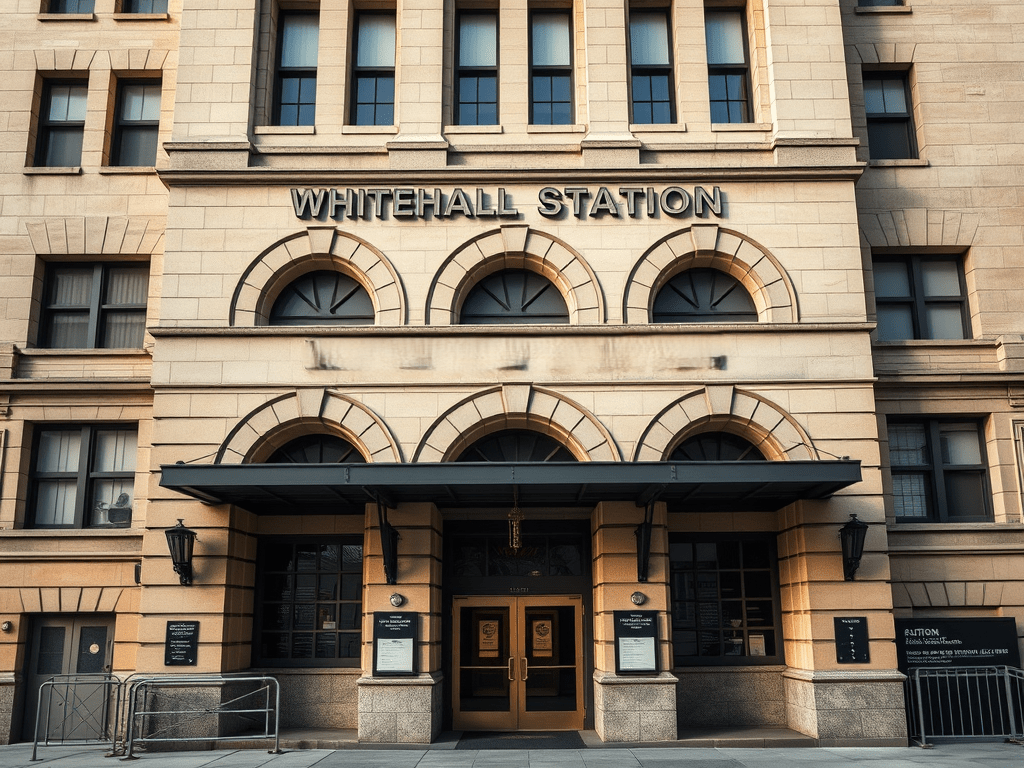
Chapter 3:Whitehall Station Army Induction Center

My father died in December 1967. Cancer. A slow, cruel thief that stole him piece by piece until all that remained was silence. I was twenty-one, and the world was already loud with war.

The night before my induction, sleep refused to visit. I lay in bed, staring at the ceiling like it owed me answers. My heart was a metronome gone rogue—too fast, too loud, too erratic. I tried counting breaths, replaying old football games, pretending I was anywhere but here. But dread crept under the door and settled in my bones. I wasn’t afraid of dying. I was scared of disappearing—of becoming a number, a uniform, a cog in a machine I didn’t believe in.

The draft lottery, America’s twisted game show of fate, didn’t begin until December 1, 1969. But in 1964, the draft was still operating under a local board system, where deferments (for college, hardship, etc.) and classifications were manually reviewed. In 1964, when I was eighteen, I burned my college deferment draft card, thinking I was making a statement. At the same time, I began writing letters to the President of the United States, Lyndon B. Johnson, expressing my opposition to the war and to my draft board on Staten Island, requesting reclassification to 1-A. You can’t refuse what you haven’t been offered. And I was tired of, if not exactly hiding behind loopholes, then at least I was tired of accepting them.

I was writing the first line of a much longer story. By ’69, they changed my deferment and reclassified me 1A—fit for service, next in line to toe the line, or not. I was on the verge of something, though I couldn’t name it. It had taken me 5 years between business schools and seminaries to get here. I think of that time as going from the gridiron to leg irons.

And then the morning came. I was up and gone by 6 am. I wasn’t sleeping anyway, leaving a note for my mother, telling her I had gone to visit friends. I wondered how long I really would be gone. I took the bus to the Staten Island Ferry, which crosses the Hudson River. Whitehall Station was about two blocks from the Ferry terminal. It must have been the longest two blocks I have ever walked, and the slowest. I was in no hurry. Just writing about that morning, I can still feel that god-awful, sinking, sick feeling in my stomach; I can’t do this.

You’ve heard of the fight-or-flight response. Mine was freeze and fall. No exit. Just a heart pounding like a drumline on speed, and a cliff edge I couldn’t see the bottom of. I was about to dive into the dark. Compared to this, the Coney Island Parachute Jump was a kiddie ride.

Whitehall Station sat in lower Manhattan like a bureaucratic bunker—the Army’s induction center where boys became soldiers, or tried not to. It shut down on May 18, 1972, two days before my birthday, while I was sitting in the Danbury Federal Correctional Institution, partly because I wanted it torn down and had done my best to see that happen.

As I walked up the last few steps to enter the building, I found Mr. Harold Jones waiting outside Whitehall Station. My eighth-grade science teacher, yes—but more than that, over my high school years, and not really having anyone else to talk to who seemed to understand what I was feeling, Mr. Jones became my confidant and my co-conspirator in resistance. He had made science feel like storytelling, helped along by a fictional mouse named Archibald MacLeish who lived in his coat closet. Archibald, named after the poet and war veteran, wore a French beret, a red bandana, and carried a cane. No one ever saw him, but I did. I still do. He walks proudly, head high, like he knows something the rest of us don’t. We said very little to each other that morning. I thank him for being there. He said something about me staying me, it was something to be proud of.

The induction ceremony began. The room smelled of sweat and floor wax. The air was thick with the breath of boys pretending not to shake. The recruiter’s voice was flat, rehearsed, like he’d stopped listening after the first hundred times. Repeat after me, he began.

“I do solemnly swear that I will support and defend the Constitution…”

He barked it out. Repeat? Hell, I could barely breathe. I needed time. I needed space. I needed something other than this.

“…that I will bear true faith…”

And suddenly I wasn’t in Whitehall anymore. I was back on the football field, hearing my coach yell, “Go in hell-bent for leather, Little Sandy!” My dad was Big Sandy. The coach used that nickname to rile me up. Hell-bent for leather. Hell-bent for leather. My heart picked up the chant, louder and louder, until it drowned out everything else.

Then came the words: “Step forward.”

I sat down.

The recruiter blinked, confused. Thought I was sick. I stood up, then sat again.

“I’m not moving,” I said, though I wasn’t sure I could if I wanted to. The sergeant’s face seemed to turn fire-engine red with anger.

My heart was a jackhammer. I was frozen in defiance—or maybe just fear. Either way, I wasn’t going forward.

Two MPs grabbed me like a sack of potatoes and hauled me to a holding cell. I was questioned by some army lawyer type who wanted me to be sure I knew what I was doing, and I asked him if he was sure if he knew what he was doing. Then came the police car, the ride to Staten Island, and my first night in jail. From the gridiron to the county jail—five miles apart, a lifetime between.

As I was carried out of Whitehall Station, I had started refusing to walk. Part of my plan was total non-cooperation. Mr. Jones stood on the grimy New York sidewalk. He smiled. Gave me a thumbs-up. And from between some cop’s gun holster and his arm, I flashed him a peace sign.

And just behind him, in the blur of sirens and sidewalk noise, I saw Archibald MacLeish.

Not in a coat closet this time—but strutting down the curb in his beret and red bandana, cane tapping a rhythm only I could hear. He paused, tipped his hat, and whispered, “Courage isn’t loud, Sandy. It’s the quiet refusal.”

Then he vanished into the crowd.

That image is etched deeper than any classroom memory.

Mr. Jones arranged to bail me out, or hoped I’d be released on my own recognizance. I was up the next morning with a trial date set. I ended up at his home for the rest of the day—resting, recovering, trying to make more sense of what had just happened. But more importantly, what would happen next?

To my mother, I was simply visiting Mr. Jones. I was old enough to say, “Don’t call my parents,” and the authorities obliged.

A trial date was set for April. The lead-up was a blur of paperwork, legal advice, and quiet panic. I walked the streets of Manhattan like a ghost, memorizing the cracks in the sidewalk, the rhythm of subway trains, the smell of roasted peanuts from corner carts—anything to anchor me. I had oddly always found the Financial District of Manhattan relaxing on a Sunday morning. The insanity of Wall Street gave way to peace and silence. I walked Wall Street a few times in those last days in New York, and of course, Times Square, the lights of Broadway were not going to shine on me, but they do shine inside of me in my heart and memory. Just as the beaches of Staten Island still call to me.. I didn’t know what I was looking for, only that it wasn’t in New York anymore.

I got a message to Emily at a Post Office Box in Alderson, and I asked if her mountain was still standing. In a week, she answered. She said yes, with directions at least for the ones that were for the roads.. So I packed up and headed south, winding through the back roads past Alderson, deep into the West Virginia woods. I wasn’t running. I was regrouping. The mountain had always been there—quiet, steady, like Emily herself. And in that silence, I could breathe again.

The last stretch to Emily’s cabin was a two-mile hike up a narrow trail—no road, no signs, just the hush of the woods and the crunch of my boots on leaves. Each step peeled away the noise of the city, the courtroom, the cell. I carried no map, but the mountain knew the way. By the time I reached the clearing, my breath had steadied, and something in me had begun to loosen.

The mountain didn’t ask for explanations. It didn’t care about draft classifications, courtroom dates, or the ache behind my eyes. It just stood there—solid, indifferent, eternal. Emily met me at the porch with a mug of hot cider and a silence that felt like a gift of grace. I sat down, let the steam rise, and listened to the wind move through the trees like a hymn. Somewhere in that hush, I heard the tap of a cane on stone. Archibald MacLeish, beret tilted just so, stepped out from behind an old oak tree and said, “You made it, Sandy. Not by marching, not by hiding—but by listening.” He tipped his hat, winked, and vanished again

And for the first time in months, that night I slept.

Leave a comment

This site uses Akismet to reduce spam. Learn how your comment data is processed.

Rating: 1 out of 5.