Rambling Harbor Dispatch: The Bill Comes Due

In the late 1960s, while napalm lit the skies over Vietnam, a quieter rebellion flickered across American kitchens. It wasn’t shouted in the streets—it was whispered through unpaid phone bills. The government had slapped a 10% excise tax on telephone service to help fund the war. And hundreds of thousands of citizens said, “No thanks.” They refused to pay, not out of stinginess, but out of conscience. I was one of those. They called it war tax resistance. I call it dialing into dignity.

By 1972, as many as half a million Americans were hanging up on war—literally—by withholding the tax. The IRS attempted to pursue them, once even seizing a man’s car over $2.44. That’s not enforcement. That’s bureaucratic burlesque.

Fast forward to 2025, and the bill has come due again. Only this time, it’s not for war—it’s for one man’s legal battle against the government. President Trump, facing a thicket of lawsuits, wants taxpayers to help cover the costs of his defense. The irony? It’s thicker than a Nixon tape.
In the Vietnam era, we resisted paying for bombs. Today, we’re being asked to pay for briefs. Legal briefs. Filed by a man who once promised to drain the swamp but now wants us to subsidize his wade through it.
Where’s the opt-out box on that invoice?

This isn’t just about money. It’s about memory. About whether public funds should be used to defend personal grievances. About whether the American people are shareholders in someone else’s vendetta. And about whether resistance still has a place in the age of auto-pay and algorithmic distraction.

It may be time to revive the spirit of the phone tax rebels, not with rotary dials and mimeographed pamphlets, but with satire, sanctuary, and a refusal to subsidize secrecy. Maybe it’s time to hang up again—this time on legal tab transfers disguised as patriotism.

Whether it’s $2.44 or $2.4 million, the principle remains: we should not be forced to pay for what violates our conscience.

And here’s my thought: what if you decided to withhold even $ 5 from any tax you might owe, along with a long explanation about why you are doing this? And sure, that would really make no difference, but sometimes it’s the symbolism, the meaning behind the action.

Donald Trump is reportedly seeking reimbursement of approximately $4.2 million. So, along with our $5, what if we lean on major companies? Corporate Tax Revenue: In 2024, the federal government collected roughly $425 billion in corporate income taxes.

Imagine if Apple, Amazon, and Google said: “We’re withholding 3% until Congress passes climate legislation.” Or until war funding is redirected to healthcare. And not one cent to Donald Trump’s defense. It would be the modern equivalent of hanging up on war—only this time, with billions instead of phone bills.

3% Withheld: That’s about $12.75 billion withheld.
Sure, I’m Dan Don Quixote, still maybe swinging at windmills, but this is my first thought tonight. If you have a better one, don’t hesitate to share it.

Rambling Harbor remembers. And resists.

Subscribing is FREE

Leave a comment

This site uses Akismet to reduce spam. Learn how your comment data is processed.

Introduction

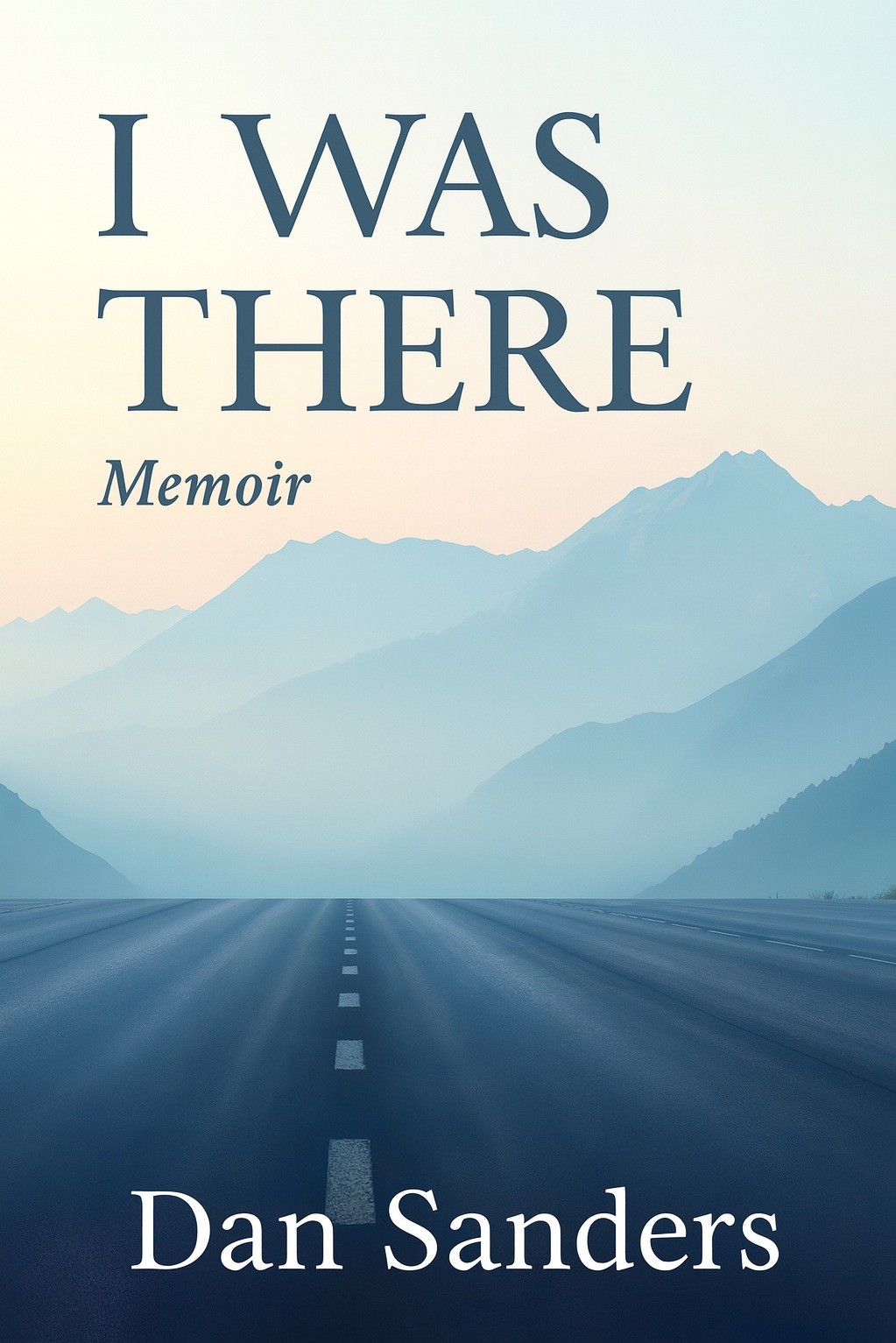
I never meant to write a war story. I meant to live a life. Not the kind that ends up in textbooks or on movie screens, but the kind shaped by quiet choices—by sitting down when others stepped forward, by saying no when silence was easier. This book isn’t about the Vietnam War or the peace movement. Those stories already fill libraries. It’s not about my years behind the mic as a radio broadcaster—that came later. Nor is it about the loud ones: the noisemakers, the celebrities, the politicians, or the filmmakers chasing spotlight and legacy.

This book is about quiet defiance. About extraordinary moments tucked inside an otherwise ordinary life. Mine.

During the Vietnam War era, roughly 570,000 young men were labeled draft offenders. Of those, 210,000 were formally charged. Just 8,750 were convicted. And only 3,250 were jailed. Less than one percent. This book is about that final group—the ones history rarely names, Hollywood never casts, and textbooks barely mention. It’s about my friend Kevin, who said, when we reconnected after Daniel Berrigan’s passing in 2016, “Dan, we didn’t go after the government; they came after us. We just wanted to live our lives.” Kevin was right. We wanted to live, and we wanted the boys sent to fight in a war we didn’t choose to live also.

I’m proud to say I was one of the 3,250 who said no. We said it quietly, but loud enough to keep our souls intact while they locked up our bodies. I tell only my part of the story, but I know I’m not so different from the other 3,249. Maybe I can make a little noise for all of us.

I once asked my father what happens when we die. We were walking a dirt road in the Deep South, the heat thick as molasses. I was nine. My dad, a scientist in spirit and mind, told me energy can’t be created or destroyed—it only changes form. Since the human body is mostly energy, it too must become something else. That left me with the unsettling idea that I might not become a mighty oak, but a daffodil on the side of a hill. Maybe my life has been a long attempt to be the oak, not the daffodil. But the jury’s still out.

I never planned to oppose a war, and I certainly never intended to write a book. If I had, maybe I would’ve kept a diary—or at least some decent notes. What few I scribbled on barroom napkins or in stray notebooks are long gone, buried in some landfill. Hopefully, raising a mighty oak. But I do remember a few things.

I’ll tell you about growing up on Staten Island—football, beaches, music, and radio. A middle-class kid with few worldly cares and a head full of books. My first dream was to be a radio star. That dream shifted when friends started coming home in body bags—boys who could run, jump, and catch with the best of us, now still forever.

I’ll try to explain how a painfully shy kid found the courage to sit down instead of stepping forward at Whitehall Station—the military induction center in New York City where young men were processed for the draft. The routine was simple: They underwent a written aptitude test and a physical examination to determine fitness for service.

Based on these evaluations, they were classified (e.g., 1-A for fit, 4-F for unfit). When your name was called, you stepped forward to begin your journey into military service. But I didn’t. I sat down. I don’t know if fear buckled my knees or if I’d read somewhere that sitting was the perfect nonviolent act. Maybe it was both. Either way, that quiet refusal marked the beginning of my resistance.

I’ll take you from New York to the mountains of West Virginia, to a woman named Emily who taught me how to live off the land. Then, to a woman older than I was, with three children, about her, and the court fight for custody of her kids and one of mine. I’ll tell you about my arrest in Hollywood and the cross-country ride back to New York, escorted by U.S. marshals. And the old judge who nearly begged me to take one of his get-out-of-jail-free cards.

I’ll talk about meeting Daniel and Phillip Berrigan in prison. And how resistance didn’t end behind bars, as shown by my trips to solitary confinement for refusing to walk the prison lines. I’ll tell you about fellow inmates like Howard Hunt, G. Gordon Liddy, and Clifford Irving—and the handful of other draft and war resisters. I’ll finish with life after prison.

3,249 other stories may or may not be told. This one is mine.

Dan Sanders

July 2025

Leave a comment

This site uses Akismet to reduce spam. Learn how your comment data is processed.

Rating: 1 out of 5.

Chapter 1: Ties, Offices, and Draft Cards

I need to revisit something I said in the introduction. I called my life ordinary. That was a misfire. Looking back, it’s been anything but. What I should’ve said is that there were ordinary moments scattered through an otherwise extraordinary life. I grew up alongside kids who mapped out their futures with surgical precision—future CEOs, most likely. Me? I had a plan too, though it felt more like a whispered plea to the universe: Please, God, don’t let my life be beige. No cubicle coma. No death by fluorescent light. I’ll tell you soon how close I came to that fate—until I tossed my tie into the Hudson River like a message in a bottle. Still the best decision I ever made.

As I started writing about my life, one emotion kept erupting like a brainquake—volcanic, relentless. It left me slack-jawed, arms limp, staring at the screen like I’d just seen a ghost. If you’ve ever tried writing in that state, you know it’s like trying to type underwater. And that emotion? The gut-punch realization that, holy hell, this is ancient history. Am I really that old? Who was she? Who was he? Did I actually do that? A Ulyssean train wreck of memory and feeling, barreling through time.

From the moment we’re born, we’re shaped by sound, sight, touch, and experience.

I was sixteen in 1962 when the Cuban Missile Crisis hit—a high-stakes staring contest between the U.S. and the Soviet Union, triggered by Soviet missiles in Cuba. It was the closest we ever came to turning the Cold War into a full-blown nuclear nightmare. But in my corner of Staten Island, the “wonder years” of the 1950s still lingered like the scent of summer on a football jersey. My friends and I spent our days at the beach, dreaming of October and kickoff season. But that October was different. For thirteen days, the whole country held its breath. I did too, hoping the football field would still be there when morning came.

My dad had worked on the Manhattan Project. He didn’t talk much about it, but I knew he carried the weight. He once said the first bomb should’ve been dropped on Mt. Fuji as a warning, not on Hiroshima. That act, he believed, was revenge—rage disguised as strategy. And now, just seventeen years later, we were back on the brink, flirting with annihilation.

Three books helped shape me in those early years. First was Elie Wiesel’s Night—a raw, haunting account of surviving Auschwitz and Buchenwald. Years later, I’d sit at the dinner table with a Tufts professor who’d lived through it. His stories etched themselves into my memory like carvings in stone. The second was Black Like Me, where John Howard Griffin darkened his skin and walked through the segregated South to see what it meant to be Black in America. I couldn’t have known then that I’d one day I’d call Phil Berrigan—a white priest who rode with the Freedom Riders—a friend. The third was Fail-Safe, serialized during the Cuban Missile Crisis itself. It imagined a nuclear war sparked by a glitch. Fiction, yes—but terrifyingly plausible.

Heavy reading for a sixteen-year-old. I don’t know what other kids were reading, but those books rewired my brain. The wonder years ended in 1962. I graduated from high school in ’64, skipped the ceremony, and refused the yearbook photo. Some of my teammates had gone off to war. Some came back in boxes. I didn’t want the pomp. I wanted silence. My mom was quietly heartbroken. My dad understood, though he never said so.

In ’63 and ’64, I had a summer gig at WSLT Radio in Ocean City, New Jersey. Two hours each way from Staten Island, but I had a license and a dream. Sunday mornings were mine—I was king of the airwaves. The worst part was driving through Newark, where the air tasted like burnt rubber and my gum absorbed the pollution. I think of that now, as climate change becomes the new crisis.

I was supposed to start at Pace University in September ’64. Tuition paid. The catch? A lifetime at Cunard Steamship Company. I lasted six weeks. One hot day, I walked into Battery Park and threw my tie into the Hudson. That was my declaration of independence. My boss called. My mom worried. My dad? Not surprised.

I kept the Sunday radio gig.

Meanwhile, the world was shifting. In December ’63, Eugene Keyes burned his draft card on Christmas Day. In May ’64, I got mine—and joined a protest in Union Square. Fifty of us. My mom thought I was with my girlfriend. My dad probably knew better. Burning that card was symbolic. I had a deferment, and I wasn’t headed to Vietnam. But I broke two laws: failing to carry the card and destroying government property. I kept the ashes in my pocket.

I haven’t been back to New York since 1968. But one day, I’ll return to Battery Park. And remember.


________________________________________

Leave a comment

This site uses Akismet to reduce spam. Learn how your comment data is processed.

Rating: 1 out of 5.